Telephone/WhatsApp:+86 156 2656 0610
Telephone/WhatsApp:+86 156 2656 0610
Email:info@seekmach.com

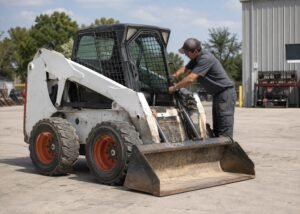
If you’re searching for a China Skid Steer Loader in the US market, you’re probably balancing two pressures at once:
This guide is built to help you make the decision with fewer assumptions and more checklists.
Key Takeaway: Don’t start with price. Start with Rated Operating Capacity (ROC), hydraulic flow, and jobsite access width—then evaluate supplier risk.
A skid-steer’s “headline horsepower” is rarely what makes (or breaks) productivity. These are the numbers that matter most.
| Spec | What it means (in plain English) | Why you should care |
|---|---|---|
| Rated Operating Capacity (ROC) | The load the machine is rated to safely handle | Determines what you can lift repeatedly without living on the edge |
| Tipping load | The test limit where the machine starts to tip forward | ROC is commonly set as a percentage of this (e.g., 50% on many wheeled units) |
| Operating weight | Machine weight | Influences stability, transport, and “how planted it feels” |
| Auxiliary hydraulic flow (GPM) | How much hydraulic “oil volume per minute” you can send to attachments | The #1 constraint for many skid steer attachments |
| Hydraulic pressure | How much hydraulic “force” you can generate | Affects attachment performance under load |
| Lift path (radial vs vertical) | How the loader arms move as they rise | Changes reach at full height and behavior at mid-height |
| Width / overall dimensions | Physical footprint | Decides if you can get through gates/doorways and work in tight spaces |
| Dump height + reach | How high/far you can dump | Matters for trucks, hoppers, trailers |
| Ground interface (wheels vs tracks) | Tires vs tracks | Impacts flotation, turf damage, traction, and cost |
For a concise definition and lift-path terminology, Wikipedia’s skid-steer loader overview is a solid baseline.
A common industry explanation is that ROC is often defined as a percentage of tipping load. One plain-language reference is White Star Machinery’s 2025 note that ROC is commonly rated at 50% of tipping load on many wheeled skid-steer loaders, and often lower on tracked loaders: tipping load vs ROC explanation (2025).
That same buyer framework also explains the practical difference between lift paths:
Many buyers choose a skid steer… then realize their favorite attachment runs poorly because hydraulics were undersized.
A commonly cited industry range is:
One clear summary comes from Carolina Cat’s guide, which states standard-flow typically ranges 17 to 25 GPM: standard-flow hydraulic range (2020).
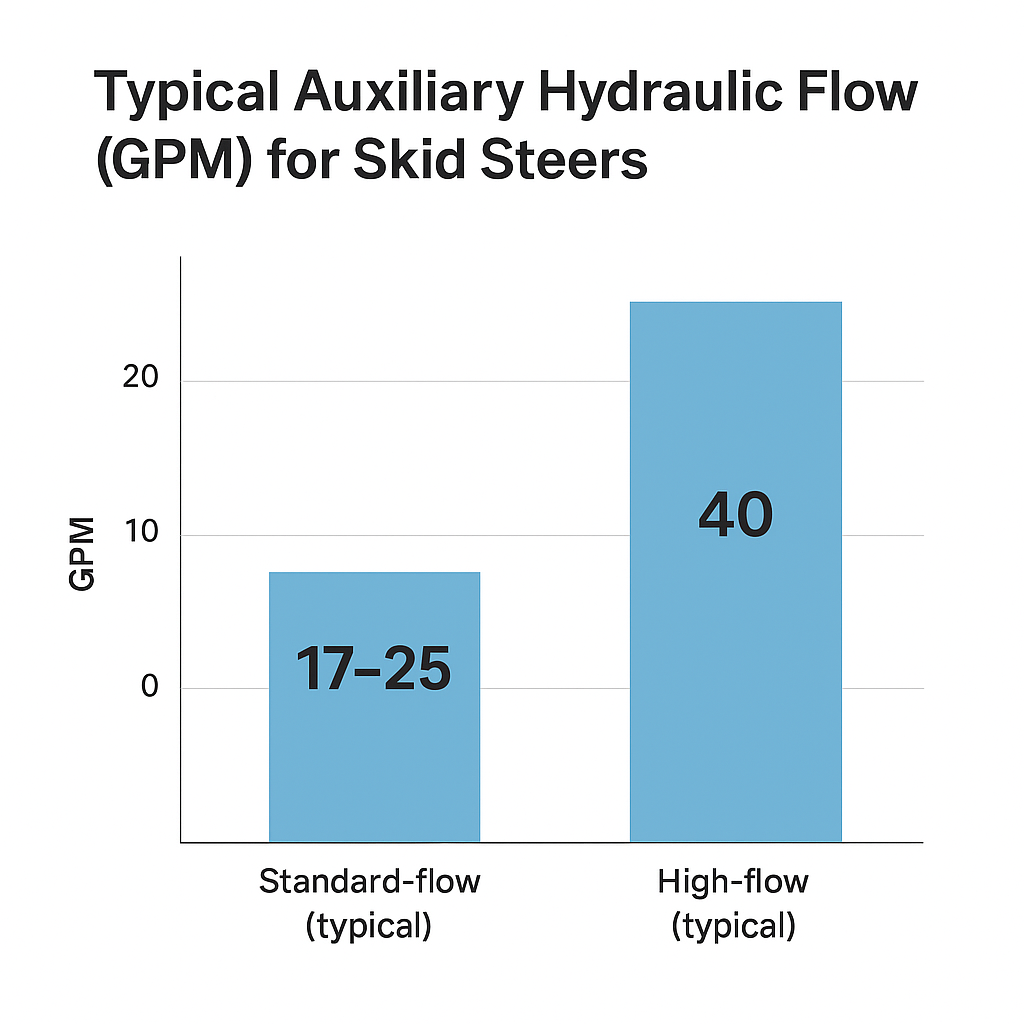
Pro Tip: Build your attachment list first, then match hydraulic flow + pressure. It’s cheaper than “upgrading the machine later.”
Use the jobsite, not preference, to decide:
The “key factors” framework above also discusses ground pressure and jobsite conditions (we linked it in the ROC section). Use that logic to match your ground to your machine.
Use this as a fast sorting tool.
| Your most common jobs | Prioritize these specs | Typical “wrong buy” symptom |
|---|---|---|
| Landscaping in tight access | Width, turning radius, low surface disturbance, ROC for pallets/soil | Machine can’t fit gates or tears up finished turf |
| Farm cleaning + material handling | ROC, durability, easy maintenance access, attachment versatility | Constant downtime due to small wear parts and hydraulics |
| Municipal maintenance | Maneuverability, quick attachment swaps, safety visibility | Too large for sidewalks/urban areas or slow to switch tasks |
| Light construction + loading | Dump height, reach, ROC, lift path preference | Can’t load trucks efficiently or feels unstable at height |
If you want application examples and attachment ideas tailored to common industries, this page is a useful internal reference: SeekMach skid steer loader application solutions.
Below is a mini skid steer loader comparison using only publicly listed specs from SeekMach pages—use it as an example of how to compare machines consistently.
| Model | Rated operating capacity (ROC) | Power | Width | Max working height | System pressure |
|---|---|---|---|---|---|
| SM-390T | 300 kg | 13.5 HP | 1000 mm | 2590 mm | (not stated on article page) |
| SM-480T | 390 kg | 23 HP | 1070 mm | 2703 mm | 17 MPa |
| SM-490T | 430 kg | 16.8 kW @ 3600 rpm | 1000 mm | 2590 mm | 20 MPa |
Internal specs sources:
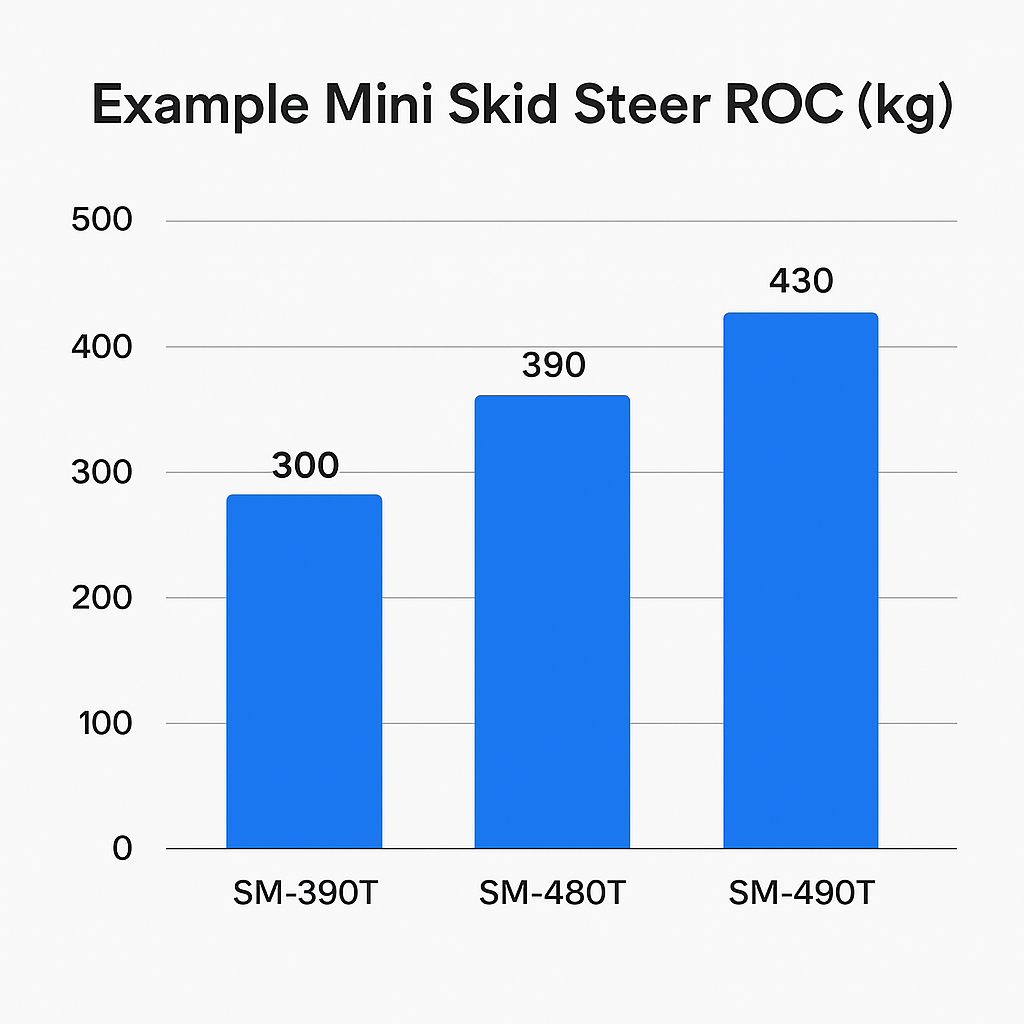
Key Takeaway: ROC and width can be a better “fit” filter than horsepower—especially when your work is gate-limited or trailer-limited.
Skid steers are compact, powerful, and often operated near people, walls, and trucks. Treat restraint systems and interlocks as non-negotiable.
Two authoritative references worth keeping on file:
⚠️ Warning: Bypassing safety interlocks is not a “convenience tweak.” It changes the failure mode from annoying to fatal.
This is where most people lose money: not on the machine—on missing paperwork, weak inspections, and no spare parts plan.
At minimum, you’ll need standard trade docs. The U.S. International Trade Administration provides a general overview of China import requirements and documentation.
For machinery, request these machine-specific items as well:
Focus your third-party inspection on items that are expensive to fix after arrival:
| Area | What to check | What “bad” looks like |
|---|---|---|
| Hydraulics | Leaks, hose routing, fitting quality | seepage at fittings, rubbed hoses, inconsistent response |
| Structure/welds | Cracks, porosity, alignment | hairline cracks, visible undercut, misalignment |
| Pins/bushings | play, lubrication points | noticeable slop, dry joints |
| Controls/safety | restraint system, proper function | intermittent engagement, loose seat, inconsistent lockouts |
| Run test | cold start, idle stability, attachment function | hard starts, surging, slow cycles |
Before importing a China skid steer loader, agree on:
Below is a general training-style video you can place in this section to increase dwell time and help new operators.
<div data-type='node-video' data-provider='youtube' data-url='https://www.youtube.com/watch?v=pDU3mejQP3c' data-embed-url='https://www.youtube.com/embed/pDU3mejQP3c'></div>
If you want to shortlist a machine quickly, start here:
Then browse your options here: SeekMach skid steer loader range.
ROC (Rated Operating Capacity) is the safe working load rating you should plan around. Tipping load is a test threshold where the machine begins to tip in a specific test setup. A plain-language reference is White Star Machinery’s 2025 explanation that ROC is commonly set at 50% of tipping load on many wheeled skid-steer loaders (linked earlier in this article).
Start with your attachment list. If you only run common tools (bucket, forks, basic auger), standard-flow often works. If you run more hydraulic-demanding tools, you’ll typically need higher flow.
For many tight-access jobs, start with width, ROC, dump height, and whether the hydraulics match your attachment plan. Then check ground clearance and overall operating weight for stability.
The most dangerous mistakes often involve restraint systems and bypassing safety interlocks, operating with lift arms raised while exiting, and working too close to people or obstacles. OSHA and CDC/NIOSH both publish skid-steer safety guidance (linked earlier in this article) that’s worth keeping on file.
Request trade documents (invoice, packing list, bill of lading, certificate of origin) plus machine-specific documentation (manuals, parts list, serial/plate photos) and inspection evidence. For the baseline set of documents, refer to the U.S. International Trade Administration page linked earlier in this article.
For a 2,000–3,000 word guide, 3–5 high-quality internal links is usually enough. The goal is helping the reader go deeper (applications, categories, key model pages), not “link stuffing.”
Choose based on ground conditions and how often you need to operate on delicate surfaces or soft terrain. Wheels often perform well on hard/paved surfaces; tracks often add flotation and traction in soft ground.