Telephone/WhatsApp:+86 156 2656 0610
Telephone/WhatsApp:+86 156 2656 0610
Email:info@seekmach.com

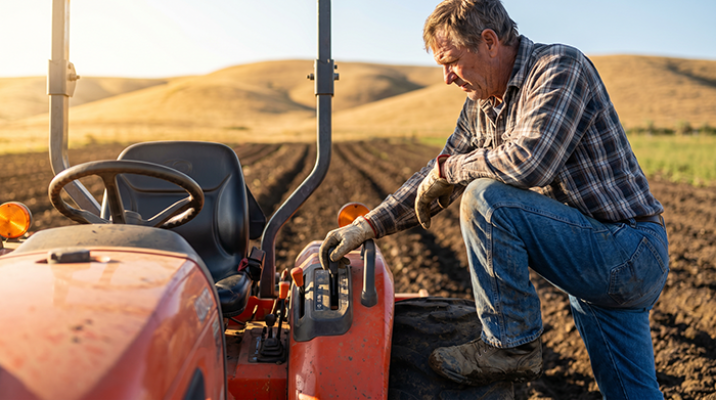
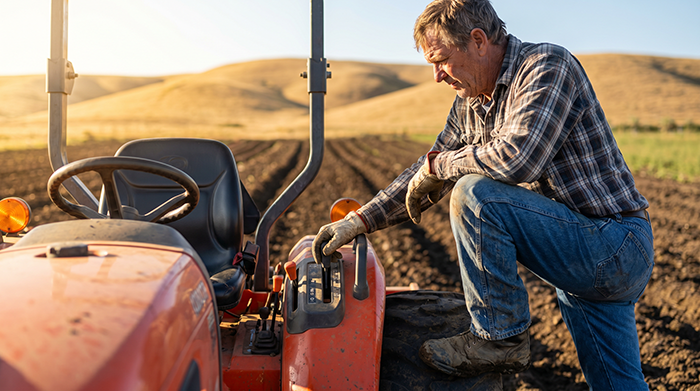
Spring in California doesn’t wait for anyone. The window between the last frost and peak soil moisture is razor-thin — and every day lost to underpowered equipment is a day your competitors are pulling ahead.
⚠️ Critical Timing Alert: According to Cropilots Agricultural Equipment Research, California’s spring planting window is exceptionally short, with rapid soil moisture fluctuation demanding maximum traction and response speed from every piece of equipment on your property. Miss the window, and you’re chasing the entire season.
This isn’t just an inconvenience. It’s a direct threat to your annual revenue.
California’s spring climate is uniquely punishing. A single week of unexpected rainfall can turn well-prepared fields into a patchwork of waterlogged patches and compacted ridges. Older, underpowered machines — the kind still running on decades-old hydraulics and worn-out drivetrains — simply bog down. They spin, slip, and stall precisely when you need them most. The frustration is real, and the yield losses that follow are measurable.
In practice, farms that continue relying on aging equipment during wet-soil conditions face compounding problems: delayed planting schedules, uneven seedbed preparation, and fuel inefficiency that silently erodes margins throughout the season.
A power upgrade isn’t an expense — it’s your first line of defense for full-year profitability. Modern 40hp tractor for sale options have redefined what compact utility machines can accomplish, blending torque, stability, and fuel efficiency in a package that handles California’s unpredictable spring terrain with confidence.
That’s exactly where SeekMach enters the conversation. The SM-404Y was purpose-built for farms that can’t afford downtime — and as you’ll see, 40 horsepower may be the smartest number in agriculture right now.
As we touched on earlier, California’s spring season demands equipment that can keep pace with narrow planting windows and unpredictable field conditions. That’s where the question of horsepower selection becomes critically important — and why so many farm operators keep landing on the same answer: 40HP.

A tractor with too little power leaves you stranded mid-row when soil resistance spikes. Too much power, and you’re hauling an oversized machine down narrow orchard lanes or suburban landscape plots. 40 horsepower sits precisely at the intersection of capability and practicality — enough torque to handle serious tillage, loader work, and implement operation, yet compact enough to navigate tight spaces without sacrificing efficiency.
According to industry expert Tractor Mike, the 40HP class has become the fastest-growing and most popular tractor size in North America — widely recognized as the “sweet spot” for small-to-mid-size farms because it handles loader work comfortably while remaining easy to trailer and transport.
Not all horsepower ranges are created equal. Here’s a quick look at where each tier fits:
| Power Range | Best For | Limitations |
|---|---|---|
| 25HP | Small hobby farms, mowing, light cultivation | Struggles with heavy loader work or dense soil |
| 40HP | Mixed operations, orchards, nurseries, diversified row crops | True all-rounder with minimal trade-offs |
| 70HP+ | Large-scale grain operations, commercial contractors | Over-engineered for tight spaces; higher operating costs |
For the typical California farm equipment user managing anywhere from 10 to 150 acres — whether that’s a wine grape vineyard in Sonoma, a vegetable operation in the Salinas Valley, or a landscaping company in the Central Valley — 40HP is the tier that earns its keep every single day.
The SM-404Y was built to capture this exact market position. Rather than being a generalist machine stretched to fit the 40HP spec, it was engineered from the ground up to maximize what this power range can deliver — particularly in the kind of challenging terrain that defines California spring conditions. The specifics of how it does that come down to some genuinely thoughtful engineering decisions worth examining closely.
Now that we’ve established why 40 horsepower hits the sweet spot for California’s small-to-mid-size operations, the natural next question is: what separates a capable 40HP tractor from a truly purpose-built one? The SM-404Y’s answer lies in its engineering fundamentals — and those details matter more than most buyers realize when spring conditions turn unpredictable.
California’s spring soils are a moving target. One morning you’re working firm ground; by afternoon, an overnight rain has turned your top layer into a slippery, uneven mess. According to Cropilots Agricultural Equipment Research, the SM-404Y’s four-wheel drive (4WD) system is the critical factor preventing axle slip and keeping spring tillage operations on schedule regardless of weather disruptions.
In practice, 4WD isn’t just about raw pull — it’s about consistent, confident traction across changing soil profiles. When front and rear axles share the load equally, you preserve soil structure, reduce ruts, and maintain forward momentum without costly stops.
Efficient power transmission is what separates affordable farm tractors USA buyers trust from those that drain operating budgets season after season. The SM-404Y’s drivetrain is engineered to convert engine output into usable drawbar pull with minimal loss — a detail that compounds over hundreds of operating hours each year.
A common pattern with well-calibrated tractor drivetrains is a measurable reduction in fuel burn during mid-load tasks like bedding, discing, and mowing. That efficiency at partial throttle matters enormously during multi-hour spring prep sessions where fuel costs can quietly balloon.
One practical advantage of the SM-404Y’s chassis architecture is its broad implement compatibility. The three-point hitch geometry and PTO configuration are designed to accept a wide range of standard attachments without custom adapters or fitment headaches. That flexibility means one machine can move between tasks — from box blade work to rear-mounted tillers — without downtime.
4WD Advantage at a Glance
- Engages both axles on demand for maximum grip on wet or loose soil
- Reduces wheel spin, protecting field surface integrity
- Maintains consistent tillage depth across uneven terrain
- Allows operation in marginal conditions competitors simply can’t handle
The SM-404Y’s OEM production background means tighter tolerance standards and documented manufacturing consistency — not just a spec sheet promise. Customization options available through OEM channels also allow operators to spec out configurations matched to their specific California microclimates and crop types.
That combination of precision manufacturing and real-world adaptability is exactly what sets the stage for understanding how the SM-404Y performs across specific California farm environments — from orchard rows to open pastures.
Understanding the technical specs is one thing — seeing how they translate to real fieldwork is another. The SM-404Y’s versatility as a 40hp tractor becomes immediately clear when you map its capabilities to the diverse tasks California’s small-to-mid-size operations demand every spring season.
🍇 Task 1: Orchard & Vineyard Narrow-Row Operations
🔧 Task 2: Fence Building & Material Handling on Pastureland
🌱 Task 3: Spring Tillage & Precision Seeding
🏡 Task 4: Landscaping & Multi-Use Property Maintenance
In practice, operators running diverse property types find that this kind of adaptability directly impacts their bottom line — which raises a compelling question about long-term ROI.
The numbers don’t lie. According to Mordor Intelligence, the North American agricultural machinery market is projected to grow at a compound annual growth rate (CAGR) of 7.62% through 2031 — driven primarily by precision agriculture adoption and the mechanization of small-to-mid-size diversified farms. For anyone shopping for a farm tractor California operation today, that growth signal carries a clear message: mechanization isn’t a luxury upgrade. It’s a competitive baseline.
Precision agriculture used to be the exclusive domain of large commodity operations with deep capital reserves. That’s changed. Affordable, capable equipment has democratized access, and small-to-medium farms are now the primary growth engine in the broader mechanization trend. Operators who delay investment aren’t just leaving productivity on the table — they’re falling behind a market that’s actively rewarding efficiency.
The farms that mechanize thoughtfully today will set the operational standard for their regions tomorrow.
One of the most compelling arguments for OEM-configured models like the SM-404Y centers on total cost of ownership (TCO) rather than sticker price alone. OEM procurement consolidates supplier relationships, eliminates middleman markups, and passes hardware-grade quality directly to the buyer — often at 20–30% below comparable branded alternatives.
Maintenance economics follow the same logic. Standardized components mean parts availability is broad and pricing stays competitive. In practice, what appears to be a modest initial savings compounds significantly over a 5–7 year equipment lifecycle.
Consider a typical scenario: a California specialty crop grower running 80 acres replaces manual and contracted labor with in-house tractor operations. At current labor rates and equipment utilization across three seasonal cycles — tillage, irrigation support, and harvest prep — payback periods commonly fall within 18 to 30 months. That’s not an optimistic projection; it reflects realistic utilization patterns for a versatile 40hp platform.
Which raises the next logical question: not just what equipment delivers this value, but who you buy it from — and why that decision matters just as much as the machine itself.
In a crowded equipment market, brand loyalty often costs farmers more than it delivers. SeekMach was built on a different premise: that small and mid-sized farm operations deserve access to professional-grade hardware without paying a premium for a logo.
SeekMach’s competitive edge starts before a tractor ever reaches your field. By integrating directly with verified OEM manufacturing partners, SeekMach eliminates the layers of distribution markup that inflate traditional brand pricing. What typically happens with legacy equipment brands is that farmers absorb costs at every middleman step — importer, regional distributor, dealer network. SeekMach compresses that chain significantly.
The result? Hardware specifications that match — and in several configurations surpass — what comparable branded models offer at a considerably higher price point.
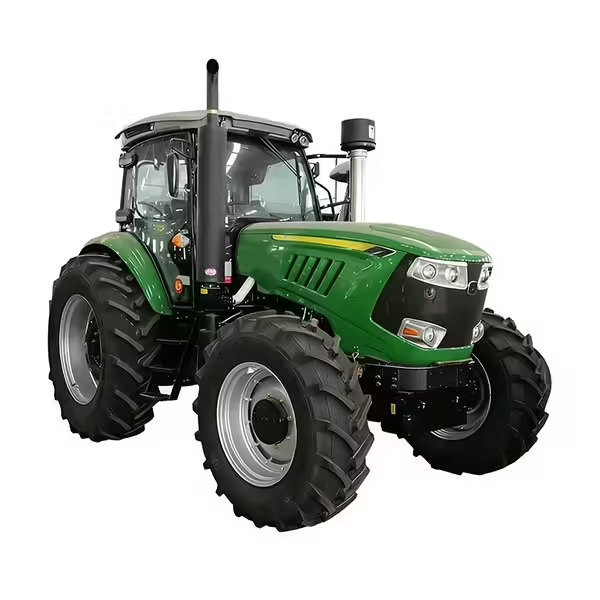
The OEM model isn’t a compromise. It’s a recalibration of where value actually lives. The SM-404Y, for example, sources drivetrain components, hydraulic systems, and PTO assemblies from the same tier-one manufacturing ecosystem that supplies recognized global brands. The engineering is comparable. The price isn’t.
This approach reflects a broader shift in North American agricultural purchasing behavior — buyers are increasingly evaluating specs-per-dollar rather than brand heritage alone.
Spring planting season doesn’t wait. If you’re evaluating equipment upgrades for your California operation, starting with the SM-404Y is a practical, low-risk entry point. Explore the full spec sheet, compare it against what you’re currently running, and let the numbers make the case.
Smarter farming starts with a smarter equipment decision.