Telephone/WhatsApp:+86 156 2656 0610

Telephone/WhatsApp:+86 156 2656 0610
Email:info@seekmach.com



Quick answer: Treat 2.5 tons as a class label, then verify operating weight, access width, digging envelope, lift chart, hydraulic flow and trailer payload for the exact configuration.
| Decision | Evidence to verify |
|---|---|
| Site access | Overall width, height and tail swing with attachment |
| Lifting | Manual chart at actual radius, height and blade position |
| Transport | Machine, bucket, coupler, fuel, trailer and tow ratings |
Buyers comparing this class need a fit checklist, not a promise that every machine with the same tonnage performs alike.
Not reliably. Confirm the exact operating and shipping definitions from the supplier documentation.
Quick answer: Treat 2.5 tons as a class label, then verify the exact operating weight, access dimensions, digging envelope, lift chart, attachment mass and legal trailer payload for the configured machine.
| System | Buyer check |
|---|---|
| Weight | Cab, bucket, coupler, fuel and added attachments |
| Access | Overall width, height, tail swing and blade position |
| Work | Dig depth, reach, dump height and lift radius |
| Transport | Trailer payload, tow rating, tie-downs and route rules |
Select against the hardest recurring task and confirm specifications in the manufacturer manual. A machine that only meets the requirement at its limit offers little margin for soil, reach or attachment changes.
No. Configuration and installed equipment can move actual transport weight above or below the class label.
Contractors, landscapers, and small-site operators are facing a hard reality: jobs are getting tighter, budgets are getting leaner, and full-size iron simply doesn’t fit anymore. That’s exactly why the 2.5 ton mini excavator class has exploded in demand — and why finding the right 2.5 ton mini excavator for sale can make or break a project’s profitability.
The global mini excavator market (under 6 tons) is projected to grow at a CAGR of 10.18% through 2030 — a clear signal that compact power is no longer a compromise; it’s a competitive advantage.
The 2.5-ton weight class hits a genuine sweet spot: enough digging force and bucket capacity to handle serious earthmoving in forestry clearing, agricultural drainage, and urban landscaping — without the transport costs or site restrictions that heavier machines carry. The SM-25Eco capitalizes on this perfectly, pairing a proven Kubota D1105 excavator engine with premium-grade hydraulics at a price point that delivers measurable ROI from day one.
This guide walks you through every critical buying decision — starting with whether your specific site can actually use this machine effectively.
Before any mini excavator 2.5 ton guide can be useful in practice, you need hard numbers from your actual job sites — not estimates. A machine that can’t pass through your access point is just an expensive piece of equipment sitting in a parking lot. Start with a tape measure, and work through the following assessment systematically.
Walk every entry point on your site and record the narrowest clearance — not the average, the minimum. This includes gates, fence openings, alleyways, and doorways for interior demolition work. A common pattern is for contractors to eyeball these gaps and underestimate how tight they actually are, leading to costly delays on delivery day.
The critical benchmark: can your machine fit through a 1000mm opening? This is the real-world threshold for dense urban sites and established residential properties. If you’re regularly working in these environments, it’s a non-negotiable spec to verify before purchasing.
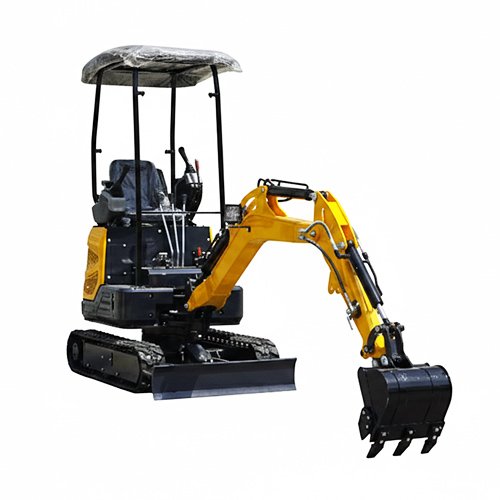
In confined settings, zero-tail-swing isn’t a luxury feature — it’s a safety requirement. According to SeekMach, the SM-25Eco’s cab rotates a full 360 degrees without the counterweight extending beyond the track footprint. In practice, this means you can swing freely next to a brick wall, a parked vehicle, or a client’s garden bed without calculating clearance for every rotation. On urban construction sites where liability for property damage is a real concern, this single feature can prevent costly incidents.
Zero-tail-swing design allows operators to focus on the work, not on constantly repositioning the machine to avoid hitting surrounding structures.
Narrow access and operational stability typically pull in opposite directions — a wider stance gives you a more stable dig, but you can’t get there in the first place. The SM-25Eco addresses this directly with a retractable track system that adjusts from 980mm to 1350mm (SeekMach / Typhon Machinery). Retract to 980mm to thread through a tight gate, then expand to 1350mm once you’re on site for improved ground stability during heavy lifts.
✅ Verification Checkpoint: The 1000mm Gate Test Before specifying the SM-25Eco for a project, confirm the following:
- Measured minimum gate or access width is ≥ 980mm (tracks retracted)
- Overhead clearance accommodates cab height with any required attachment
- Ground surface at entry point supports track pressure without sinking
- Site has sufficient turn radius after the entry point for safe maneuvering
Once you’ve confirmed your site’s physical constraints, the next logical step is understanding exactly what’s under the hood — and whether the machine’s technical specifications match the demands you’ll place on it.
Once you’ve mapped your site’s physical constraints, the next logical question is whether a machine’s engine and hydraulic system can actually perform under those conditions — consistently, economically, and without grinding operators down by midday. This is where the SM-25Eco separates itself from the field.
When evaluating the best 2.5 ton mini excavator on the market, the engine specification is the single most telling number on the data sheet. The SM-25Eco runs a Kubota D1105, a three-cylinder diesel unit that has earned its reputation through durability and precision engineering rather than marketing claims. According to Kubota Engine / Boleo US, the D1105 delivers 24.8 HP at 3,000 RPM — enough grunt for demanding dig cycles while maintaining the compact footprint that 2.5-ton operators depend on.
The engine’s longevity is its strongest argument: field-maintained D1105 units routinely exceed 8,000–10,000 operating hours before requiring major overhaul, dramatically lowering total cost of ownership for small-business operators.
The D1105 also incorporates E-TVCS (Elliptic Toroidal Vortex Combustion System) technology, which optimizes the air-fuel mixture through a specially shaped combustion chamber. In practice, this translates to approximately a 5% improvement in fuel efficiency compared to conventional combustion designs — a meaningful figure when a machine runs six to eight hours daily across a multi-week project. On a tight margin job, fuel savings compound quickly into measurable ROI gains.
A specification often overlooked in purchase decisions is noise and vibration output. The D1105’s smooth three-cylinder firing sequence, combined with the SM-25Eco’s rubber-mounted cab isolation, keeps operational sound levels in a range that reduces operator fatigue during extended shifts. In practice, fatigued operators make more errors and move less material per hour — so this “soft” spec has a direct impact on daily productivity.
The SM-25Eco’s hydraulic system is engineered around a dual-pump configuration that delivers consistent flow to both the travel motors and the attachment circuit simultaneously. For a 2,500 kg class machine, this matters because underpowered auxiliary lines are the most common reason operators find a compact excavator underperforming with demanding attachments like hydraulic breakers or augers.
| Spec | SM-25Eco Performance | Benefit |
|---|---|---|
| Engine | Kubota D1105, 24.8 HP | Reliable power with proven longevity |
| Fuel System | E-TVCS combustion | ~5% fuel efficiency improvement |
| Hydraulic Config | Dual-pump circuit | Simultaneous travel + attachment operation |
| Noise Isolation | Rubber-mounted cab | Reduced operator fatigue on long shifts |
Understanding these specs gives you a solid foundation — but knowing which attachments your hydraulic lines can actually support is where the buying decision gets specific. That’s exactly where the next step takes you.
With a clear picture of the SM-25Eco’s technical capabilities, the next practical step is configuring the machine to match your actual workload — and making sure the acquisition process doesn’t create unexpected costs down the road. For any small business investing in a 2.5 ton mini digger, the decisions made during purchase often determine long-term ROI as much as the machine itself.
The SM-25Eco’s auxiliary hydraulic lines unlock substantial versatility, but attachment selection should start with your most frequent tasks, not your most ambitious ones. Grading buckets (typically 300–450mm width) cover the majority of utility, landscaping, and foundation work. Augers become essential for post-hole or fencing contracts, while a hydraulic thumb dramatically improves material handling during demolition cleanups and debris sorting.
Verification Checkpoint: Before ordering any attachment, confirm that your unit’s auxiliary hydraulic flow rate and pressure output match the attachment manufacturer’s operating requirements. Mismatched specs — particularly with high-demand tools like hydraulic hammers — can cause premature wear on the machine’s pump or underperform on the job. Request written hydraulic auxiliary specs from your dealer before finalizing any attachment purchase.
Sourcing through an established dealer typically carries a measurable service advantage. As noted by AntMyERP, “Effective after-sales and service make sure that industrial machines are running smoothly… The support team should be available 24/7.” This matters enormously when a machine goes down mid-project.
Direct-import models — increasingly common and documented in buyer walkthroughs like this direct purchase review — can reduce upfront costs significantly. However, parts lead times and warranty enforcement are harder to manage without a local service network. Weigh that risk honestly against the price differential.
One practical framework: calculate your minimum billable hours per month needed to cover the monthly payment, then cross-reference that against your current subcontracting spend. In many cases, operators replacing hired equipment find break-even within 12–18 months.
Financing terms, residual value, and parts availability all feed into the real ROI picture — which sets the stage perfectly for understanding how to maximize every operational hour through smart, confined-space technique.
Getting the SM-25Eco configured and purchased is only half the battle. Translating that investment into productive, damage-free work requires disciplined operating habits — especially in the tight corridors where this mini excavator 2500kg class truly earns its keep. The SM-25Eco is purpose-built for the “in-between” spaces where manual labor is too slow but larger machines simply cannot fit, which means your operating technique becomes a direct multiplier on ROI.
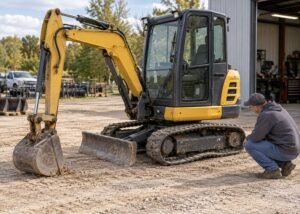
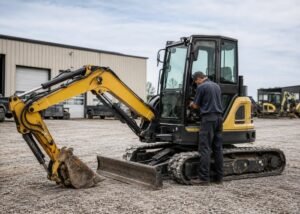
Never skip the walk-around. Before every shift, a structured inspection should cover these critical checkpoints:
In practice, a thorough pre-start takes under five minutes but prevents the kind of mid-job failures that stall an entire crew.
When the SM-25Eco moves into position, retract the tracks to their narrowest setting for access, then widen them fully before beginning any lifting or heavy digging cycle. This is non-negotiable during heavy lifts. Wider track stance lowers the center of gravity and significantly increases tipping resistance — a critical factor when working near trench edges or on sloped surfaces.
Pro Tip: On slopes greater than 15 degrees, position the machine so the boom works directly uphill or downhill — never across the slope. This keeps the machine’s weight distribution aligned with its most stable axis.
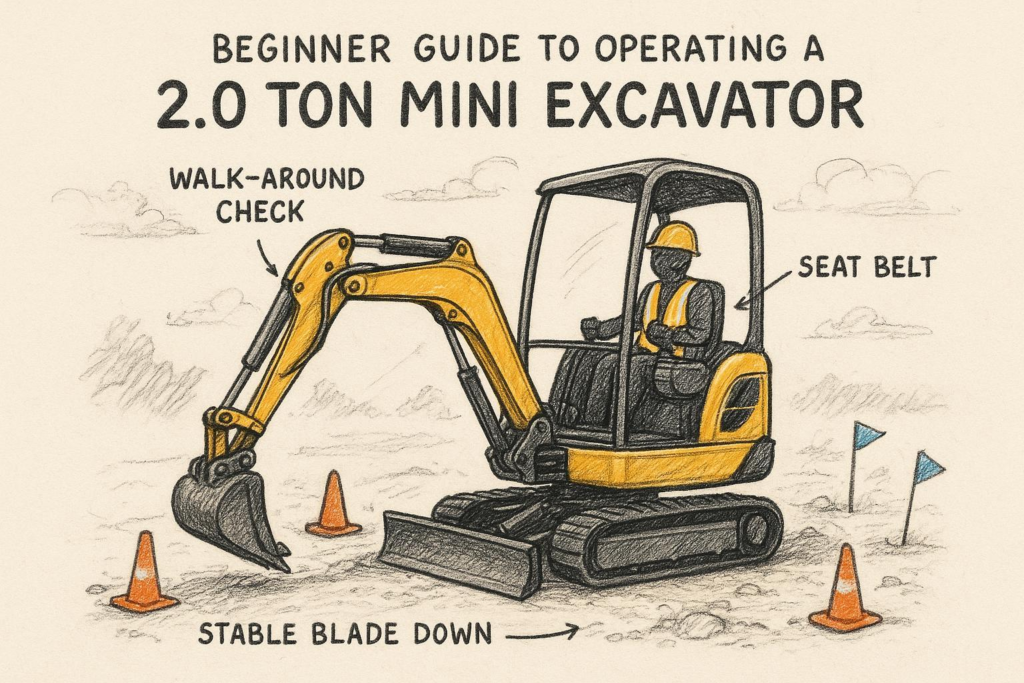
The zero-tail-swing profile means you can pivot freely without clipping walls, fences, or parked vehicles. Use this to your advantage by planning dig cycles that maximize rotation without repositioning the tracks. Shorter, deliberate bucket strokes with controlled crowd pressure outperform aggressive digging in tight quarters — they reduce ground disturbance, protect utilities, and keep the machine centered over its dig zone.
Pro Tip: When working within 12 inches of a structure, reduce hydraulic flow to the travel circuit using the machine’s flow-control selector. This limits unintended machine creep during digging.
High-idle tasks like hydraulic breaking or sustained lifting consume significantly more fuel than standard digging cycles. One practical approach is to drop engine RPM to mid-throttle during pauses longer than 30 seconds rather than leaving the machine at full idle. This alone can reduce hourly fuel consumption noticeably over a full workday.
Mastering these operational habits protects the machine’s components over time — which connects directly to the next priority: building a maintenance schedule rigorous enough to protect both your warranty and your uptime.
Any thorough SM-25Eco review will confirm what experienced operators already know: the machine’s ROI is only as strong as the maintenance program behind it. The heavy equipment industry can suffer major financial and operational losses during downtime, according to AntMyERP, making proactive servicing not just good practice — it’s a business-critical discipline.
Consistent short-interval checks prevent small issues from compounding into costly failures. Follow this structured schedule:
| Interval | Task |
|---|---|
| Daily | Check engine oil level, coolant level, hydraulic fluid |
| Daily | Inspect bucket teeth and cutting edges for wear |
| Daily | Clear debris from the undercarriage and track tension |
| Weekly | Grease all pivot points and swing bearings |
| Weekly | Inspect hoses and fittings for chafing or leaks |
| Weekly | Check air filter restriction indicator |
In practice, daily checks take fewer than ten minutes and catch the vast majority of preventable failures before they escalate.
At 500-hour intervals, the Kubota D1105 engine requires more comprehensive attention: engine oil and filter replacement, fuel filter swap, coolant system inspection, and a full hydraulic filter change. The D1105 is a globally distributed engine, which works significantly in the operator’s favor. Authorized Kubota dealers across North America, Europe, and Australia stock compatible parts, reducing lead times and avoiding the supply chain uncertainty that plagues less common powerplants.
Unplanned downtime on a revenue-generating project can erase days of profit in a single afternoon. Many SM-25Eco distributors offer around-the-clock technical support lines specifically to address hydraulic diagnostics, error codes, and parts sourcing questions in real time. Confirm this support structure before finalizing any purchase agreement — it’s a meaningful differentiator between suppliers.
Verification Checkpoint: Is your maintenance log updated for warranty compliance?
Most manufacturer warranties require documented service records at specified intervals. A missing log entry can void coverage on a hydraulic pump or engine component repair. Use a digital maintenance tracker or even a simple dated spreadsheet — consistency matters far more than the format. Protecting this documentation is the final, essential step in maximizing the SM-25Eco’s long-term return on investment.