Telephone/WhatsApp:+86 156 2656 0610
Telephone/WhatsApp:+86 156 2656 0610
Email:info@seekmach.com

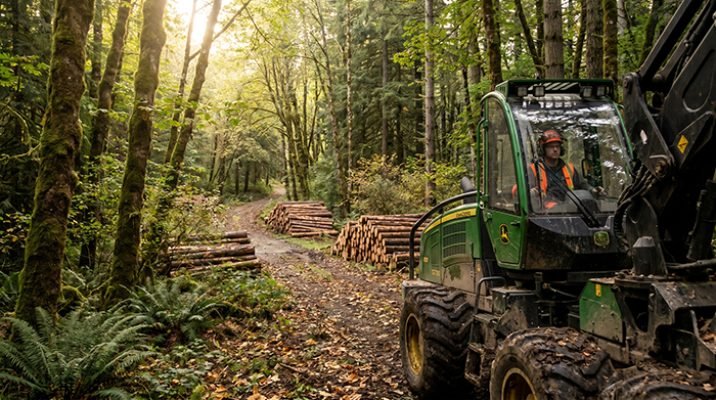
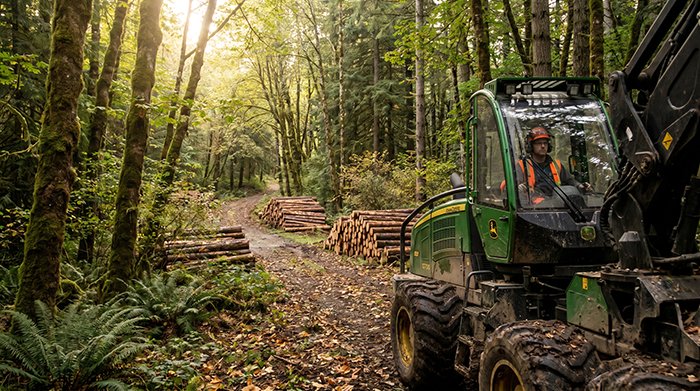
Sustainable timber harvesting is no longer a niche concern — it’s rapidly becoming the industry standard, and the equipment choices operators make are driving that transformation.
Table des matières
BasculerForestry practices have always carried a tension between extraction efficiency and long-term land health. For decades, heavy industrial skidders and large-wheeled feller bunchers dominated timber operations. They got wood out fast, but the collateral damage — compacted soils, torn root systems, and widened skid trails — quietly eroded the productivity of the land itself. Studies have consistently shown that severe soil compaction from oversized machinery can reduce forest regeneration rates for years after a harvest. That cost is increasingly impossible for landowners and certified timber operations to ignore.
Low-impact forestry, at its core, means extracting timber while preserving the soil structure, residual stand, and hydrological integrity of the site. It’s not about removing less timber — it’s about removing it smarter. Narrow skid trails, reduced ground pressure, and precise maneuvering are the operational pillars of this approach. As research into right-sized equipment has demonstrated in comparable high-value crop environments, lighter and more agile machines dramatically reduce compaction in sensitive zones.
This is exactly where forestry tractors in the 60–90 HP range have carved out a defining role. They sit in a practical sweet spot: powerful enough to handle demanding skidding and processing tasks, yet compact enough to navigate existing trail networks without widening them. As noted by the Forestry Forum professional logger community, “the versatility of the 60–90 HP tractor allows it to serve as a ‘prime mover’ for diverse forestry attachments, from hydraulic log splitters to heavy-duty skidding winches.” That adaptability makes a single machine viable across an entire operation.
Before exploring the specific advantages these tractors offer in terms of power, attachment compatibility, it’s worth examining where they prove their value most immediately — in the tight spaces and costly stand damage.
A well-matched forest tractor doesn’t just perform better — it preserves the stand, protects operator safety, and works within the forest’s existing infrastructure.
Oversized equipment is one of the most preventable sources of stand damage in commercial timber operations. As the Food and Agriculture Organization of the United Nations has documented, larger machines frequently lack the maneuverability to navigate between standing trees without causing bark skinning or root damage — both of which create infection pathways for disease and reduce the long-term timber value of residual trees. When a machine’s turning radius exceeds the spacing between stems, contact with neighboring trees becomes almost inevitable.
Narrow-frame design is where the 60–90 HP class earns its place in active forestry. Chassis widths in this range typically run between 72 and 84 inches, allowing operators to use existing narrow skid trails without widening them — a significant advantage when minimizing soil disturbance is a priority. Avoiding new trail construction reduces both environmental impact and site preparation costs. As covered in the previous section, this aligns directly with the broader industry shift toward low-disturbance harvesting methods. For operators weighing how machine size affects land degradation, the difference between a compact utility tractor and an oversized alternative isn’t marginal — it’s measurable in soil structure and stand health.
Garde au sol plays an equally practical role. In active forest environments, the ground is rarely clean — slash piles, root buttresses, and embedded rocks are constant obstacles. Models in this HP range commonly offer 15–18 inches of ground clearance, reducing the risk of hang-ups, and drivetrain damage while keeping forward momentum through debris-heavy corridors. Operator safety is the often-overlooked dimension of maneuverability. In tight timber stands, a machine that handles predictably and stops cleanly is far less likely to create a dangerous situation. Responsive steering and a compact footprint give the operator genuine control — not just the appearance of it.
Understanding what this frame size can withstand in a dense stand naturally raises the next question: how much pulling and PTO power does this chassis deliver when it’s time to actually extract timber?
The 60–90 HP range hits a genuine sweet spot for forestry work — enough muscle to drive demanding PTO-powered implements, without the bulk that turns forest floors into compacted wastelands.
In this HP band, operators access real extraction capability while keeping the machine footprint manageable enough to qualify as low impact logging equipment.
“The transition from manual to mechanized extraction in small-scale forestry operations consistently delivers productivity gains that justify the equipment investment within a single season of use.” — University of Kentucky
Efficacité here isn’t just about speed. It’s about doing more with less — fewer passes, fewer crew members, and less disturbance per board-foot extracted. A tractor in this range threads the needle between underpowered compact units that struggle with heavy timber and oversized industrial machines that demand wide corridors and cause lasting soil disruption.
That balance of weight and traction, however, is only part of the story. The real long-term cost of forestry equipment choices shows up underfoot — in the soil structure that affects the regeneration of future timber.
Soil compaction is one of the most underestimated threats to long-term forest productivity — and the machinery you choose directly determines how much damage you leave behind.
Compacted soil is essentially dead soil for seedlings. When heavy equipment crushes the pore spaces between soil particles, water infiltration drops, oxygen levels fall, and root systems can’t penetrate to the depths they need. Repeated heavy equipment traffic creates hardpan layers that restrict root growth for years after harvest — sometimes decades. Seedling survival rates in severely compacted zones can drop dramatically, turning a sustainable harvest into a slow ecological setback.
This is precisely why the rise of small scale timber harvesting equipment in the 60–90 HP class matters beyond pure economics. According to the USDA Forest Service, low-ground-pressure tires and properly weighted chassis designs in this power class actively prevent the kind of soil degradation that undermines post-harvest regeneration. The physics are straightforward: distribute the machine’s weight over a larger contact area, and peak ground pressure falls sharply. A well-specced 90 HP utility tractor running wide-flotation tires can operate with ground pressure comparable to a loaded ATV — a fraction of what larger industrial equipment imposes.
The contrast with full-scale industrial skidders is stark. Many skidder models tip the scales at 10 tons or more, exerting ground pressures that compact soil to depths exceeding 18 inches. A comparably capable utility tractor in the 60–90 HP range typically weighs 5,000–7,500 lbs. That weight difference isn’t just a transport consideration — it’s the line between recoverable and unrecoverable forest floor.
Weighted chassis design adds another layer of value here. A low-slung, ballasted frame improves stability on uneven forest floors while keeping the machine’s footprint predictable, reducing the risk of rutting caused by sudden weight shifts. The goal is controlled, consistent contact with the ground — not the concentrated pressure spikes that destroy soil structure.
As compelling as the environmental case is, these tractors offer something else worth exploring: the ability to shift roles entirely once the timber work is done.
A 60–90 HP tractor built for forestry doesn’t stop earning its keep at the tree line — it transitions seamlessly into land clearing, mowing, and agricultural work that justifies the investment year-round.
The real economic argument for logging with farm tractors is that one machine can carry multiple job descriptions.
For owners managing mixed-use land, the shift from timber extraction to pasture maintenance or row-crop prep requires little more than swapping attachments. A tractor that spent the morning skidding logs can be running a rotary cutter or box blade by afternoon. This operational flexibility dramatically reduces the number of machines a property owner or contractor needs to own, insure, and maintain — compressing overhead in ways that matter on a working budget.
The multi-role case becomes even stronger for municipal and agricultural distributors. A single 60–90 HP platform can serve roadside vegetation management, right-of-way clearing, and light grading contracts alongside seasonal timber work. Rather than purchasing dedicated equipment for each application, operators can compare the full HP spectrum and recognize that this range covers the widest spread of productive tasks without stepping into larger, costlier iron.
OEM and ODM customization options strengthen the argument further. Buyers sourcing direct from manufacturers can specify forestry-grade cab guards, ROPS-integrated brush protection, and reinforced undercarriage skid plates — built to spec rather than bolted on as aftermarket compromises. Factory-direct procurement eliminates the distributor margin on those custom configurations, lowering the total cost of ownership measurably over a machine’s service life.
That lower acquisition cost, paired with broad attachment compatibility, sets the stage for a closer look at how PTO performance and hydraulic capacity determine what these tractors can actually drive in the field.
The 60–90 HP tractor’s true forestry value lives in its drivetrain — specifically, a high-torque PTO capable of powering demanding implements without cavitation or stall.
The PTO output in this horsepower class is what separates productive forestry operations from frustrating half-measures. As industry experts at the Forestry Forum emphasize, the value of this specific horsepower class lies in its PTO capability, which can drive high-torque forestry implements — including commercial-grade log splitters that would overwhelm a smaller compact tractor. In practice, a mid-range log splitter demands sustained PTO torque throughout each cycle, not just peak horsepower. Operators running smaller HP machines for comparison regularly hit the ceiling of what their equipment can sustain under load.
Three-point hitch integration extends that utility further. Forestry winches mounted to the rear three-point hitch allow a single operator to extract downed timber from slopes or tight terrain without additional equipment. The three-point geometry keeps the winch load centered over the rear axle, reducing instability during uphill pulls — a meaningful safety factor that cable-only setups don’t provide.
Hydraulic flow is the third pillar. Modern forestry grapples, brush cutters, and mulching heads require consistent hydraulic volume — typically 15–25 GPM — to operate at rated capacity. Tractors in the utility class range are increasingly designed with open-center or load-sensing hydraulics that prioritize flow to demanding implements without sacrificing steering response.
Longevity in the field demands intentional maintenance. High-dust, high-debris forestry environments accelerate filter saturation and radiator fouling faster than standard agricultural use. Operators should follow shortened service intervals — air filters checked every 8–10 operating hours, coolant passages inspected after any heavy debris work. Machines that receive this level of attention consistently outperform those maintained on standard schedules.
Taken together, these mechanical systems form the foundation of what makes this HP class genuinely capable in commercial forestry — and they’re also the primary reason the ROI case for these tractors is so compelling across multiple use scenarios.
The 60–90 HP tractor class delivers a measurable, multi-dimensional advantage for forestry operations — combining productivity gains, stand protection, soil stewardship, and long-term ROI in a single machine.
A 25% productivity boost over manual logging methods is one of the most compelling reasons operators are making the switch. That gain comes not just from raw horsepower, but from the consistent, repeatable efficiency of mechanized extraction — fewer fatigue-related slowdowns, faster cycle times on skidding routes, and more usable timber per day. For small-scale operators managing 50 to 200 acres, that efficiency gap translates directly into dollar returns.
Utility frame size is a standing timber’s best defense. According to the FAO, 60–90 HP tractors represent the optimal utility class for forestry precisely because their narrow frames and high ground clearance allow maneuvering between trees without the bark skinning and root zone damage common with wider, heavier equipment. That physical restraint isn’t a limitation — it’s a feature. Protecting residual stand quality is what separates sustainable extraction from strip-clearing.
Low ground pressure is a non-negotiable for future harvests. Compacted soil suppresses root regeneration, reduces water infiltration, and can sterilize a productive forest floor for years. Tractors in this weight class, especially those spec’d for multi-row or row-crop terrain, distribute load across a broader footprint relative to their power output — keeping the soil biology intact for the next rotation.
Factory-direct utility models consistently deliver the strongest ROI when operators need a machine that earns across forestry, land clearing, mowing, and ag work. Reviewing current utility tractor configurations and pricing reveals how purpose-built specs in this range avoid the compromises of undersized compacts or the overhead of full forestry machines.
Whether you’re comparing attachment compatibility, ground pressure ratings, or cost-per-acre metrics, the pattern is consistent: the 60–90 HP range hits the intersection of power, precision, and practicality. If you still have questions about specific use cases — from logging safety modifications to fuel efficiency under load — the next section addresses the most common ones directly.
Forestry tractor selection raises practical questions that directly affect safety, soil health, and return on investment — here are the answers that matter most.
Can a standard farm tractor be used for logging?
Technically, yes — but it comes with significant caveats. A stock farm tractor lacks the rollover protection, underside guarding, and forestry-rated tires that timber work demands. In practice, operators typically retrofit a purpose-built forestry cab, skid plate, and debris screens before taking a farm machine into any serious logging environment.
What are the essential safety modifications for forestry work?
The non-negotiables are a ROPS-certified cab, front and belly armor, and a rear winch or grapple mounting point. Falling object protective structures (FOPS) are equally critical in any canopy environment. Beyond hardware, proper ballasting is a foundational requirement — as the USDA Forest Service notes, properly ballasted machines provide the traction needed for log towing without destroying the soil structure beneath the wheels.
How does 4WD impact fuel efficiency in timber transport?
Engaging 4WD does increase fuel draw — typically 8–12% over 2WD on flat terrain — but the tradeoff is rarely a concern on uneven forest floor. What operators right-sizing their equipment consistently find is that 4WD reduces wheel spin, which actually shortens cycle times and can lower overall fuel consumption per load hauled when terrain is challenging.
Why is the 60–90 HP range preferred over 100+ HP for small-scale harvesting?
Larger machines exceed the weight threshold where soil compaction becomes a long-term stand management problem. The 60–90 HP class delivers sufficient torque for grapple loaders and PTO-driven chippers while keeping ground pressure low enough to protect root zones. Procurement managers evaluating specific configurations — including factory-direct sourcing and regional customization options — will find those decisions addressed in the next section.
Choosing the right 60–90 HP forestry tractor is ultimately a procurement decision — and the criteria you apply at the selection stage will shape operational outcomes for years.
CE certification should be your baseline, non-negotiable requirement. Equipment carrying CE mark has been independently verified against European safety and emissions directives, giving procurement managers a documented compliance foundation for cross-border operations, insurance purposes, and site access requirements. In international timber markets, uncertified machinery increasingly creates liability exposure that outweighs any upfront cost savings.
Beyond certification, the sourcing model matters. Factory-direct manufacturers eliminate distributor markup layers that can inflate purchase prices by 15 to 30% on comparable spec machines. Working directly with the manufacturer also accelerates lead times, simplifies warranty resolution, and opens the door to genuine OEM/ODM customization — something middlemen rarely facilitate. For forestry operations with region-specific terrain, canopy conditions, or regulatory requirements, the ability to configure cab protection, axle clearance, or hydraulic output at the factory level is a measurable competitive advantage. Understanding how machine size affects compaction risk is also worth revisiting before finalizing specs, since over-specifying on weight can undermine stand recovery goals.
Machines SeekMach brings 15+ years of manufacturing expertise and CE-certified production to the mid-tier industrial market — a combination that addresses both the compliance and customization demands forestry buyers consistently face.
For procurement managers and firm owners, the final recommendation is straightforward: evaluate manufacturers on certification status, direct-factory access, and documented OEM flexibility — then validate against your terrain and extraction volume requirements. The 60–90 HP class has set the new standard for low-impact forestry. The question now is which supplier helps you meet it.
SeekMach is a professional manufacturer and exporter dedicated to the R&D and production of excavators, loaders and tractors. We guarantee to provide you with the best quality service.