Telephone/WhatsApp:+86 156 2656 0610

Telephone/WhatsApp:+86 156 2656 0610
Email:seekmach@gmail.com

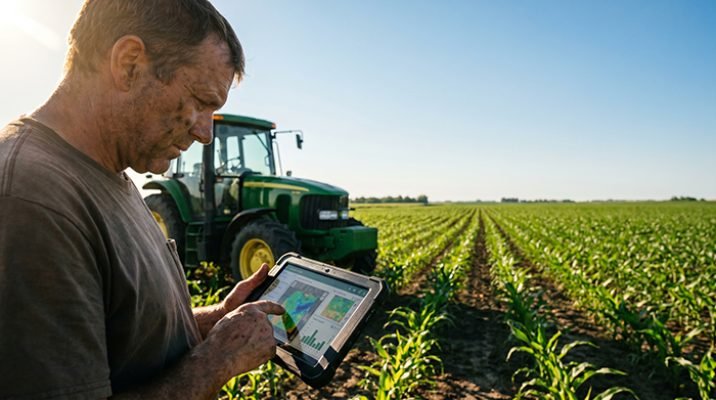
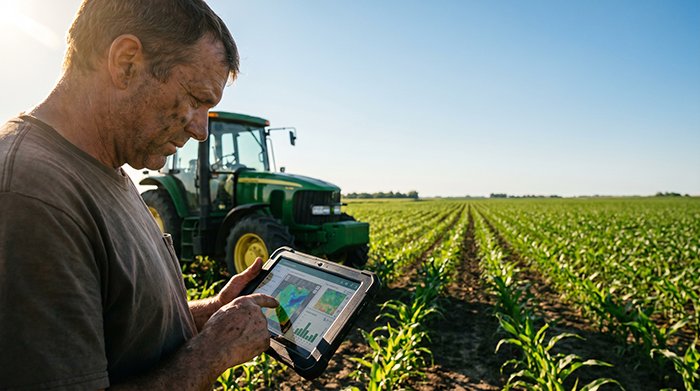
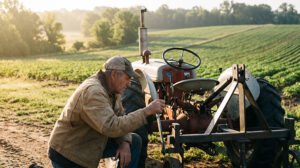
The most valuable component on a modern tractor isn’t the engine block or the hydraulic lift — it’s the data flowing through it. Farming has quietly crossed a threshold where computational intelligence, not raw horsepower, determines which operations thrive and which ones bleed margin.
Precision agriculture software adoption among large US farms jumped from 48% in 2022 to 72% in 2023 — a pace of change that mirrors the smartphone revolution, not the slow churn of mechanical innovation.
This shift matters most in the 35HP to 90HP tractor segment. These machines are the workhorses of small-to-mid-scale commercial farms, specialty crop operations, and mixed-use holdings — exactly the environments where tight margins demand smarter resource allocation, not simply more power. Understanding the true cost of running these machines is only half the equation today; the other half is understanding the software ecosystem layered on top. As one industry framework puts it, the moment a product becomes a platform, the rules of competition — and procurement — change entirely.
That’s the mindset reshaping how operators evaluate equipment. An agriculture mobile apps is no longer a convenience feature bundled in after the sale. Increasingly, buyers are leading with the software question: What does this machine connect to? What can it learn? What can it automate? The iron is the chassis. The apps are the intelligence.
One area where that intelligence pays immediate dividends is field coverage precision — and that’s exactly where the next section picks up.
The previous section established that data is now the most valuable asset on a modern tractor. But data only pays off when it drives tangible, measurable savings — and that’s exactly where GPS-guided tractor appss technology earns its keep. According to the USDA Economic Research Service, GPS-guided tractor appsslications can reduce overlapping and skips by up to 10%, translating directly into lower fuel bills and reduced chemical inputs per acre. For mid-sized operations running 35HP–90HP machines, that’s not a rounding error — it’s a real line item.
| Facteur | Traditional Field Operation | App-Guided Operation |
|---|---|---|
| Pass accuracy | Operator-dependent | Sub-inch GPS guidance |
| Input overlap | 8–12% waste typical | Reduced to near-zero |
| Fuel consumption | Higher (repeat passes) | Optimized routing cuts waste |
| Chemical application | Risk of over- or under-spray | Variable-rate, zone-specific |
| Operator fatigue | High on long runs | Significantly reduced |
Precision guidance isn’t just about straight lines — it’s about eliminating every wasted dollar between the cab and the crop.
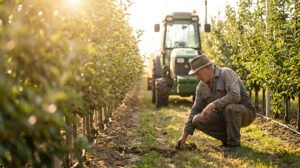
In orchard settings, precision is non-negotiable. PennState Extension notes that mid-size tractors in the 35HP–90HP range are the preferred choice for orchard management, delivering high torque without the weight and width that damages high-value trees and root zones. A tractor apps using GPS boundary mapping and track-following guidance ensures operators — or increasingly, automated systems — stay within tight row tolerances run after run. The cost of a single off-track pass in a mature apple or pecan orchard can easily exceed the annual subscription cost of the guidance software itself.
If you’re still weighing which horsepower range fits your orchard layout, this guide to compact tractor sizing breaks down the practical tradeoffs worth considering before you commit.
Intercropping — growing two or more crops simultaneously in defined row patterns — demands a level of pass consistency that human steering simply can’t reliably deliver at scale. A GPS-guided application layer allows operators to define and lock precise row spacing, protecting both cash crops from mechanical damage and ensuring inputs reach intended zones only. In practice, farms using guidance systems on intercropped plots report meaningful reductions in herbicide spend, since overlap zones are eliminated systematically rather than estimated visually.
This convergence of software precision and mid-range horsepower is laying the groundwork for something even more disruptive — autonomous retrofit kits that let a single operator manage multiple machines at once.
Precision agriculture apps solved the overlap problem, but a bigger opportunity is emerging — one that challenges the assumption that autonomous operation belongs exclusively to premium, large-scale equipment. The reality is that autonomous retrofit kits are now making driverless capability accessible across the entire 35HP-90HP segment, regardless of brand.
The economics of farm labor are forcing a rethink of how farm machinery management systems gets structured. According to the Association of Equipment Manufacturers (AEM), the shift toward autonomous tractor appslications is directly driven by a global labor shortage — allowing a single operator to oversee multiple units simultaneously. That’s not a future projection. It’s happening now.
Historically, autonomy was locked behind flagship pricing from major manufacturers. Retrofit solutions from companies like Sabanto are dismantling that barrier by bolting autonomous guidance systems onto factory-direct machines that already populate most mid-size operations.
What makes the retrofit model genuinely compelling is its scalability. A farm running multiple tractor configurations can introduce autonomy incrementally — one unit at a time — without overhauling the entire fleet.
Autonomy handles the when et where of field operations. The next logical question is: what happens when the machine itself starts telling you it’s about to fail?
Autonomous kits and precision agriculture apps have transformed how tractors work in the field. The next frontier is what happens between work cycles — specifically, keeping machines running when operators need them most.
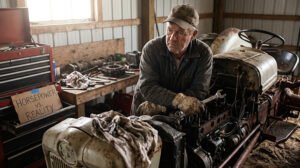
Unplanned downtime can cost small and mid-size farming operations over $50,000 per season in lost productivity and emergency repair premiums. IoT-infused tractors in the 35HP–90HP range are changing that math by pushing real-time telemetry directly to a mobile dashboard, so problems surface before they become breakdowns.
“Predictive maintenance is no longer a luxury feature — it’s the difference between harvesting on schedule and watching a crop window close while you wait for a technician.” — Agricultural Technology Review, via ADS/ScienceDirect findings on IoT-enabled machinery
One practical approach gaining traction is the Digital Twin model. Software creates a virtual replica of your tractor, simulating load conditions, hydraulic pressure, and engine cycles against actual sensor readings. When the simulation flags abnormal wear patterns — say, a PTO shaft approaching its stress threshold — the maintenance app alerts the operator days before a failure occurs.
“Simulating tractor behavior under real-world load conditions lets operators make data-driven decisions about service intervals rather than guessing based on a calendar.”
This is where factory-direct sourcing pays a quiet but significant dividend. Machines built to CE/ISO certification standards carry consistent parts specifications, which makes app-based parts tracking genuinely reliable. The app knows exactly which filter, belt, or seal belongs to your unit — no ambiguity, no substitution guesswork.
“Standardized certification creates a clean data layer that parts-tracking software can actually use.”
Operators exploring factory-spec industrial machinery alongside a connected maintenance app are already discovering that the hardware-software relationship runs deeper than most buyers expect — a theme the next section explores directly through smart fleet integration.
IoT-driven maintenance alerts and predictive diagnostics have changed how operators think about individual machines. Now imagine scaling that intelligence across an entire mixed fleet — tractors, excavators, and wheel loaders — managed from a single dashboard.
Fleet-level synchronization is where the app-first ecosystem pays its biggest dividend. A unified dashboard can surface your tractor maintenance app alerts alongside loader utilization rates and excavator fuel consumption — all in real time. According to market analysts, tractor demand recovery is accelerating precisely because integrated digital platforms are lowering the total cost of ownership across mixed fleets, not just individual units.
However, this integration only works cleanly when hardware is built for it. OEM/ODM customization — where manufacturers design machines with open communication protocols from the ground up — is what separates seamless connectivity from frustrating workarounds. Operators can explore how certified hardware performs in practice before committing to a platform. Choosing the right physical foundation is, ultimately, what makes every layer of software above it actually work — a point worth examining closely when selecting your next machine.
Smart fleet dashboards and predictive maintenance tools only deliver their full value when the underlying hardware is built to support them. Choosing the wrong tractor — one that lacks open data ports, certified electronics, or scalable connectivity — can quietly undermine every digital investment you make.
Here’s a practical checklist before you commit to any 35HP–90HP machine for a tech-forward operation:
The global compact tractor market is projected to grow at a 5% CAGR through 2030, driven by small-scale municipal and hobby farming — a segment where software ROI is often realized fastest. In practice, operators who purchase factory-direct machinery avoid markups that commonly run 15–25% above manufacturer pricing. That recovered capital is precisely what funds a precision app suite, RTK subscription, or IoT sensor network. The hardware decision is, in reality, a software budget decision.
CE and ISO certification also matters beyond regulatory compliance. Certified electronics mean standardized data outputs, which translates directly into plug-and-play compatibility with leading ag platforms. You can explore how this hardware-first thinking applies across machine categories beyond tractors. If you’re still weighing specific configurations or have questions about retrofitting older models for app readiness, the next section addresses the most common practical questions operators ask before making the leap.
Can I add these apps to an older tractor?
In many cases, yes — with the right aftermarket hardware. Retrofit kits, including GNSS receivers, telematics modules, and sensor packages, can bring basic precision capabilities to machines outside the latest model years. However, older tractors may lack the CAN bus architecture needed for deep integration, so functionality is typically more limited than on app-native platforms.
Do I need 5G for these apps to work in remote fields?
Absolutely not. Most farm management apps are designed to function on 4G LTE, Wi-Fi sync, or even offline data collection with periodic uploads. Where cellular connectivity fails entirely, SATCOM systems provide stable connections in remote areas, enabling reliable remote monitoring without depending on ground-based infrastructure. Connectivity requirements are far more flexible than most operators assume.
What is the ROI timeframe for a precision app suite?
ROI timelines vary depending on operation size and crop type, but a common pattern is that input cost savings — fuel, fertilizer, and labor — offset software subscription costs within one to two growing seasons. For 35HP–90HP operators running mixed tasks across multiple fields, the compounding value of data-driven decisions accelerates that payback. Exploring higher-output precision-ready models can also help you benchmark what full app-ecosystem integration looks like at scale before committing to a hardware upgrade.