Telephone/WhatsApp:+86 156 2656 0610

Telephone/WhatsApp:+86 156 2656 0610
Email:info@seekmach.com

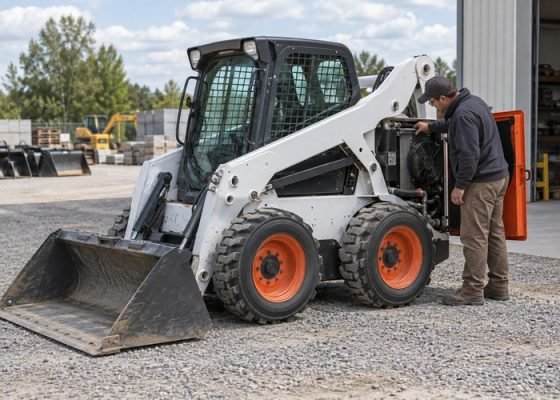
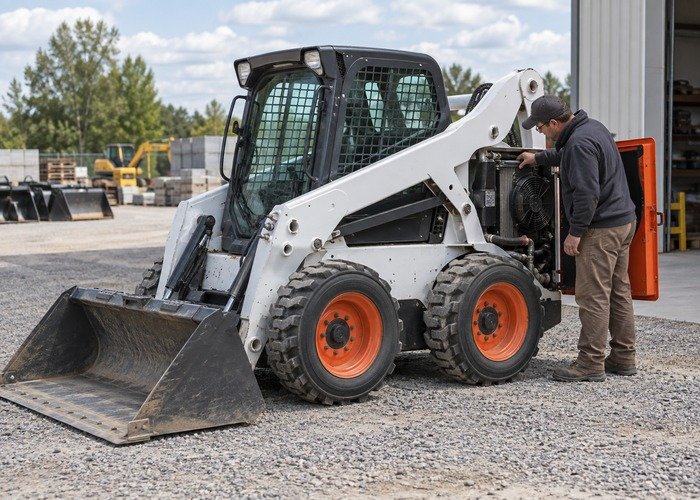
When a skid steer hydraulic oil overheating complaint appears, park on level ground, lower every attachment, set the brake, remove the key and record the exact symptom. The first goal is to distinguish a control or safety-lock condition from an oil, linkage, electrical, or internal hydraulic fault. Do not force a lever or loosen a pressurized fitting. Begin with related equipment guide and authoritative safety or service reference.
Confirm the operator position, restraint or pilot lock, neutral controls, warning lights, oil level, and any selected work mode. A correct part can appear faulty when an interlock is active or a control has not returned fully to neutral. Compare the model manual with related equipment guide before changing any adjustment.
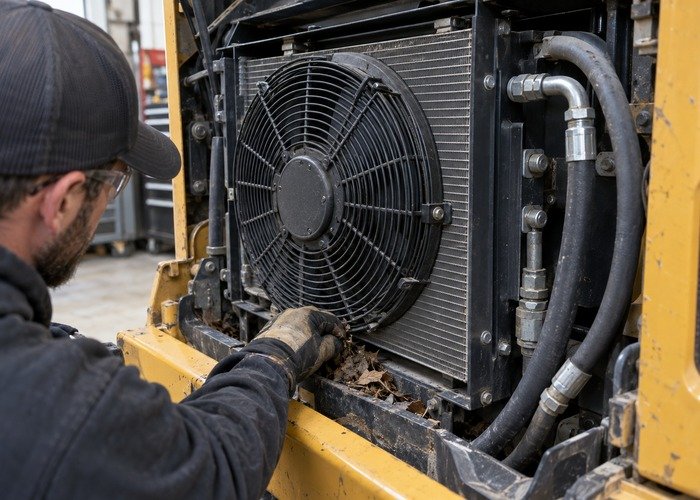
With stored energy removed by the approved model procedure, inspect hoses, connectors, linkages, fittings, filters, pins, belts and guards that belong to the affected function. Look for heat, chafing, loose hardware, contamination, corrosion and damaged insulation. A clean external surface does not rule out internal bypass, but an obvious defect should be recorded before a gauge test. authoritative safety or service reference explains why energy isolation matters.
If other functions work normally, the fault may be local to one control, valve section, cylinder, drive, or linkage. If several functions are weak, look first at fluid level, charge condition, restriction, suction leak, or a shared safety command. Use only the specified diagnostic ports and values. related equipment guide gives a related fault-isolation path.
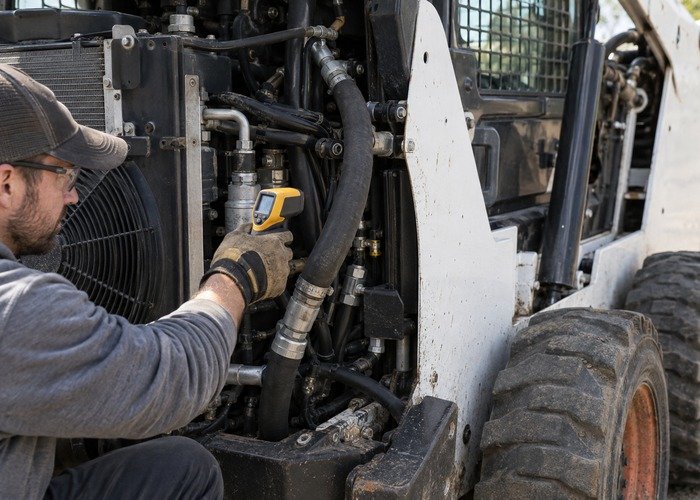
Pressure, voltage, continuity, temperature, and movement time are useful only when the test point, temperature, rpm and load are known. Record readings before replacing a part. Never hold a stalled system at relief longer than the model procedure permits, and never place a person under a raised load. Consult authoritative safety or service reference for manufacturer service context.
After any inspection or repair, restore guards, covers, connectors, hose restraints and fasteners. Test from the normal operator position in a clear area at low risk, then inspect again for abnormal sound, drift, leakage, heat or warning lamps. A repeatable low-load test is more useful than a quick uncontrolled cycle. related equipment guide can help plan related equipment checks.
Keep a short record of the serial number, hours, condition, readings, parts installed and final test. This lets the next technician reproduce the symptom and avoids repeated parts swapping. Follow the scheduled service interval and keep oil, filters, wiring and linkages clean and protected. authoritative safety or service reference is a useful example of model-specific operating and service information.
Remove the machine from service for a failed safety system, repeated fuse or warning condition, damaged pressure hose, uncontrolled movement, abnormal heat, metal debris, or a defect that returns after the approved checks. The correct next step is a qualified model-specific diagnosis, not bypassing a switch or altering a relief setting.
| Observation | Likely system | Safe next step |
|---|---|---|
| One function fails | Local control, linkage or work circuit | Use model diagnostic procedure |
| Several functions weak | Shared supply or safety command | Check level, condition and warnings |
| Fault changes when warm | Restriction, resistance or internal leakage | Repeat controlled test at temperature |
| Safety device abnormal | Serious operational hazard | Remove from service |
Use the operator manual as the controlling document for any value, connector, pressure port, service support, oil specification, adjustment, or torque. Generic troubleshooting narrows the conversation; it does not authorize an unsafe test or replace a correct repair procedure.
Use the operator manual as the controlling document for any value, connector, pressure port, service support, oil specification, adjustment, or torque. Generic troubleshooting narrows the conversation; it does not authorize an unsafe test or replace a correct repair procedure.
Use the operator manual as the controlling document for any value, connector, pressure port, service support, oil specification, adjustment, or torque. Generic troubleshooting narrows the conversation; it does not authorize an unsafe test or replace a correct repair procedure.
Use the operator manual as the controlling document for any value, connector, pressure port, service support, oil specification, adjustment, or torque. Generic troubleshooting narrows the conversation; it does not authorize an unsafe test or replace a correct repair procedure.
Use the operator manual as the controlling document for any value, connector, pressure port, service support, oil specification, adjustment, or torque. Generic troubleshooting narrows the conversation; it does not authorize an unsafe test or replace a correct repair procedure.
Use the operator manual as the controlling document for any value, connector, pressure port, service support, oil specification, adjustment, or torque. Generic troubleshooting narrows the conversation; it does not authorize an unsafe test or replace a correct repair procedure.
Use the operator manual as the controlling document for any value, connector, pressure port, service support, oil specification, adjustment, or torque. Generic troubleshooting narrows the conversation; it does not authorize an unsafe test or replace a correct repair procedure.
Use the operator manual as the controlling document for any value, connector, pressure port, service support, oil specification, adjustment, or torque. Generic troubleshooting narrows the conversation; it does not authorize an unsafe test or replace a correct repair procedure.
No. Park the equipment when a safety system, hydraulic function, control, or drive response is unreliable. Continued use can damage components or create an injury hazard. Review the applicable related equipment guide before putting the machine back into service.
Provide the model, serial number, hour reading, symptom sequence, temperature, warning lamps, recent maintenance and only the approved checks already completed. The steps shown in the directly relevant troubleshooting video are useful for understanding the symptom, but the machine manual remains the controlling instruction.
A dated final record reduces repeat downtime. Note the approved checks, observations, any replaced component, fluid condition, and verification result before the machine returns to normal duty. Keep the record tied to the exact machine, attachment and operating condition so a qualified technician can repeat only the manufacturer-approved checks.
A dated final record reduces repeat downtime. Note the approved checks, observations, any replaced component, fluid condition, and verification result before the machine returns to normal duty. Keep the record tied to the exact machine, attachment and operating condition so a qualified technician can repeat only the manufacturer-approved checks.
A dated final record reduces repeat downtime. Note the approved checks, observations, any replaced component, fluid condition, and verification result before the machine returns to normal duty. Keep the record tied to the exact machine, attachment and operating condition so a qualified technician can repeat only the manufacturer-approved checks.
A dated final record reduces repeat downtime. Note the approved checks, observations, any replaced component, fluid condition, and verification result before the machine returns to normal duty. Keep the record tied to the exact machine, attachment and operating condition so a qualified technician can repeat only the manufacturer-approved checks.
A dated final record reduces repeat downtime. Note the approved checks, observations, any replaced component, fluid condition, and verification result before the machine returns to normal duty. Keep the record tied to the exact machine, attachment and operating condition so a qualified technician can repeat only the manufacturer-approved checks.
A dated final record reduces repeat downtime. Note the approved checks, observations, any replaced component, fluid condition, and verification result before the machine returns to normal duty. Keep the record tied to the exact machine, attachment and operating condition so a qualified technician can repeat only the manufacturer-approved checks.
A dated final record reduces repeat downtime. Note the approved checks, observations, any replaced component, fluid condition, and verification result before the machine returns to normal duty. Keep the record tied to the exact machine, attachment and operating condition so a qualified technician can repeat only the manufacturer-approved checks.
A dated final record reduces repeat downtime. Note the approved checks, observations, any replaced component, fluid condition, and verification result before the machine returns to normal duty. Keep the record tied to the exact machine, attachment and operating condition so a qualified technician can repeat only the manufacturer-approved checks.
A dated final record reduces repeat downtime. Note the approved checks, observations, any replaced component, fluid condition, and verification result before the machine returns to normal duty. Keep the record tied to the exact machine, attachment and operating condition so a qualified technician can repeat only the manufacturer-approved checks.
A dated final record reduces repeat downtime. Note the approved checks, observations, any replaced component, fluid condition, and verification result before the machine returns to normal duty. Keep the record tied to the exact machine, attachment and operating condition so a qualified technician can repeat only the manufacturer-approved checks.
A dated final record reduces repeat downtime. Note the approved checks, observations, any replaced component, fluid condition, and verification result before the machine returns to normal duty. Keep the record tied to the exact machine, attachment and operating condition so a qualified technician can repeat only the manufacturer-approved checks.
A dated final record reduces repeat downtime. Note the approved checks, observations, any replaced component, fluid condition, and verification result before the machine returns to normal duty. Keep the record tied to the exact machine, attachment and operating condition so a qualified technician can repeat only the manufacturer-approved checks.
A dated final record reduces repeat downtime. Note the approved checks, observations, any replaced component, fluid condition, and verification result before the machine returns to normal duty. Keep the record tied to the exact machine, attachment and operating condition so a qualified technician can repeat only the manufacturer-approved checks.
A dated final record reduces repeat downtime. Note the approved checks, observations, any replaced component, fluid condition, and verification result before the machine returns to normal duty. Keep the record tied to the exact machine, attachment and operating condition so a qualified technician can repeat only the manufacturer-approved checks.
A dated final record reduces repeat downtime. Note the approved checks, observations, any replaced component, fluid condition, and verification result before the machine returns to normal duty. Keep the record tied to the exact machine, attachment and operating condition so a qualified technician can repeat only the manufacturer-approved checks.
A dated final record reduces repeat downtime. Note the approved checks, observations, any replaced component, fluid condition, and verification result before the machine returns to normal duty. Keep the record tied to the exact machine, attachment and operating condition so a qualified technician can repeat only the manufacturer-approved checks.
A dated final record reduces repeat downtime. Note the approved checks, observations, any replaced component, fluid condition, and verification result before the machine returns to normal duty. Keep the record tied to the exact machine, attachment and operating condition so a qualified technician can repeat only the manufacturer-approved checks.
A dated final record reduces repeat downtime. Note the approved checks, observations, any replaced component, fluid condition, and verification result before the machine returns to normal duty. Keep the record tied to the exact machine, attachment and operating condition so a qualified technician can repeat only the manufacturer-approved checks.
A dated final record reduces repeat downtime. Note the approved checks, observations, any replaced component, fluid condition, and verification result before the machine returns to normal duty. Keep the record tied to the exact machine, attachment and operating condition so a qualified technician can repeat only the manufacturer-approved checks.
A dated final record reduces repeat downtime. Note the approved checks, observations, any replaced component, fluid condition, and verification result before the machine returns to normal duty. Keep the record tied to the exact machine, attachment and operating condition so a qualified technician can repeat only the manufacturer-approved checks.
A dated final record reduces repeat downtime. Note the approved checks, observations, any replaced component, fluid condition, and verification result before the machine returns to normal duty. Keep the record tied to the exact machine, attachment and operating condition so a qualified technician can repeat only the manufacturer-approved checks.
A dated final record reduces repeat downtime. Note the approved checks, observations, any replaced component, fluid condition, and verification result before the machine returns to normal duty. Keep the record tied to the exact machine, attachment and operating condition so a qualified technician can repeat only the manufacturer-approved checks.
A dated final record reduces repeat downtime. Note the approved checks, observations, any replaced component, fluid condition, and verification result before the machine returns to normal duty. Keep the record tied to the exact machine, attachment and operating condition so a qualified technician can repeat only the manufacturer-approved checks.
A dated final record reduces repeat downtime. Note the approved checks, observations, any replaced component, fluid condition, and verification result before the machine returns to normal duty. Keep the record tied to the exact machine, attachment and operating condition so a qualified technician can repeat only the manufacturer-approved checks.
A dated final record reduces repeat downtime. Note the approved checks, observations, any replaced component, fluid condition, and verification result before the machine returns to normal duty. Keep the record tied to the exact machine, attachment and operating condition so a qualified technician can repeat only the manufacturer-approved checks.