Telephone/WhatsApp:+86 156 2656 0610

Telephone/WhatsApp:+86 156 2656 0610
Email:info@seekmach.com

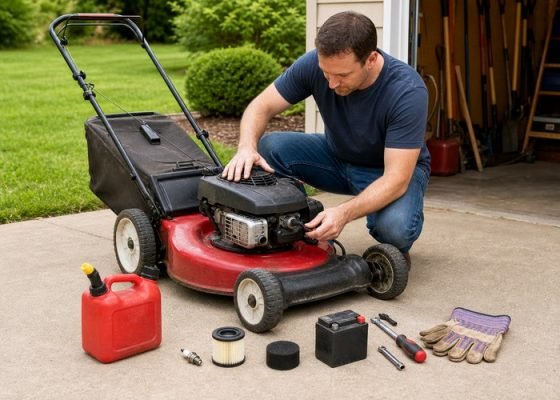
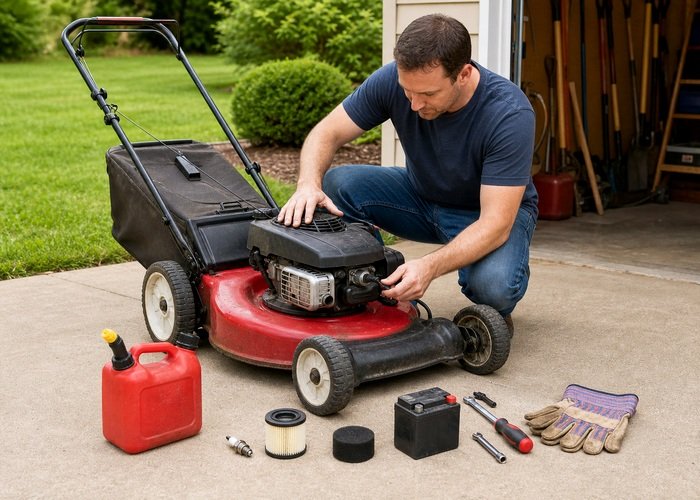
A lawn mower that will not start usually creates pressure at the worst time: grass is growing, the route is behind, or the property needs to look clean before weather changes. The good news is that many starting problems follow a simple pattern. Fuel, spark, air, battery condition, safety switches, blade drag, stale storage habits, and basic maintenance explain a large share of failures. The bad news is that guessing can waste time and cause avoidable damage.
This guide gives a practical order of checks for push mowers, self-propelled mowers, riding mowers, and zero-turn style machines. It is not a substitute for the owner’s manual or safe repair practice, but it can help you decide whether the problem is simple, service-related, or better handled by a technician. If you are comparing replacement options while diagnosing the current machine, start with the SeekMach product overview and keep your yard size, route, terrain, and service habits in mind.
Before touching the deck, blade area, belts, or engine parts, disable the machine according to the manual. Remove the spark plug wire on walk-behind equipment when working near the blade. Keep hands away from moving parts. Do not bypass safety switches. The U.S. Consumer Product Safety Commission has lawn mower safety material at CPSC lawn mower safety, and it is worth reading if multiple people use the machine.
Then check the simple items. Is there fuel in the tank? Is the fuel fresh? Is the choke set correctly? Is the battery charged on an electric-start model? Is the blade control engaged correctly? Is the parking brake set on a riding mower? Is the operator presence control working? Many no-start calls begin with a small overlooked step, especially after winter storage or a rushed morning.
| Symptom | Likely area | First check |
|---|---|---|
| Cranks but will not start | Fuel, spark, air | Fresh fuel, plug condition, air filter |
| Clicks but does not crank | Battery or starter circuit | Battery charge, terminals, brake and seat switches |
| Pull cord will not move | Blade obstruction or engine issue | Disable safely and inspect deck area |
| Starts then dies | Fuel delivery or air restriction | Fuel cap vent, carburetor, air filter |
| Runs rough after starting | Fuel quality or maintenance | Old fuel, dirty filter, plug, carburetor condition |
Stale fuel is one of the most common reasons a mower will not start after sitting. Fuel can degrade, absorb moisture, leave deposits, and create carburetor problems. If the mower sat through winter or a long wet season, do not assume last year’s fuel is good. Drain and replace fuel according to the manual and local disposal rules. Do not pour fuel on the ground or into drains.
A clogged fuel cap vent can also stop fuel flow. If the mower starts briefly and then dies, the cap, line, filter, carburetor, and tank debris all belong on the checklist. The U.S. Environmental Protection Agency provides general information about small engines and emissions at EPA small equipment engine regulations, which is useful background for why fuel and engine condition matter beyond convenience.
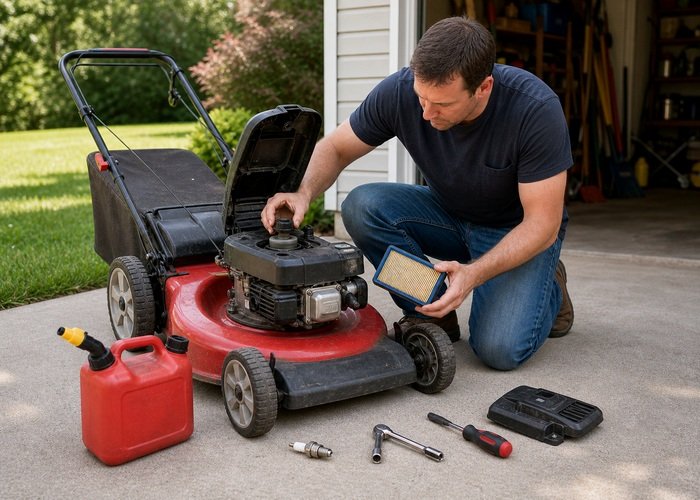
A small engine needs fuel, spark, air, and compression. If fuel is fresh and reaching the engine, check the spark plug. A fouled, cracked, loose, or incorrectly gapped plug can prevent starting or create rough running. Replace it if it is worn or suspect, using the correct type from the manual. Do not assume any plug that fits the threads is correct.
Air is just as important. A clogged air filter can make the engine run rich, smoke, or fail to start. A missing filter can let dust into the engine and shorten its life. Clean or replace the filter according to the manual. If the mower has been stored in a shed, also look for nesting material, blocked cooling fins, and debris around the engine cover. A clean engine runs cooler and is easier to inspect.
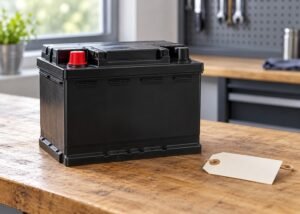
A mower that clicks but does not crank often points to the battery, terminals, starter circuit, or safety interlock system. Clean and tight terminals matter. A battery may show some voltage but still lack enough capacity under load. On riding mowers and zero-turn style machines, the brake switch, seat switch, PTO switch, neutral position, and key switch may all affect starting.
Do not bypass safety systems to save time. If a safety switch is faulty, repair it correctly. OSHA’s groundskeeping and landscaping safety topic page at OSHA landscaping hazards and solutions is a useful reminder that routine property maintenance still involves real hazards. If the machine is used commercially, downtime pressure should not push crews into unsafe shortcuts.
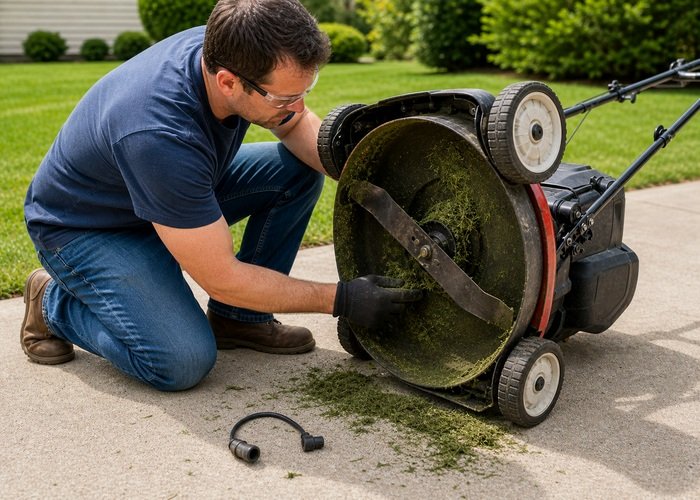
Sometimes the engine is blamed when the deck is the problem. Packed wet grass, wrapped string, a bent blade, a seized pulley, or a damaged belt can create enough resistance to make starting difficult. If the pull cord will not move or the starter struggles, stop. Disable the mower safely, then inspect the underside and belt path according to the manual. Never reach under a mower that is not secured and disabled.
Blade condition also affects cut quality after the mower starts. A dull or damaged blade tears grass, stresses the engine, and can create vibration. University extension lawn resources, such as University of Minnesota Extension mowing practices, are useful for understanding why mowing height, blade sharpness, and frequency affect lawn health. Troubleshooting should lead into better maintenance, not just a one-time restart.
Repair is not always the right choice. Replacement may make sense when the deck is badly rusted, the engine has internal damage, parts are hard to source, the machine no longer fits the property, or repeated downtime costs more than a newer machine. A small yard may not need the same mower as a large uneven property. A commercial route needs serviceability and uptime more than a homeowner mowing once a week.
When comparing options, think in terms of the property. Push mowers suit small flat lawns. Self-propelled machines reduce fatigue on slopes or larger yards. Riding mowers and zero-turn style machines help with larger routes and open areas. For broader matching, use the SeekMach product overview E SeekMach application solutions pages to compare yard equipment with other machines used around properties.
The same no-start problem can have a different business impact depending on the mowing route. A homeowner with a small flat yard may have time to replace fuel, clean the air filter, and test a spark plug over a weekend. A grounds crew or rural property manager may need a backup plan because one failed mower can delay several acres of work. If your mowing work has become larger, steeper, or more time-sensitive than the machine was originally bought for, review the SeekMach product overview again and compare machine type to the actual route.
For small yards, the best fix may be simple maintenance and better storage. For larger lawns, repeated no-start events may point to a mower that is being worked harder than intended. Long wet grass, dusty conditions, rough ground, and frequent starts can expose weak batteries, dirty filters, dull blades, and fuel issues faster. A machine that starts cleanly in the shop but struggles after transport or after a hot restart still deserves diagnosis.
Spring no-start problems often trace back to storage: old fuel, a weak battery, corrosion at terminals, dirty filters, or controls left in the wrong position. Mid-season problems often involve heat, dust, packed grass, dull blades, or worn belts. Fall problems may come from wet clippings, leaves packed under the deck, and rushed storage after the last cut. Writing down when the failure happens can shorten the repair path.
If the mower is part of a larger equipment mix, compare the mowing workload with the SeekMach application solutions page. Properties that also need grading, hauling, ditch cleanup, or material movement may need a mower plus another machine rather than expecting one piece of equipment to solve every outdoor job.
The best troubleshooting is prevention. Use fresh fuel, follow storage instructions, clean the deck, check the air filter, inspect the spark plug, keep the battery charged, sharpen blades, and store the mower away from heavy moisture. At season end, follow the manual for fuel storage, battery care, cleaning, lubrication, and safe parking. A mower that is put away clean is far easier to start later.
Keep a small maintenance note in the shed or shop. Record oil changes, blade sharpening, plug replacement, battery dates, belt changes, and fuel treatment. This simple habit helps homeowners and crews avoid repeating the same diagnosis every spring. If the mower is part of a business route, records also help schedule maintenance before downtime interrupts work.
The common checks are fuel quality, fuel flow, spark plug condition, air filter restriction, choke setting, and safety controls.
Yes. Stale fuel can create starting problems and carburetor deposits, especially after storage.
Possible causes include poor fuel flow, a clogged cap vent, dirty carburetor, restricted air filter, or control setting issues.
It is often an inexpensive check, but confirm the correct plug type and do not ignore fuel, air, battery, and safety switch issues.
Stop if you smell strong fuel, see damaged wiring, suspect internal engine damage, cannot disable the machine safely, or are unsure about the repair.
– CPSC lawn mower safety – University of Minnesota Extension mowing practices – OSHA landscaping hazards and solutions – EPA small equipment engine regulations – Lawn mower definition – Lawn mower troubleshooting video