Telephone/WhatsApp:+86 156 2656 0610

Telephone/WhatsApp:+86 156 2656 0610
Email:info@seekmach.com

Robot Mower Boundary Wire Troubleshooting: No Loop, Outside Area, and Interference gives buyers and operators a structured way to verify condition, fit, and safety before money or machinery moves.
Continue through the SeekMach equipment range, compare the tractor range, review compact excavators, see caricatori skid steer, and browse lawn mowers.
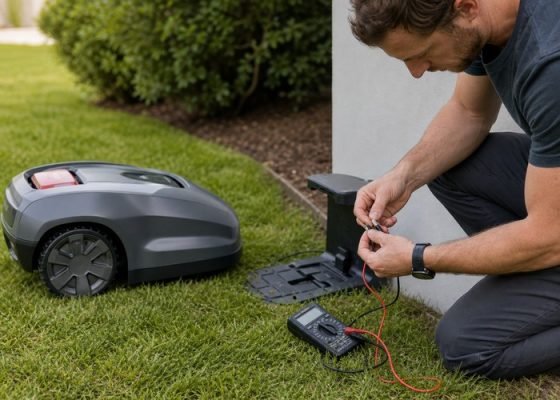
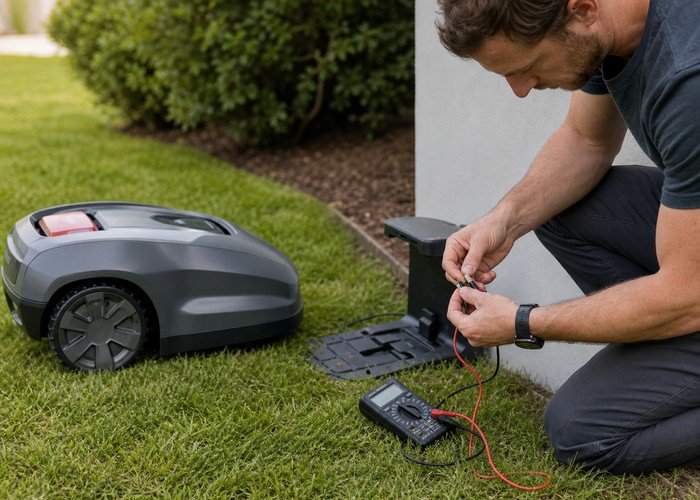
Start with records, ratings, and the exact machine: Treat a no-loop warning as a circuit diagnosis. Confirm that the charging station has power, read the indicator-light pattern in the model manual, and inspect both boundary-wire terminals before opening the lawn. A loose connector, corroded contact, or damaged lead-in can imitate a buried break.
Start with records, ratings, and the exact machine: Divide the loop into smaller sections instead of replacing the whole perimeter. A short temporary test loop can separate a mower or station problem from a field-wire problem. If the station recognizes the temporary loop, reconnect sections methodically and use an approved break detector or meter only as the manufacturer permits.
Start with records, ratings, and the exact machine: An outside-area fault is not always a complete break. Crossed connectors, reversed guide-wire connections, a narrow passage, an island laid in the wrong direction, or wire moved during edging can change the signal geometry. Compare the installation with the manual and recent garden work before changing settings.
Start with records, ratings, and the exact machine: Interference becomes more likely around bundled power cables, electric fences, buried services, metal edging, or a neighboring robotic mower installation. Do not cut or probe where utilities may be present. Move temporary electrical equipment away, test one variable at a time, and involve the relevant service provider when the cable route is uncertain.
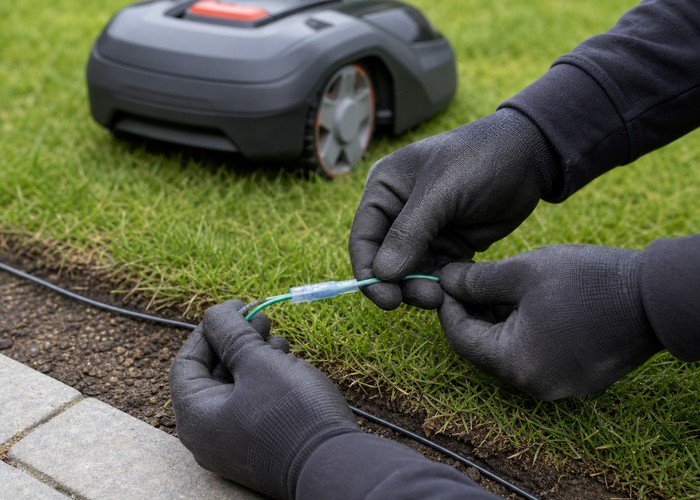
Start with records, ratings, and the exact machine: Repair a confirmed break with the connector specified for direct burial and the wire gauge approved for the system. Make a clean splice, seal it fully, strain-relieve the cable, and map the repair location. Twisted wire covered with household tape may work briefly but commonly admits moisture and creates an intermittent fault.
Safety-first walk-around before operation: Treat a no-loop warning as a circuit diagnosis. Confirm that the charging station has power, read the indicator-light pattern in the model manual, and inspect both boundary-wire terminals before opening the lawn. A loose connector, corroded contact, or damaged lead-in can imitate a buried break.
Safety-first walk-around before operation: Divide the loop into smaller sections instead of replacing the whole perimeter. A short temporary test loop can separate a mower or station problem from a field-wire problem. If the station recognizes the temporary loop, reconnect sections methodically and use an approved break detector or meter only as the manufacturer permits.
Safety-first walk-around before operation: An outside-area fault is not always a complete break. Crossed connectors, reversed guide-wire connections, a narrow passage, an island laid in the wrong direction, or wire moved during edging can change the signal geometry. Compare the installation with the manual and recent garden work before changing settings.
Safety-first walk-around before operation: Interference becomes more likely around bundled power cables, electric fences, buried services, metal edging, or a neighboring robotic mower installation. Do not cut or probe where utilities may be present. Move temporary electrical equipment away, test one variable at a time, and involve the relevant service provider when the cable route is uncertain.
Safety-first walk-around before operation: Repair a confirmed break with the connector specified for direct burial and the wire gauge approved for the system. Make a clean splice, seal it fully, strain-relieve the cable, and map the repair location. Twisted wire covered with household tape may work briefly but commonly admits moisture and creates an intermittent fault.

Engine, fluids, cooling, and leak checks: Treat a no-loop warning as a circuit diagnosis. Confirm that the charging station has power, read the indicator-light pattern in the model manual, and inspect both boundary-wire terminals before opening the lawn. A loose connector, corroded contact, or damaged lead-in can imitate a buried break.
Engine, fluids, cooling, and leak checks: Divide the loop into smaller sections instead of replacing the whole perimeter. A short temporary test loop can separate a mower or station problem from a field-wire problem. If the station recognizes the temporary loop, reconnect sections methodically and use an approved break detector or meter only as the manufacturer permits.
Engine, fluids, cooling, and leak checks: An outside-area fault is not always a complete break. Crossed connectors, reversed guide-wire connections, a narrow passage, an island laid in the wrong direction, or wire moved during edging can change the signal geometry. Compare the installation with the manual and recent garden work before changing settings.
Engine, fluids, cooling, and leak checks: Interference becomes more likely around bundled power cables, electric fences, buried services, metal edging, or a neighboring robotic mower installation. Do not cut or probe where utilities may be present. Move temporary electrical equipment away, test one variable at a time, and involve the relevant service provider when the cable route is uncertain.
Engine, fluids, cooling, and leak checks: Repair a confirmed break with the connector specified for direct burial and the wire gauge approved for the system. Make a clean splice, seal it fully, strain-relieve the cable, and map the repair location. Twisted wire covered with household tape may work briefly but commonly admits moisture and creates an intermittent fault.
Hydraulics, structure, and working components: Treat a no-loop warning as a circuit diagnosis. Confirm that the charging station has power, read the indicator-light pattern in the model manual, and inspect both boundary-wire terminals before opening the lawn. A loose connector, corroded contact, or damaged lead-in can imitate a buried break.
Hydraulics, structure, and working components: Divide the loop into smaller sections instead of replacing the whole perimeter. A short temporary test loop can separate a mower or station problem from a field-wire problem. If the station recognizes the temporary loop, reconnect sections methodically and use an approved break detector or meter only as the manufacturer permits.
Hydraulics, structure, and working components: An outside-area fault is not always a complete break. Crossed connectors, reversed guide-wire connections, a narrow passage, an island laid in the wrong direction, or wire moved during edging can change the signal geometry. Compare the installation with the manual and recent garden work before changing settings.
Hydraulics, structure, and working components: Interference becomes more likely around bundled power cables, electric fences, buried services, metal edging, or a neighboring robotic mower installation. Do not cut or probe where utilities may be present. Move temporary electrical equipment away, test one variable at a time, and involve the relevant service provider when the cable route is uncertain.
Hydraulics, structure, and working components: Repair a confirmed break with the connector specified for direct burial and the wire gauge approved for the system. Make a clean splice, seal it fully, strain-relieve the cable, and map the repair location. Twisted wire covered with household tape may work briefly but commonly admits moisture and creates an intermittent fault.
Functional test under realistic load: Treat a no-loop warning as a circuit diagnosis. Confirm that the charging station has power, read the indicator-light pattern in the model manual, and inspect both boundary-wire terminals before opening the lawn. A loose connector, corroded contact, or damaged lead-in can imitate a buried break.
Functional test under realistic load: Divide the loop into smaller sections instead of replacing the whole perimeter. A short temporary test loop can separate a mower or station problem from a field-wire problem. If the station recognizes the temporary loop, reconnect sections methodically and use an approved break detector or meter only as the manufacturer permits.
Functional test under realistic load: An outside-area fault is not always a complete break. Crossed connectors, reversed guide-wire connections, a narrow passage, an island laid in the wrong direction, or wire moved during edging can change the signal geometry. Compare the installation with the manual and recent garden work before changing settings.
Functional test under realistic load: Interference becomes more likely around bundled power cables, electric fences, buried services, metal edging, or a neighboring robotic mower installation. Do not cut or probe where utilities may be present. Move temporary electrical equipment away, test one variable at a time, and involve the relevant service provider when the cable route is uncertain.
Functional test under realistic load: Repair a confirmed break with the connector specified for direct burial and the wire gauge approved for the system. Make a clean splice, seal it fully, strain-relieve the cable, and map the repair location. Twisted wire covered with household tape may work briefly but commonly admits moisture and creates an intermittent fault.
Decision table: pass, negotiate, or stop: Treat a no-loop warning as a circuit diagnosis. Confirm that the charging station has power, read the indicator-light pattern in the model manual, and inspect both boundary-wire terminals before opening the lawn. A loose connector, corroded contact, or damaged lead-in can imitate a buried break.
Decision table: pass, negotiate, or stop: Divide the loop into smaller sections instead of replacing the whole perimeter. A short temporary test loop can separate a mower or station problem from a field-wire problem. If the station recognizes the temporary loop, reconnect sections methodically and use an approved break detector or meter only as the manufacturer permits.
Decision table: pass, negotiate, or stop: An outside-area fault is not always a complete break. Crossed connectors, reversed guide-wire connections, a narrow passage, an island laid in the wrong direction, or wire moved during edging can change the signal geometry. Compare the installation with the manual and recent garden work before changing settings.
Decision table: pass, negotiate, or stop: Interference becomes more likely around bundled power cables, electric fences, buried services, metal edging, or a neighboring robotic mower installation. Do not cut or probe where utilities may be present. Move temporary electrical equipment away, test one variable at a time, and involve the relevant service provider when the cable route is uncertain.
Decision table: pass, negotiate, or stop: Repair a confirmed break with the connector specified for direct burial and the wire gauge approved for the system. Make a clean splice, seal it fully, strain-relieve the cable, and map the repair location. Twisted wire covered with household tape may work briefly but commonly admits moisture and creates an intermittent fault.
Questions to ask the seller or operator: Treat a no-loop warning as a circuit diagnosis. Confirm that the charging station has power, read the indicator-light pattern in the model manual, and inspect both boundary-wire terminals before opening the lawn. A loose connector, corroded contact, or damaged lead-in can imitate a buried break.
Questions to ask the seller or operator: Divide the loop into smaller sections instead of replacing the whole perimeter. A short temporary test loop can separate a mower or station problem from a field-wire problem. If the station recognizes the temporary loop, reconnect sections methodically and use an approved break detector or meter only as the manufacturer permits.
Questions to ask the seller or operator: An outside-area fault is not always a complete break. Crossed connectors, reversed guide-wire connections, a narrow passage, an island laid in the wrong direction, or wire moved during edging can change the signal geometry. Compare the installation with the manual and recent garden work before changing settings.
Questions to ask the seller or operator: Interference becomes more likely around bundled power cables, electric fences, buried services, metal edging, or a neighboring robotic mower installation. Do not cut or probe where utilities may be present. Move temporary electrical equipment away, test one variable at a time, and involve the relevant service provider when the cable route is uncertain.
Questions to ask the seller or operator: Repair a confirmed break with the connector specified for direct burial and the wire gauge approved for the system. Make a clean splice, seal it fully, strain-relieve the cable, and map the repair location. Twisted wire covered with household tape may work briefly but commonly admits moisture and creates an intermittent fault.
A repeatable field checklist: Treat a no-loop warning as a circuit diagnosis. Confirm that the charging station has power, read the indicator-light pattern in the model manual, and inspect both boundary-wire terminals before opening the lawn. A loose connector, corroded contact, or damaged lead-in can imitate a buried break.
A repeatable field checklist: Divide the loop into smaller sections instead of replacing the whole perimeter. A short temporary test loop can separate a mower or station problem from a field-wire problem. If the station recognizes the temporary loop, reconnect sections methodically and use an approved break detector or meter only as the manufacturer permits.
A repeatable field checklist: An outside-area fault is not always a complete break. Crossed connectors, reversed guide-wire connections, a narrow passage, an island laid in the wrong direction, or wire moved during edging can change the signal geometry. Compare the installation with the manual and recent garden work before changing settings.
A repeatable field checklist: Interference becomes more likely around bundled power cables, electric fences, buried services, metal edging, or a neighboring robotic mower installation. Do not cut or probe where utilities may be present. Move temporary electrical equipment away, test one variable at a time, and involve the relevant service provider when the cable route is uncertain.
A repeatable field checklist: Repair a confirmed break with the connector specified for direct burial and the wire gauge approved for the system. Make a clean splice, seal it fully, strain-relieve the cable, and map the repair location. Twisted wire covered with household tape may work briefly but commonly admits moisture and creates an intermittent fault.
Common mistakes that create expensive surprises: Treat a no-loop warning as a circuit diagnosis. Confirm that the charging station has power, read the indicator-light pattern in the model manual, and inspect both boundary-wire terminals before opening the lawn. A loose connector, corroded contact, or damaged lead-in can imitate a buried break.
Common mistakes that create expensive surprises: Divide the loop into smaller sections instead of replacing the whole perimeter. A short temporary test loop can separate a mower or station problem from a field-wire problem. If the station recognizes the temporary loop, reconnect sections methodically and use an approved break detector or meter only as the manufacturer permits.
Common mistakes that create expensive surprises: An outside-area fault is not always a complete break. Crossed connectors, reversed guide-wire connections, a narrow passage, an island laid in the wrong direction, or wire moved during edging can change the signal geometry. Compare the installation with the manual and recent garden work before changing settings.
Common mistakes that create expensive surprises: Interference becomes more likely around bundled power cables, electric fences, buried services, metal edging, or a neighboring robotic mower installation. Do not cut or probe where utilities may be present. Move temporary electrical equipment away, test one variable at a time, and involve the relevant service provider when the cable route is uncertain.
Common mistakes that create expensive surprises: Repair a confirmed break with the connector specified for direct burial and the wire gauge approved for the system. Make a clean splice, seal it fully, strain-relieve the cable, and map the repair location. Twisted wire covered with household tape may work briefly but commonly admits moisture and creates an intermittent fault.
Final verification before transport or purchase: Treat a no-loop warning as a circuit diagnosis. Confirm that the charging station has power, read the indicator-light pattern in the model manual, and inspect both boundary-wire terminals before opening the lawn. A loose connector, corroded contact, or damaged lead-in can imitate a buried break.
Final verification before transport or purchase: Divide the loop into smaller sections instead of replacing the whole perimeter. A short temporary test loop can separate a mower or station problem from a field-wire problem. If the station recognizes the temporary loop, reconnect sections methodically and use an approved break detector or meter only as the manufacturer permits.
Final verification before transport or purchase: An outside-area fault is not always a complete break. Crossed connectors, reversed guide-wire connections, a narrow passage, an island laid in the wrong direction, or wire moved during edging can change the signal geometry. Compare the installation with the manual and recent garden work before changing settings.
Final verification before transport or purchase: Interference becomes more likely around bundled power cables, electric fences, buried services, metal edging, or a neighboring robotic mower installation. Do not cut or probe where utilities may be present. Move temporary electrical equipment away, test one variable at a time, and involve the relevant service provider when the cable route is uncertain.
Final verification before transport or purchase: Repair a confirmed break with the connector specified for direct burial and the wire gauge approved for the system. Make a clean splice, seal it fully, strain-relieve the cable, and map the repair location. Twisted wire covered with household tape may work briefly but commonly admits moisture and creates an intermittent fault.
No. Use this workflow to organize the inspection, then apply the exact limits and procedures in the model manual.
Use a qualified technician when records are incomplete, safety structures are altered, fluids are contaminated, structural cracks appear, or the functional test is inconsistent.
Record serial number, hours, cold-start condition, leaks, wear, measured settings, attachments, faults, photographs, and the person who performed the check.