Telephone/WhatsApp:+86 156 2656 0610

Telephone/WhatsApp:+86 156 2656 0610
Email:info@seekmach.com

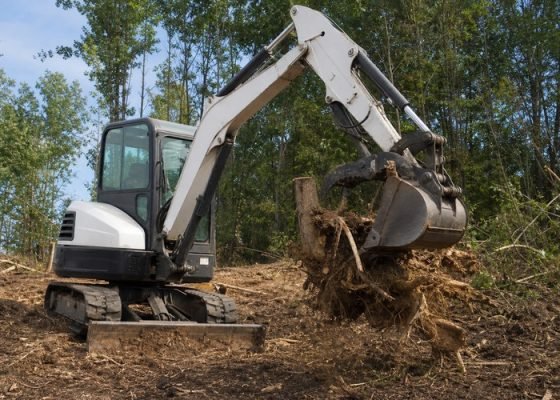
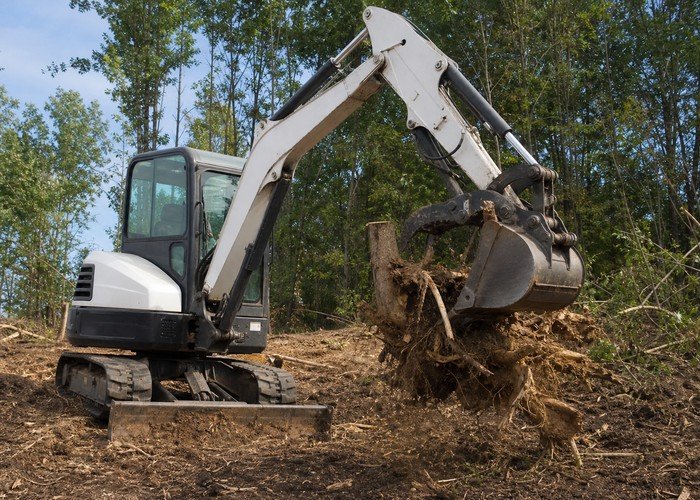
Mini Excavator Thumb, Grapple, or Ripper: Which Attachment Removes Stumps Best? gives buyers and operators a structured way to verify condition, fit, and safety before money or machinery moves.
Continue through the SeekMach equipment range, compare the tractor range, review pelles compactes, see chargeuses compactes, and browse lawn mowers.
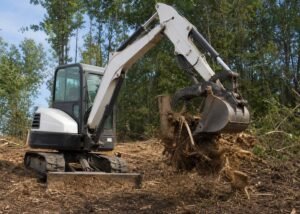
Start with records, ratings, and the exact machine: A bucket-and-thumb grips and rolls loosened stumps, a grapple sorts irregular roots and debris, and a ripper concentrates force to break individual roots. The best choice depends on stump diameter, root pattern, soil, access, excavator weight, coupler and auxiliary hydraulics.
Start with records, ratings, and the exact machine: Expose major roots before pulling. Dig around the stump in short controlled cuts, keep the tracks on undisturbed ground and avoid lifting a root ball that is still anchored. Never use travel momentum or violent side loading as a substitute for cutting roots.
Start with records, ratings, and the exact machine: A hydraulic thumb adds control against the bucket and is useful for lifting and loading, but its range must match the bucket curl path. Confirm pin geometry, cylinder protection, hydraulic pressure and transport position before ordering.
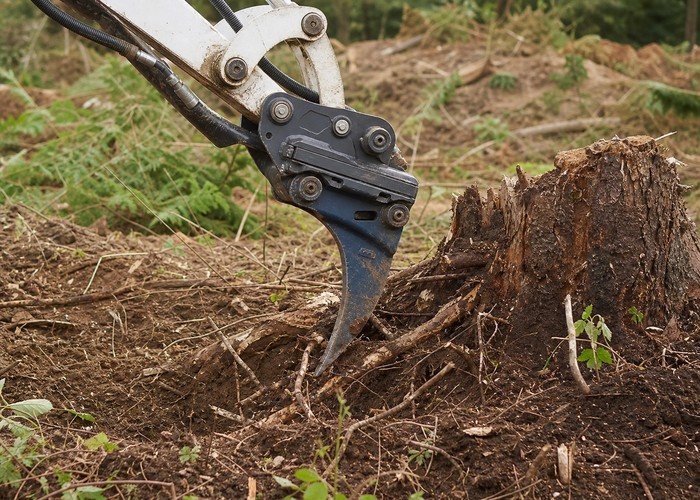
Start with records, ratings, and the exact machine: A ripper tooth penetrates hard soil and concentrates breakout force with less soil disturbance than a wide bucket. Work one root at a time and inspect the coupler, tooth, pins and boom for side-load damage after impact with buried rock.
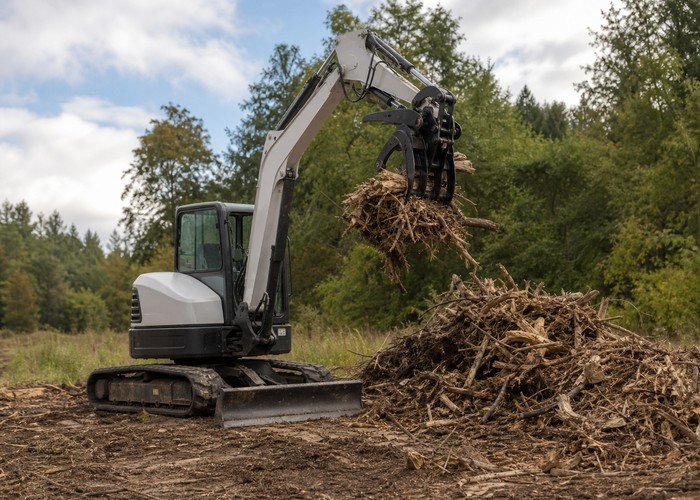
Start with records, ratings, and the exact machine: A rotating or fixed grapple speeds sorting after extraction but adds attachment weight and may need extra circuits or a case drain. Subtract attachment mass from usable lift and confirm hose routing through the full boom and coupler movement.
Safety-first walk-around before operation: A bucket-and-thumb grips and rolls loosened stumps, a grapple sorts irregular roots and debris, and a ripper concentrates force to break individual roots. The best choice depends on stump diameter, root pattern, soil, access, excavator weight, coupler and auxiliary hydraulics.
Safety-first walk-around before operation: Expose major roots before pulling. Dig around the stump in short controlled cuts, keep the tracks on undisturbed ground and avoid lifting a root ball that is still anchored. Never use travel momentum or violent side loading as a substitute for cutting roots.
Safety-first walk-around before operation: A hydraulic thumb adds control against the bucket and is useful for lifting and loading, but its range must match the bucket curl path. Confirm pin geometry, cylinder protection, hydraulic pressure and transport position before ordering.
Safety-first walk-around before operation: A ripper tooth penetrates hard soil and concentrates breakout force with less soil disturbance than a wide bucket. Work one root at a time and inspect the coupler, tooth, pins and boom for side-load damage after impact with buried rock.
Safety-first walk-around before operation: A rotating or fixed grapple speeds sorting after extraction but adds attachment weight and may need extra circuits or a case drain. Subtract attachment mass from usable lift and confirm hose routing through the full boom and coupler movement.
Engine, fluids, cooling, and leak checks: A bucket-and-thumb grips and rolls loosened stumps, a grapple sorts irregular roots and debris, and a ripper concentrates force to break individual roots. The best choice depends on stump diameter, root pattern, soil, access, excavator weight, coupler and auxiliary hydraulics.
Engine, fluids, cooling, and leak checks: Expose major roots before pulling. Dig around the stump in short controlled cuts, keep the tracks on undisturbed ground and avoid lifting a root ball that is still anchored. Never use travel momentum or violent side loading as a substitute for cutting roots.
Engine, fluids, cooling, and leak checks: A hydraulic thumb adds control against the bucket and is useful for lifting and loading, but its range must match the bucket curl path. Confirm pin geometry, cylinder protection, hydraulic pressure and transport position before ordering.
Engine, fluids, cooling, and leak checks: A ripper tooth penetrates hard soil and concentrates breakout force with less soil disturbance than a wide bucket. Work one root at a time and inspect the coupler, tooth, pins and boom for side-load damage after impact with buried rock.
Engine, fluids, cooling, and leak checks: A rotating or fixed grapple speeds sorting after extraction but adds attachment weight and may need extra circuits or a case drain. Subtract attachment mass from usable lift and confirm hose routing through the full boom and coupler movement.
Hydraulics, structure, and working components: A bucket-and-thumb grips and rolls loosened stumps, a grapple sorts irregular roots and debris, and a ripper concentrates force to break individual roots. The best choice depends on stump diameter, root pattern, soil, access, excavator weight, coupler and auxiliary hydraulics.
Hydraulics, structure, and working components: Expose major roots before pulling. Dig around the stump in short controlled cuts, keep the tracks on undisturbed ground and avoid lifting a root ball that is still anchored. Never use travel momentum or violent side loading as a substitute for cutting roots.
Hydraulics, structure, and working components: A hydraulic thumb adds control against the bucket and is useful for lifting and loading, but its range must match the bucket curl path. Confirm pin geometry, cylinder protection, hydraulic pressure and transport position before ordering.
Hydraulics, structure, and working components: A ripper tooth penetrates hard soil and concentrates breakout force with less soil disturbance than a wide bucket. Work one root at a time and inspect the coupler, tooth, pins and boom for side-load damage after impact with buried rock.
Hydraulics, structure, and working components: A rotating or fixed grapple speeds sorting after extraction but adds attachment weight and may need extra circuits or a case drain. Subtract attachment mass from usable lift and confirm hose routing through the full boom and coupler movement.
Functional test under realistic load: A bucket-and-thumb grips and rolls loosened stumps, a grapple sorts irregular roots and debris, and a ripper concentrates force to break individual roots. The best choice depends on stump diameter, root pattern, soil, access, excavator weight, coupler and auxiliary hydraulics.
Functional test under realistic load: Expose major roots before pulling. Dig around the stump in short controlled cuts, keep the tracks on undisturbed ground and avoid lifting a root ball that is still anchored. Never use travel momentum or violent side loading as a substitute for cutting roots.
Functional test under realistic load: A hydraulic thumb adds control against the bucket and is useful for lifting and loading, but its range must match the bucket curl path. Confirm pin geometry, cylinder protection, hydraulic pressure and transport position before ordering.
Functional test under realistic load: A ripper tooth penetrates hard soil and concentrates breakout force with less soil disturbance than a wide bucket. Work one root at a time and inspect the coupler, tooth, pins and boom for side-load damage after impact with buried rock.
Functional test under realistic load: A rotating or fixed grapple speeds sorting after extraction but adds attachment weight and may need extra circuits or a case drain. Subtract attachment mass from usable lift and confirm hose routing through the full boom and coupler movement.
Decision table: pass, negotiate, or stop: A bucket-and-thumb grips and rolls loosened stumps, a grapple sorts irregular roots and debris, and a ripper concentrates force to break individual roots. The best choice depends on stump diameter, root pattern, soil, access, excavator weight, coupler and auxiliary hydraulics.
Decision table: pass, negotiate, or stop: Expose major roots before pulling. Dig around the stump in short controlled cuts, keep the tracks on undisturbed ground and avoid lifting a root ball that is still anchored. Never use travel momentum or violent side loading as a substitute for cutting roots.
Decision table: pass, negotiate, or stop: A hydraulic thumb adds control against the bucket and is useful for lifting and loading, but its range must match the bucket curl path. Confirm pin geometry, cylinder protection, hydraulic pressure and transport position before ordering.
Decision table: pass, negotiate, or stop: A ripper tooth penetrates hard soil and concentrates breakout force with less soil disturbance than a wide bucket. Work one root at a time and inspect the coupler, tooth, pins and boom for side-load damage after impact with buried rock.
Decision table: pass, negotiate, or stop: A rotating or fixed grapple speeds sorting after extraction but adds attachment weight and may need extra circuits or a case drain. Subtract attachment mass from usable lift and confirm hose routing through the full boom and coupler movement.
Questions to ask the seller or operator: A bucket-and-thumb grips and rolls loosened stumps, a grapple sorts irregular roots and debris, and a ripper concentrates force to break individual roots. The best choice depends on stump diameter, root pattern, soil, access, excavator weight, coupler and auxiliary hydraulics.
Questions to ask the seller or operator: Expose major roots before pulling. Dig around the stump in short controlled cuts, keep the tracks on undisturbed ground and avoid lifting a root ball that is still anchored. Never use travel momentum or violent side loading as a substitute for cutting roots.
Questions to ask the seller or operator: A hydraulic thumb adds control against the bucket and is useful for lifting and loading, but its range must match the bucket curl path. Confirm pin geometry, cylinder protection, hydraulic pressure and transport position before ordering.
Questions to ask the seller or operator: A ripper tooth penetrates hard soil and concentrates breakout force with less soil disturbance than a wide bucket. Work one root at a time and inspect the coupler, tooth, pins and boom for side-load damage after impact with buried rock.
Questions to ask the seller or operator: A rotating or fixed grapple speeds sorting after extraction but adds attachment weight and may need extra circuits or a case drain. Subtract attachment mass from usable lift and confirm hose routing through the full boom and coupler movement.
A repeatable field checklist: A bucket-and-thumb grips and rolls loosened stumps, a grapple sorts irregular roots and debris, and a ripper concentrates force to break individual roots. The best choice depends on stump diameter, root pattern, soil, access, excavator weight, coupler and auxiliary hydraulics.
A repeatable field checklist: Expose major roots before pulling. Dig around the stump in short controlled cuts, keep the tracks on undisturbed ground and avoid lifting a root ball that is still anchored. Never use travel momentum or violent side loading as a substitute for cutting roots.
A repeatable field checklist: A hydraulic thumb adds control against the bucket and is useful for lifting and loading, but its range must match the bucket curl path. Confirm pin geometry, cylinder protection, hydraulic pressure and transport position before ordering.
A repeatable field checklist: A ripper tooth penetrates hard soil and concentrates breakout force with less soil disturbance than a wide bucket. Work one root at a time and inspect the coupler, tooth, pins and boom for side-load damage after impact with buried rock.
A repeatable field checklist: A rotating or fixed grapple speeds sorting after extraction but adds attachment weight and may need extra circuits or a case drain. Subtract attachment mass from usable lift and confirm hose routing through the full boom and coupler movement.
Common mistakes that create expensive surprises: A bucket-and-thumb grips and rolls loosened stumps, a grapple sorts irregular roots and debris, and a ripper concentrates force to break individual roots. The best choice depends on stump diameter, root pattern, soil, access, excavator weight, coupler and auxiliary hydraulics.
Common mistakes that create expensive surprises: Expose major roots before pulling. Dig around the stump in short controlled cuts, keep the tracks on undisturbed ground and avoid lifting a root ball that is still anchored. Never use travel momentum or violent side loading as a substitute for cutting roots.
Common mistakes that create expensive surprises: A hydraulic thumb adds control against the bucket and is useful for lifting and loading, but its range must match the bucket curl path. Confirm pin geometry, cylinder protection, hydraulic pressure and transport position before ordering.
Common mistakes that create expensive surprises: A ripper tooth penetrates hard soil and concentrates breakout force with less soil disturbance than a wide bucket. Work one root at a time and inspect the coupler, tooth, pins and boom for side-load damage after impact with buried rock.
Common mistakes that create expensive surprises: A rotating or fixed grapple speeds sorting after extraction but adds attachment weight and may need extra circuits or a case drain. Subtract attachment mass from usable lift and confirm hose routing through the full boom and coupler movement.
Final verification before transport or purchase: A bucket-and-thumb grips and rolls loosened stumps, a grapple sorts irregular roots and debris, and a ripper concentrates force to break individual roots. The best choice depends on stump diameter, root pattern, soil, access, excavator weight, coupler and auxiliary hydraulics.
Final verification before transport or purchase: Expose major roots before pulling. Dig around the stump in short controlled cuts, keep the tracks on undisturbed ground and avoid lifting a root ball that is still anchored. Never use travel momentum or violent side loading as a substitute for cutting roots.
Final verification before transport or purchase: A hydraulic thumb adds control against the bucket and is useful for lifting and loading, but its range must match the bucket curl path. Confirm pin geometry, cylinder protection, hydraulic pressure and transport position before ordering.
Final verification before transport or purchase: A ripper tooth penetrates hard soil and concentrates breakout force with less soil disturbance than a wide bucket. Work one root at a time and inspect the coupler, tooth, pins and boom for side-load damage after impact with buried rock.
Final verification before transport or purchase: A rotating or fixed grapple speeds sorting after extraction but adds attachment weight and may need extra circuits or a case drain. Subtract attachment mass from usable lift and confirm hose routing through the full boom and coupler movement.
No. Use this workflow to organize the inspection, then apply the exact limits and procedures in the model manual.
Use a qualified technician when records are incomplete, safety structures are altered, fluids are contaminated, structural cracks appear, or the functional test is inconsistent.
Record serial number, hours, cold-start condition, leaks, wear, measured settings, attachments, faults, photographs, and the person who performed the check.