Telephone/WhatsApp:+86 156 2656 0610
Telephone/WhatsApp:+86 156 2656 0610
Email:info@seekmach.com

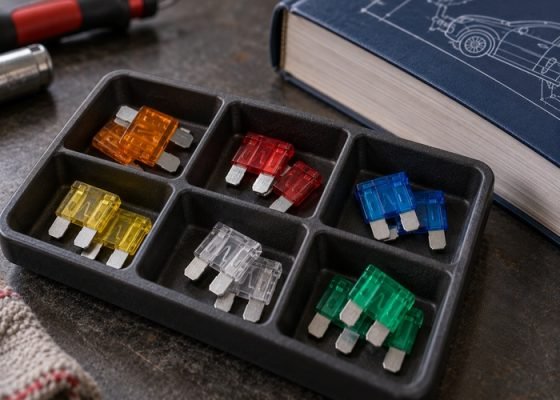
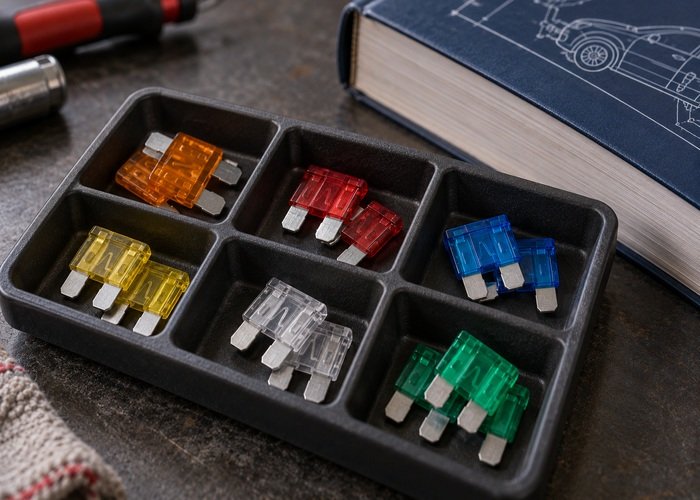
Before replacing a mini excavator fuse, identify the protected circuit and the complete approved fuse specification for the actual machine. A failed fuse is evidence that protection has operated or that the device needs assessment; replacing it does not automatically repair the underlying fault. Repeated failure, heat damage or uncertain wiring needs qualified electrical diagnosis.
This guide prepares a precise parts and service request. It does not give a universal fuse rating, wiring test, disconnect sequence or method for working on an energized circuit. Use the applicable machine instructions and appropriately competent personnel. Never fit a larger fuse, bridge the protection or bypass an interlock to keep the excavator operating.
Start with model and serial information and the exact function affected. Describe what the operator observed and when it occurred. A machine that would not start, a light that stopped working and a function that became intermittent can involve different circuits. Do not label all three as the same fuse problem.
Keep the observation separate from a diagnosis. Note recent work, added accessories or other relevant changes without declaring that they caused the failure. A qualified provider can use a clear history to decide what investigation is needed. Repeatedly replacing devices to reproduce a fault can lose that history and create additional risk.
Das mini excavator battery replacement guide addresses another electrical component. A correct battery selection does not identify the fuse protecting a particular circuit, and a no-start symptom does not prove that either component is the root cause.
Obtain the operator or service information that applies to the exact serial range and configuration. Identify the fuse location and circuit designation from that documentation, not only from a photograph of another machine’s box. A label may be missing, a cover may have been exchanged or the installation may have changed.
Das Kubota K008-3 manual, a 2003 issue, provides model-specific fuse and circuit information. It illustrates the value of an identified source. Its ratings, locations and procedures are not instructions for a SeekMach excavator or another engine and electrical arrangement.
If the document and the installed box do not agree, stop the identification decision and ask the manufacturer or authorized provider to resolve the mismatch. Do not move a fuse to a different position to see what happens. Physical access to a fuse panel is not permission to experiment with the circuit.
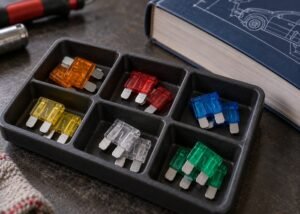
Ask for the complete specified replacement, including the applicable format, rating and other characteristics identified by the manufacturer. Color and physical size can assist identification, but they do not establish suitability on their own. An unmarked spare from a toolbox should remain unidentified until its application is confirmed.
Keep the proposed part number and supporting documentation with the request. A supplier’s statement that a fuse fits should be clarified: does it merely fit the holder, or is it the approved replacement for the identified circuit? Those are different answers, and a photograph of two similar housings cannot resolve the difference.
| Decision | Evidence needed | Shortcut to avoid |
|---|---|---|
| Which circuit is affected? | Actual machine and applicable circuit designation | Choosing a position from a different model’s photograph |
| Which device belongs there? | Complete approved fuse reference | Using color or physical fit as the whole specification |
| Why did protection operate? | Qualified assessment and symptom history | Calling replacement a root-cause repair |
| Is the machine ready to return? | Required acceptance checks and open-defect status | Assuming one successful start closes every concern |
Do not increase a rating to prevent repeat failure. The larger device may change the protection of the circuit without addressing the fault. Similarly, foil, wire or another improvised bridge removes the intended protection rather than repairing it. Refer repeated operation to the qualified provider.
A machine may use different protective devices for different parts of its electrical system. Do not assume a main protective device, a branch fuse and a device described as slow-blow are interchangeable. Identify the actual item and its role through the applicable instructions and approved parts reference.
Das 2017 Kubota U27-4 operator manual is another example of machine-specific electrical and fuse information. The reason to consult it is to recognize that the manufacturer defines the arrangement; it does not authorize transferring a location, amperage or replacement sequence to another excavator.
A conventional fuse that has operated is not simply a resettable switch. When a work order uses the phrase reset the fault, clarify whether it means an approved service action, a diagnostic reset or replacement of a specified protective device. Loose wording can conceal tasks that require different instructions and competence.

Identify who is permitted and competent to perform the work under the applicable instructions. The responsible provider should determine the required access, isolation and verification arrangements. This article does not substitute an ignition-key position or a generic battery-disconnection sequence for that procedure.
Do not work on an energized circuit to save time or bypass a safety function to gain access. If the task requires opening a panel or another assembly, confirm its safe access provisions separately. A correct fuse reference does not resolve mechanical access, stored-energy or unexpected-movement hazards.
UK HSE inspection, maintenance and repair guidance emphasizes manufacturer information and a clear response to defects. Apply that framework to the work order: identify the required instructions, responsible person and unresolved condition before service starts. Local requirements remain applicable.
Record when the device operated, which function was being requested and what warning or behavior was observed. Include the identity of any previously fitted replacement if known. Do not invent a missing rating or describe an unknown spare as original because it was found in the machine.
Report heat damage, discolored holders, suspect wiring or other visible concerns through the defect process without probing, pulling or energizing components for a photograph. The qualified provider should decide how to examine the circuit and whether any affected component must remain out of service.
A useful history can also record whether an accessory was recently installed, the machine was washed or another service occurred. These facts help frame questions; they do not prove the cause. Avoid turning a sequence of events into a diagnosis that directs the technician toward one component before assessment.
Added lights, cameras or other electrical equipment can create documentation questions when the original installation has changed. Ask for the approved arrangement and records of the work. A matching connector or a supplier’s universal label does not establish how the added equipment interacts with the machine circuit.
Das mini excavator work-light guide addresses electrical and mechanical fit for that accessory. Keep the accessory confirmation with the circuit information, but do not assume an approved lamp alone validates every change made during its installation.
Where an undocumented modification is found, have the responsible provider determine the next step. Do not redraw the circuit from memory or change the fuse specification to accommodate the modification. The useful outcome is an identified, approved arrangement with a traceable service record.

Record the actual replacement device, its approved application, the work date and the responsible person. Retain the instruction reference and the required check results. A parts receipt proves purchase, not correct installation or resolution of the symptom.
If the original complaint remains, keep that defect open with a named follow-up responsibility. A successful start or a light briefly illuminating should not be expanded into a statement that the whole electrical system has been repaired. The applicable acceptance process should define what has actually been checked.
Keep recurring-failure records with the machine rather than in the personal notes of one operator. That makes the next service visit more productive and prevents the same observation being treated as a new isolated event every time the machine changes hands.
Once the approved references are established, keep spares identifiable and linked to their intended circuit. Separate unknown items rather than mixing them into the approved stock. Review the entry if the manufacturer supersedes a part or the approved electrical arrangement changes.
Das spare-parts ordering guide helps structure that record. For a SeekMach inquiry, provide the machine identity, circuit information, observed symptom and safely readable device markings. Ask for application confirmation and service scope rather than a bag of visually similar replacements.
Color can assist identification but cannot establish the complete approved specification. Confirm the device and circuit through the actual machine documentation and supplier evidence.
Do not increase the specified rating or bridge protection. Repeated operation requires qualified investigation of the actual circuit rather than a change that defeats its intended protection.
Not necessarily. Keep device replacement and root-cause assessment separate, and retain any unresolved symptom until the appropriate acceptance checks and follow-up are complete.
Provide machine and circuit identity, the applicable instructions, the observed behavior and known replacement history. Do not perform an improvised live test to make the report more detailed.