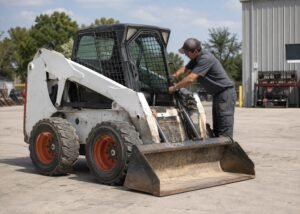
A skid steer’s “can it do the job?” comes down to a few measurable inputs: rated operating capacity, machine width, hydraulic capability, and attachment match.
Most costly buying mistakes aren’t about horsepower—they’re about stability, access constraints (gates/doorways), and support readiness (parts, manuals, training).
If you’re sourcing a China Skid Steer Loader for the U.S. market, you’ll win on total cost only if you verify documentation, certifications, and after-sales details before shipping.
What is a skid steer loader (and why mini models are trending)
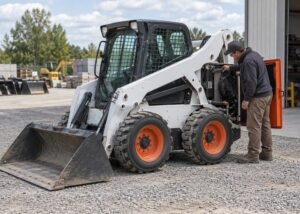
A skid steer loader is a compact loader with lift arms that can run many different attachments. It turns by driving the left and right wheels (or tracks) at different speeds, causing a “skid” turn—great for tight spaces. A clear definition and background are covered in the skid-steer loader entry on Wikipedia.
Attachment-driven productivity (one power unit, many tools)
That’s why mini skid steers—especially compact-width models—keep showing up on landscaping, municipal, and farm operations.
The 10-spec checklist that decides whether a skid steer fits your job
Use this as your decision framework before you compare models and prices.
1) Rated operating capacity (ROC): your real working limit
ROC is the load a skid steer can safely handle in normal operation. Exceeding it increases tip risk—especially with the load lifted. Michigan State University’s skid steer safety sheet calls out ROC as a key stability limit and warns against exceeding it with lifted loads.
⚠️ Warning: A machine can lift more than its ROC for a moment—your goal is safe, repeatable work, not a one-time stunt.
2) Tipping load: how stability is tested
Manufacturers publish tipping load as a standardized stability benchmark. In the real world, bumps, slopes, dynamic turns, and raised loads reduce stability margins. Keep the load low during travel—this advice shows up in multiple jobsite safety checklists, including Oregon DOT’s tailgate talk.
3) Overall width: the “gate test” that kills a purchase
Before you even debate ROC, verify access:
Narrow gates (common residential and landscape access)
Measure your narrowest pinch point and decide your max width first.
4) Operating weight: stability, transport, and ground impact
Weight affects:
Stability during lifts
Trailer and tow-vehicle requirements
Rutting/ground disturbance on lawns and soft soil
5) Dump height + reach: can you actually load the truck/bin?
Don’t buy “capacity” and then discover your dump height is short for your most common workflow (dumpsters, dump trailers, high-sided trucks).
6) Hydraulic system capability (pressure/flow): attachment reality check
Attachments aren’t interchangeable across machines. Performance depends on whether the loader’s hydraulic system matches the tool’s needs.
7) Lift geometry and visibility: productivity and safety
If your work is pallet handling or loading over sides, geometry and sightlines matter as much as raw numbers.
8) Tire/track choice: your surface decides this
Hard surfaces: prioritize low wear and predictable turning behavior.
Soft ground: prioritize traction and reduced ground pressure.
9) Quick-attach compatibility: “does it fit?” is not a small question
Confirm your attachment interface and verify what’s included as standard.
10) Serviceability and after-sales readiness
What you want in writing:
Parts list / recommended spares
Maintenance intervals
Operator training support
Response times for technical issues
If it’s not documented, it will become downtime.
(When researching, you’ll also see this class called a mini skid steer loader—the same idea here: compact width, high maneuverability, attachment versatility.)
Mini skid steer comparison: a simple table you can use today
Below is a mini skid steer snapshot using two representative models.
Practical operating reminders like “carry loads low,” “keep the heavy end uphill,” and “don’t exceed rated capacity” are summarized in Oregon DOT’s tailgate talk (Oregon DOT Safe Operation of a Skid-Steer Loader PDF).
A practical pre-op inspection checklist
Use this before the first start of the day—and anytime the operator changes.
Confirm seat belt condition and latch function.
Verify protective structures and safety devices are intact (don’t bypass interlocks).
Check tires/tracks for damage and proper condition.
Inspect hydraulic hoses and connections for leaks.
Verify attachment is properly secured and locks are engaged.
Test horn/alarms and any visibility aids.
Confirm lift arms and bucket can be safely lowered/locked when parked.
Clear the work area—keep bystanders away.
For a visual walkthrough, here’s a short YouTube video on inspection:
For deeper official guidance, see:
NIOSH (CDC): Preventing injuries and deaths from skid-steer loaders
OSHA: Safety and Health Information Bulletin on skid-steer hazards
Oregon DOT: Safe Operation of a Skid-Steer Loader (tailgate talk)
A buyer’s checklist for sourcing a China Skid Steer Loader (without surprises)
Price is only a win if the machine arrives with the documentation and support you need.
Documents to verify
Spec sheet that clearly states ROC, dimensions, and hydraulics
Operator manual (English) + maintenance schedule
Parts list + recommended spares
Any certifications required for your sales channel
Questions that reduce total cost of ownership
What are the standard wear parts and typical lead times?
What training materials are included for operators?
How is after-sales support handled across time zones?
What’s the packing method and shipping protection for hydraulic lines and controls?
Red flags
Specs change between quotation and invoice
No parts list or unclear after-sales workflow
Unclear warranty scope or exclusions
Next steps: turn your job into a “model match” in 10 minutes
If you want a fast shortlist, start with three numbers from your job:
Then compare options in the SeekMach skid steer loader lineup page on seekmach.com and use the criteria above to narrow to 1–2 models.
FAQ
1) What’s the difference between rated operating capacity and tipping load?
Rated operating capacity is the practical working limit for safe operation; tipping load is a stability benchmark used in standardized testing. Exceeding ROC increases tip risk, especially with lifted loads—see Michigan State University’s skid steer safety guidance PDF.
2) How do I choose the right skid steer size for residential landscaping?
Start with the “gate test” (overall width), then check ROC for your heaviest recurring load, then confirm dump height for your most common bins/trailers. Mini skid steers are often chosen because access constraints are the hard limiter.
3) What attachments should I buy first?
Buy attachments that match your top weekly tasks. A general bucket plus one productivity attachment (handling, sweeping, or light demolition) usually beats buying many tools you rarely use.
4) What are the most common skid steer safety risks?
The most serious risks include rollovers and caught-in/between incidents. NIOSH (CDC) provides prevention guidance for operators and nearby workers (see NIOSH’s skid-steer loader hazard guidance), and OSHA summarizes recommended safety practices (see OSHA’s skid-steer hazard bulletin).
5) What should I check before operating a skid steer each day?
Seat belt and safety devices, tires/tracks, hydraulic leaks, attachment locks, alarms/horn, and a clear work zone. Oregon DOT’s tailgate talk includes practical reminders like carrying loads low and maintaining stability (see Oregon DOT’s skid-steer safety tailgate talk PDF).
6) What should I verify when importing a China Skid Steer Loader to the U.S.?
Verify stable specs, English manuals, parts lists, after-sales support workflow, and shipping protection methods before you pay the final balance. The goal is to avoid downtime caused by missing documentation or delayed parts.
SeekMach is a professional manufacturer and exporter dedicated to the R&D and production of excavators, loaders and tractors. We guarantee to provide you with the best quality service.