Telephone/WhatsApp:+86 156 2656 0610
Telephone/WhatsApp:+86 156 2656 0610
Email:info@seekmach.com

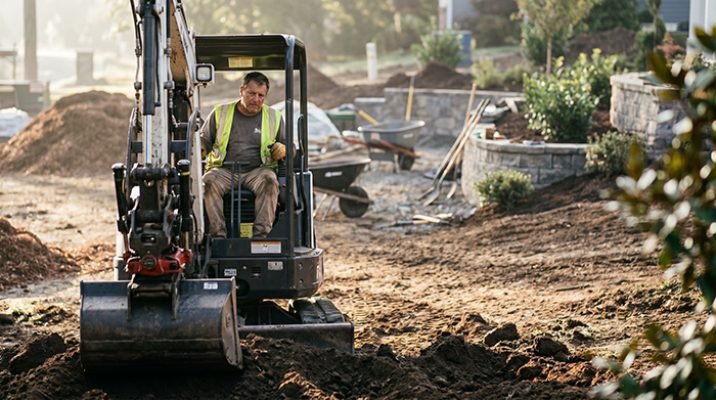
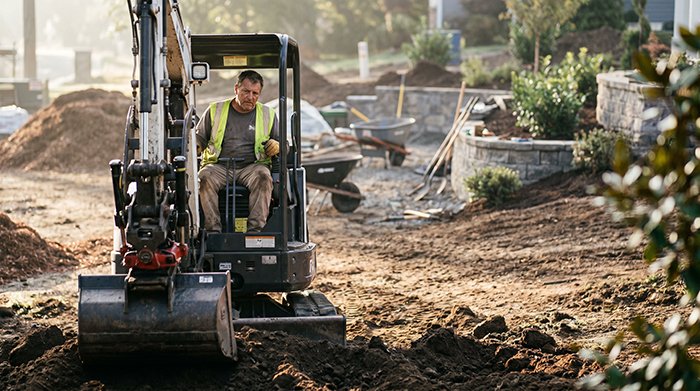
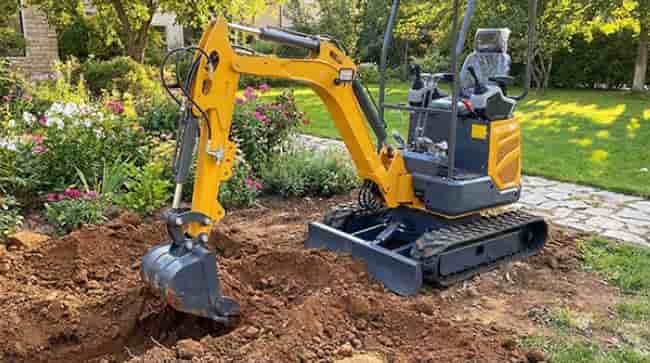
The mini excavator is no longer just a digging machine — in 2026, it’s the most versatile tool carrier on any landscaping job site.
Labor costs and crew shortages are fundamentally rewriting the equipment playbook. With skilled operators harder to find and hourly rates climbing, contractors can’t afford to keep multiple single-purpose machines on site. The solution gaining traction across the industry is deceptively simple: one well-specced excavator, paired with the right mini excavator attachments for landscaping, can replace two or three dedicated pieces of equipment.
The economic logic is hard to argue with:
According to Allied Market Research, the global excavator attachments market is projected to reach $10.1 billion by 2030, driven by a 5.3% CAGR tied largely to urban landscaping demand. That growth signal reflects what contractors are already discovering on the ground: specialization through attachments, not through additional machines, is the path forward.
This shift also connects to a broader 2026 philosophy around low-impact landscaping — minimizing site disturbance, reducing fuel burn, and working with surgical precision rather than brute force. As job sites get tighter and municipalities add noise and emissions restrictions, how a machine operates across multiple tasks matters as much as raw power.
That precision starts with the attachment — specifically, with the tools that give operators true positional control. Which brings us to the technology making the biggest waves in 2026: advanced grapples and tiltrotators.
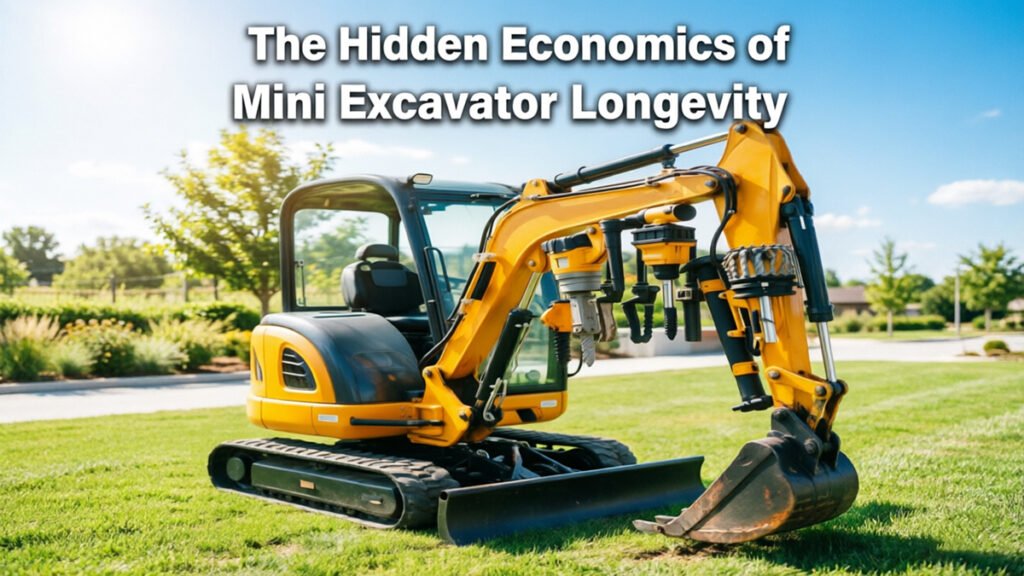
Advanced grapples and tiltrotators are reshaping 2026 landscaping equipment trends by giving operators full rotational control without ever moving the machine.
The core advantage is simple: when the tool rotates, the excavator doesn’t have to. According to the Association of Equipment Manufacturers, tiltrotators and advanced grapples can increase job site productivity by up to 40% by eliminating constant machine repositioning — a compounding benefit that also cuts fuel consumption on every shift.
Tiltrotators deliver continuous 360-degree rotation combined with a ±45-degree tilt axis. In practice, this means a single machine position can handle boulder placement, timber setting, and fine grading without the operator backing up, pivoting, or re-approaching the work zone. For tight urban landscapes — courtyard gardens, narrow residential corridors, rooftop terracing — that surgical precision isn’t just convenient, it’s often the only practical option. As explored in this breakdown of fixed-position machine efficiency, operators can grade, compact, and set components from one spot, fundamentally changing how crews plan their workflows.
Standard thumbs vs. hydraulic grapples — here’s where many contractors are still leaving efficiency on the table:
With precise placement now handled mechanically, the next efficiency frontier shifts to what’s growing on the ground — and that’s where high-flow vegetation management tools take over.
Effective land clearing in 2026 demands machine-mounted mulching heads and brush cutters — not manual crews — to meet the pace and precision modern landscaping contracts require.
The manual clearing model is disappearing. Where crews once spent days with chainsaws and chippers, a single mini excavator fitted with a mulching head can process brush, saplings, and ground cover in hours. As Landscape Management Magazine notes, “The future of landscaping lies in ‘low-impact’ machinery where mini excavators equipped with specialized mulchers and stump grinders replace heavy crews.”
Technical compatibility is where most operators stumble. Mulching heads and brush cutters are among the most hydraulically demanding compact excavator hydraulic attachments on the market, typically requiring 15–40 GPM of continuous flow to operate efficiently. Mismatching flow rates doesn’t just reduce cutting performance — it causes hydraulic overheating, accelerated wear, and costly downtime. Before selecting any clearing attachment, confirm your machine’s auxiliary hydraulic output against the attachment’s rated requirements.
Here’s a quick hydraulic compatibility checklist before mounting a brush cutter or mulcher:
For operations running high-flow clearing work across varied terrain, consistent hydraulic output is non-negotiable. Beyond speed, machine-mounted tools eliminate direct operator contact with debris — a meaningful safety upgrade on any site.
That efficiency mindset extends underground too, where the next challenge isn’t clearing vegetation but penetrating it — precisely drilling into the compacted urban soils that challenge every foundation and fence post installation.
Structural landscaping lives or dies on precision drilling — and in 2026, planetary drive augers have become the non-negotiable standard for urban soil conditions.
Urban soils are fundamentally hostile to standard drilling equipment. Decades of construction fill, compacted clay layers, and subsurface debris create resistance that direct-drive auger systems simply weren’t built to handle consistently. Where direct-drive setups lose torque under load and risk stalling, planetary drive systems distribute force through multiple gear stages — maintaining steady output even as soil density fluctuates mid-bore.
That torque consistency matters beyond just getting the hole drilled. When an auger stalls and recovers repeatedly, the excavator’s hydraulic system absorbs the shock. On large-scale planting jobs — think 50-plus tree installations or commercial fence lines — that thermal stress accumulates fast. Planetary drive systems sustain smooth torque delivery, preventing the hydraulic overheating cycles that add hours of downtime to high-volume projects.
Vertical accuracy is another critical factor. Fence posts, structural footings, and large specimen plantings all require consistent bore angles. Planetary drive units resist the rotational deflection that occurs when a bit contacts a buried rock or root mass, keeping holes plumb without requiring the operator to compensate manually.
According to Equipment World, augers with planetary drive systems are now the industry standard for 2026 landscaping, specifically because of their performance in compacted urban soils.
For contractors learning how to choose the right excavator attachment for clearing and structural work, auger selection follows the same logic as any high-performance tool: match the drive system’s torque rating to your worst-case soil condition, not your average one.
The investment in premium planetary-drive attachments raises a broader question — one that goes beyond individual tool selection into how those tools are sourced and priced in the first place.
Choosing where you buy matters as much as what you buy — and in 2026, factory-direct procurement is reshaping how serious landscaping contractors source high-performance attachments.
Eliminating middleman markups means every dollar saved can be reinvested directly into higher-quality tooling — from a heavy-duty excavator brush cutter attachment to precision planetary drive augers. According to Seekmach Industrial Insights, direct-from-factory procurement eliminates intermediary costs while delivering certified quality through integrated production facilities. In practice, that margin difference often funds an upgrade from standard to reinforced housing — a specification detail that dramatically extends service life under daily operational stress.
Certification and facility scale are two factors that rarely get enough attention during procurement decisions. Key advantages of factory-direct sourcing include:
Consistency matters as much as cost. When attachments come from a single integrated source, tolerances stay tight across batches — meaning the second unit performs identically to the first. That reliability compounds over a full fleet.
For contractors scaling operations, OEM/ODM partnerships also open the door to mulching solutions built for precision work, purpose-engineered rather than off-the-shelf adapted.
Of course, getting the right attachment at the right price is only half the equation — keeping it operational long-term is where the real ROI is won.
High-performance hydraulic attachments only deliver their full value when a disciplined maintenance routine keeps every component operating at peak condition.
Daily inspection is non-negotiable. Before each shift, operators should walk through a structured check of hydraulic hoses, fittings, and quick-couplings. Look for cracking, abrasion, or seepage around connection points — small leaks escalate quickly under high-torque operating conditions. A methodical pre-start protocol takes under ten minutes but can prevent thousands of dollars in unplanned downtime.
Lubrication drives longevity in planetary systems. High-torque planetary drive augers generate significant internal heat and mechanical stress. Grease fittings on the drive motor and auger shaft should be serviced at manufacturer-specified intervals — typically every 8–10 operating hours. Skipping lubrication cycles is one of the fastest ways to shorten gear life in a component class where replacement costs are substantial. According to Heavy Equipment Guide, proper hydraulic attachment maintenance can extend service life by up to 50% compared to neglected equipment.
⚠ WARNING — Hydraulic Contamination: Contaminated fluid is the leading cause of hydraulic system failure. Always cap exposed ports during attachment swaps, use clean transfer equipment, and replace filters on schedule. A single dirt ingestion event can score cylinder walls and ruin control valves.
Storage practices protect seals and metal surfaces. At season’s end — or during extended downtime — retract cylinders fully, cap all hydraulic ports, and store attachments off bare ground to prevent moisture contact. Apply a light rust inhibitor to bare steel. Understanding how hydraulic circuits handle attachment compatibility also informs smarter storage decisions.
Train operators to catch early warning signs. Sluggish response, unusual heat buildup, or erratic pressure readings all signal hydraulic stress. Whether sourcing factory-direct heavy machinery or aftermarket tools, pairing quality equipment with a trained crew ensures your investment performs well beyond its warranty period — a natural foundation for the fleet decisions covered next.
The machine behind the attachment is just as critical as the attachment itself — and 2026 buyers who ignore spec sheets will leave serious performance on the table.
Zero-tail swing is no longer a luxury; it’s a baseline requirement for landscaping work in tight residential and commercial environments. When you’re navigating between retaining walls, fence lines, or mature trees, a conventional tail swing becomes a genuine liability. Zero-tail swing mini excavators let operators rotate freely without clearing the rear — a practical advantage that directly affects how quickly attachment-based tasks get completed.
Auxiliary hydraulic lines with adjustable flow controls are the next non-negotiable. As Equipment World notes, modern mini excavators are increasingly designed with high-flow auxiliary hydraulics to support the next generation of mulching and cutting tools. Without flow-rate adjustability, operators run the risk of over-pressurizing attachments or underperforming on high-demand tools like tiltrotators and hydraulic mulchers.
Operator comfort and visibility deserve more weight in purchasing decisions than they typically receive. Precision grading and placement work — especially with tiltrotators — demands unobstructed sightlines and low-fatigue control layouts. Ergonomic cab design translates directly to attachment accuracy over long shifts.
The 35HP–90HP range — covering compact tractors and mid-size excavators — remains the sweet spot for 2026 landscaping fleets. These machines carry enough hydraulic capacity and counterweight to handle demanding attachments without the site-access limitations of full-size equipment. Pairing them with attachments sourced from a verified integrated production facility ensures both the machine interface and the tool are engineered to perform together.
Tracking fuel efficiency alongside attachment performance is also worth considering — platforms built to reduce long-term operating costs can amplify your fleet’s overall ROI. With the right machine specs confirmed, the next step is drawing everything together into a clear decision framework.
The landscaping businesses that thrive in 2026 will be defined by one factor above all others: how efficiently their equipment replaces manual labor and expands per-job capacity.
As industry trend analysis confirms, the integration of specialized attachments will be the deciding factor in landscaping contract profitability by 2026. That’s not a prediction — it’s an operational reality taking shape right now. Here’s what the evidence distills into clear guidance:
In practice, the contractors who treat attachments as core capital investments — not afterthoughts — are the ones expanding their contract portfolios year over year. If questions remain about specific compatibility, sourcing options, or which tools best suit your machine class, the answers you need are addressed directly ahead.
Smart equipment buyers don’t just shop — they ask the right questions before committing to attachments that must perform across every job site condition.
Q: How do I know if my mini excavator has enough hydraulic flow for a mulcher?
Check your machine’s spec sheet for auxiliary hydraulic flow (measured in GPM) and compare it against the mulcher manufacturer’s minimum requirement. Most drum mulchers demand 15–40 GPM, so confirm your auxiliary circuit can deliver that before purchasing.
Q: Are factory-direct attachments compatible with major excavator brands?
Yes — most modern mini excavators in the 1–10 ton range utilize universal quick-attach systems compatible with a wide range of globally manufactured tools. Verify the coupler pin spacing and attachment class rating to ensure a secure, reliable fit.
Q: What is the most versatile attachment for a new landscaping business?
A tiltrotator-compatible bucket or a hydraulic auger consistently offers the widest job-site applicability for newer operations. Both handle foundational tasks — grading, planting, drainage — without requiring high-flow hydraulics, keeping startup costs manageable while building client confidence.
Q: How does a planetary drive auger differ from a direct-drive one?
A planetary drive auger uses a multi-stage gear reduction system to generate significantly higher torque output at lower RPM, making it far more effective in dense clay or rocky soil. Standard augers rely on a simpler drive and tend to stall or wear faster under those conditions.
Q: What are the benefits of OEM/ODM services for equipment distributors?
OEM/ODM services allow distributors to source attachments built to their exact specs — branded, configured, and priced for their target market — without maintaining in-house manufacturing. This reduces overhead while giving distributors a competitive advantage through differentiated product offerings that off-the-shelf catalogs can’t replicate.