Telephone/WhatsApp:+86 156 2656 0610

Telephone/WhatsApp:+86 156 2656 0610
Email:info@seekmach.com

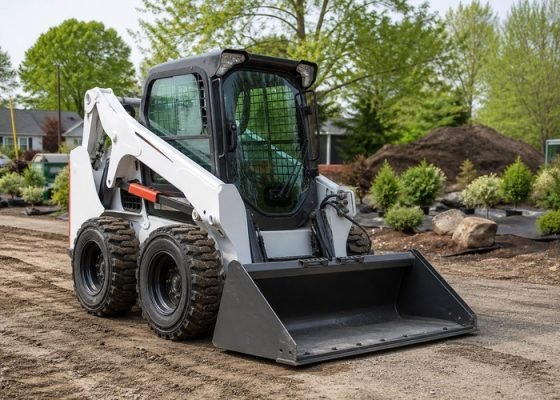
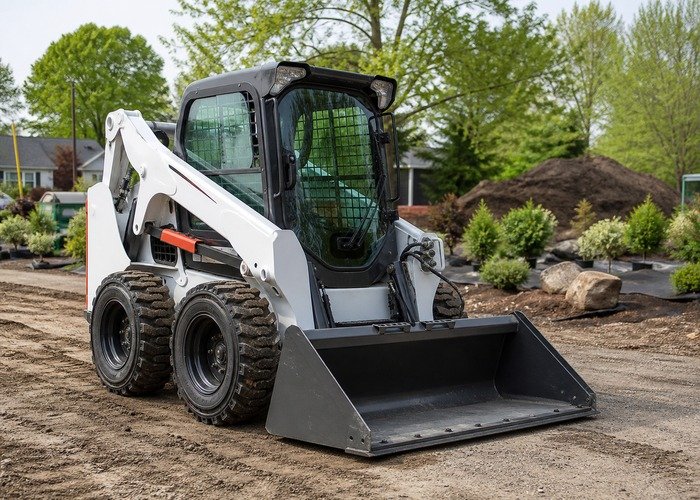
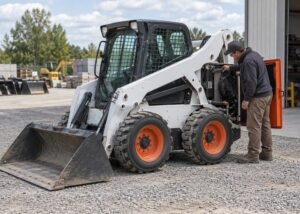
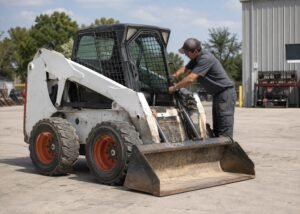
A skid steer should be selected around the heaviest real task and the attachments that task requires, not around engine horsepower alone. Start with rated operating capacity, lift path, auxiliary hydraulic flow and pressure, attachment mount, machine width, operating weight, service access, and the surface under the tires. A machine that fits those limits will usually work harder and more safely than a larger unit bought from a headline specification.
This guide turns those specifications into a job-by-job shortlist. It also explains what to confirm on the quotation and during a demonstration, because two loaders with similar horsepower can behave very differently when lifting a pallet, loading a truck, running a cold planer, or turning on soft finished ground.
The safest baseline is always the machine operator manual, attachment manual, rated load information, and the rules for the jobsite. OSHA guidance on skid-steer hazards is a useful reminder that bypassed interlocks, raised arms, and poor entry procedures can turn an ordinary task into a severe incident.
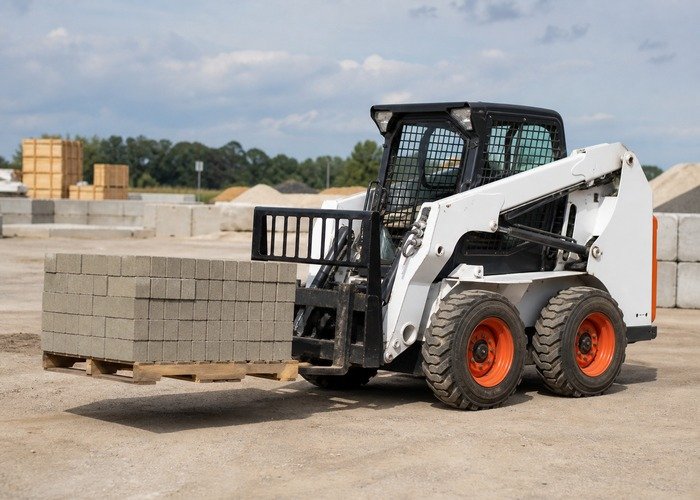
Before the shortlist is finalized, include access control, stable parking, safe entry, and interlock checks in the work description. These are operating requirements, not accessories, and they affect whether the cab, attachment, and daily route are suitable. Review the hazard controls summarized by OSHA skid-steer loader safety guidance.
List the materials, typical load weight, lift height, dump height, travel distance, doorway width, ground condition, transport limits, and attachments used each month. Separate daily work from an occasional task that could be rented out, because buying enough loader for a once-a-year lift often adds weight, cost, and ground disturbance every other day.
Turn vague phrases such as landscaping or construction into measurable cycles. Loading a high-sided truck needs reach and hinge-pin height; carrying pallets needs residual capacity at the actual load center; trenching with an attachment needs hydraulic compatibility and cooling; finish grading rewards visibility, smooth controls, and predictable tire response.
For a related specification or ownership decision, continue with this practical SeekMach resource: skid steer loader category.
Capacity decisions should be supported by the exact manual and a conservative handling plan. Dynamic travel, slopes, raised loads, and uncertain load centres increase the need for margin. A useful incident-prevention overview is available from CDC/NIOSH skid-steer safety recommendations.
Rated operating capacity is not permission to lift any object of that weight in any position. Attachment mass, load center, lift height, slope, travel speed, tire condition, ballast policy, and dynamic movement all change stability. Confirm the rating method and read the load information supplied for the exact machine and attachment.
Build margin into the shortlist. A pallet whose weight is uncertain, extends far beyond the fork carriage, or moves as liquid should not be treated like a compact test weight. Carry loads low, keep the route level and firm, avoid abrupt turns, and use a spotter where visibility is restricted.
For a related specification or ownership decision, continue with this practical SeekMach resource: skid steer hydraulic flow guide.
A radial-lift path generally keeps the load close through the lower and middle part of the cycle, which can suit digging, pushing, and loading over lower sides. A vertical-lift design tends to provide more forward reach near full height, useful for trucks, hoppers, and pallet placement. The label alone is not enough; compare hinge-pin height, dump angle, reach, and capacity at the height you actually use.
Watch a full loading cycle during the demonstration. Check whether the bucket clears the target without crowding the truck, whether the operator can see the cutting edge, and whether the machine remains settled as the attachment rises. A specification that works only at maximum height may still be awkward at the working height.
For a related specification or ownership decision, continue with this practical SeekMach resource: attachment compatibility checklist.
A pinhole hydraulic leak is a medical emergency risk, not a defect to locate with fingers. Depressurize by the approved procedure, use appropriate detection methods, and obtain urgent care after suspected injection. See the safe-pressure reminder from OSHA hydraulic equipment guidance.
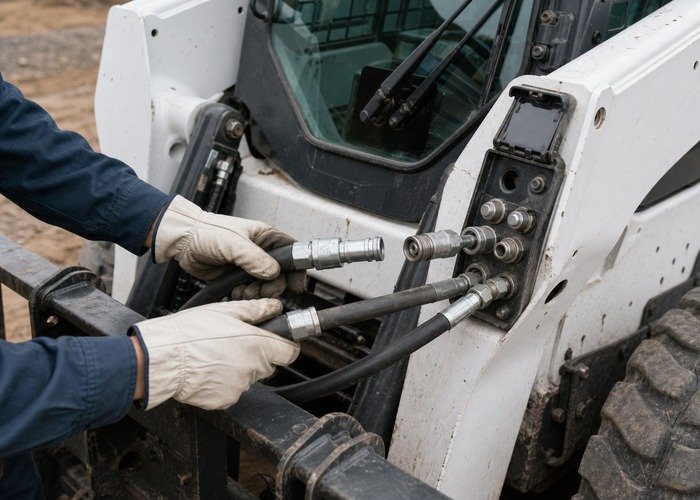
Match every powered attachment by required flow in gallons per minute or litres per minute, pressure, case-drain need, return restriction, electrical controls, and duty cycle. Standard flow may run augers, grapples, and many sweepers, while high-demand planers, mulchers, or snow blowers may require high flow and more cooling capacity.
Couplers fitting together does not prove compatibility. Ask for the continuous hydraulic output, not only a peak figure, and confirm how the machine manages oil temperature in hot weather or long stationary work. Hose routing must remain clear through the entire lift and tilt range.
For a related specification or ownership decision, continue with this practical SeekMach resource: pallet-fork capacity guide.
Confirm the physical quick-attach pattern, locking-pin engagement, hydraulic coupler type, case drain, electrical connector, and control logic for every tool already owned. Photograph data plates and measure the interface before ordering; small assumptions become expensive when a delivered attachment cannot lock or communicate.
Plan two years ahead without buying every option. If forestry work is likely, guard packages, cooling, door design, tires, and hydraulic protection may matter more than a small horsepower difference. If the loader will stay around finished properties, low ground pressure, quiet operation, and easy cleanup can carry more value.
For a related specification or ownership decision, continue with this practical SeekMach resource: compact equipment range.
The video below is useful as a visual supplement to the specification checklist, especially when comparing lift geometry and attachment needs.
Pause at each operating example and write down the lift height, material, attachment, and surface. Those four observations matter more than a general impression that the loader looks powerful.
Use the demonstration only to form questions. The operator manual and the exact machine data remain the controlling references.
After watching, convert each appealing capability into a specification that can be verified on the quotation.
If a tool is central to the business, ask to demonstrate that tool rather than a light bucket in an empty yard.
Keep the shortlist narrow enough that service support, transport, and operator comfort receive the same attention as lift numbers.
Tire condition, matched inflation where specified, speed, and surface change braking and stability. The work plan should also control pedestrians and reversing zones. General mobile-equipment precautions are outlined by Canadian Centre for Occupational Health and Safety.
Pneumatic, solid, severe-duty, turf-style, and foam-filled tires trade ride quality, puncture resistance, traction, cost, and surface damage. Match tread to the dominant surface, then check width and overall machine clearance with the chosen tire. A tire change can alter ride height and rated assumptions.
Skid steering scrubs the surface by design. Use wider turns, reduce unnecessary counter-rotation, keep tire pressures matched where applicable, and avoid repeated pivots on wet turf or weak pavement. If most work is soft mud or sensitive ground, compare a compact track loader rather than forcing a wheeled machine into the wrong environment.
For a related specification or ownership decision, continue with this practical SeekMach resource: job-matching application pages.
Road transport requirements vary, so the buyer must verify mass, securement, trailer, driver, and route rules locally. In the United States, the regulatory starting point for cargo securement is Federal Motor Carrier Safety Administration cargo securement rules.
Measure gates, trailers, ramps, floor loading, overhead clearance, and turning space. Published machine width may exclude a wider bucket or tire option, and transport height can change with cab equipment. Operating weight must include attachment, fuel, options, and any carried materials when planning the trailer.
A compact machine that arrives at every job is more useful than a powerful loader that exceeds the tow vehicle or cannot enter the site. Verify tie-down points, loading instructions, parking-brake procedure, and local transport requirements before treating mobility as solved.
Compare hand-foot controls, selectable joysticks, response settings, seat and armrest adjustment, entry clearance, camera views, mirrors, and sightlines to the tires and attachment corners. Ten minutes in an empty yard will not reveal fatigue; simulate repeated loading, reverse travel, and attachment changes.
Visibility is a production feature and a safety feature. Check blind zones with the exact bucket or forks installed, confirm warning devices, and keep windows and cameras clean. An operator who can place the cutting edge accurately usually makes fewer corrective passes and disturbs less finished ground.
Engine and emissions configuration can affect fuel, maintenance, diagnostics, and legal market fit. Buyers comparing nonroad equipment for the United States can confirm the regulatory framework through US EPA nonroad diesel engine information.
Open every service panel. Locate engine-oil, coolant, fuel-water separator, air filters, hydraulic sight level, grease points, battery, fuse access, and cooler-cleaning path. Daily inspection should be possible without removing an attachment or climbing beneath raised arms.
Ask which parts are stocked locally, what diagnostic support is available, and which filters and fluids are specified. Record serial-number locations and obtain the correct manuals. A lower purchase price can disappear quickly when a common hose, sensor, coupler, or door panel has a long lead time.
Test the actual attachment or a load that represents it. Start cold, listen for abnormal noise, inspect for leaks, cycle boom and tilt smoothly, verify auxiliary functions, check steering response, and repeat the cycle after the oil is warm. Stop if an interlock or warning is bypassed.
The final quotation should identify machine model, operating capacity basis, tire and cab configuration, hydraulic package, couplers, electrical kit, attachment interface, freight scope, manuals, warranty process, commissioning, and spare-parts package. Compare like with like rather than treating the lowest total as identical equipment.
Write a cycle sheet for every recurring job. Record attachment mass, expected load, load centre, pickup and placement heights, travel distance, surface, slope, access width, and cycles per shift. This separates a loader that merely connects to a tool from one that can operate it productively. It also gives the supplier enough detail to challenge an unsafe assumption before the machine ships.
For lifting, obtain reliable weights and include the fork frame, bucket, grapple, or other attachment. Long timber, liquid containers, loose blocks, and suspended loads behave differently from a compact pallet. If weight or centre is uncertain, establish it before work. A sound purchase preserves margin for ordinary variation rather than consuming every published kilogram on paper.
Copy each powered attachment data plate into the worksheet: flow range, pressure, return arrangement, case drain, electrical connector, controls, couplers, and guarding. Ask the machine supplier to answer every line in writing. A statement that a tool is high flow or universal is not a compatibility check and will not resolve a dispute after overheating.
Draw the transport combination as carefully as the work cycle. Include machine, tires, cab and guard options, fuel, attachment, chains, tools, and trailer. Confirm axle ratings, deck length, ramp angle, tie-downs, and tow limits under local rules. A loader needing a different truck changes the ownership budget and the jobs it can reach.
Use one demonstration scorecard for visibility, control smoothness, access, ride, attachment change, service panels, cooler cleaning, and confidence near obstacles. Repeat comparable tasks on each candidate and write factual notes. The scorecard makes subtle differences visible without reducing the choice to horsepower, appearance, or brand familiarity.
Watch a complete attachment change, including locking indicators, pressure release, coupler cleanliness, hose routing, and electrical connection. Cycle lift and tilt through the intended range while observing clearance. The process should remain safe and repeatable with expected gloves, weather, and dirt; a difficult connection rarely improves after daily wear.
Create a first-year support list covering filters, fuel-water service items, air elements, coupler seals, approved fluids, tire repair, cutting edges, fuses, and attachment wear parts. Record stock location and normal lead time. The purpose is not to buy everything; it is to confirm that routine service and common failures have a credible path.
Write rejection conditions before reviewing quotes: excessive transport weight, failure at the narrowest gate, insufficient continuous flow, inadequate capacity at the real load centre, or no documented parts support. These conditions protect the shortlist from an attractive machine that cannot perform the work. If all candidates fail, revise the job plan or machine class.
Before final acceptance, repeat the priority work cycle with the oil warm and the real attachment installed. Record cycle time, visibility, control response, warning messages, temperature trend, tire marks, fuel or energy use, and any need to reposition. Inspect the machine again after the test for hose contact, loose hardware, leaks, hot components, or coupler movement. Review the notes with both operator and supplier, then place unresolved limits on the delivery document. This final check connects the buying worksheet to observable performance instead of relying on brochure language or a short unloaded drive.
No. Horsepower helps only when the hydraulic system, traction, cooling, lift geometry, and attachment match can use it. A lower-power machine with the right ROC and flow can outperform a larger but mismatched loader.
Use the manufacturer load information and add conservative margin for uncertain weight, long load centers, slopes, travel, and dynamic movement. Never estimate safety from tipping load alone.
Physical mounting patterns may look similar, but locking geometry, hydraulic flow, pressure, case drain, electrical controls, hose routing, and machine capacity still need confirmation.
Compare tracks when soft ground, mud, flotation, or frequent rough-terrain travel dominates. Wheeled skid steers often remain attractive on firm surfaces where speed, lower undercarriage cost, and easier transport matter.
Cold start, warnings, interlocks, travel, braking, boom and tilt, auxiliary hydraulics, coupler locking, leaks, cooling, visibility, and the actual priority attachment should all be checked.
A useful skid steer buying guide ends with a machine that fits the job cycle, attachment system, ground, transport plan, operator, and service network. Keep the decision measurable, demonstrate the real work, and document every configuration detail before shipment.
For an imported machine, continue with this skid steer delivered-cost and Europe import checklist.
Improve jobsite fit with this skid steer tire pressure and tread selection.
Attachment compatibility path: Use the hydraulic flow and case-drain checklist together with the skid steer buying guide before matching an attachment.
Skid steer compatibility hub: Confirm auxiliary hydraulic flow and case-drain requirements, compare the skid steer buyer checklist, and verify rated operating capacity, coupler, controls, width, and attachment mass before ordering.
Skid steer traction and attachment decision path: Compare tractor financing against cash and farm liquidity, review the compact tractor DPF operating guide, and use a compact tractor size and implement checklist before requesting a final delivered quote.
A smooth short test drive does not prove the chaincase is healthy. On a level service pad, identify the correct level plug from the serial-number manual, clean the area, and inspect a small fluid sample plus the magnetic plug. Milky oil, separated water, sharp flakes, repeated overfill, or a burnt odor needs diagnosis before purchase.
Keep tire size, construction, wear, and pressure matched because rolling-radius differences load the chain drive continuously on high-traction ground. Review the detailed skid steer chaincase oil check and contamination guide before estimating service or repair cost.
| Evidence | Buyer response |
|---|---|
| Light smooth magnetic paste | Document and compare with service history |
| Water or milky oil | Find vent or seal entry and price cleanup |
| Sharp chips or drive-speed knock | Stop and obtain internal inspection |
No. Use the exact model and serial-number specification; similar-looking machines may require different products or level procedures.