Telephone/WhatsApp:+86 156 2656 0610
Telephone/WhatsApp:+86 156 2656 0610
Email:info@seekmach.com

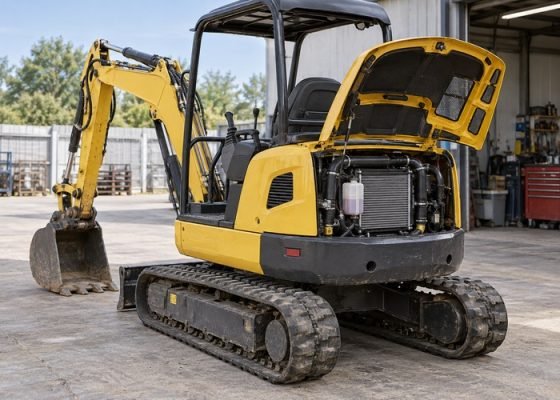
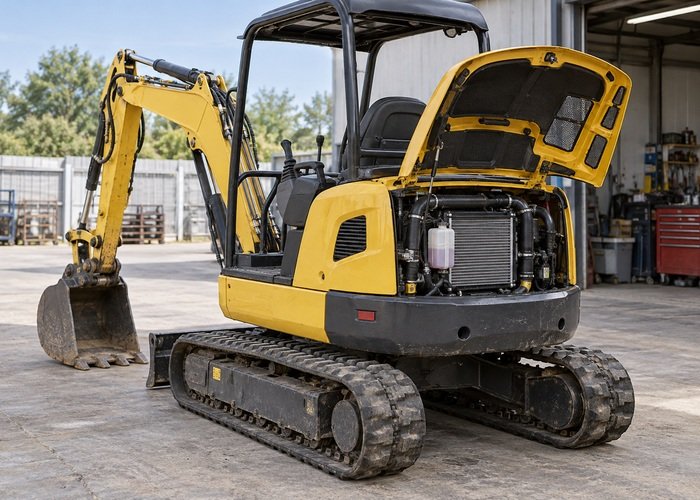
When a mini excavator shows an engine-temperature warning, stop the work and follow the machine’s warning and shutdown procedure. Do not keep digging to see whether the warning clears, and do not open a hot cooling-system cap. Once the machine is secured and cooled as required, identify which system produced the warning, document the operating conditions and inspect the accessible cooling components safely.
Engine coolant temperature and hydraulic oil temperature are different measurements. A hot hydraulic system can affect the overall cooling load, but the two warnings do not establish the same fault. Start with the actual display message or fault code rather than assuming that every hot machine needs a new radiator.
This guide provides a practical observation and service-request sequence for owners and fleet managers. It does not set a universal temperature limit or replace the engine and excavator manuals. For a wider symptom investigation, see mini excavator power loss under load if that exact symptom accompanies the warning.
Reduce the immediate risk by stopping the task in a suitable location and securing the machine according to its manual. Follow the prescribed response to the particular warning, including any required controlled cooldown or shutdown. Severe leakage, steam, abnormal noise or loss of safe control can require a different response from a routine temperature indication; follow the manufacturer’s instructions and arrange qualified assistance.
Keep people away from hot surfaces, moving parts and the attachment operating area. Do not remove guards with the engine running or reach toward a fan to check whether it is turning. Never treat a stationary-looking fan as proof that it cannot start. Isolate the equipment as required before accessing service areas.
The UK HSE’s maintenance guidance discusses planning and isolation during service work. Its safety principles provide context, while the applicable local requirements and the equipment-specific procedure determine how the work should be performed.
Photograph the display if it can be done safely. Record the warning text, code, indicated temperature, machine hours and the time into the work cycle. Add ambient conditions, the task, attachment, engine setting and whether several functions were being used together. Do not clear diagnostic information before it has been recorded for the service technician.
Note whether the warning appears shortly after starting, only under sustained work, during travel, or after a particular attachment is connected. Record whether the indication rises gradually or jumps unexpectedly. These are observations, not diagnoses. A sudden indication may require a sensor or wiring assessment, but that possibility is not a reason to ignore the warning.
Ask which temperature the instrument measures and what warning action the manual specifies. The normal operating range and alarm logic vary with engine and machine configuration. A temperature quoted for another brand or model is not an acceptance limit for your excavator. Do not use an internet temperature value to override the displayed alarm.
| Observed pattern | Useful information | Next assessment |
|---|---|---|
| Warning after sustained digging | Task duration, load, ambient conditions and airflow observations | Cooling capacity and workload assessment |
| Warning with a powered attachment | Attachment identity, approved flow settings and duty pattern | Carrier/attachment match and shared cooling load |
| Coolant loss or visible leakage | Location, cold level and leak evidence | Qualified leak and cooling-system diagnosis |
| Indication jumps abruptly | Code, display behavior and any recent wiring work | Verify measurement and actual system condition |
| Warning returns after cleaning | What was cleaned and conditions of recurrence | Further diagnosis rather than repeated cleaning alone |
Once the machine is isolated and cool enough for the approved inspection, inspect accessible air screens and cooling surfaces. Look for dust, grass, leaves and packed debris. A clean outer grille does not establish that the spaces between cooling cores are clear. Use the manual’s access arrangement and avoid forcing covers or bending fins.
Check whether panels, screens and seals are installed correctly after recent servicing. Missing or damaged parts can change the intended air path. Record anything unusual before replacing or adjusting it, and confirm the correct configuration from the machine documentation. Do not assume that removing a cover permanently is an acceptable cooling modification.
The HSE’s excavator guidance discusses keeping people clear of machine movements and arranging appropriate inspection. Treat it as UK safety context, not a universal statement of legal requirements for every site. Access arrangements and isolation methods must follow the actual equipment procedure and applicable local requirements.
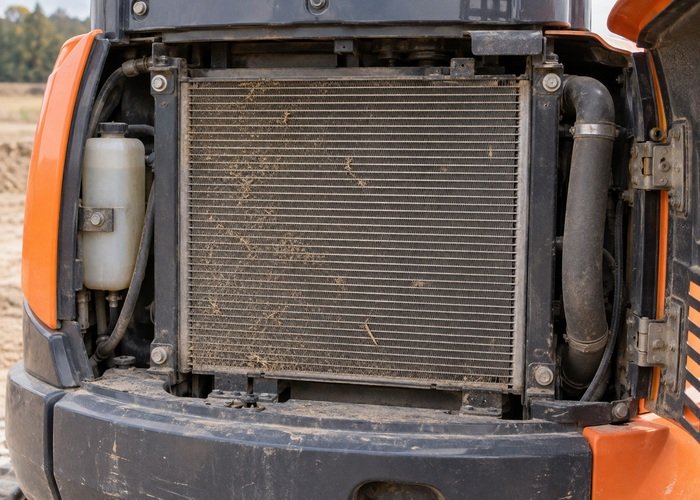
Cleaning pressure, direction, access and protective measures should come from the equipment manual. Radiator fins are easily damaged by aggressive cleaning. Avoid pushing debris deeper into a cooling stack or directing a jet at sensitive electrical components. If the necessary areas cannot be reached safely, arrange service rather than improvising access.
Before cleaning, photograph the debris pattern and any fin damage. After cleaning, record what was actually done. “Radiator cleaned” is an incomplete note if only the exterior screen was brushed. A precise record helps explain why a warning returned and prevents the next technician from assuming the whole air path has already been inspected.
Check the cleaning result with the machine secured, then reinstall all required covers and guards. Do not begin a work test with a guard removed just to improve visibility. Any functional assessment should be performed under the manufacturer’s procedure and the site’s safe system of work.
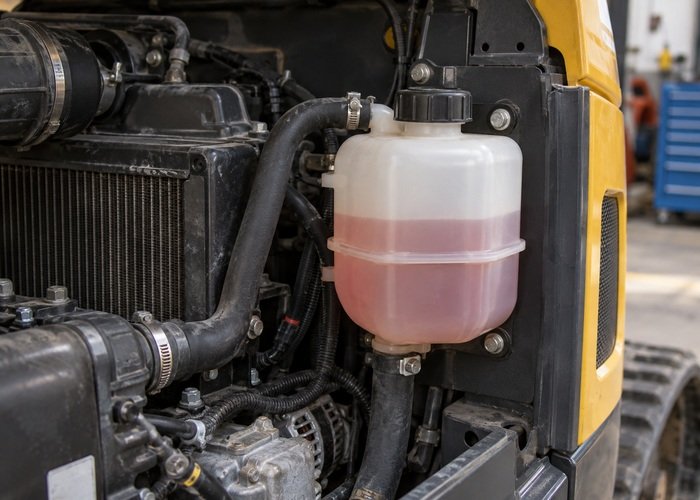
Use the manual’s cold-level check at the specified point. Some machines have an expansion reservoir; the correct reading method depends on the system. Record the observed level and whether recent top-ups have been needed. Repeated loss deserves investigation even if adding coolant temporarily restores the reading.
Look for accessible signs of leakage, hose deterioration or damaged clamps after safe isolation. A wet area can have several explanations, so document its location and arrange diagnosis rather than immediately blaming the nearest component. Do not inspect a pressurized leak by touch or disconnect a hot hose.
Confirm the approved coolant product and mixture requirements before topping up or changing it. Color does not reliably establish product compatibility. If previous coolant identity is unknown, tell the service provider. Mixing products or adding an unapproved treatment can complicate both the system condition and later diagnosis.
Keep the cold-level observation, coolant identity and any top-up history together in the service record. A technician needs that context before deciding whether the problem is a leak, an incorrect fluid, or another cooling-system issue. Retain the actual excavator’s approved coolant and service requirements.
Record whether the warning began after a change in attachment, operating method or duty cycle. A breaker or another powered tool may create a sustained load that differs from ordinary digging. Confirm that the tool, hydraulic requirements, settings and duty limits are approved for the carrier before attributing the problem solely to the engine.
Do not adjust hydraulic pressure, flow or engine controls to mask the warning. Review the written attachment requirements with a qualified technician. The operating weight of an excavator alone does not prove compatibility with a powered tool; the exact hydraulic configuration and cooling arrangement matter.
If the machine also loses power, produces abnormal noise or develops unusual hydraulic behavior, record the combined symptoms. Keep the investigations connected without collapsing them into one diagnosis. The cylinder-drift guide covers a separate loss-of-holding symptom that should not be dismissed as ordinary engine heat.
Qualified diagnosis may need to assess fan operation, belt condition where applicable, coolant circulation, pressure retention, thermostat behavior, temperature measurement and other model-specific causes. Those checks require the correct tools and procedure. They should not become a sequence of speculative part replacements.
Give the technician a concise history: warning evidence, operating conditions, coolant top-ups, recent work, what was inspected or cleaned, and when the symptom returned. Add the engine identification as well as the excavator serial number. This can matter when the same excavator family uses different engine configurations.
Before ordering parts, confirm the part reference and the evidence supporting replacement. See the mini excavator spare parts guide for the identity information to collect. Avoid ordering a radiator or thermostat only because the machine feels hot.
After the necessary assessment or repair, have the responsible technician define a suitable confirmation test. Record the conditions and the outcome, including whether the warning recurred. Do not deliberately run the machine into an alarm to demonstrate that a repair worked. Stop if the prescribed conditions or safe control cannot be maintained.
Keep the before-and-after observations in the service history. The HSE’s inspection guidance provides context for inspections based on equipment and risk. A completed repair note should identify the work and its verification, rather than saying only “overheating fixed.” If the cause remains uncertain, retain that uncertainty and the next action. A short successful test may not represent every operating condition.
For a future purchase, discuss cooling-service access and the intended duty cycle with the supplier. Compare the SeekMach excavator range and request the exact model’s operating and service information. Confirm attachment approval and maintenance requirements for the supplied configuration.
Follow the warning procedure and obtain the required assessment. A falling indication does not prove that sustained work is safe or that the underlying cause is resolved.
No. Airflow restriction is one possible issue. Coolant loss, circulation problems, measurement faults and other causes need appropriate assessment. Begin with observations rather than an assumed replacement part.
Never open a hot pressure cap. Follow the specific cold-system check and pressure-release procedure in the manual. If uncertain, leave the system closed and arrange qualified service.
No. Use the actual engine and machine documentation, warning logic and service guidance. Another model’s normal range is not proof that your warning can be ignored.