Telephone/WhatsApp:+86 156 2656 0610

Telephone/WhatsApp:+86 156 2656 0610
Email:info@seekmach.com

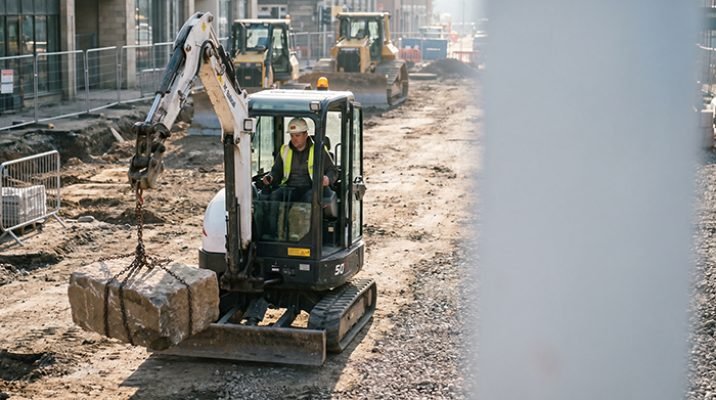
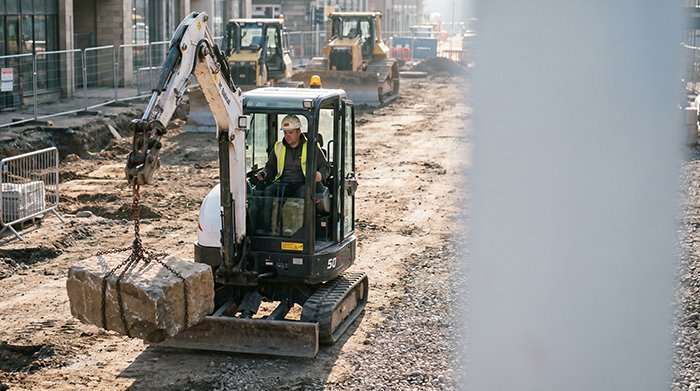
The “3.5T” label sells machines, but it doesn’t tell you what a machine can actually lift — and that distinction matters enormously on a real job site.
The 3.5-ton class has earned its reputation as the sweet spot for urban construction, agricultural utility, and tight municipal work. Compact enough to navigate landscaped properties and residential sites, yet powerful enough to handle serious digging and material handling, these machines occupy a uniquely versatile position in the equipment market. However, contractors who order direct from manufacturers based on tonnage alone routinely discover the spec sheet tells only half the story.
Critical distinction: “3.5 tons” refers to the machine’s operating weight — not its lifting capacity.
That number describes how much the excavator itself weighs, including fluid, operator, and standard attachments. Actual lifting performance is a completely separate figure, governed by hydraulic output, boom geometry, and machine stability. According to Construction Equipment Guide, a 3.5T excavator typically delivers a maximum lift capacity of approximately 1,100 kg to 1,500 kg at ground level over the front — a range wide enough to make the specific hydraulic specs critically important before purchase.
Lifting capacity in this class isn’t a single number — it’s a triangle. Every capacity rating shifts based on three interdependent variables: the horizontal radius from the machine’s centerline, the height at which the load is held, and the orientation of the boom relative to the tracks. Extend the arm, raise the load, or swing to the side, and the usable capacity shrinks — sometimes dramatically.
Understanding the full 3.5T excavator lifting capacity chart requires reading that triangle carefully. The sections ahead break down exactly how radius and orientation interact to define — and limit — what your machine can safely handle.
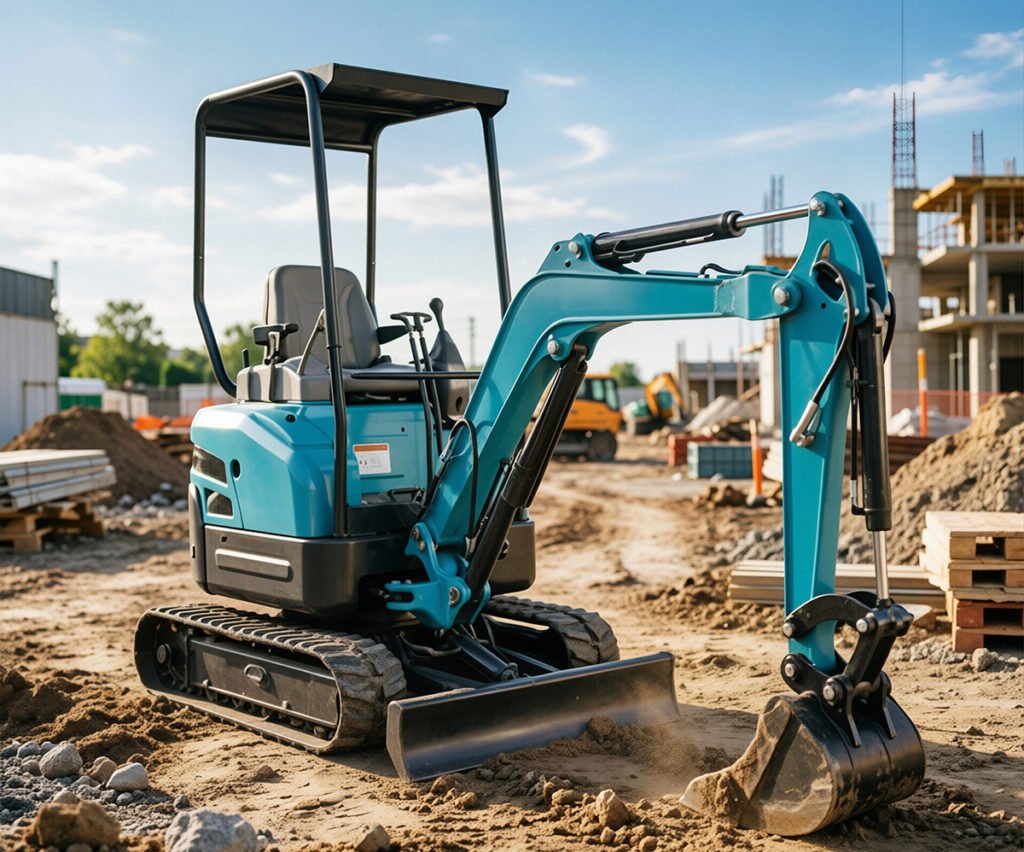
A lifting capacity chart is the single most important document for understanding true 3.5-ton mini excavator performance specs — yet most operators never read beyond the headline number.
The chart is a grid, not a single figure. Two axes control every number on it: horizontal radius (how far from the machine’s center the load sits) and vertical height (where in the arc the load travels). As radius increases, capacity drops sharply because the boom functions as a lever — the longer the arm extends, the more mechanical disadvantage the machine works against. According to Construction Equipment Guide, capacity at a 3-meter radius is significantly higher than at maximum reach, which means placing a load even a foot closer can make or break a lift.
Key variables to read on any capacity chart:
Tip: Always lower the blade before any critical lift. Even on flat ground, the blade adds measurable stability and shifts the machine into its “blade-down” chart column — often adding hundreds of pounds of rated capacity.
Understanding these variables also sets up a more nuanced question: what happens when the machine itself has a reduced footprint? That’s exactly the trade-off that compact machine configurations navigate — and why zero-tail-swing design choices have real consequences for the numbers on that chart.
Choosing between a zero-tail swing and a conventional 3.5T model is one of the most consequential procurement decisions you’ll make — because the answer to “how much weight can a 3.5-ton excavator lift” changes significantly depending on which configuration sits in your fleet.
ZTS models achieve their compact footprint by shrinking the counterweight — the rear mass that physically balances a heavy load at the boom end. Less counterweight means the upper structure rotates within the machine’s own track width, letting operators work flush against walls or inside tight corridors without clipping obstructions. That’s a genuine operational advantage on urban job sites.
The cost, however, is measurable. According to data from OEM and industry sources, ZTS configurations on 3.5T excavators can reduce lifting capacity by 10–15% compared to conventional tail swing models — a gap that translates to hundreds of pounds at practical working radii.
“A 10–15% reduction in lift capacity may sound minor on paper, but at a 10-foot radius that can mean the difference between a single-pick lift and a two-stage operation — adding time, cost, and risk to every cycle.”
In practice, the right choice comes down to the primary use case:
Balancing these demands is an engineering challenge, not just a catalog decision. Seekmach addresses this at the machine level through its integrated production facility, where counterweight geometry and boom cylinder sizing are developed together — rather than adapted after the fact — ensuring that whichever configuration a buyer chooses, the hydraulic system is matched to it from day one.
That hydraulic system, it turns out, is where the real performance story gets told.
Compact excavator hydraulic lifting power is determined far more by PSI and flow rate than by engine horsepower — a distinction that separates capable machines from frustrating ones in the field.
PSI and flow rate are the real performance metrics to scrutinize. A higher-horsepower engine paired with a weak hydraulic circuit will still struggle when lifting dense loads or running demanding attachments. What matters is the system pressure — typically ranging from 2,900 to 3,500 PSI in modern 3.5T units — combined with sufficient hydraulic flow (measured in liters per minute) to sustain that pressure under continuous load. As Equipment World notes, “hydraulic pressure settings and cylinder diameters are the true ‘muscles’ behind a 3.5T machine’s ability to handle dense materials like wet clay or concrete debris.” In practice, an underpowered hydraulic circuit loses efficiency rapidly when the bucket encounters resistance, causing sluggish response and premature wear.
Cylinder diameter directly governs breakout force — the peak force the bucket or arm can generate to fracture compacted soil or wet clay. Larger bore cylinders multiply the mechanical advantage of the same system pressure, translating PSI into more usable digging force at the cutting edge. This is why two machines with identical horsepower ratings can feel dramatically different when trenching through saturated ground.
High-efficiency hydraulic systems in modern 3.5T excavators increasingly use load-sensing circuits and variable-displacement pumps, reducing heat buildup and improving fuel economy without sacrificing output. Understanding how auxiliary hydraulic pressure affects attachments is equally critical — undersized flow starves tools like hydraulic breakers of the pressure they need to operate correctly.
Three hydraulic components worth inspecting before any heavy-lift operation:
Of course, hydraulic performance doesn’t operate in a vacuum. Even a perfectly tuned system has hard physical limits — and understanding where those limits become dangerous brings us directly to the concept of tipping load and machine stability.
Understanding where a 3.5T excavator’s lifting capacity becomes a liability is as critical as knowing its peak rated load — and the line between the two is narrower than most operators expect.
The “tipping point” refers to the threshold at which a machine’s center of gravity shifts beyond its stability base, causing the undercarriage to lift on the opposite side. For a 3.5T class machine, this threshold isn’t fixed — it shifts constantly based on boom angle, swing position, and ground conditions.
Side-lift positioning is where operators are most frequently caught off guard. According to the OSHA Technical Manual, lifting over the side without the blade deployed for ground contact can reduce effective capacity by as much as 40–50% compared to front-facing lifts. That means a machine rated for 3,000 lbs at the front could safely handle only 1,500–1,800 lbs in an unbraced side configuration. The 3.5-ton excavator lifting capacity at maximum reach compounds this further — reach and angle together represent the worst-case scenario for stability.
Uneven terrain amplifies every risk. A slope as modest as 5–10 degrees can shift the effective center of gravity enough to invalidate the manufacturer’s load chart entirely. What’s listed on the spec sheet assumes a flat, compacted surface.
Before handling maximum loads, operators should run through this safety checklist:
These constraints don’t diminish the 3.5T’s value — they define which applications it handles best, a distinction that becomes clear when examining real-world use cases.
The 3.5T mini excavator’s lifting capacity translates directly into job-site productivity across three distinct work environments — urban, agricultural, and industrial.
Urban construction is where the 3.5T class truly earns its reputation. Municipalities routinely need to lift precast concrete pipes (typically 200–400 lbs per section) and cast-iron manhole covers (250–350 lbs) in congested corridors where larger machines simply can’t operate. According to the OSHA Technical Manual, the 3.5T class is specifically engineered for “wall-hugging” applications in confined urban sites — meaning operators can reposition around obstacles without shutting down adjacent lanes or scaffolding. Its zero-tail-swing capability, explored in more depth through specialized excavation trends, makes it the default choice for utility contractors working within tight right-of-way boundaries.
In agricultural and land-clearing scenarios, raw lifting muscle matters most. Moving large boulders in the 800–1,200 lb range or extracting root balls from mature tree stumps pushes a 3.5T excavator toward its rated capacity — but stays within safe working limits when lift geometry is managed correctly. What typically happens on clearing jobs is that operators use shorter boom extensions to keep loads closer to the centerline, maximizing stability on uneven ground.
On tight industrial job sites, the ability to handle palletized materials — equipment components, bagged aggregate, or precast blocks — adds genuine versatility. This multi-task flexibility is a core reason industrial equipment distributors favor the 3.5T over smaller classes; it bridges the gap between light-duty 1.5T machines and full-size units that can’t access confined spaces. As DOZR’s excavator spec guide notes, this size range consistently ranks among the most rented compact excavator categories.
The consistency of that performance in real-world conditions, however, depends heavily on how the machine is built — which brings manufacturing quality directly into focus.
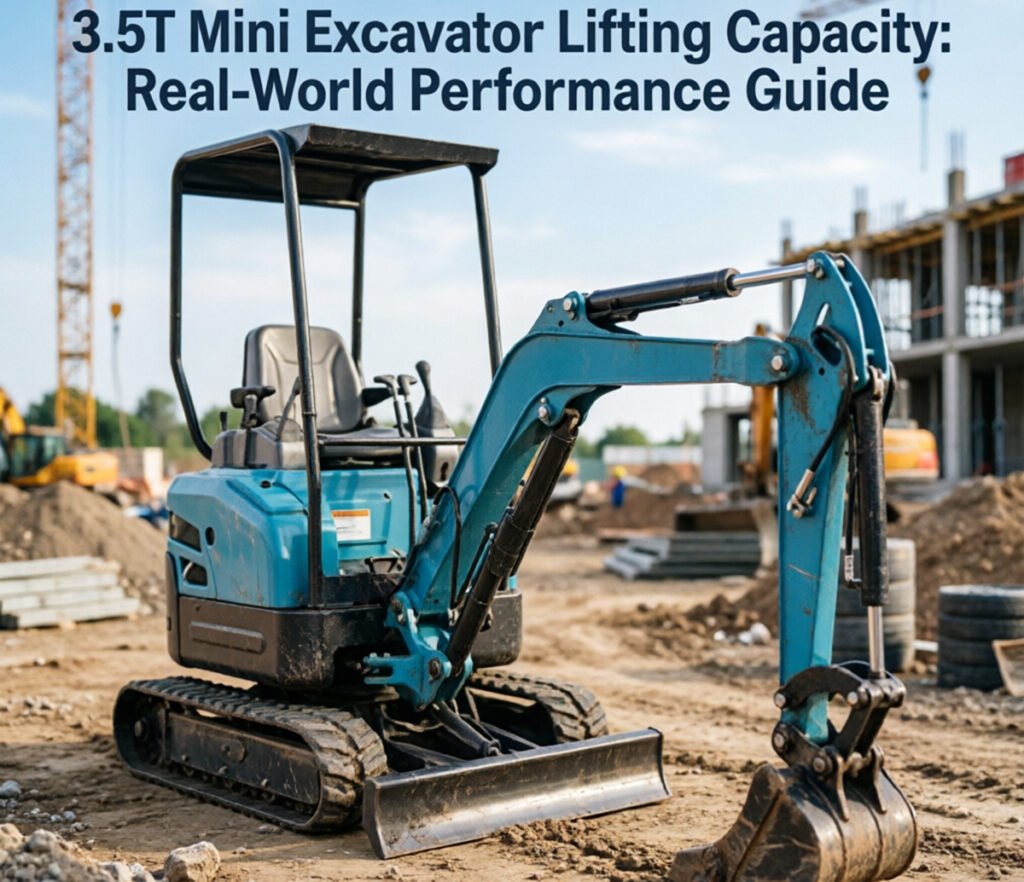
Buying a 3.5T mini excavator directly from an integrated manufacturer is one of the most reliable ways to ensure that lifting performance matches what’s promised on the spec sheet.
Hydraulic tolerances are where production scale matters most. When a manufacturer operates a facility like Seekmach’s 50,000m² integrated production campus — where fabrication, assembly, and quality testing happen under one roof — component tolerances stay tight across every unit. Hydraulic pumps, control valves, and cylinder seals are matched and tested together rather than sourced from multiple third-party suppliers and assembled later. In practice, this consistency translates directly into predictable lift performance across the machine’s working radius, not just at the most favorable angle.
ISO 9001 certification establishes the procedural backbone behind that consistency. For heavy machinery where lifting safety margins are engineered to specific tolerances, certified quality management systems mean documented processes govern everything from weld inspection to final hydraulic pressure testing. That’s not paperwork — it’s the difference between a counterweight that performs to spec on day one and one that does so on day 1,000.
Counterweight engineering benefits significantly from deep OEM/ODM experience. With over 15 years designing and manufacturing to client specifications, an experienced OEM understands how counterweight geometry interacts with boom reach and hydraulic output — variables that generic assemblers often treat as fixed rather than tunable.
> Factory-direct pricing doesn’t mean cutting corners — it means redirecting middleman margins into premium hydraulic components instead of distributor profit.
Eliminating intermediary markups allows manufacturers to invest in higher-grade hydraulic components — the exact parts that determine whether a machine hits its rated lift capacity consistently or fades under load. If you’re sourcing machines that need to perform across varied attachment configurations, that component quality gap compounds quickly.
Those production fundamentals set the stage for the practical buying decisions covered next.
Understanding a 3.5T mini excavator’s true lifting capability requires looking well beyond the headline number on the spec sheet. According to the OSHA Technical Manual, stability — not raw engine power — is the primary constraint on lifting capacity in the 3.5T class, and every operational decision should flow from that fact.
Here are the five most actionable takeaways:
These fundamentals apply whether you’re evaluating your first machine or expanding a fleet. Still have specific questions about real-world performance? The next section addresses the most common ones buyers ask before signing a purchase order.
Knowing the right questions to ask about a 3.5T mini excavator separates smart buyers from those left dealing with costly surprises on the job site.
Can a 3.5-ton excavator lift a 1-ton concrete block?
In practice, yes — but only under the right conditions. Most 3.5T machines carry rated lifting capacities between 1,500 and 2,200 lbs depending on boom configuration, but a 1-ton (2,000 lb) concrete block sits near the upper limit. At close range and with the arm fully retracted, that lift may be feasible. Extend the arm outward or work on uneven ground, and the safe working load drops significantly. Always verify the machine’s load chart for the specific radius before attempting the lift.
What is the difference between breakout force and lifting capacity?
These two specs are frequently confused. As Equipment World notes, breakout force refers to the bucket’s digging power, while lifting capacity refers to the crane-like ability of the boom to raise and hold a suspended load. A machine can have impressive breakout force and still be a poor choice for overhead lifting tasks — they measure entirely different capabilities.
How does arm length affect hydraulic lifting power?
Longer arm extensions increase mechanical disadvantage, reducing the effective lifting capacity at the hook point. A spec guide from DOZR confirms that rated capacities are always position-dependent — always cross-reference the load radius column in your chart.
If you’re weighing whether a compact machine is the right fit for your workload, this honest look at small excavator ownership offers useful real-world context.
Understanding your machine’s true limits — not just its headline spec — is what keeps lifts safe, equipment intact, and projects on schedule.