Telephone/WhatsApp:+86 156 2656 0610

Telephone/WhatsApp:+86 156 2656 0610
Email:info@seekmach.com

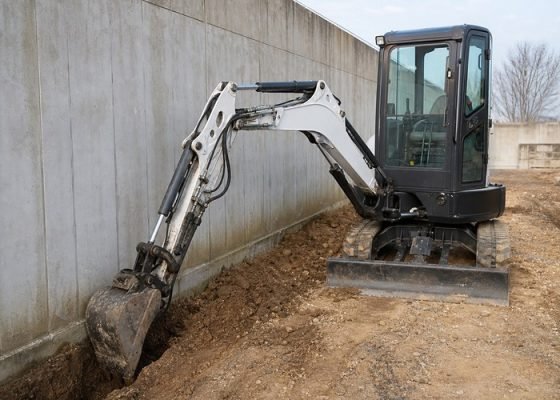
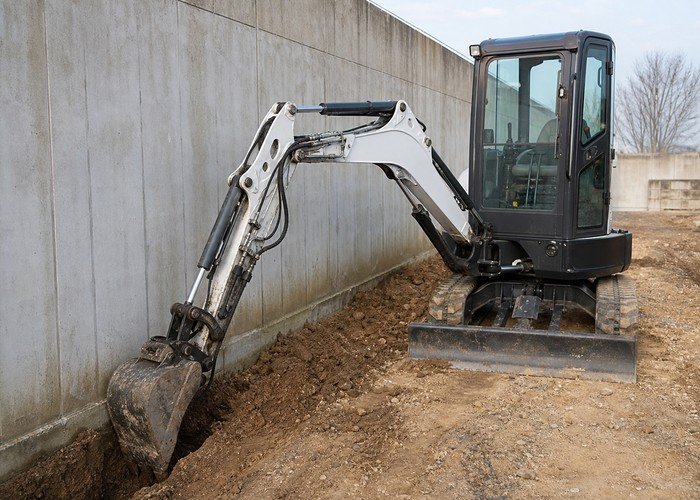
Mini Excavator Side-Shift Boom Guide: Wall-Side Trenches, Offset Reach, and Stability gives buyers and operators a structured way to verify condition, fit, and safety before money or machinery moves.
Continue through the SeekMach equipment range, compare the tractor range, review compact excavators, see skid steer loaders, and browse lawn mowers.
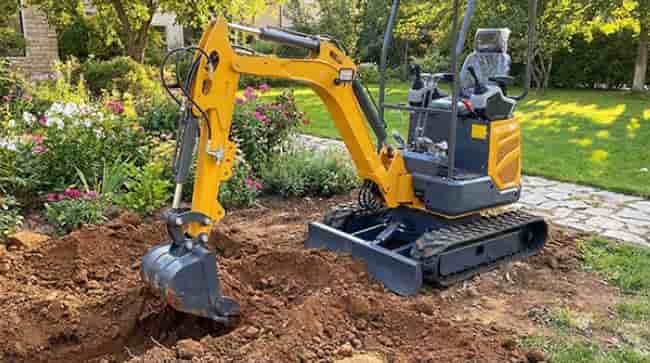
Start with records, ratings, and the exact machine: A boom-swing or side-shift function moves the digging line left or right of the tracks without rotating the whole upper structure. That geometry is useful beside walls, fences, utilities, and traffic lanes, but the operator must confirm the exact swing angle, offset reach, tail clearance, and control arrangement in the model manual before entering a confined cut.
Start with records, ratings, and the exact machine: Set the excavator on firm level ground, square the tracks to the travel path, lower the blade where the manual permits, and test boom swing at low engine speed with an empty bucket. Watch hoses, pins, the swing bracket, cylinder mounts, and clearance to the cab; stop for binding, leakage, abnormal movement, or contact.
Start with records, ratings, and the exact machine: Offset reach reduces the margin available for a heavy bucket, especially when the boom is across a slope or the machine is working over the side. Keep loads small, avoid sudden swing or travel inputs, and never treat the dozer blade as permission to exceed the load chart or operating instructions.
Start with records, ratings, and the exact machine: For a wall-side trench, mark the line, utilities, spoil zone, exclusion area, and safe travel direction first. Dig short controlled bites, keep the bucket visible, avoid undercutting the track edge, and reposition before the machine becomes twisted against the wall or the trench removes its support.
Start with records, ratings, and the exact machine: Inspect the swing pivot and bracket daily for loose fasteners, damaged stops, cracked weld areas, pin movement, hose abrasion, and grease condition. Record measured play and compare it with the service manual; extra grease cannot correct worn bushings, a bent bracket, or damaged hydraulic components.
Safety-first walk-around before operation: A boom-swing or side-shift function moves the digging line left or right of the tracks without rotating the whole upper structure. That geometry is useful beside walls, fences, utilities, and traffic lanes, but the operator must confirm the exact swing angle, offset reach, tail clearance, and control arrangement in the model manual before entering a confined cut.
Safety-first walk-around before operation: Set the excavator on firm level ground, square the tracks to the travel path, lower the blade where the manual permits, and test boom swing at low engine speed with an empty bucket. Watch hoses, pins, the swing bracket, cylinder mounts, and clearance to the cab; stop for binding, leakage, abnormal movement, or contact.
Safety-first walk-around before operation: Offset reach reduces the margin available for a heavy bucket, especially when the boom is across a slope or the machine is working over the side. Keep loads small, avoid sudden swing or travel inputs, and never treat the dozer blade as permission to exceed the load chart or operating instructions.
Safety-first walk-around before operation: For a wall-side trench, mark the line, utilities, spoil zone, exclusion area, and safe travel direction first. Dig short controlled bites, keep the bucket visible, avoid undercutting the track edge, and reposition before the machine becomes twisted against the wall or the trench removes its support.
Safety-first walk-around before operation: Inspect the swing pivot and bracket daily for loose fasteners, damaged stops, cracked weld areas, pin movement, hose abrasion, and grease condition. Record measured play and compare it with the service manual; extra grease cannot correct worn bushings, a bent bracket, or damaged hydraulic components.
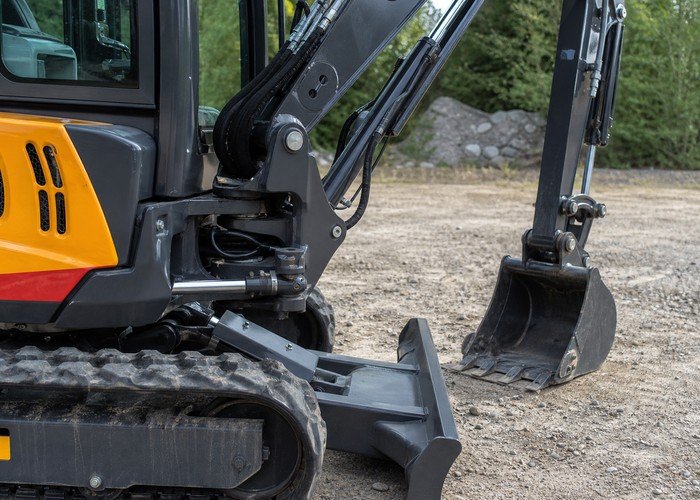
Engine, fluids, cooling, and leak checks: A boom-swing or side-shift function moves the digging line left or right of the tracks without rotating the whole upper structure. That geometry is useful beside walls, fences, utilities, and traffic lanes, but the operator must confirm the exact swing angle, offset reach, tail clearance, and control arrangement in the model manual before entering a confined cut.
Engine, fluids, cooling, and leak checks: Set the excavator on firm level ground, square the tracks to the travel path, lower the blade where the manual permits, and test boom swing at low engine speed with an empty bucket. Watch hoses, pins, the swing bracket, cylinder mounts, and clearance to the cab; stop for binding, leakage, abnormal movement, or contact.
Engine, fluids, cooling, and leak checks: Offset reach reduces the margin available for a heavy bucket, especially when the boom is across a slope or the machine is working over the side. Keep loads small, avoid sudden swing or travel inputs, and never treat the dozer blade as permission to exceed the load chart or operating instructions.
Engine, fluids, cooling, and leak checks: For a wall-side trench, mark the line, utilities, spoil zone, exclusion area, and safe travel direction first. Dig short controlled bites, keep the bucket visible, avoid undercutting the track edge, and reposition before the machine becomes twisted against the wall or the trench removes its support.
Engine, fluids, cooling, and leak checks: Inspect the swing pivot and bracket daily for loose fasteners, damaged stops, cracked weld areas, pin movement, hose abrasion, and grease condition. Record measured play and compare it with the service manual; extra grease cannot correct worn bushings, a bent bracket, or damaged hydraulic components.
Hydraulics, structure, and working components: A boom-swing or side-shift function moves the digging line left or right of the tracks without rotating the whole upper structure. That geometry is useful beside walls, fences, utilities, and traffic lanes, but the operator must confirm the exact swing angle, offset reach, tail clearance, and control arrangement in the model manual before entering a confined cut.
Hydraulics, structure, and working components: Set the excavator on firm level ground, square the tracks to the travel path, lower the blade where the manual permits, and test boom swing at low engine speed with an empty bucket. Watch hoses, pins, the swing bracket, cylinder mounts, and clearance to the cab; stop for binding, leakage, abnormal movement, or contact.
Hydraulics, structure, and working components: Offset reach reduces the margin available for a heavy bucket, especially when the boom is across a slope or the machine is working over the side. Keep loads small, avoid sudden swing or travel inputs, and never treat the dozer blade as permission to exceed the load chart or operating instructions.
Hydraulics, structure, and working components: For a wall-side trench, mark the line, utilities, spoil zone, exclusion area, and safe travel direction first. Dig short controlled bites, keep the bucket visible, avoid undercutting the track edge, and reposition before the machine becomes twisted against the wall or the trench removes its support.
Hydraulics, structure, and working components: Inspect the swing pivot and bracket daily for loose fasteners, damaged stops, cracked weld areas, pin movement, hose abrasion, and grease condition. Record measured play and compare it with the service manual; extra grease cannot correct worn bushings, a bent bracket, or damaged hydraulic components.
Functional test under realistic load: A boom-swing or side-shift function moves the digging line left or right of the tracks without rotating the whole upper structure. That geometry is useful beside walls, fences, utilities, and traffic lanes, but the operator must confirm the exact swing angle, offset reach, tail clearance, and control arrangement in the model manual before entering a confined cut.
Functional test under realistic load: Set the excavator on firm level ground, square the tracks to the travel path, lower the blade where the manual permits, and test boom swing at low engine speed with an empty bucket. Watch hoses, pins, the swing bracket, cylinder mounts, and clearance to the cab; stop for binding, leakage, abnormal movement, or contact.
Functional test under realistic load: Offset reach reduces the margin available for a heavy bucket, especially when the boom is across a slope or the machine is working over the side. Keep loads small, avoid sudden swing or travel inputs, and never treat the dozer blade as permission to exceed the load chart or operating instructions.
Functional test under realistic load: For a wall-side trench, mark the line, utilities, spoil zone, exclusion area, and safe travel direction first. Dig short controlled bites, keep the bucket visible, avoid undercutting the track edge, and reposition before the machine becomes twisted against the wall or the trench removes its support.
Functional test under realistic load: Inspect the swing pivot and bracket daily for loose fasteners, damaged stops, cracked weld areas, pin movement, hose abrasion, and grease condition. Record measured play and compare it with the service manual; extra grease cannot correct worn bushings, a bent bracket, or damaged hydraulic components.
Decision table: pass, negotiate, or stop: A boom-swing or side-shift function moves the digging line left or right of the tracks without rotating the whole upper structure. That geometry is useful beside walls, fences, utilities, and traffic lanes, but the operator must confirm the exact swing angle, offset reach, tail clearance, and control arrangement in the model manual before entering a confined cut.
Decision table: pass, negotiate, or stop: Set the excavator on firm level ground, square the tracks to the travel path, lower the blade where the manual permits, and test boom swing at low engine speed with an empty bucket. Watch hoses, pins, the swing bracket, cylinder mounts, and clearance to the cab; stop for binding, leakage, abnormal movement, or contact.
Decision table: pass, negotiate, or stop: Offset reach reduces the margin available for a heavy bucket, especially when the boom is across a slope or the machine is working over the side. Keep loads small, avoid sudden swing or travel inputs, and never treat the dozer blade as permission to exceed the load chart or operating instructions.
Decision table: pass, negotiate, or stop: For a wall-side trench, mark the line, utilities, spoil zone, exclusion area, and safe travel direction first. Dig short controlled bites, keep the bucket visible, avoid undercutting the track edge, and reposition before the machine becomes twisted against the wall or the trench removes its support.
Decision table: pass, negotiate, or stop: Inspect the swing pivot and bracket daily for loose fasteners, damaged stops, cracked weld areas, pin movement, hose abrasion, and grease condition. Record measured play and compare it with the service manual; extra grease cannot correct worn bushings, a bent bracket, or damaged hydraulic components.
Questions to ask the seller or operator: A boom-swing or side-shift function moves the digging line left or right of the tracks without rotating the whole upper structure. That geometry is useful beside walls, fences, utilities, and traffic lanes, but the operator must confirm the exact swing angle, offset reach, tail clearance, and control arrangement in the model manual before entering a confined cut.
Questions to ask the seller or operator: Set the excavator on firm level ground, square the tracks to the travel path, lower the blade where the manual permits, and test boom swing at low engine speed with an empty bucket. Watch hoses, pins, the swing bracket, cylinder mounts, and clearance to the cab; stop for binding, leakage, abnormal movement, or contact.
Questions to ask the seller or operator: Offset reach reduces the margin available for a heavy bucket, especially when the boom is across a slope or the machine is working over the side. Keep loads small, avoid sudden swing or travel inputs, and never treat the dozer blade as permission to exceed the load chart or operating instructions.
Questions to ask the seller or operator: For a wall-side trench, mark the line, utilities, spoil zone, exclusion area, and safe travel direction first. Dig short controlled bites, keep the bucket visible, avoid undercutting the track edge, and reposition before the machine becomes twisted against the wall or the trench removes its support.
Questions to ask the seller or operator: Inspect the swing pivot and bracket daily for loose fasteners, damaged stops, cracked weld areas, pin movement, hose abrasion, and grease condition. Record measured play and compare it with the service manual; extra grease cannot correct worn bushings, a bent bracket, or damaged hydraulic components.
A repeatable field checklist: A boom-swing or side-shift function moves the digging line left or right of the tracks without rotating the whole upper structure. That geometry is useful beside walls, fences, utilities, and traffic lanes, but the operator must confirm the exact swing angle, offset reach, tail clearance, and control arrangement in the model manual before entering a confined cut.
A repeatable field checklist: Set the excavator on firm level ground, square the tracks to the travel path, lower the blade where the manual permits, and test boom swing at low engine speed with an empty bucket. Watch hoses, pins, the swing bracket, cylinder mounts, and clearance to the cab; stop for binding, leakage, abnormal movement, or contact.
A repeatable field checklist: Offset reach reduces the margin available for a heavy bucket, especially when the boom is across a slope or the machine is working over the side. Keep loads small, avoid sudden swing or travel inputs, and never treat the dozer blade as permission to exceed the load chart or operating instructions.
A repeatable field checklist: For a wall-side trench, mark the line, utilities, spoil zone, exclusion area, and safe travel direction first. Dig short controlled bites, keep the bucket visible, avoid undercutting the track edge, and reposition before the machine becomes twisted against the wall or the trench removes its support.
A repeatable field checklist: Inspect the swing pivot and bracket daily for loose fasteners, damaged stops, cracked weld areas, pin movement, hose abrasion, and grease condition. Record measured play and compare it with the service manual; extra grease cannot correct worn bushings, a bent bracket, or damaged hydraulic components.
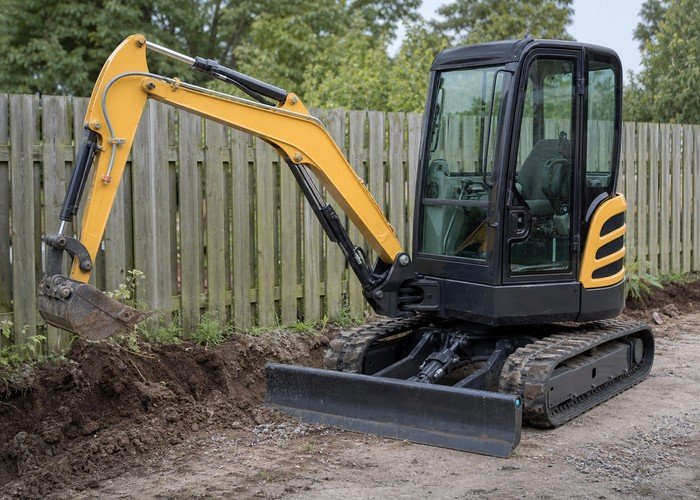
Common mistakes that create expensive surprises: A boom-swing or side-shift function moves the digging line left or right of the tracks without rotating the whole upper structure. That geometry is useful beside walls, fences, utilities, and traffic lanes, but the operator must confirm the exact swing angle, offset reach, tail clearance, and control arrangement in the model manual before entering a confined cut.
Common mistakes that create expensive surprises: Set the excavator on firm level ground, square the tracks to the travel path, lower the blade where the manual permits, and test boom swing at low engine speed with an empty bucket. Watch hoses, pins, the swing bracket, cylinder mounts, and clearance to the cab; stop for binding, leakage, abnormal movement, or contact.
Common mistakes that create expensive surprises: Offset reach reduces the margin available for a heavy bucket, especially when the boom is across a slope or the machine is working over the side. Keep loads small, avoid sudden swing or travel inputs, and never treat the dozer blade as permission to exceed the load chart or operating instructions.
Common mistakes that create expensive surprises: For a wall-side trench, mark the line, utilities, spoil zone, exclusion area, and safe travel direction first. Dig short controlled bites, keep the bucket visible, avoid undercutting the track edge, and reposition before the machine becomes twisted against the wall or the trench removes its support.
Common mistakes that create expensive surprises: Inspect the swing pivot and bracket daily for loose fasteners, damaged stops, cracked weld areas, pin movement, hose abrasion, and grease condition. Record measured play and compare it with the service manual; extra grease cannot correct worn bushings, a bent bracket, or damaged hydraulic components.
Final verification before transport or purchase: A boom-swing or side-shift function moves the digging line left or right of the tracks without rotating the whole upper structure. That geometry is useful beside walls, fences, utilities, and traffic lanes, but the operator must confirm the exact swing angle, offset reach, tail clearance, and control arrangement in the model manual before entering a confined cut.
Final verification before transport or purchase: Set the excavator on firm level ground, square the tracks to the travel path, lower the blade where the manual permits, and test boom swing at low engine speed with an empty bucket. Watch hoses, pins, the swing bracket, cylinder mounts, and clearance to the cab; stop for binding, leakage, abnormal movement, or contact.
Final verification before transport or purchase: Offset reach reduces the margin available for a heavy bucket, especially when the boom is across a slope or the machine is working over the side. Keep loads small, avoid sudden swing or travel inputs, and never treat the dozer blade as permission to exceed the load chart or operating instructions.
Final verification before transport or purchase: For a wall-side trench, mark the line, utilities, spoil zone, exclusion area, and safe travel direction first. Dig short controlled bites, keep the bucket visible, avoid undercutting the track edge, and reposition before the machine becomes twisted against the wall or the trench removes its support.
Final verification before transport or purchase: Inspect the swing pivot and bracket daily for loose fasteners, damaged stops, cracked weld areas, pin movement, hose abrasion, and grease condition. Record measured play and compare it with the service manual; extra grease cannot correct worn bushings, a bent bracket, or damaged hydraulic components.
No. Use this workflow to organize the inspection, then apply the exact limits and procedures in the model manual.
Use a qualified technician when records are incomplete, safety structures are altered, fluids are contaminated, structural cracks appear, or the functional test is inconsistent.
Record serial number, hours, cold-start condition, leaks, wear, measured settings, attachments, faults, photographs, and the person who performed the check.
Mini excavator hydraulic attachment decision path: Compare tractor financing against cash and farm liquidity, review the compact tractor DPF operating guide, and use a compact tractor size and implement checklist before requesting a final delivered quote.