Telephone/WhatsApp:+86 156 2656 0610
Telephone/WhatsApp:+86 156 2656 0610
Email:info@seekmach.com

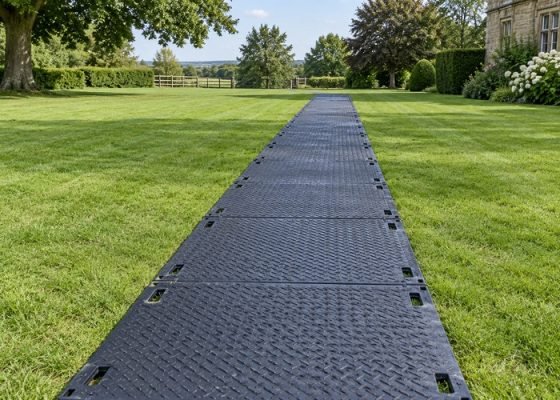
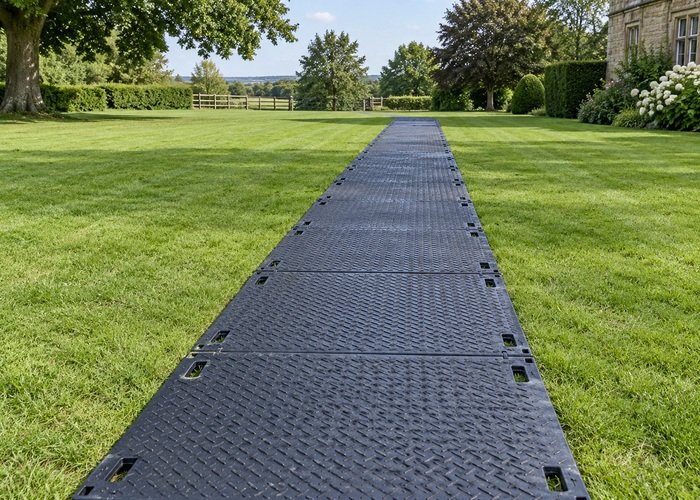
Ground protection mats may help protect a surface or create a defined access route, but they do not automatically make weak ground safe for a mini excavator. Confirm the underlying ground, actual machine and attachment loads, mat system and permitted use before travelling or working. A product’s headline capacity is not a site-specific ground-bearing approval, and a surface-protection mat should not be assumed to bridge a trench, void or unsupported edge.
This guide helps a buyer prepare a temporary-access enquiry and distinguish surface protection from an engineered working platform. It does not calculate bearing capacity or approve a route. A competent ground assessment, the mat supplier’s requirements and the machine’s operating limits must all support the proposed arrangement.
Write down the actual objective: protecting turf, reducing marking on a finished surface, managing a repeated travel route or supporting a designed access arrangement. Those objectives can require different products and different site preparation. Avoid using the general word mat as though every panel performs the same function.
Identify whether the excavator will only travel over the route or will also turn, load, dig or remain stationary on it. Include the planned work position and any delivery or recovery access. A quotation based only on a straight travel path may not address the rest of the task.
The Checkers ground-protection buying guide describes product-selection considerations for access and surface protection. Use it to frame supplier questions. Product descriptions do not establish that the soil beneath your route can support the proposed machine and activity.
A neat lawn or paved finish does not describe everything below it. Obtain the site information needed to identify buried services, chambers, tanks, recent excavations and other features that could affect the route. Record uncertainty rather than assuming that a flat appearance proves uniform support.
Have the responsible competent person assess the ground and any necessary investigation. The mat supplier should be told about known constraints, but supplying a mat is not automatically a complete ground-design service. Make the division of responsibility explicit before ordering equipment.
HSE excavation guidance discusses hazards associated with excavations, water and adjacent structures. Its UK context reinforces the need to assess the site. It does not supply a universal safe distance or approve a mat crossing over a concealed opening.
Give the supplier the exact excavator model and configuration, actual operating mass information and installed attachments. Explain the planned movement and work. An attachment, coupler or carried load can change the information the assessor needs. Do not substitute the machine’s marketing weight class for the complete configuration.
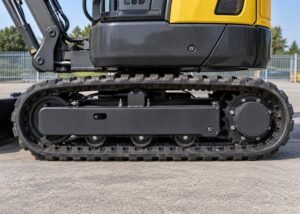
Include track type and condition where requested, and ask which machine data are required for the review. Do not calculate a safe mat capacity by dividing total mass by the visible area of two tracks. That shortcut does not capture the full combination of loading, mat behaviour and ground conditions.
Use the SeekMach excavator range to identify a proposed machine, then obtain its specific technical information. This article does not establish that any SeekMach model is compatible with a particular mat or that a supplier’s capacity rating applies to the complete route.
| Information | What to provide | Why it belongs in the review |
|---|---|---|
| Surface objective | What finish needs protection and what marking is unacceptable | Surface protection is a distinct requirement |
| Underlying site | Known ground, services, openings and recent works | The mat cannot be assessed independently of its support |
| Machine configuration | Exact model, attachments and required technical data | Headline weight classes omit relevant details |
| Activities | Travel, turns, transitions and any working positions | Different activities need appropriate approval |
| Mat system | Panel, connector and installation details | Individual panels are only part of the arrangement |
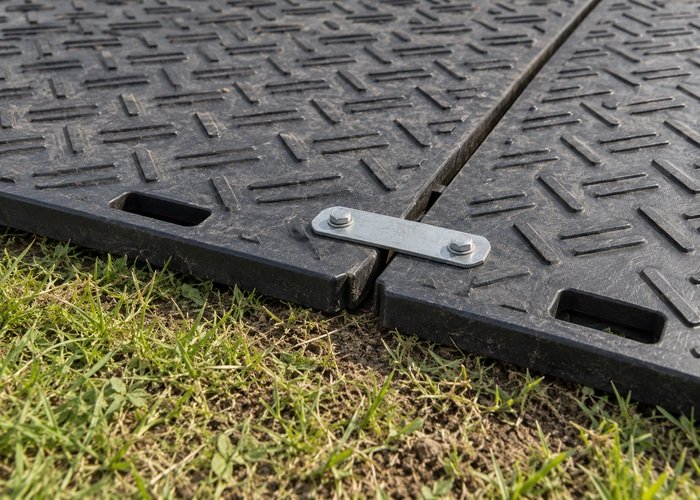
Request the conditions behind any stated capacity. Which substrate, loading arrangement, panel configuration and limitations were used? Ask whether the rating applies to tracked equipment and to the proposed activity. Keep the written answer with the quotation rather than relying on a sales headline.
Ask how connectors, edges and transitions are specified. If the quote contains alternative panels or accessories, confirm that the proposed configuration is the one reviewed. A supplier’s demonstration may use a different system or prepared surface from your job.
If the supplier cannot approve the intended use without more information, supply it or revise the plan. Do not treat a broad claim that a panel supports heavy machinery as a substitute for a clear answer about this machine, activity and ground.
Sketch the route from unloading through the work area and back out. Include entrance widths, gates, turns, slopes and changes of surface. Identify where people or other vehicles could cross the route. The shortest line between two points may not be the suitable access arrangement.
Ask the supplier how starts, ends and panel joints are handled under its approved installation method. Confirm any restrictions on slope, turning or repositioning. Do not improvise a ramp or overlap because it looks similar to a photograph from another site.
Plan where the machine can stop if the route becomes unsuitable. Avoid creating a situation in which the operator has no approved way to leave the work area. Any recovery arrangement should be established by competent people before equipment enters uncertain ground.
Travelling across a protected route and operating from a working position are different questions. Tell the reviewer whether the excavator will dig, slew, load or handle an attachment from the mats. Obtain approval for the actual activity rather than assuming access approval covers the entire job.
The bucket selection guide explains why the attachment and intended work belong in machine planning. A change of bucket or task should also be communicated where it affects the assessed configuration. Do not silently expand the scope after the route has been reviewed.
If an engineered working platform is required, obtain the appropriate design and management arrangements. A stack of surface-protection panels does not become a designed platform simply because more material has been added. The responsible specialist should determine what the task needs.
Identify who prepares the surface, installs the system, inspects it and authorises use. The installation record should describe the actual panels and connectors, route limits and any restrictions. Make that information accessible to the operator and the site supervisor.
HSE work-equipment inspection guidance explains the role of inspection in identifying deterioration and unsafe conditions. Use the applicable local framework and supplier instructions to establish your checks. This guide does not set a universal inspection interval for every mat system.
Decide which changes require reassessment. Examples to raise with the responsible person include altered weather conditions, visible settlement, panel movement, a different machine or changed activity. Record the required response rather than expecting an operator to judge an unfamiliar structural problem alone.
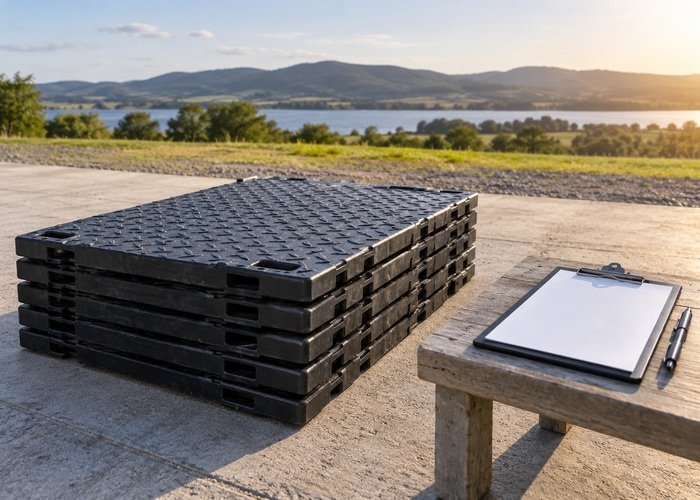
Agree what the operator should do if panels shift, support changes, a transition becomes unsuitable or the approved boundary cannot be maintained. The response should refer to the site plan and competent supervisor. Do not invent an on-the-spot repair by adding loose material or driving farther to see whether the condition improves.
Keep known exclusions visible on the route plan. A nearby trench, chamber or fragile feature does not become safe to cross because a mat hides it. If the location or condition of an underground feature is uncertain, resolve that uncertainty before approving access.
Keep pedestrian routes and communication arrangements clear. The mat system should fit within the wider site-traffic plan, including loading and unloading. It is one part of the access decision, not the whole safety plan.
Compare the specified system, delivery, preparation, installation, connectors, inspection support and collection requirements. Include any stated limitations and the information still needed for approval. Two quotations for the same number of panels may cover very different scopes.
Keep cleaning and transport requirements in the plan, particularly when equipment moves between sensitive sites. The rental handover record guide can help document supplied items and condition. It does not replace the mat supplier’s installation requirements or the ground assessment.
For a SeekMach machine enquiry, describe the intended access and work rather than asking only whether the excavator can drive on mats. Request the model information needed by the mat supplier and ground assessor. Compatibility and site approval need their own documented decisions.
No. Assess the underlying ground, system and intended use. Surface protection is not proof of adequate ground support.
Do not assume that capability. Any spanning arrangement requires appropriate design and explicit approval for the actual conditions.
Not automatically. Specify travel and working activities separately and obtain approval for the complete task.
Only a rating supported by relevant conditions helps the decision. Compare the whole system, substrate requirements and permitted machine activities.