Telephone/WhatsApp:+86 156 2656 0610

Telephone/WhatsApp:+86 156 2656 0610
Email:info@seekmach.com

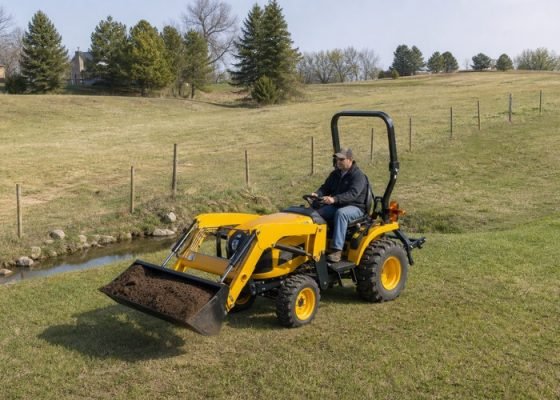

The first hour on a new tractor often feels easier than it should. The controls are simple enough to move, the loader lifts, and the machine has more traction than a pickup. That quick confidence is useful, but it can hide the decisions that matter most: where the center of gravity moves with a raised load, what a side slope does to stability, how fast a PTO shaft turns, and why a familiar driveway changes after rain.
This guide treats tractor safety for new owners as a series of ordinary choices rather than a poster on the shed wall. It starts with the route, the load, and the attachment, then works through ROPS and seat-belt use, loader travel, PTO setup, hitching, shutdown, and a realistic property-work scenario. Owners comparing machine layouts can keep the SeekMach tractor category open while reading, but the operator’s manual for the exact tractor remains the controlling document.
The numbers behind rollover protection deserve attention. NIOSH reports that 971 tractor-related fatalities occurred in agricultural production from 2011 through 2018 and cites previous analyses in which overturns represented 45% of tractor-related fatalities. Those figures do not predict what will happen on one property. They do explain why rollover protection, seat-belt use, conservative loader position, and route planning belong in the same conversation.
A practical rule runs through every section: if a job requires a raised load, a sharp turn, a side slope, a hurried hookup, or a person standing inside the machine’s working envelope, redesign the job before adding throttle. Productivity comes from a cycle that can be repeated calmly, not from proving that the tractor can survive one awkward pass.
| What you see | What it may change | First response | Do not rely on |
|---|---|---|---|
| Wet grass, frost, loose gravel, or a soft shoulder | Steering, braking, side grip, and stopping distance | Walk the route and choose a flatter line or postpone | Four-wheel drive as a substitute for traction and judgment |
| Loader material carried above hood height | Center of gravity, forward visibility, and rollover margin | Lower the load before travel and use approved ballast | Driving slowly with the bucket still high |
| Missing PTO shield or damaged driveline guard | Entanglement exposure | Shut down and repair before use | Loose clothing discipline alone |
| ROPS folded or absent | Operator survival space in an overturn | Restore the approved protective setup before the task | Jumping clear during a rollover |
| Unknown tow point or chain rating | Rear overturn and component failure | Use only the approved drawbar or hitch point and rated hardware | Connecting to an axle or three-point component because it is convenient |
A tractor does not experience a property the way a person on foot does. A shallow ditch can place one rear tire lower than the other, a hidden stump can lift the front axle, and a soft edge beside a culvert can collapse under a loaded tire. Cross slopes are especially deceptive because the operator may feel comfortable until a rut, turn, or raised attachment shifts the center of gravity farther downhill. A related SeekMach reference is the tractor sizing and acreage guide. For independent guidance, review NIOSH Worker Safety on the Farm.
Use a repeatable order and follow the exact manual. Park securely, lower attachments, isolate power, control stored energy, and inspect the work area before testing.
Field example. A new owner needs to move soil from a garden excavation to a pile across a grassy bank. Empty, the route feels harmless. With the bucket full, the front tires press into a soft swale and the return turn points downhill. A safer cycle uses a flatter diagonal route, a smaller bucket fill, and a turning area on level ground.
Decision point. If the route cannot be made predictable with the attachment low and the tractor square to the grade, use another route, another machine, or a stationary material-transfer plan. Stop whenever the setup falls outside the manual, site rules, component ratings, or the operator’s training.
A rollover protective structure creates a survival zone; the seat belt keeps the operator inside that zone. One without the other is not the same protective system. With an approved ROPS upright, buckle the belt. On a tractor without ROPS, the correct long-term answer is not to treat the belt question as a loophole but to determine whether an approved retrofit is available or whether the tractor should be removed from the job. A related SeekMach reference is the SeekMach product overview. For independent guidance, review NIOSH rollover protection guidance.
Use a repeatable order and follow the exact manual. Park securely, lower attachments, isolate power, control stored energy, and inspect the work area before testing.
Field example. A tractor is stored under a low lean-to, so the owner leaves the folding ROPS down for mowing. The first open-area pass feels normal, but the protection is unavailable near a ditch. The better routine is to redesign the parking approach so raising and pinning the ROPS becomes part of leaving storage, followed immediately by fastening the belt.
Decision point. If an approved ROPS cannot be placed in its operating position for the route, do not treat lower speed as equivalent protection. Resolve clearance or machine suitability first. Stop whenever the setup falls outside the manual, site rules, component ratings, or the operator’s training.
Loader capacity is only one part of safe loader work. The load center, bucket position, rear ballast, tire condition, surface, axle loading, and steering response all change the result. Carrying the bucket just high enough for ground clearance usually preserves visibility and stability better than traveling with the loader raised. Ballast must follow the tractor and loader instructions; a random heavy object on the three-point hitch is not an engineered answer. A related SeekMach reference is the tractor loader lift-capacity guide. For independent guidance, review USDA tractor safety training.
Use a repeatable order and follow the exact manual. Park securely, lower attachments, isolate power, control stored energy, and inspect the work area before testing.
Field example. A bucket of dry mulch and a bucket of wet soil occupy similar space but do not place the same load on the tractor. If the rear feels light, steering changes, or a tire begins to sink, the answer is not a faster trip to the pile. Reduce the load and correct the setup.
Decision point. Any loss of steering authority, rear-tire contact, predictable braking, or clear forward view is a stop signal, even when the hydraulic system will still lift the bucket. Stop whenever the setup falls outside the manual, site rules, component ratings, or the operator’s training.
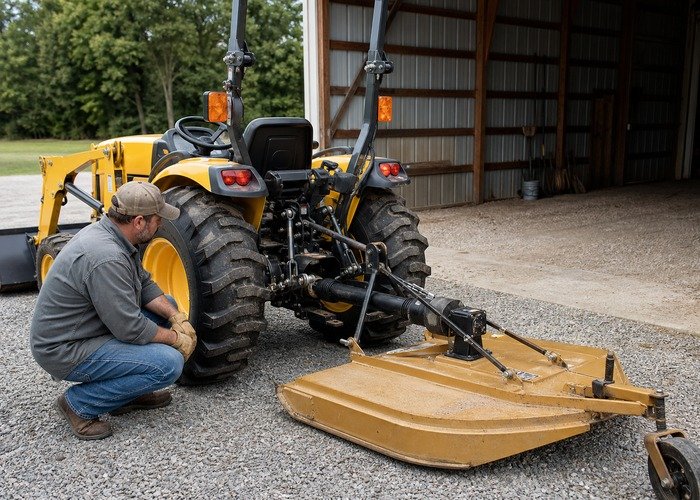
A PTO driveline can remain hazardous even when the job feels routine. Guards, correct driveline length, proper locking, the right PTO speed, and a complete shutdown sequence matter every time. Loose clothing is an obvious risk, but a guarded system is still required; clothing discipline is not permission to operate damaged shielding. A related SeekMach reference is the compact tractor maintenance schedule. For independent guidance, review OSHA tractor safety toolbox.
Use a repeatable order and follow the exact manual. Park securely, lower attachments, isolate power, control stored energy, and inspect the work area before testing.
Field example. A rotary cutter stops throwing material, so the operator assumes grass is wrapped around the shaft. The safe diagnosis begins with a full shutdown and control of stored energy, not a quick reach from the seat. A slip clutch, shear device, blockage, or driveline problem needs the manual’s procedure.
Decision point. If a shield is missing, a driveline is the wrong length, or the attachment cannot be connected without entering a pinch point under unsupported equipment, the job waits for repair or the correct components. Stop whenever the setup falls outside the manual, site rules, component ratings, or the operator’s training.
Improper hitching can rotate a tractor rearward with startling speed. The approved drawbar or manufacturer-specified hitch point is designed around the tractor’s geometry. An axle housing, upper three-point location, or improvised high point may look strong while creating dangerous leverage. Towing also requires rated chain or strap hardware and a plan for what happens if the load moves suddenly. A related SeekMach reference is the SeekMach application solutions. For independent guidance, review NIOSH improper tractor hitching alert.
Use a repeatable order and follow the exact manual. Park securely, lower attachments, isolate power, control stored energy, and inspect the work area before testing.
Field example. A tree section will not move, so the tempting response is to attach higher and gain leverage. That is exactly the moment to reassess the load, cut it smaller, improve the path, or use purpose-built recovery equipment instead of changing the tractor’s safe hitch geometry.
Decision point. If the load requires shock loading, an improvised attachment point, or a person to stand near a tensioned line, redesign the recovery before pulling. Stop whenever the setup falls outside the manual, site rules, component ratings, or the operator’s training.
Many close calls happen after the useful work is finished: an attachment is left raised, a child approaches the machine, a hydraulic line retains pressure, or the tractor rolls because the parking sequence was rushed. A consistent shutdown also improves maintenance because leaks, loose pins, wrapped debris, and damaged guards are easier to notice while the day’s work is still fresh. For independent guidance, review Penn State tractor safety guidance.
Use a repeatable order and follow the exact manual. Park securely, lower attachments, isolate power, control stored energy, and inspect the work area before testing.
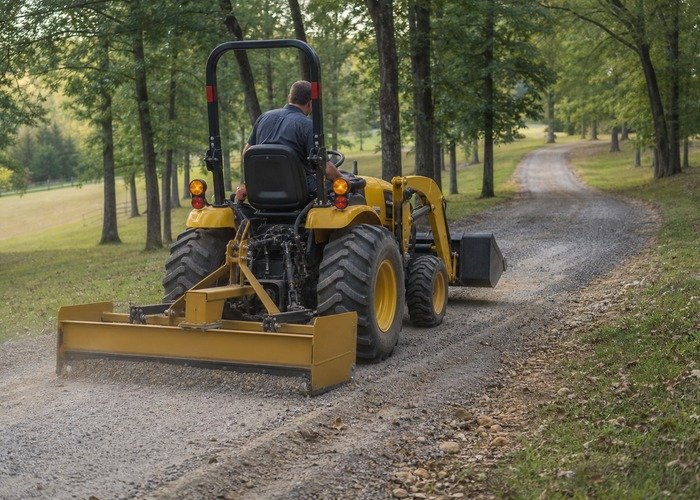
Field example. After grading a driveway, the owner notices one loader pin has pushed partly outward. A thirty-second note and lockout prevents the next operator from starting with an unknown defect. Wiping the area clean also shows whether the nearby moisture is spilled lubricant or an active leak.
Decision point. Do not hand a questionable tractor to the next operator with only a verbal warning. Tag the issue, secure the key, and repair it before the next cycle. Stop whenever the setup falls outside the manual, site rules, component ratings, or the operator’s training.
No. Four-wheel drive may improve traction, but it does not create rollover protection, reduce the height of the center of gravity, strengthen a soft shoulder, or guarantee braking on wet grass. Follow the exact tractor manual’s slope limits and operating instructions, keep attachments low, and choose a route that does not depend on traction alone.
Yes. NIOSH treats ROPS and seat-belt use as a combined protective system because the belt helps keep the operator inside the protected zone during an overturn. Inspect both before work and do not operate with a folded or damaged protective structure unless the exact manual specifically permits the limited situation and procedure.
Slow travel reduces some dynamic forces, but a raised bucket still lifts the center of gravity and can block visibility. Carry the load in the low travel position specified by the manual, use approved ballast, and raise only where needed for a controlled dump on suitable ground.
Disengage the PTO, lower and secure the implement as required, stop the engine, remove the key, wait for all motion to stop, and follow the implement manual’s stored-energy and blockage procedure. Never rely on the PTO lever alone and never reach across a coasting shaft.
Practice mounting, starting, stopping, steering, braking, loader lowering, attachment shutdown, and parking on a large level clear area with no bystanders. Add loads, slopes, implements, and confined spaces only after the basic cycle is smooth and the operator understands the manual.
Good tractor operation is rarely dramatic. The loader stays low, the turn happens on level ground, the PTO guard is in place, the hitch point is correct, and the key comes out before anyone approaches. Those habits may look slow during the first week. Soon they become the reason work continues without a damaged machine, an avoidable repair, or a frightening near miss.
Before the next job, write a one-page route and setup card for the property: known slopes, soft areas, approved ballast, common attachments, shutdown steps, and who is allowed to operate. Review it whenever weather, an attachment, or the work area changes. Tractor safety for new owners becomes useful when it lives in the work cycle, not only in the manual on the shelf.