Telephone/WhatsApp:+86 156 2656 0610

Telephone/WhatsApp:+86 156 2656 0610
Email:info@seekmach.com

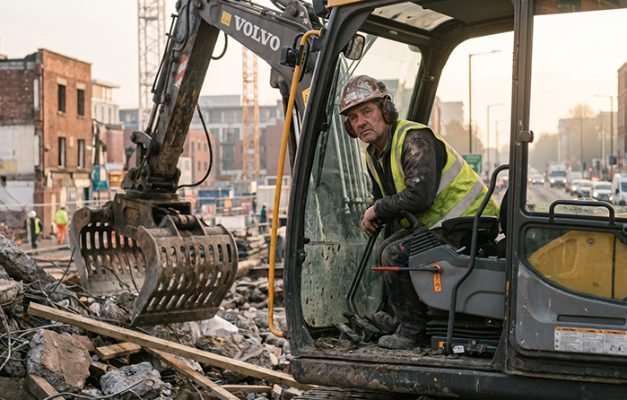
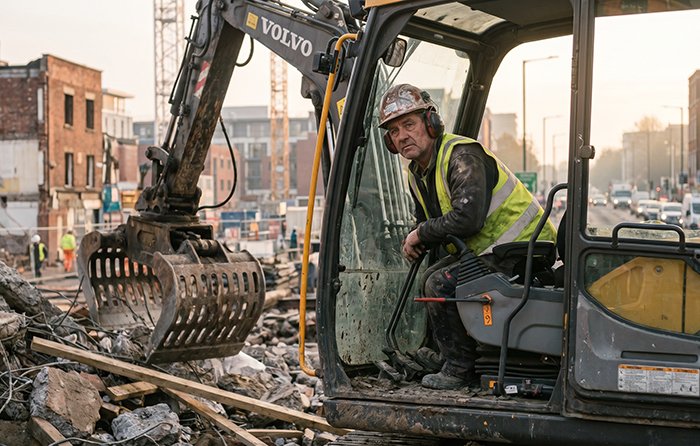
The job site doesn’t wait for the wrong machine to catch up. Across urban demolition corridors and precision agricultural projects alike, operators are discovering that deploying a general-purpose excavator on a specialized task doesn’t just slow things down — it compounds inefficiencies across every phase of the work.
The numbers make the case clearly: according to the Association of Equipment Manufacturers, integrating 2D and 3D machine control systems can improve grading productivity by up to 40% while cutting fuel consumption by 15%. That’s not a marginal gain — it’s the difference between a project that finishes on schedule and one that bleeds budget into overtime.
The machinery industry is responding with a fundamental shift in philosophy. Rather than deploying a single machine with a fixed bucket and hoping it fits the task, forward-thinking contractors and fleet managers are embracing the multi-tool carrier model — excavators engineered from the ground up to accept a wide range of purpose-built attachments. Understanding what drives hydraulic compatibility in these systems is increasingly a baseline requirement, not an afterthought.
This is precisely where excavator application solutions for urban construction and large-scale agricultural work converge: in the demand for factory-configured machines matched to project conditions before the first bucket of earth moves. The sections ahead unpack exactly how that precision pays off — starting with the tightest, most demanding environments any machine will ever face.
Modern urban renewal doesn’t just demand power — it demands intelligence. As cities densify and infill projects multiply, the ability to work within a tight footprint has become as critical as raw digging force. What’s changed in recent years isn’t just machine size; it’s the complete rethinking of how excavators perform multiple roles within the same constrained site.
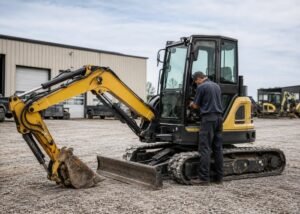
Compact excavators with zero or minimal tail swing have become the standard solution for renovation corridors, utility trenching between live structures, and basement excavations where every inch matters. In practice, a machine that can rotate its upper structure within its own track width eliminates costly repositioning delays — and in urban billing environments, time truly is money.
One of the most significant shifts in urban demolition is the replacement of dedicated single-function machinery with versatile excavator attachments for land clearing and selective debris management. According to Construction Equipment Magazine, excavators equipped with specialized hydraulic thumb attachments and rotating grapples are increasingly replacing dedicated demolition machinery in urban renewal projects.
The practical advantage is substantial. A rotating grapple can sort concrete rubble from rebar, stack salvageable material, and prepare a debris pile for removal — all without a machine swap. Understanding how attachments interact with your hydraulic system before selecting your setup prevents underperformance in the field.
Urban project permits frequently impose strict noise ordinances. Electric or hybrid compact excavators are gaining traction here, reducing both acoustic output and vibration transfer to adjacent structures — a genuine consideration when working near occupied buildings or historic facades.
A skilled operator with the right attachment lineup can move from structural dismantling directly into grading and trenching without swapping machines. That operational continuity compresses project timelines significantly.
This same flexibility — moving fluidly between tasks within a confined space — turns out to be exactly what agricultural environments demand, though the constraints there look very different from a city block.
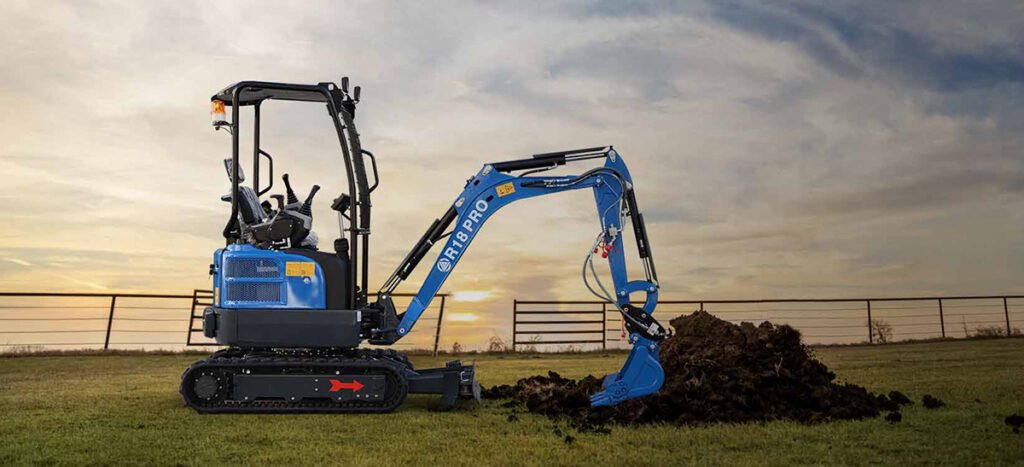
Urban job sites aren’t the only environments demanding precision over raw power. Out in the field — literally — small and mid-size farming operations face their own set of constraints that make compact excavators increasingly indispensable. From soil-sensitive orchards to tight-gated hobby farms, the right machine can mean the difference between a productive season and a damaged landscape.
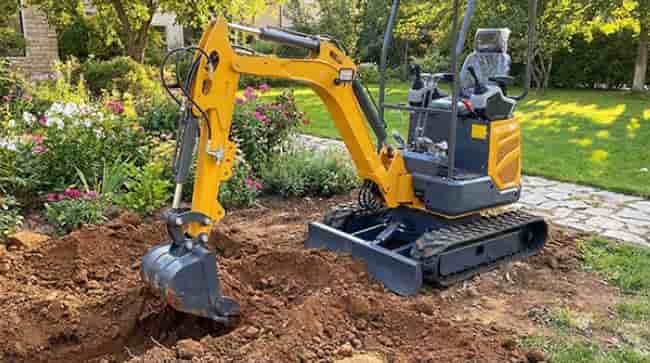
Soil compaction is one of the most overlooked threats to agricultural productivity. Heavy equipment that exceeds optimal ground pressure can crush the microscopic structure that roots depend on, reducing yields for years after a single pass. Compact and mini excavators are engineered specifically to address this. Their reduced weight distributes force across a wider footprint, preserving soil integrity even in saturated post-rain conditions. This is a critical advantage when clearing fence lines, managing irrigation channels, or shaping berms near active crop rows.
According to Equipment World, the shift toward compact and mini excavators in landscaping and residential construction is driven by the need for low ground pressure and the ability to navigate through 36-inch gates. That same capability translates directly to small-farm environments, where access between outbuildings, greenhouses, and fenced paddocks is routinely restricted. A machine that can’t fit through the gate simply can’t do the job.
| Farm Task | Excavator Solution |
|---|---|
| Drainage channel installation | Precise trenching with minimal soil disturbance |
| Irrigation line burial | Controlled depth digging in row-crop areas |
| Fence post removal and reset | Thumb attachments for grip and extraction |
| Slope grading near orchards | Low ground pressure prevents root zone damage |
| Pond and retention basin work | High-efficiency excavator solutions for commercial site prep scale down to AG applications |
Waterlogging is a yield killer. Poorly drained fields can lose entire sections of a harvest if water sits too long after heavy precipitation. Compact excavators allow operators to cut precise drainage swales, install culverts, and shape land contours without disturbing surrounding crop areas. For operators comparing machine sizes before committing to a purchase, this guide to tight-space performance breaks down hydraulic efficiency across the sub-1-ton class — a common choice for drainage work on smaller plots.
Factory-direct sourcing from Seekmach gives agricultural buyers access to compact models configured for these exact use cases, without the markup or spec compromises that come through third-party channels. That said, total cost of ownership extends well beyond the purchase price — and how you monitor and maintain your machine has a measurable impact on long-term returns.
Smart excavator deployment — whether in dense urban corridors or open agricultural fields — only delivers lasting value when the machine stays operational. Downtime is expensive. Unplanned repairs are more expensive. That’s where telematics transforms the economics of excavator ownership.
Key Stat: According to McKinsey & Company, maintenance costs for excavators can be reduced by 25% through telematics-driven predictive maintenance schedules — a figure that compounds significantly over a machine’s working life.
For operators who’ve already recognized the compact excavator utility in precision agriculture and urban infill work, that 25% reduction isn’t abstract. It’s the difference between a machine that pays for itself in three years versus four.
Hydraulic pressure monitoring sits at the core of any effective telematics strategy. Subtle pressure drops — often invisible to the naked eye — frequently precede catastrophic seal failures or pump degradation. Real-time sensors flag these anomalies before they become on-site emergencies.
Maintenance Tip #1: Set hydraulic pressure threshold alerts at 90% of rated capacity. Consistent readings below that baseline warrant immediate inspection, not a “wait and see” approach.
For operators running attachment-intensive workflows, understanding how hydraulic flow affects performance is foundational — because attachments stress hydraulic systems in ways standard bucket work simply doesn’t.
Telematics data loses its value if corrective action relies on off-spec replacement parts. Maintaining CE and ISO certification compliance demands factory-direct components that match original engineering tolerances exactly.
Maintenance Tip #2: Always cross-reference part numbers against factory documentation. Aftermarket alternatives can technically fit while quietly degrading hydraulic efficiency by 10–15%.
Maintenance Tip #3: Schedule full CE/ISO compliance reviews annually — not just when something breaks. Telematics schedules make this proactive approach straightforward and cost-defensible.
Mid-tier machinery — like the farm-ready models explored in the previous section — benefits disproportionately from data-driven maintenance. A well-maintained 1.0-ton unit operating on a predictive schedule consistently outperforms expectations for small-scale work, delivering utility well beyond standard depreciation curves.
What does all this look like in real operation? The next section brings these capabilities to life visually.
[VIDEO EMBED: Smart Excavator Attachments That Are On Another Level]
What to watch for: This video demonstrates exactly why visual proof has become a non-negotiable for serious buyers. Pay close attention to how quickly operators cycle through attachment changes — from standard buckets to augers and hydraulic breakers — without downtime. Notice the precision grading passes, where the blade maintains consistent depth across uneven terrain. If you’re researching how to choose the right excavator for drainage projects, watch how the trenching attachment maintains grade angle through varying soil conditions. That level of controlled movement doesn’t happen by accident; it’s the result of calibrated hydraulic flow matched to attachment demand. For factory-direct buyers especially, seeing real machine behavior on video eliminates the ambiguity that spec sheets alone can’t resolve. A machine that handles demanding attachments without pressure drop is worth more than one with impressive numbers that don’t translate to the field.
Seeing is believing — and in a market where factory-direct purchasing decisions are made remotely, video documentation closes the confidence gap faster than any datasheet. With that foundation in place, the next step is building a structured framework to match the right machine to your specific application.
Not every excavator fits every job — and the cost of a poor match shows up fast, whether it’s a bogged-down undercarriage on clay soil or a hydraulic system gasping to feed a high-demand attachment. Use the checklist and framework below to cut through the noise before you commit to a purchase or rental.
Quick Pre-Purchase Checklist:
Soil type and track width are your first filter. Wide steel tracks distribute weight effectively on soft agricultural ground, preventing sinkage — but those same tracks become a liability in narrow urban trenches or finished hardscape areas. Rubber tracks on compact machines protect surfaces and squeeze into tighter corridors without compromising traction on moderate terrain.
Hydraulic flow matching is equally non-negotiable. A high-torque auger or a cold-planer attachment may demand 25–40 GPM of auxiliary hydraulic flow, while a standard thumb or tilt bucket runs comfortably at 15–20 GPM. Running an attachment beyond a machine’s rated flow causes heat buildup, premature seal failure, and voided warranties. Always cross-reference the attachment manufacturer’s spec sheet against the excavator’s auxiliary circuit rating before finalizing your configuration. Platforms like Alibaba’s engineering excavator showroom surface factory-spec data that makes this comparison straightforward.
OEM/ODM customization unlocks value that off-the-shelf machines can’t deliver for niche applications — think reinforced booms for demolition cycles, custom pin configurations for proprietary attachments, or localized voltage settings for regional compliance. In practice, a customized machine specification eliminates costly retrofitting downstream.
Factory-direct sourcing removes the middleman markup without sacrificing build quality. Procurement officers consistently find that direct manufacturer relationships — supported by platforms built around verified suppliers — yield better lead times, clearer warranty terms, and direct access to engineering support. If your team also works with compact loaders on mixed sites, reviewing versatile attachment options for complementary machines can round out your procurement strategy efficiently.
The right machine-attachment combination is rarely obvious on paper alone — which is why the questions that follow address the most common decision points buyers encounter in the field.
How do I choose an excavator for drainage projects?
Focus on digging depth, bucket capacity, and undercarriage performance on saturated ground. A compact model in the 2–6 ton class often delivers the precision needed for trenching without disturbing adjacent infrastructure — check out this beginner’s framework for attachment-ready machines if you’re evaluating specs for the first time.
What are the best attachments for land clearing?
Hydraulic thumbs, mulching heads, and rotating grapples consistently outperform standard buckets for land clearing. The right combination depends on vegetation density and debris type — purpose-built attachments can reduce clearing time by a significant margin compared to bucket-only approaches.
Can compact excavators handle commercial site prep?
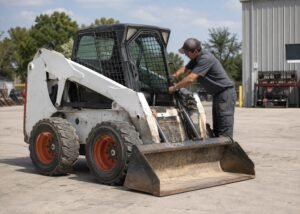
Yes, in most scenarios. Modern compact excavators deliver hydraulic performance that rivals larger machines in confined urban footprints. For related insight on versatile compact attachments, this guide to loader attachment selection applies transferable principles worth reviewing.
What does CE/ISO certification mean for my project safety?
CE and ISO certifications confirm that a machine meets internationally recognized engineering and safety standards. For contractors, this translates directly into reduced liability exposure, smoother permit approvals, and confidence that the equipment performs as specified under real working conditions.