Telephone/WhatsApp:+86 156 2656 0610

Telephone/WhatsApp:+86 156 2656 0610
Email:info@seekmach.com

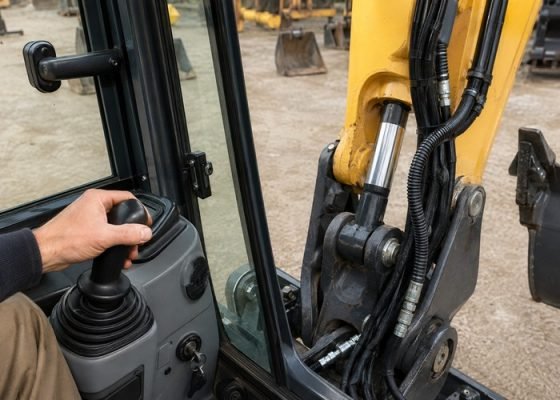
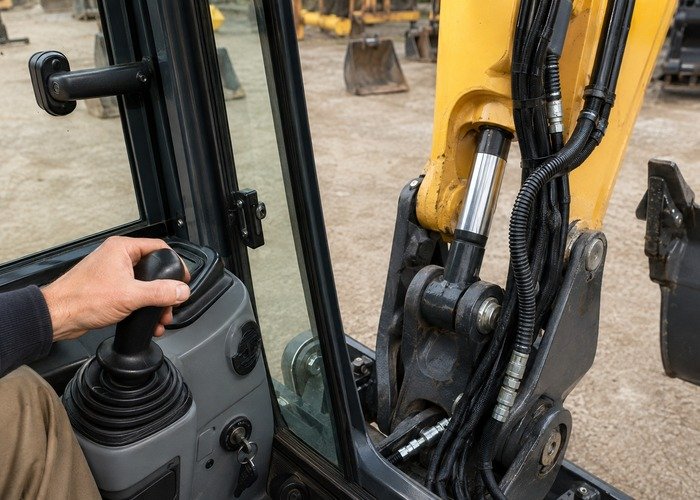
A mini excavator boom that jerks, stutters, pauses or surges needs a controlled diagnosis before anyone adjusts a relief valve. The cause may be abrupt joystick input, cold oil, low fluid, aeration, suction leakage, restricted filters, unstable engine speed, pilot-pressure fluctuation, an electronic control signal, a sticking spool, cylinder friction, pump control or contamination.
Lower the attachment, park level, set the controls neutral, stop the engine and release stored pressure before inspection. Never work beneath equipment held only by hydraulics. Keep hands away from leaks; follow the NIOSH hydraulic safety guidance for injection hazards.
Define the pattern. Record which function jerks, direction, joystick position, engine rpm, hydraulic temperature, attachment, load and whether another function is being used. A single cylinder that sticks differs from every function pulsing together. A cold-only symptom differs from one that begins after thirty minutes.
Test on level ground with the standard bucket low and no bystanders. Use slow, steady joystick input in one function at a time. An unfamiliar short-throw control can feel abrupt even when the system is healthy. Compare both directions and repeat with any selectable work mode in its standard setting.
Remove an auxiliary attachment only by its approved procedure. A heavy thumb, breaker or tilted quick coupler changes inertia and cylinder load. Review the hydraulic thumb and coupler guide before treating attachment-induced motion as a pump fault.
Watch engine rpm while the motion jerks. If rpm hunts or falls, inspect fuel, air, derate codes and engine load. If all hydraulic functions pulse with rpm, fix the shared power problem first. If engine speed remains steady but one function stutters, focus on that command and work circuit.
Operate travel, swing, boom, stick and bucket separately. Shared jerking suggests oil supply, pump control, pilot supply or electrical reference. A single direction suggests spool, port relief, hose, load-holding valve or cylinder behavior.
Check level at the specified attachment position, temperature and engine state. Low oil can draw air; overfilling can cause churning. Use only the approved viscosity and specification. The manufacturer maintenance overview demonstrates routine checks for fluid, hoses, cylinders and undercarriage.
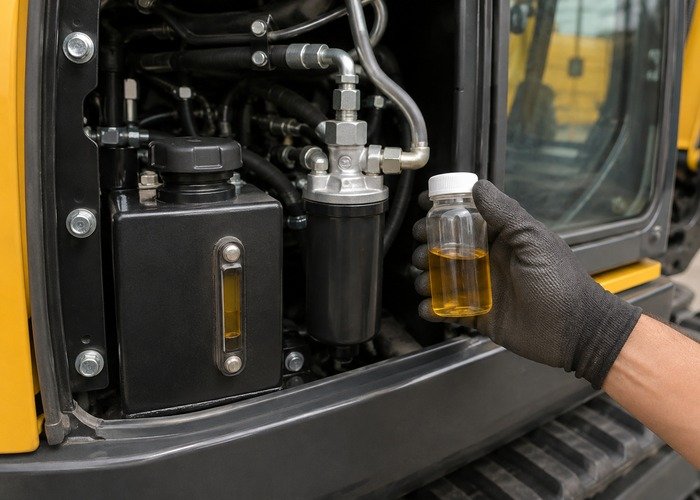
Look for foam, cloudiness, burnt odor, water, particles and abnormal color. Take a clean sample from the approved point. Do not judge oil health from reservoir color alone. If the symptom appears hot, record hydraulic temperature and cooling condition, and use the mini excavator maintenance checklist to organize the inspection. Follow the model manual for measurement points and limits.
Aerated oil compresses and can make cylinders hesitate then jump. Inspect reservoir level, suction hose, clamps, pump inlet seals, return location and tank breather. Suction leaks may pull air without leaking oil outward. Listen for pump whine and observe foam only through the approved sight point.
Do not tighten every clamp blindly or replace the pump first. Check hose hardness, cracks, collapse and fitting condition. Bleed only by the service procedure; repeatedly cycling a loaded cylinder can increase heat and entrained air.
A restricted suction strainer or filter can starve the pump, while a bypassed filter can spread debris into pilot or main valves. Check service hours, restriction indicators and cut-open filter evidence. Replace with the specified element and keep caps and funnels clean.
Le service-maintenance article illustrates why model intervals and clean access matter. Do not use another machine’s filter interval or oil grade.
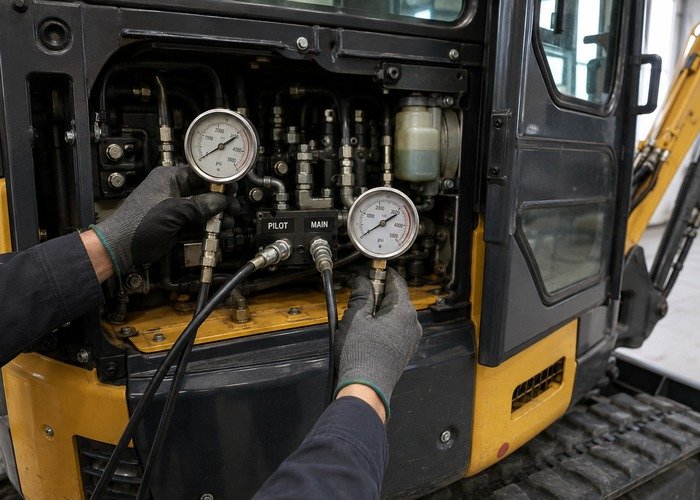
Pilot controls should provide a smooth pressure change as the joystick moves. Use the specified port, rated gauge, oil temperature and engine speed. Compare neutral, initial movement and full command in both directions. Fluctuation may originate at the pilot pump, regulator, accumulator, joystick valve, solenoid or controller.
On electronically controlled machines, compare joystick percentage, commanded current and actual pilot pressure. A noisy sensor or poor ground can command a jump even when hydraulic components are healthy. Do not bypass lock levers or neutral interlocks.
Main relief pressure alone cannot diagnose jerkiness. Measure pump pressure, load-sense or negative-control signal where applicable, and cycle time. A pump regulator that hunts may affect multiple functions; a port relief or spool problem may affect one direction.
Use the mini excavator power-under-load guide to separate engine, pump and relief behavior. Gauges, hoses and adapters must be rated above maximum pressure and secured away from moving linkage.
Check external linkage, joystick pivots and spool return. Contamination or damage can make a spool stick then release. Do not polish or force a precision spool. Qualified repair requires a clean bench, component identification and exact assembly data.
Inspect cylinder rod, gland, pins and bushings. Dry pins, side load, bent rods or tight seals can cause stick-slip motion. Internal bypass more often causes drift or weak force; compare with the mini excavator cylinder drift guide before ordering seals.
This video shows a repair approach for jerky excavator controls. It helps identify control-side symptoms, but component location and adjustments vary by model.
Obtain the serial-number-specific service manual before opening a valve or changing pressure. Mark every connector and hose.
Keep the attachment lowered and isolate stored energy. A successful visual repair is not complete until pressure and motion are measured.
After viewing, map the symptom from joystick input to pilot pressure, main spool, work port and cylinder. This prevents unrelated parts replacement.
Repeat the same slow-input test after repair at cold and normal operating temperature. Stop for unexpected movement.
Record cycle time, pressure stability and the exact condition that changed. Keep the result with the machine history.
| Pattern | Priority check |
|---|---|
| All functions jerk cold | Oil viscosity, level and warm-up |
| All functions pulse with steady engine | Pilot supply and pump control |
| One direction only | Command, spool, port relief and hose |
| Movement jumps after pause | Aeration, stick-slip or valve sticking |
| Jerking plus drift | Cylinder and load-holding leakage |
Finish with a daily inspection of oil, hoses, rods, pins, leaks and controls using the mini excavator maintenance checklist. If travel also surges or pulls, use the one-side travel diagnosis as a separate path. A repeatable record is more valuable than a guessed adjustment.
Mark a safe reference position for the boom, stick and bucket. With the machine level and oil at the specified temperature, time each function through a defined range using the same engine speed and work mode. Record the moment motion begins, any pause, surge or vibration, and whether the symptom appears at the same cylinder position. Repeat in the opposite direction without combining functions.
Video can help document motion, but place the camera outside the machine’s working envelope and never ask a person to stand near the attachment. A slow-motion recording may show whether the cylinder hesitates while the control moves smoothly or whether engine speed and all functions pulse together. Use that observation to choose pressure and signal measurements; do not treat video alone as a diagnosis.
Compare cold and warm results with actual oil temperature. Thick cold oil can increase pressure loss through a filter or small pilot passage, while warm oil can reveal internal leakage. Record ambient temperature, warm-up time and cooler-fan operation. If the problem changes suddenly at a particular temperature, inspect thermostatic, cooling and electronic control behavior in addition to viscosity.
Check every recent service event. A wrong filter, incorrect oil, loose suction clamp, disturbed connector or contaminated refill can introduce jerking immediately after maintenance. Confirm part numbers and quantities from records. Do not drain good evidence before taking a sample and checking the restriction indicator, reservoir level and fault history.
Linkage friction can imitate hydraulic instability. Grease pins by the schedule and inspect bushings for side load, but keep grease away from rod surfaces and seals. A bent cylinder rod, damaged pin bore or attachment geometry problem may stick at a repeatable position. Disconnecting components for isolation requires secure support and the service manual.
If pilot pressure is unstable, work backward from the affected function. Compare joystick signal, pilot supply, accumulator behavior, solenoid command and spool response. If pilot pressure is smooth but main pressure surges, examine pump regulation, load-sense signals, work-port reliefs and mechanical load. The distinction keeps a control repair from becoming an unnecessary pump replacement.
After repair, repeat the original motion test before changing any other variable. Confirm smooth single-function and combined-function operation, neutral response, drift, noise, temperature and leakage. Then inspect filters and sample oil after the recommended interval if contamination was involved. A repair that feels better but produces new debris or heat has not passed.
Teach operators to report the first conditions, not just the word jerky. Useful notes include function, direction, load, temperature, work mode, engine rpm and fault code. Those details turn an intermittent complaint into a testable pattern and reduce the temptation to alter relief settings without evidence.
Bring the machine serial number, hours, oil and filter history, attachment weight, fault codes and a written symptom table. Include which functions jerk, directions, cold and warm temperatures, engine rpm, work mode, cycle times, pilot readings and main pressure behavior. This evidence can save hours of repeating tests and prevents broad component replacement.
Ask the technician to explain what each proposed test will separate. A pilot test should distinguish command instability from the main circuit. A case-drain or leakage test should follow the specified temperature and pressure. A flow test should account for engine speed and regulator command. If a test cannot change the decision, it may not justify its risk.
When a valve or pump is opened, require contamination controls: cleaned exterior, capped lines, protected ports, lint-free assembly, correct seals, calibrated tools and a flushing plan based on the failure. If metal is present, replacing one cartridge without cleaning the circuit can send debris straight into the repaired part.
Close the service case with before-and-after results, part numbers, settings and follow-up interval. Verify the operator understands warm-up, work modes and stop conditions. Smooth motion at idle is not enough; the machine must remain predictable warm, under its normal attachment load and during safe combined movements.
Intermittent jerking deserves a longer observation window. Repeat the same test after transport vibration, full warm-up and several neutral-to-command cycles. Note whether the symptom follows one joystick angle, cylinder position or simultaneous function. These patterns can reveal a connector, sensor dead spot, spool friction or regulator response that a single shop test misses.
Before release, remove every temporary gauge and cap the ports with clean specified plugs. Restore covers, guards and harness clips, then inspect for leaks after shutdown. Schedule an early filter and sample review when contamination or component wear was part of the repair. Use the machine-specific interval, supported by a manufacturer’s excavator service schedule, rather than inventing a generic hour limit.
Ask the operator to report any return of the symptom immediately and to avoid compensating with faster joystick movements. A sudden command can hide a small hesitation until the machine is carrying a load, when the resulting jump becomes more dangerous. Review the OSHA hydraulic-equipment safety guidance with the crew so nobody searches for a pinhole leak by hand or enters the machine’s crush zone during diagnosis.
Run a final controlled cycle with the bucket empty, then with only the approved test load and a spotter outside the swing radius. Confirm that the boom starts, stops and combines with another function smoothly at idle and normal test speed. Any renewed jump, pressure spike, abnormal sound or rising temperature means the machine should stay out of service for deeper testing.
Some response changes with temperature, but severe jumping is not a normal warm-up method. Use the approved oil and procedure.
Yes. Low level can admit air, but find the reason for low oil and inspect for leaks.
No. Relief pressure must be measured and adjusted only to model specifications.
Not necessarily. Controls, air, valve sticking, pin friction and pump signals can produce similar motion.
Stop for unpredictable movement, severe noise, foaming, heat, damaged hoses, metal contamination or any unsafe load-control behavior.