Telephone/WhatsApp:+86 156 2656 0610
Telephone/WhatsApp:+86 156 2656 0610
Email:info@seekmach.com

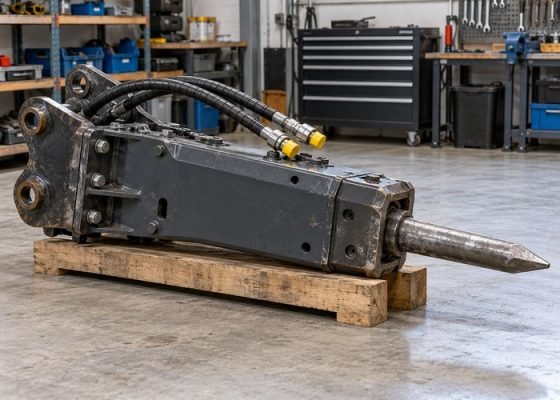
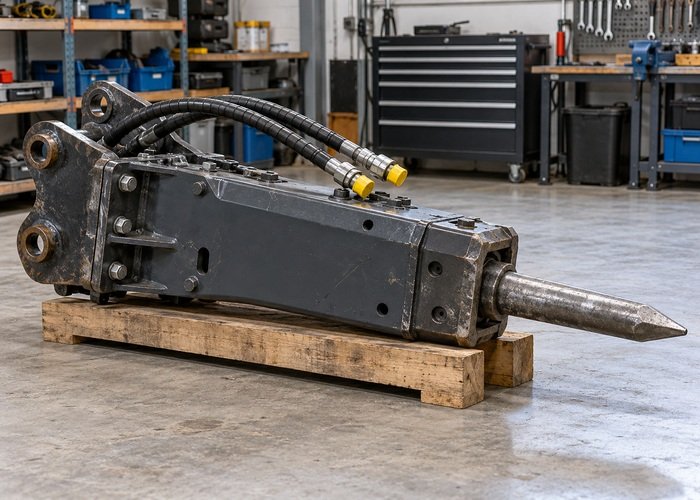
Assess the people exposed, the actual tasks and their duration, and the other noise on the site before selecting controls. A machine’s declared noise figure is useful equipment information, but it is not automatically a worker’s daily exposure. Breaker work, nearby plant and the working environment can change the assessment. Have competent people establish the required evidence and applicable arrangements.
This guide helps contractors prepare an exposure enquiry and compare control options. It does not calculate a permitted shift, select a hearing protector from a photograph or certify a noise level for an unnamed excavator. Use the exact equipment documents and the real work pattern when making decisions.
List the operator, ground workers and others whose duties bring them near the activity. Describe digging, travel, breaker operation, waiting and other tasks separately. Include changes in location and the time people spend near different sources. Do not assess only the person in the operator’s seat while overlooking someone working alongside the machine.
HSE’s construction noise guidance identifies the need to consider different activities, people and working conditions. It is UK guidance. Its planning approach helps organize the enquiry, but local requirements and the actual exposure assessment determine the measures needed for the job.
Record whether other machinery operates at the same time and whether the work is in an enclosed or reflective space. A quiet moment during a site visit may not represent the busy part of the shift. Give the assessor a realistic account rather than choosing the easiest conditions to describe.
Ask the supplier what each declared value represents, which configuration and operating conditions it covers, and what supporting information is available. Distinguish sound power information from sound pressure information at a specified position. Neither label alone supplies the complete daily exposure of every person on a site.
HSE’s noise information advice for manufacturers explains the value of representative emission information and its measurement context. Request clarification when a quotation provides an unexplained number. Do not compare values from different test conditions as if they were interchangeable evidence of which complete system will expose workers least.
Confirm whether the attachment and cab arrangement proposed for delivery match the information being used. A figure for normal digging should not automatically be adopted for breaker work. Keep the declared data, its limitations and the actual supplied configuration together in the equipment file.
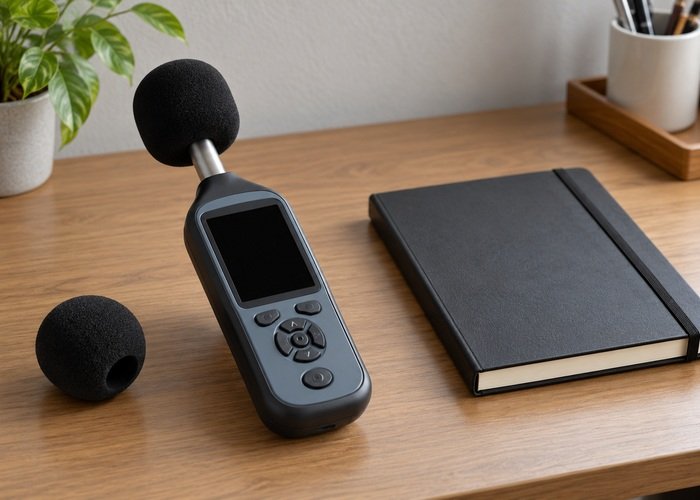
Have the responsible assessor decide what evidence is suitable and whether measurements are needed. Explain the expected tasks, equipment and exposure pattern. If measurements are specified, establish who carries them out, how the conditions are recorded and who interprets the results. An isolated reading without context may not answer the exposure question.
HSE’s noise-risk assessment guidance describes the use of reliable information to determine what action is needed. Use it as background for commissioning an appropriate review. Do not turn a general example, a phone screenshot or a supplier’s test value into an approved daily exposure calculation.
Keep uncertainties visible. If the work pattern is provisional or an attachment has not been selected, identify that limitation and when the assessment needs updating. A missing item should lead to a clear request for information, rather than an assumed low exposure entered merely to complete a form.
Consider whether the noisy task can be avoided or performed by a suitable alternative method. Review equipment selection, source reduction, separation and work organization with the responsible people. The best combination depends on the work and must also address the other hazards introduced by a proposed change.
A barrier or enclosure may need specific design and practical review. Consider access, visibility, communication and maintenance requirements rather than placing an object near the machine and assuming it is an effective acoustic control. Ask how the proposed arrangement will be checked and who will maintain it during the work.
When changing work schedules, assess the people affected across their actual activities. Moving a task to another person or another shift does not make exposure disappear. Record the revised work pattern and have the relevant assessment reviewed before treating the change as an adequate control.
| Article | Information to establish | What needs review |
|---|---|---|
| People and tasks | Actual duties, locations and duration | Nearby workers and concurrent activities |
| Equipment data | Declared value, method and configuration | Whether it represents the planned duty |
| Exposure evidence | Reliable information or specified measurements | Competent interpretation and uncertainty |
| Contrôles | Chosen source, separation and work measures | Effectiveness and responsibilities |
| Protection and follow-up | Suitable selection, training and checks | Continued fit and changed conditions |
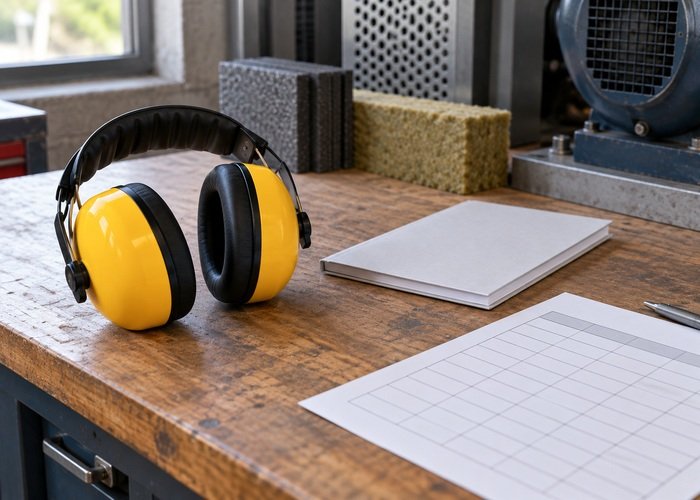
Hearing protection should be selected for the actual assessed exposure and workplace, with proper use and maintenance arrangements. Consider compatibility with other protective equipment and the need to communicate or recognize warnings. Do not assume that the highest advertised attenuation is automatically the best choice for every worker and task.
HSE’s hearing protection guidance explains that protection does not replace technical and organizational noise controls. It also discusses appropriate selection and effective use. Obtain the relevant competent advice instead of selecting a product solely from a general online recommendation or treating a packaging rating as the protection every wearer receives.
Make training and replacement practical. Workers should know when and where the selected protection is required, how to use it correctly and where to report damage. Ensure replacements are available through the site’s system. A protector kept in a cab or worn inconsistently cannot be assumed to provide the intended result.
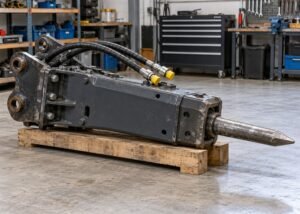
Le hydraulic breaker guide addresses carrier match and equipment care. Those decisions remain necessary, but they do not calculate workers’ noise exposure. Give the actual breaker and carrier information to the assessor and request the relevant supplier documentation before making noise claims.
Le auxiliary hydraulic-flow guide deals with another part of attachment selection. A hydraulic match does not establish that the complete work arrangement has acceptable noise exposure. Keep hydraulic compatibility, operating method and exposure controls as separate decisions with appropriate evidence for each.
Include relevant maintenance and defect reporting in the plan. Report changes in equipment condition or unexpected noise through the responsible service process. Do not modify mufflers, guards or acoustic components without the required manufacturer approval and competent review. A proposed noise modification must not introduce another hazard or invalidate the machine’s requirements.
Confirm how the operator and ground workers will communicate within the assessed arrangement. The need to hear instructions and warnings should be considered alongside protection and separation. Resolve any loss of communication before proceeding with the affected task, rather than encouraging workers to remove protection to understand an informal signal.
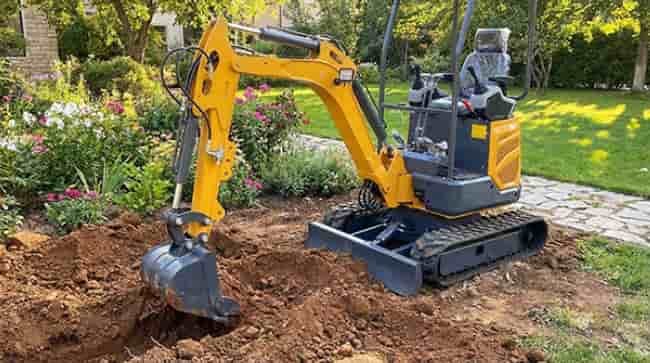
The broader mini excavator safety guide provides operating context. Noise arrangements should fit the site plan for access, exclusion and coordination. A solution that improves one exposure question but obstructs visibility or access needs further review by the responsible people.
Identify who supervises the arrangement and what findings require work to pause or be reviewed. Include changes in attachment, work location, task duration or nearby equipment. A control accepted for one activity should not be carried forward automatically when the work changes. Keep the assessment connected to what the crew is actually doing.
Arrange any required occupational-health follow-up through the appropriate competent service under applicable requirements. This article does not diagnose hearing damage or prescribe an individual health-surveillance programme. Relevant findings should be handled by the responsible professionals and used to review workplace prevention where appropriate.
Keep the current equipment information, assessment and control responsibilities available to the next supervisor and operator. Explain which work the arrangement covers and which matters remain unresolved. Do not describe a task as noise-compliant merely because ear defenders were delivered or a measurement was taken at some earlier point.
Record any significant change and the decision that followed it. Preserve the basis for comparing quieter equipment on future jobs, including the duty and test conditions. That record is more useful than a general claim that one attachment is quiet, because the next site may have a different task, enclosure and group of workers.
No automatic equivalence applies. Review what the value represents and assess the person’s actual tasks and exposure pattern.
Do not assume so. Include the task and its duration in the assessment, together with other relevant noise during the working day.
They are part of a suitable arrangement and do not replace required source and organizational controls. Obtain competent selection and use advice.
Review it when relevant equipment, tasks, locations, exposure patterns or control effectiveness change, following the responsible site’s requirements.