Telephone/WhatsApp:+86 156 2656 0610
Telephone/WhatsApp:+86 156 2656 0610
Email:info@seekmach.com

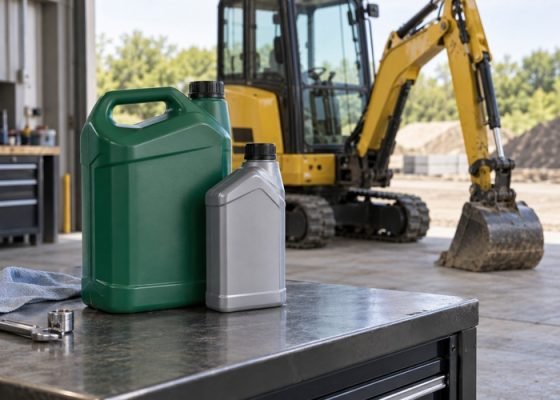
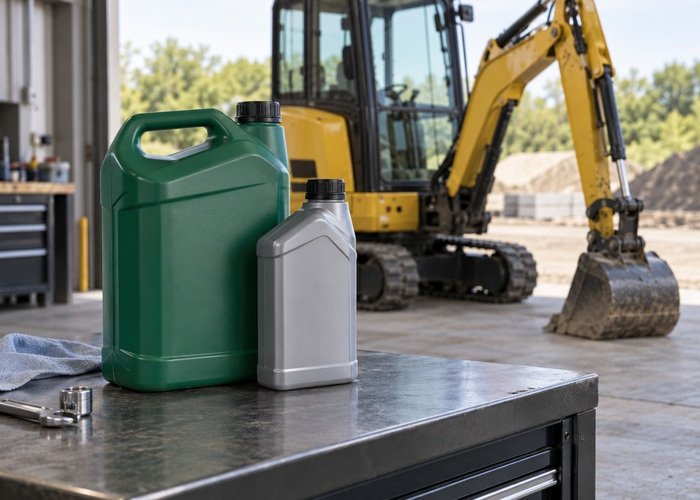
A mini excavator can use a biodegradable hydraulic oil only when the exact fluid is approved for the machine, its installed hydraulic components and the intended application. An environmental label, matching viscosity number or familiar brand does not establish compatibility. Obtain written technical approval and an approved changeover plan before draining or mixing the current fluid.
This is a procurement and planning guide for work near sensitive ground, waterways or sites with a specified lubricant requirement. It does not prescribe a flushing recipe or identify a universally suitable oil. Keep the environmental requirement, machine approval and service procedure as separate decisions, then bring them together in one documented specification.
Ask the responsible site contact for the actual written requirement. Does the project specify an approved product, a defined environmental test, an accepted certification or a broader restriction on lubricant use? Record the location and scope of the requirement. Avoid treating a spoken request for green oil as a complete purchase specification.
Confirm whether the requirement applies to the excavator, hydraulic attachments, support equipment or all of them. A machine and a hired attachment may have separate reservoirs or share hydraulic fluid, depending on the design. The supplier must understand the real arrangement before reviewing compatibility.
Keep any legal interpretation with the project’s qualified adviser. This article does not establish a worldwide obligation to use a particular fluid. A rule or label developed for one application may not determine what another jurisdiction or construction contract requires.
Biodegradability describes behaviour under specified test conditions. It does not identify the correct viscosity, approve a pump or guarantee that a spill causes no harm. Ask for the actual product documentation and the evidence supporting the claimed environmental properties rather than relying on packaging colour or a general marketing term.
Le US EPA Safer Choice criteria include additional considerations for environmentally acceptable marine lubricants. They illustrate that biodegradation and environmental suitability involve defined criteria. They do not establish excavator approval, and marine programme requirements must not be presented as a universal construction-site rule.
| Question | Evidence needed | Decision owner |
|---|---|---|
| What does the site require? | Written specification and accepted evidence | Project authority |
| Is the exact fluid suitable for the machine? | Approval covering identified equipment and conditions | Machine and component suppliers |
| Can it mix with the existing charge? | Product-specific compatibility and residual-fluid guidance | Fluid supplier and service provider |
| How is conversion performed? | Approved service plan and acceptance checks | Qualified maintenance provider |
| How are leaks and waste controlled? | Site containment and disposal arrangements | Operator and site management |
Require an answer for every row. A purchasing team can obtain an environmentally documented product while the service team still lacks approval to install it. Make those unresolved items visible before arranging a changeover.
Collect the machine model, serial number, operator manual and available component information. Record the current fluid’s exact product name and grade, supported by service records or supplier documentation. If the current charge is uncertain, label it unknown and request a method for resolving that uncertainty.
Include attachment circuits and previous modifications in the enquiry. Hoses, seals and other components may differ from the original machine arrangement after repairs. A fluid approval based on an incomplete description can leave an important compatibility question unanswered.
Le mini excavator spare-parts guide can help organise serial numbers and component references. Use those records to support the technical review. Do not infer the current oil from the appearance of the reservoir or from another machine in the same fleet.
Request approval for the named fluid under the expected operating temperatures and duty. A matching nominal viscosity grade is useful information, but it is only one part of the review. Ask which machine requirements the proposed product satisfies and what limits or exclusions accompany that answer.
Ask about seals, hoses, O-rings, reservoir coatings and any other relevant materials. Shell’s Naturelle changeover advice discusses compatibility questions for its ester fluids in marine applications. Use it as a reminder to obtain product-specific answers, not as an excavator flushing procedure or approval for a different fluid family.
A request should name both the fluid and the equipment. An assurance that ester oils are generally suitable is less useful than an approval that identifies the product, machine configuration and conditions. If a supplier cannot establish compatibility, pause the conversion decision until the missing information is resolved.
If the machine powers a hired breaker, mower or other hydraulic attachment, tell both suppliers that a fluid change is being considered. Ask whether the attachment shares the carrier’s fluid and what approval, cleaning or service requirements apply. Do not assume that an attachment previously used with mineral oil can be connected without further review.
Record which attachment configurations are covered by the approval. A later rental or replacement may introduce a different fluid history. Make the fleet’s connection procedure account for that possibility, using the supplier-approved approach rather than an owner-created flushing shortcut.
Le hydraulic hose inspection guide concerns physical condition and routing. A hose that passes that inspection still needs material-compatibility consideration for a new fluid. Keep those two assessments in the maintenance record rather than treating one as proof of the other.
The plan should identify the responsible service provider, fluid quantities established from the correct documentation, affected circuits and the required acceptance checks. It should state how residual old fluid is assessed and controlled according to the fluid and equipment suppliers. Do not invent a universal acceptable mixture percentage.
Confirm whether filters, seals or other components need service as part of the approved process. Keep the procedure for the actual machine available to the technician. Instructions for a marine steering system, stationary plant or another excavator are not automatically transferable.
Define how removed fluid and contaminated service materials will be collected and disposed of. A fluid change can create handling and spill risks even when the replacement has favourable environmental properties. Prepare the workspace and waste route before the machine is opened.
Ask which condition checks are required after conversion and how they differ from the existing maintenance programme. Record the installation date, hour-meter reading, exact product and batch identification. Keep the approved plan and the service findings together so that later samples can be interpreted against the known change.
Le hydraulic oil analysis guide explains the value of consistent sampling and comparable records. For a different fluid chemistry, the laboratory needs the correct product information and appropriate reference criteria. Do not compare unlike fluids as though a changed result necessarily indicates damage.
Agree who receives the results and who decides whether further action is needed. A laboratory report, an operator observation and a supplier recommendation answer different questions. Preserve their original meanings instead of reducing every finding to a single reassuring status.
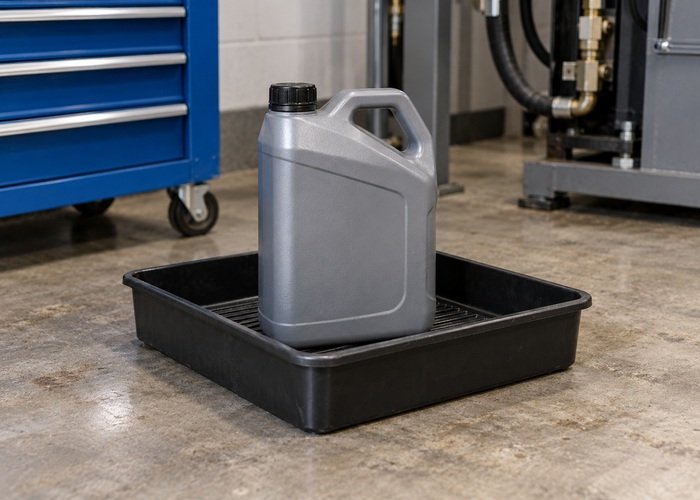
Changing fluid does not remove the need to inspect connections, contain leaks and follow the site’s incident procedure. Define where absorbent materials are kept, who reports a leak and how affected ground or water is managed. Use the site’s approved arrangements and the fluid’s safety information.
Do not describe a biodegradable lubricant as safe to discharge. Its label does not authorise a spill or replace a local environmental obligation. Record any incident factually, including the product involved and the response taken, so that the responsible specialist has accurate information.
HSE’s hydraulic injection alert explains that pressurised fluid presents an injury hazard. Environmental properties do not make a high-pressure leak safe to approach. Keep people away from suspected leakage and obtain urgent professional medical care for suspected injection.
After an approved changeover, identify the machine’s authorised fluid clearly in the maintenance system. Keep dedicated, appropriately clean transfer equipment as required by the service plan. An emergency top-up from an unidentified container can undermine the documented compatibility decision.
Before buying another batch, check the exact product designation and current supplier documentation. A similar name or replacement product may need a new review. Preserve dated approvals and ask how product changes will be communicated. Do not treat a past approval as covering every future formulation.
For a SeekMach enquiry, provide the intended model, site requirement, proposed fluid and attachment arrangement. Ask what technical documentation can support the compatibility review. This guide does not claim that any listed model is approved for a named biodegradable fluid.
No. The exact fluid chemistry, materials, operating conditions and equipment approval also need review.
Do not assume compatibility. Obtain product-specific guidance and an approved residual-fluid plan before mixing or converting.
No. Environmental documentation and machinery approval are separate requirements, and the label’s application scope matters.
No. Maintain containment, leak inspection, incident reporting and the applicable disposal process.