Telephone/WhatsApp:+86 156 2656 0610

Telephone/WhatsApp:+86 156 2656 0610
Email:info@seekmach.com

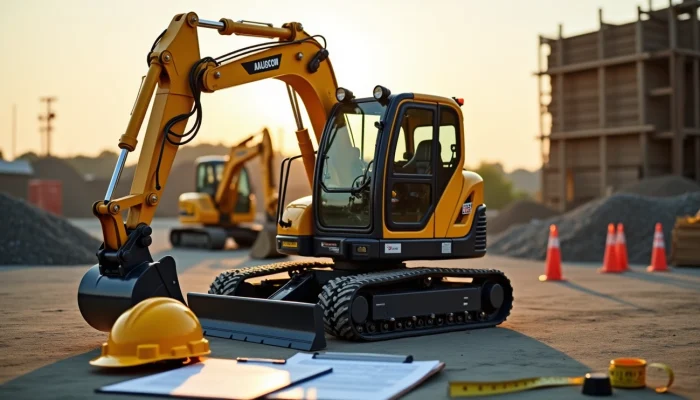

Choosing the right mini excavator for sale requires careful evaluation of multiple factors that directly impact your project’s success and return on investment. With numerous options flooding the market in 2026, from new mini excavator for sale listings to various chinese mini excavator for sale models, making an informed decision becomes crucial for contractors and business owners alike.
Moreover, understanding the differences between brands, evaluating critical features like hydraulic systems and operator comfort, and considering factors such as mini excavator attachments for sale can significantly affect your machine’s versatility and long-term value. We’ve created this comprehensive guide to walk you through the essential considerations, helping you select a 1 ton mini excavator that matches your specific project requirements, budget constraints, and operational needs.
Assessing your operational requirements before browsing any new mini excavator for sale listings prevents costly mismatches between equipment capabilities and job demands. This evaluation process determines whether a 1 ton, 2 ton mini excavator for sale, or 3 ton mini excavator for sale best fits your workflow.
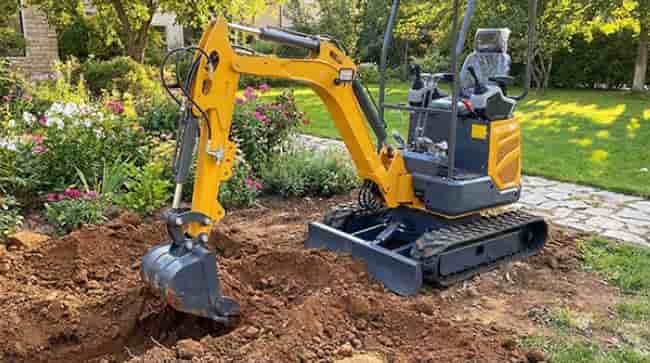
Measure the narrowest access point on your typical job sites before considering any mini excavator for sale options. For tight spaces, choose models less than 40 inches wide. Specifically, measure gate widths, doorways, and spaces between property lines where your machine must pass. Retractable undercarriages on micro-class machines (under 2 tons) can contract to roughly 28-39 inches, allowing passage through standard residential gates.
Zero tail swing (ZTS) configuration becomes critical when working near walls or parked vehicles. The house rotates within the track footprint, eliminating collision risks. In contrast, conventional tail swing extends the counterweight beyond track width, providing more lift capacity but requiring additional clearance space.

An excavator can dig between 350 to 1,000 cubic yards per day. This range depends on bucket capacity, which typically spans 0.5 to 1.5 cubic yards. As an example, an excavator with 1 cubic yard capacity operated by an experienced operator performing 120 cycles per hour across 6 actual work hours could dig approximately 720 cubic yards daily.
Operator skill significantly impacts production speed. Inexperienced operators take twice as long to complete cycles, resulting in half the daily volume. Ground conditions also affect performance, as soaking wet mud or rocky terrain requires more time than dry, loose dirt.
Clay soils stick when wet and harden when dry, binding to buckets and tracks while increasing fuel consumption. Sandy soils dig easily but present stability concerns requiring different approach angles. Loam soils, mixing sand, silt, and clay, generally provide ideal excavation conditions.
Moisture content dramatically affects soil behavior. Saturated soils lead to machine bogging and unstable excavation walls. Following rain, allow drainage time before resuming work, particularly in clay-heavy areas. Ground load-bearing capacity requires assessment through preliminary tests, observing how tracks leave impressions.
Multiple financing structures exist for mini excavator purchases in 2026. Eligible models receive 0% financing for up to 60 months, with the offer valid from January 1, 2026 through June 30, 2026. Alternatively, rates as low as 1.54% for 72 months provide extended payment flexibility.
Other financing providers offer 0% APR for 36 months with 0% down, 0.99% APR for 48 months, 1.99% APR for 60 months, or 2.99% APR for 72 months, with offers expiring March 31, 2026. Purchase and delivery must occur by the promotional deadline. Correspondingly, financing terms depend on the excavator’s purchase price, your credit history, and anticipated depreciation rate.
Evaluating technical specifications separates reliable performers from problematic machines when comparing any new mini excavator for sale or chinese mini excavator for sale models. These features determine operational efficiency, operator satisfaction, and long-term maintenance costs.
Hydraulic pump pressure in 1-ton machines typically ranges from 3,130 to 3,555 PSI during normal operation. Pilot pressure, which controls arm and bucket movements, operates between 400 and 500 PSI. This lower pilot pressure enables careful, smooth operation. Flow rate, measured in gallons per minute, determines response speed. Higher flow creates faster cycles but may sacrifice precision. Hydraulic oil temperature must stay under 80°C to prevent seal damage and maintain efficiency.
Climate control systems maintain internal temperatures regardless of external conditions, with advanced models reaching 125°F ambient operation capability. Suspension seating with lumbar support reduces fatigue during extended shifts. Noise reduction technology lowers sound levels to 69-70 dB(A), creating a quieter workspace. LCD monitors display real-time performance data, tracking fluid levels and maintenance intervals. Wider cabs improve ingress and egress while providing better visibility through larger windows.
Track width directly affects stability and maneuverability. Wider tracks distribute weight over larger surface areas, reducing ground pressure. This prevents sinking in soft, muddy terrain. Narrower tracks provide better agility for confined spaces but exert more ground pressure, potentially causing deeper ruts. Longer tracks increase traction on uneven terrain by expanding ground contact area.
Pilot controls use hydraulic pressure, reducing operator effort by approximately 30% compared to manual systems. Electronic joystick controls enable programmable work modes and one-touch functions. ISO and SAE control patterns determine joystick function assignment, with most excavators allowing pattern switching.
Ground-level access to daily checkpoints reduces service time. Grouped service points streamline routine maintenance checks. Filter change intervals reaching 3,000 operating hours lower maintenance costs.
Brand reputation significantly influences long-term satisfaction when comparing western manufacturers against chinese mini excavator for sale options. This decision affects not only initial investment but also operational costs throughout the machine’s lifespan.
Cat mini excavators feature proprietary technologies including Stick Steer for switching between traditional lever-pedal control and joystick operation. The Cat 305 CR delivers 45 net horsepower with operating weights from 11,016 to 12,688 pounds. Case models like the CX50D produce 58.7 gross horsepower at 10,912 pounds operating weight, featuring swing booms with zero tail swing or optional 7-11 inch overhang counterweights.
Chinese mini excavators cost 20-50% less than western brands. Major manufacturers now use proven engines from Kubota and Yanmar, advanced hydraulic systems, and meet Tier 4 or EURO V emission standards. Brands like SANY and XCMG have established regional production facilities in U.S. markets.
Case maintains robust dealer networks providing myCASE fleet management, SiteControl machine control, and PlusCare maintenance programs. Chinese manufacturers expanded international distribution, with companies establishing partnerships with local dealers for after-sales support.
Excavators depreciate approximately 20-25% during the first year, then 5-10% annually. Cat, Komatsu, and John Deere brands retain value better than lesser-known manufacturers due to established reliability and robust after-sales service.
Finalizing your purchase requires systematic verification steps that protect your investment when evaluating any new mini excavator for sale.
Request a cold machine delivery for testing. The engine should start within 2-3 seconds with minimal smoke. Inspect hydraulic hoses, cylinders, and seals for leaks or damage. Check undercarriage components including tracks, rollers, and sprockets for wear patterns.
Sit in the cab for 15 minutes during operation, evaluating seat comfort, control reach, and visibility to bucket teeth. Test attachment changes by timing the quick coupler disconnect and reconnect process. Pop the hood to assess maintenance access points, filter locations, and component spacing.
Industry standard coverage spans one year, though premium manufacturers extend this considerably. Sany provides a 5-year, 5,000-hour warranty, while Yanmar offers 4 years or 4,000 hours. Most warranties cover parts but exclude labor costs. Verify if the warranty transfers to subsequent owners, as transferable coverage enhances resale value.
Coordinate delivery logistics including trailer specifications and job site access for unloading. Confirm operator training availability post-delivery.
Excavation contractor insurance typically includes general liability coverage, equipment insurance protecting against theft and damage, and commercial auto insurance for transport vehicles.
We’ve covered the essential factors that protect your investment when selecting a 1 ton mini excavator. Careful assessment of your project requirements, combined with thorough evaluation of hydraulic performance, operator comfort, and brand reliability, directly determines your machine’s long-term value. Take the time to complete pre-purchase inspections and test demo units before committing. Your excavator represents a significant capital investment, and choosing wisely ensures years of productive service and strong resale value.
Q1. Which mini excavator brands offer the best resale value?
John Deere G-Tier models (17G, 26G, 30G, and 35G) typically maintain the strongest resale value, along with Cat and Komatsu brands. These manufacturers retain value better due to their established reliability, robust dealer networks, and comprehensive after-sales service. Excavators from these brands generally depreciate 20-25% in the first year, then 5-10% annually thereafter.
Q2. What are the most popular mini excavator models currently in demand?
The Deere 35G, Kubota KX040-4, and Deere 50G rank among the most sought-after mini excavator models. These machines balance performance, reliability, and operator comfort, making them preferred choices for contractors handling various excavation projects.
Q3. What key specifications should I consider when selecting a mini excavator size?
Focus on operating weight for stability and lift capacity, maximum dig depth for your project requirements, maximum dump height and reach for material handling, bucket capacity for productivity