Telephone/WhatsApp:+86 156 2656 0610
Telephone/WhatsApp:+86 156 2656 0610
Email:info@seekmach.com

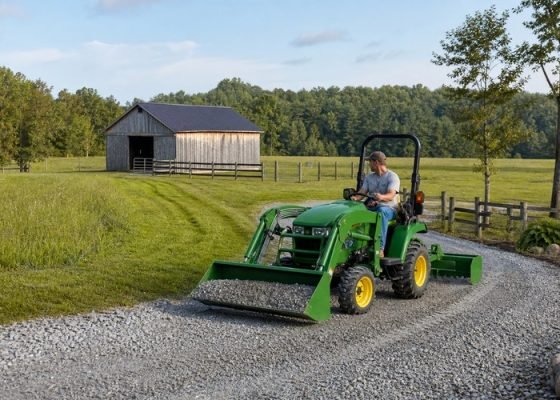

Acreage is a useful starting point, but it is a poor final answer to the question, “What size tractor do I need?” Ten smooth acres used mainly for mowing can demand less tractor than five wooded acres with a steep gravel drive, heavy logs, drainage work, and frequent loader use. The machine must fit the hardest routine task while remaining compact enough for gates, buildings, trees, trailers, and soft ground.
This guide builds a work profile before discussing horsepower. It separates engine horsepower from PTO power, loader capacity, hydraulic performance, tractor weight, and traction. Begin with the SeekMach tractor range, then compare candidates using the same task list instead of assuming that the highest power number is automatically the best value.
Treat every range in this article as a planning band, not a universal prescription. Implement manuals, tractor manuals, local conditions, and a competent demonstration control the final decision. A properly matched smaller tractor often outworks an oversized machine in tight areas, while a heavier machine can be the safer and more productive choice for traction-heavy or loader-intensive jobs.
List every recurring job and rank it by frequency, load, and seasonal urgency. Mowing, rotary cutting, tilling, loader work, snow handling, driveway grading, post-hole digging, and material transport place different demands on a tractor. For related machine and attachment choices, use the SeekMach product overview as a second reference. The Penn State tractor stability guidance provides useful independent background for this part of the check.
The practical way to evaluate this point is to write down the job, the operating condition, and the limit that would stop the work. Do not compare a single brochure number in isolation. Check the operator’s manual, attachment instructions, ground conditions, access width, transport plan, and the skill of the person who will use the machine. A combination that works only at its maximum rating leaves little room for wet material, a slope, wear, or an imperfect load.
Consider this field example: A landowner mows weekly, grades a driveway monthly, and moves firewood in winter. Mowing drives deck width and maneuverability, but loaded travel and grading determine useful tractor weight and ballast. The useful answer comes from the whole work cycle—setup, approach, productive pass, turning, travel, cleanup, and storage—not from one impressive moment. If the task cannot be repeated calmly with good visibility and control, change the setup, reduce the load, or choose a different machine.
A common mistake is buying by acreage alone and discovering later that the loader cannot reach a trailer or the tractor cannot pass through a gate. That shortcut usually transfers the problem somewhere else: extra passes, damaged turf, overloaded components, poor cut or trench quality, unsafe travel, or maintenance that is harder to perform. Record what happened during a test and use that evidence in the buying or service decision.
Engine horsepower describes power produced at the engine. PTO horsepower is the power available to a correctly matched powered implement after drivetrain losses. Implement requirements should be matched to PTO output, not to a decal on the hood. The PTO safety overview provides useful independent background for this part of the check.
The practical way to evaluate this point is to write down the job, the operating condition, and the limit that would stop the work. Do not compare a single brochure number in isolation. Check the operator’s manual, attachment instructions, ground conditions, access width, transport plan, and the skill of the person who will use the machine. A combination that works only at its maximum rating leaves little room for wet material, a slope, wear, or an imperfect load.
Consider this field example: A rotary cutter that turns easily in short grass may load the PTO heavily in tall wet growth. A comfortable reserve lets the operator slow down and maintain rated speed instead of forcing the tractor. The useful answer comes from the whole work cycle—setup, approach, productive pass, turning, travel, cleanup, and storage—not from one impressive moment. If the task cannot be repeated calmly with good visibility and control, change the setup, reduce the load, or choose a different machine.
A common mistake is selecting an implement from engine horsepower and ignoring PTO output, implement weight, hitch category, and driveline length. That shortcut usually transfers the problem somewhere else: extra passes, damaged turf, overloaded components, poor cut or trench quality, unsafe travel, or maintenance that is harder to perform. Record what happened during a test and use that evidence in the buying or service decision.
Loader performance depends on measurement point, lift height, attachment weight, hydraulic geometry, ballast, tires, axle limits, and load shape. The printed pivot-pin figure is not the same as useful payload on pallet forks. For related machine and attachment choices, use the tractor loader capacity guide as a second reference. The OSHA tractor safety resource provides useful independent background for this part of the check.
The practical way to evaluate this point is to write down the job, the operating condition, and the limit that would stop the work. Do not compare a single brochure number in isolation. Check the operator’s manual, attachment instructions, ground conditions, access width, transport plan, and the skill of the person who will use the machine. A combination that works only at its maximum rating leaves little room for wet material, a slope, wear, or an imperfect load.
Consider this field example: Wet gravel and long logs move the center of mass forward. A tractor that curls the load near the ground may not place it at full height with adequate stability. The useful answer comes from the whole work cycle—setup, approach, productive pass, turning, travel, cleanup, and storage—not from one impressive moment. If the task cannot be repeated calmly with good visibility and control, change the setup, reduce the load, or choose a different machine.
A common mistake is treating hydraulic relief as a scale or adding ballast as permission to exceed loader, axle, tire, or attachment ratings. That shortcut usually transfers the problem somewhere else: extra passes, damaged turf, overloaded components, poor cut or trench quality, unsafe travel, or maintenance that is harder to perform. Record what happened during a test and use that evidence in the buying or service decision.
Horsepower is useful only when the tractor can put power to the ground. Tractor mass, wheelbase, tire choice, four-wheel drive, differential lock, ballast, and soil condition affect pulling and braking. The NIOSH agricultural safety information provides useful independent background for this part of the check.
The practical way to evaluate this point is to write down the job, the operating condition, and the limit that would stop the work. Do not compare a single brochure number in isolation. Check the operator’s manual, attachment instructions, ground conditions, access width, transport plan, and the skill of the person who will use the machine. A combination that works only at its maximum rating leaves little room for wet material, a slope, wear, or an imperfect load.
Consider this field example: A light tractor may spin while grading compacted gravel; a heavy tractor may finish that job easily but leave unacceptable ruts on a damp lawn. The useful answer comes from the whole work cycle—setup, approach, productive pass, turning, travel, cleanup, and storage—not from one impressive moment. If the task cannot be repeated calmly with good visibility and control, change the setup, reduce the load, or choose a different machine.
A common mistake is using extra horsepower to compensate for poor ballast, worn tires, an aggressive gear, or work attempted when the soil is too wet. That shortcut usually transfers the problem somewhere else: extra passes, damaged turf, overloaded components, poor cut or trench quality, unsafe travel, or maintenance that is harder to perform. Record what happened during a test and use that evidence in the buying or service decision.
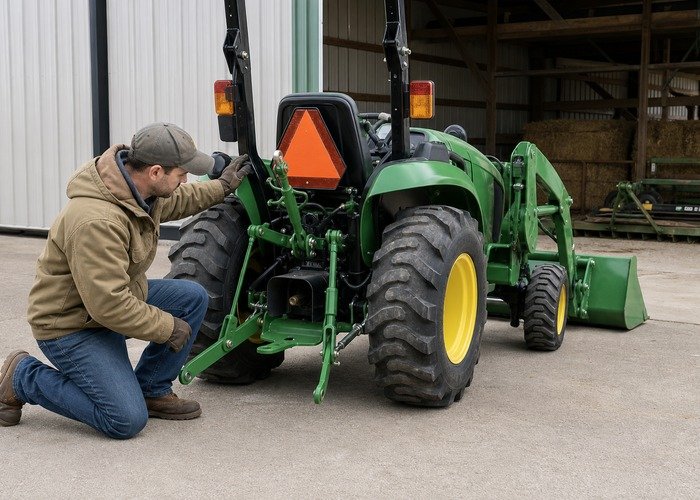
The tractor must lift, stabilize, and power the intended implement. Hitch category, lift capacity at the stated point, implement length, transport clearance, hydraulic remotes, and front ballast all matter. For related machine and attachment choices, use the tractor attachments for landowners as a second reference.
The practical way to evaluate this point is to write down the job, the operating condition, and the limit that would stop the work. Do not compare a single brochure number in isolation. Check the operator’s manual, attachment instructions, ground conditions, access width, transport plan, and the skill of the person who will use the machine. A combination that works only at its maximum rating leaves little room for wet material, a slope, wear, or an imperfect load.
Consider this field example: A long rotary cutter creates leverage well behind the hitch. Even if the hitch raises it, the front axle may become too light without the approved front ballast. The useful answer comes from the whole work cycle—setup, approach, productive pass, turning, travel, cleanup, and storage—not from one impressive moment. If the task cannot be repeated calmly with good visibility and control, change the setup, reduce the load, or choose a different machine.
A common mistake is choosing the widest implement the tractor can barely lift rather than the implement it can control through turns, slopes, and transport. That shortcut usually transfers the problem somewhere else: extra passes, damaged turf, overloaded components, poor cut or trench quality, unsafe travel, or maintenance that is harder to perform. Record what happened during a test and use that evidence in the buying or service decision.
Physical fit is part of productivity. Measure gates, barn doors, aisle width, tree spacing, trailer deck width, overhead clearance, and the room needed to attach implements safely. The OSHA rollover-protection standard provides useful independent background for this part of the check.
The practical way to evaluate this point is to write down the job, the operating condition, and the limit that would stop the work. Do not compare a single brochure number in isolation. Check the operator’s manual, attachment instructions, ground conditions, access width, transport plan, and the skill of the person who will use the machine. A combination that works only at its maximum rating leaves little room for wet material, a slope, wear, or an imperfect load.
Consider this field example: A powerful utility tractor can lose hours on a small property if it cannot turn at row ends or enter the shed with rollover protection correctly configured. The useful answer comes from the whole work cycle—setup, approach, productive pass, turning, travel, cleanup, and storage—not from one impressive moment. If the task cannot be repeated calmly with good visibility and control, change the setup, reduce the load, or choose a different machine.
A common mistake is assuming published overall width covers every tire position, attachment, mirror, mower deck, or ballast configuration. That shortcut usually transfers the problem somewhere else: extra passes, damaged turf, overloaded components, poor cut or trench quality, unsafe travel, or maintenance that is harder to perform. Record what happened during a test and use that evidence in the buying or service decision.
A dealer-yard drive without an attachment reveals little. Use a known load and an approved implement on representative ground, with a qualified operator and all safety systems active. For related machine and attachment choices, use the compact tractor maintenance schedule as a second reference.
The practical way to evaluate this point is to write down the job, the operating condition, and the limit that would stop the work. Do not compare a single brochure number in isolation. Check the operator’s manual, attachment instructions, ground conditions, access width, transport plan, and the skill of the person who will use the machine. A combination that works only at its maximum rating leaves little room for wet material, a slope, wear, or an imperfect load.
Consider this field example: Two tractors with similar horsepower can feel very different when inching to a pallet, backing a mower around trees, or holding speed while grading. The useful answer comes from the whole work cycle—setup, approach, productive pass, turning, travel, cleanup, and storage—not from one impressive moment. If the task cannot be repeated calmly with good visibility and control, change the setup, reduce the load, or choose a different machine.
A common mistake is making the decision from a fast unloaded drive and ignoring attachment change time, visibility, heat, vibration, and maintenance access. That shortcut usually transfers the problem somewhere else: extra passes, damaged turf, overloaded components, poor cut or trench quality, unsafe travel, or maintenance that is harder to perform. Record what happened during a test and use that evidence in the buying or service decision.
Once the task profile is complete, group candidates into subcompact, compact, and utility-size bands. Compare the smallest band that meets every routine limit with margin, then check whether the next band improves safety and productivity enough to justify its size.
The practical way to evaluate this point is to write down the job, the operating condition, and the limit that would stop the work. Do not compare a single brochure number in isolation. Check the operator’s manual, attachment instructions, ground conditions, access width, transport plan, and the skill of the person who will use the machine. A combination that works only at its maximum rating leaves little room for wet material, a slope, wear, or an imperfect load.
Consider this field example: A property may need a compact tractor for weekly work and a rented excavator for one drainage project. That combination can be better than buying one oversized machine for an annual task. The useful answer comes from the whole work cycle—setup, approach, productive pass, turning, travel, cleanup, and storage—not from one impressive moment. If the task cannot be repeated calmly with good visibility and control, change the setup, reduce the load, or choose a different machine.
A common mistake is purchasing for the most dramatic once-a-year job and accepting poor maneuverability, soil impact, and storage fit every ordinary week. That shortcut usually transfers the problem somewhere else: extra passes, damaged turf, overloaded components, poor cut or trench quality, unsafe travel, or maintenance that is harder to perform. Record what happened during a test and use that evidence in the buying or service decision.
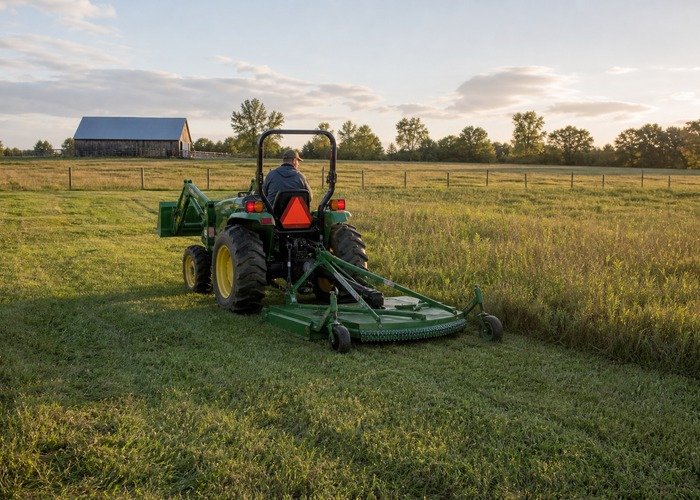
It can be when the work is mainly mowing, light loader handling, and property maintenance, but acreage alone cannot confirm the choice. PTO implement demand, loader loads, slopes, soil, access, tractor weight, and the required work rate may point higher or lower.
Reserve is useful, but hitch capacity, tractor weight, hydraulic flow, wheelbase, and attachment compatibility can become the real limits. Define likely future implements and compare their complete requirements before paying for engine power alone.
Four-wheel drive can improve traction and loader control, but it does not change rated capacities or eliminate the need for ballast and suitable tires. It also cannot make unsafe slopes, soft shoulders, or overloaded travel acceptable.
Use capacity at the actual load center and required height, then check attachment weight, ballast, front axle, tires, steering, braking, and stability. No single loader number answers the complete question.
The right tractor is the smallest practical configuration that completes every routine job with control and reasonable reserve. It should fit the property physically, power the intended implements correctly, carry loader loads within all ratings, and remain serviceable for the owner.
Write the work profile before requesting quotes. Give each candidate the same test and reject any comparison that uses different measurement points or attachments. This turns a vague acreage question into an equipment decision that can be defended.
If the task list still spans mowing, heavy excavation, and high-cycle loading, compare the SeekMach application solutions rather than forcing one tractor to replace every machine.