Telephone/WhatsApp:+86 156 2656 0610

Telephone/WhatsApp:+86 156 2656 0610
Email:info@seekmach.com



Your tractor’s exhaust stack is one of the most honest diagnostic tools on your entire operation . Most operators don’t speak its language until serious damage is already done.
If you’ve ever wondered “why is my tractor blowing black smoke,” the answer starts with a fundamental imbalance: too much fuel, not enough air. According to the Extension Foundation, black, blue, and white exhaust smoke each serve as primary indicators of specific internal engine malfunctions — and distinguishing between them quickly can mean the difference between a $50 fix and a $5,000 rebuild.
| Smoke Color | Likely Cause | Immediate Action |
|---|---|---|
| Black | Air-to-fuel ratio imbalance; clogged air filter or injector fault | Inspect air filter; check injectors for fouling |
| Bleu | Oil entering the combustion chamber; worn piston rings or valve seals | Inspect oil consumption; schedule a compression test |
| White | Unburnt fuel or coolant infiltration; possible head gasket failure | Inspect coolant level; test for combustion gases in the coolant |
Black smoke signals that your engine is running rich — combustion is incomplete because airflow is restricted or injectors are delivering excess fuel. Blue smoke is a more serious warning: oil is burning internally, pointing to seal wear or ring degradation that worsens progressively. White smoke demands urgent attention, as coolant intrusion can hydrolock an engine with catastrophic speed.
Warning: In mid-size tractors (35HP–90HP), ignoring early smoke signals — even intermittent ones — accelerates wear in high-pressure fuel systems more than most operators realize.
Just as routine pre-operation checks catch mechanical problems before they compound, reading exhaust smoke early keeps minor issues from becoming major failures. That brings us to where most engine damage actually originates — your fuel quality.
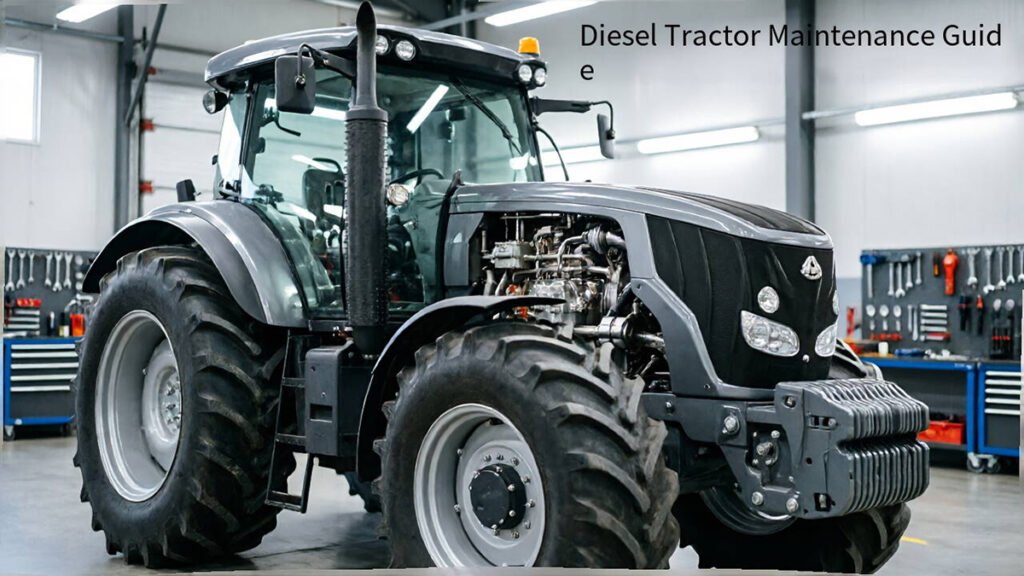
Fuel contamination is a major threat to diesel engine longevity — and it’s one that careful tractor engine maintenance practices can almost entirely prevent. According to the Association of Equipment Management Professionals, fuel contamination accounts for nearly 90% of modern diesel fuel system failures — a staggering figure that demands serious attention from every operator running equipment in the field.
High-pressure injection systems are especially unforgiving. Tractors in the 35HP–90HP range rely on common rail or mechanically governed injection pumps operating at extreme pressures, sometimes exceeding 20,000 PSI. At those tolerances, even microscopic particulates or water droplets become abrasive — destroying injector tips and pump components that can be costly to replace.
Water contamination is particularly destructive. Water enters fuel storage through condensation, poor tank sealing, or low-quality bulk deliveries. Once inside an injector, it causes cavitation, accelerated corrosion, and — in severe cases — hydraulic lock that cracks internal components instantly.
Fuel system must-dos for every diesel operator:
The hidden cost of non-industrial storage is often overlooked. Consumer-grade tanks lack the micron filtration and sealed vent systems that prevent biological growth and water ingress — two contamination sources that compound silently over months.
Fuel integrity is the first domino. Keep it standing, and you protect everything downstream — including the cooling system, which faces its own set of high-stakes thermal challenges.
Diesel engines run hotter and harder than gasoline counterparts — and that thermal reality makes cooling system integrity a make-or-break factor in long-term tractor performance.
Diesel combustion generates significantly higher internal pressures and temperatures, often exceeding 1,000°F at the cylinder head. Unlike gasoline engines, diesels rely on compression ignition, which means that heat isn’t a byproduct — it’s the mechanism. That distinction matters enormously for diesel engine troubleshooting, because many mysterious performance problems trace back not to fuel or injectors, but to a compromised cooling circuit quietly allowing thermal stress to accumulate.
One of the most expensive consequences of cooling neglect is cylinder head warping. When coolant flow is restricted or the coolant mixture is diluted, localized hot spots develop across the head surface. Over time, the metal distorts. Head gasket failure follows. What started as a $20 coolant flush becomes a $2,000+ repair.
As Machinery Lubrication / Noria Corporation notes:
“The most critical maintenance task for a diesel engine is the management of thermal stress through cooling system integrity.”
Three cooling system checks every operator should prioritize:
Modern equipment design is increasingly addressing this challenge — oversized radiator configurations in newer machines reflect just how seriously thermal management is taken in demanding field conditions.
Of course, keeping coolant flowing cleanly is only part of the picture. The fuel delivery system presents its own set of vulnerabilities — particularly in the high-pressure steel lines that most operators rarely think to inspect.
Hard lines are the unsung vulnerability in diesel fuel delivery — steel tubing that carries pressurized fuel between the injection pump, rail, and injectors, often at pressures exceeding 30,000 PSI in modern common rail systems.
Neglecting hard lines is one of the most expensive blind spots in preventative maintenance for heavy machinery. Unlike flexible hoses, which show obvious cracking or swelling, steel fuel lines fail subtly — through vibration-induced fatigue cracks and micro-leaks at compression fittings that can go undetected for hundreds of operating hours.
Why they’re overlooked: Generalist mechanics often focus on inspecting hoses and filters, but high-pressure steel tubing demands a different diagnostic mindset. In practice, hard lines sit close to the engine block, tucked behind brackets and heat shielding, making visual inspection easy to skip. As noted in research on heavy-duty component failures, common rail technology delivers fuel with extraordinary precision — which means even a hairline crack disrupts injection timing and degrades performance long before a visible leak appears.
What to look for — a field inspection checklist:
Inspection protocol: At every 250-hour service interval, wipe lines clean and run the engine briefly, then re-inspect for seepage under pressure. Replace any line showing deformation — never attempt field repairs on high-pressure steel tubing.
The hidden nature of hard line degradation makes it a compelling argument for looking beyond visual checks entirely — which is exactly where oil analysis proves its worth.
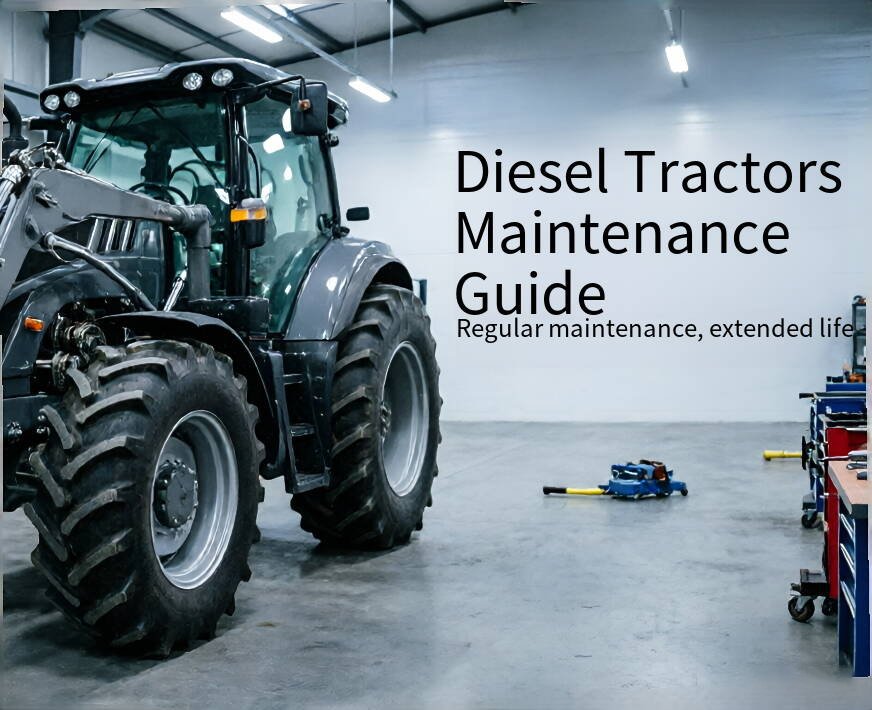
Oil analysis is one of the highest-ROI maintenance investments available for 35HP-90HP tractor care — revealing internal wear patterns that a dipstick check simply cannot detect.
The dipstick tells you quantity. Oil analysis tells you what’s happening inside your engine.
A standard oil change confirms that fluid levels are adequate and that scheduled intervals are met. Professional oil analysis goes significantly further, identifying:
Detecting bearing failure early is where oil analysis pays its most direct dividend. Bearing erosion rarely produces audible symptoms until damage is catastrophic. A fluid sample taken at regular intervals catches the metallic debris long before a connecting rod bearing seizes — turning a $200 repair into a $4,000 engine overhaul.
The financial case is well-documented. According to WearCheck International, regular oil analysis can reduce overall engine repair costs by up to 50% by identifying “silent” failures before they escalate. For fleet operators running multiple tractors, that figure compounds quickly across a season.
Integrating analysis into a service roadmap is straightforward in practice. The most effective approach ties fluid sampling to every 500-hour service interval — the same milestone that typically governs fuel filter replacement and cooling system checks. Much like maximizing component lifespan in compact equipment, consistency in sampling frequency is what makes trend data actionable.
Of course, oil analysis is only one layer of a complete protection strategy — and as conditions shift with the seasons, the demands on your diesel system change dramatically.
Seasonal extremes are among the most predictable threats to diesel performance — and one of the most preventable causes of unplanned downtime on mid-size tractors.
| Winter Prep | Summer Prep |
|---|---|
| Fuel anti-gel additives — diesel gelling begins as low as 32°F and can clog filters within hours. Blend in anti-gel additives before temperatures drop, not after. | Viscosity-rated lubricants — high-load agricultural work in peak summer heat demands oils rated for elevated operating temperatures. Check your OEM spec sheet. |
| Block heater installation — as Perkins Global Focus notes, cold weather doesn’t have to mean diesel problems when block heaters are utilized correctly alongside quality fuel additives. | Cooling system flush — summer heat amplifies any existing coolant weakness. Flush and refill at the start of the season to maintain optimal thermal regulation. |
| Battery load testing — diesel starting cycles draw significantly more cranking amps in cold conditions. A battery that passes a standard check in August may fail at 10°F. | Air filter inspection frequency — dust and chaff increase dramatically during dry summer field work, accelerating filter restriction and fuel inefficiency. |
| Water separator draining — moisture accumulates faster in winter, increasing freeze risk inside fuel lines. Drain weekly during cold months. | Belt and hose inspection — heat cycles degrade rubber components faster. Inspect for cracking or soft spots before the season peaks. |
Factory-direct machinery reliability hinges on matching your maintenance schedule to the season, not running a single year-round protocol. A pre-season checklist — covering fuel system, battery, cooling, and filtration — is the most efficient way to protect performance at both temperature extremes.
The granular procedures behind these checks — from safe oil drain protocols to the exact tools required — are worth executing correctly every time, which is precisely what the next section covers step by step.
Hands-on maintenance confidence starts with knowing the exact sequence — rushing any step risks inaccurate results, stripped threads, or worse, engine damage.
[VIDEO EMBED: Step-by-step oil and filter replacement walkthrough for 35HP–90HP tractors]
Follow this five-step procedure for a safe, effective service interval:
Pro-Tip: The most common DIY mistake is skipping the torque wrench on the drain plug. Hand-tight feels secure but leaves enough gap for slow seepage that won’t show up until the next season.
Just as smart engineering reduces waste on compact equipment — a principle that applies across machinery classes — disciplined service procedures protect long-term ROI on your tractor investment. With these procedures internalized, you’re ready to put it all together into a structured maintenance schedule — which the next section addresses directly.
Proactive diesel maintenance only delivers results when it follows a consistent, structured schedule — and a universal checklist ensures no critical system gets overlooked regardless of tractor size or application, as Countryside Magazine confirms.
The most effective maintenance programs aren’t complicated — they’re consistent.
Here’s the framework that keeps diesel tractors running at peak ROI:
Structure beats intention every time. Posting this checklist in the cab or shop creates accountability that informal habits simply can’t match. Each interval builds on the last — daily checks catch acute problems, while annual services reveal slow-developing trends.
Even with this framework in hand, specific questions come up repeatedly in the field. The next section addresses the most common ones directly.
Smart tractor ownership means having quick, reliable answers to the questions that come up most often in the field — before a minor issue becomes a costly repair.
How often should I change the fuel filter on a 50HP tractor?
Most manufacturers recommend replacing the fuel filter every 250–500 operating hours on a mid-size diesel tractor in that power range. However, working in dusty or debris-heavy environments can shorten that interval significantly. When in doubt, inspect the filter at each oil change and replace it proactively rather than reactively.
Is black smoke always a sign of a broken turbo?
Not necessarily. Black smoke typically signals a rich fuel-to-air mixture — often caused by a clogged air filter, injector wear, or overfueling — rather than turbo failure specifically. According to DieselPro, black smoke points to incomplete combustion, which can stem from several addressable causes before a turbo replacement is ever needed.
Can I use standard automotive oil in my diesel tractor?
This is a common and potentially damaging mistake. Modern compact tractors require specific low-ash diesel-rated oils to protect emission systems and wet clutch components — as Yanmar’s guidelines confirm. Standard automotive motor oil lacks the correct additive profile and can accelerate internal wear.
Why is factory-direct machinery easier to maintain?
Factory-direct equipment comes with standardized parts, verified service intervals, and direct access to technical documentation. There’s no guesswork around compatible filters, fluids, or torque specifications. CE-certified, factory-direct machines are engineered with documented maintenance pathways built in from the start — which means less downtime, lower long-term costs, and a stronger return on your investment.
Proactive diesel maintenance isn’t optional — it’s the foundation every productive tractor season is built on.