Telephone/WhatsApp:+86 156 2656 0610
Telephone/WhatsApp:+86 156 2656 0610
Email:info@seekmach.com

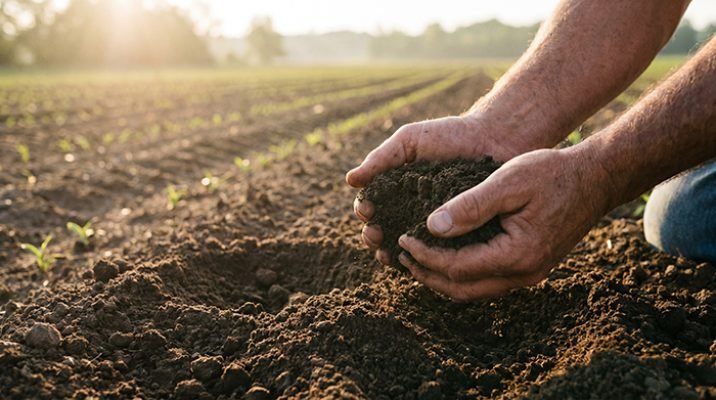
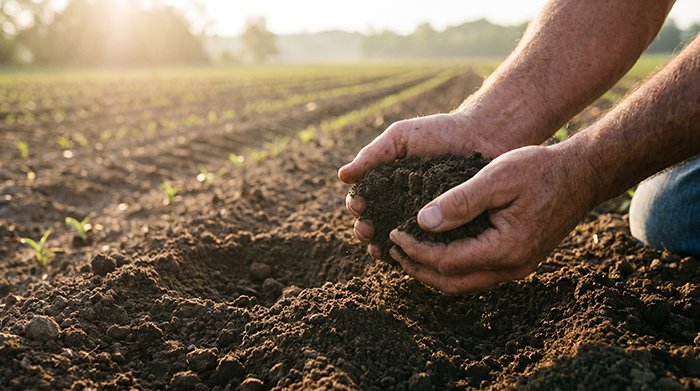
Modern yield gains don’t come from turning soil deeper — they come from engineering the top few inches with surgical accuracy before a single seed drops.
The old-school moldboard plow promised a fresh start by inverting the entire soil profile, but that approach disrupts beneficial microbial networks, buries crop residue too deep, and leaves large air pockets that cause uneven seed-to-soil contact. Today’s high-speed planters running at 6–8 mph demand something more disciplined. The right spring tractor implements focus almost entirely on the top 2–3 inches of the profile — the zone where temperature, moisture, and firmness determine whether a seedling thrives or stalls.
“The goal of spring tillage is to create a level, firm seedbed that promotes rapid root development and efficient nutrient uptake.” — Farm Journal
Soil temperature is the first battlefield. Every air pocket left behind by aggressive, deep tillage acts as an insulator — in reverse. Cold air trapped in loose, cloddy soil keeps soil temperatures suppressed well below the 50°F threshold that corn germination requires. Precision seedbed tools collapse those voids at a millimeter level, creating uniform contact between soil particles so heat accumulates faster and germination windows open days earlier. In a compressed spring planting season, those two to three extra days can be the difference between hitting optimal moisture and racing against a dry spell.
Contrast matters here. Where the moldboard plow illustrates dramatic soil inversion, modern precision implements like finishing discs and basket rollers work laterally and shallowly — refining structure rather than reinventing it. Understanding that distinction is the foundation for every equipment decision that follows, starting with how you handle the residue that’s already sitting on top of your field.
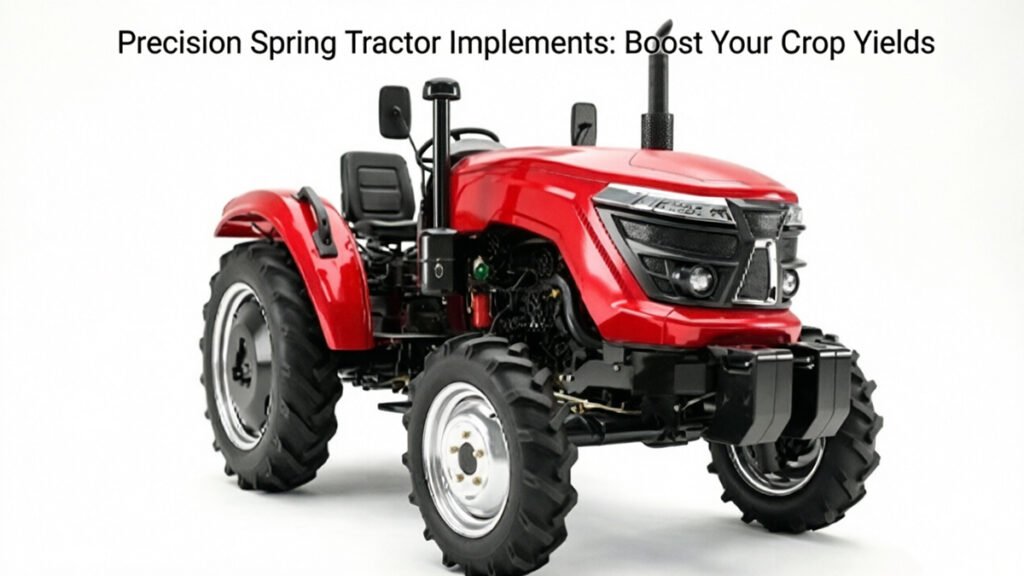
Vertical tillage solves one of spring’s most stubborn problems — heavy crop residue — without sacrificing the soil moisture that early-season germination depends on.
Residue management starts at the blade angle. Unlike conventional plowing, vertical tillage tools cut through corn stalks and wheat stubble in a near-vertical orientation. This slicing action prevents “hairpinning,” a condition where residue folds into the seed slot and creates an air pocket that starves roots of both moisture and contact. The result is a cleaner seedbed without disrupting the soil profile deeper than necessary.
According to Successful Farming magazine, vertical tillage manages heavy crop residue while simultaneously warming the soil faster — a critical advantage when compressed spring planting windows demand every possible day. By cutting through stalks rather than burying them, the implement exposes dark soil surface to sunlight, accelerating thermal gain. In high-residue corn or wheat fields, this can translate to earlier planting dates that align with optimal soil temperature thresholds.
Pro-Tip: In fields with corn-on-corn rotations or heavy wheat stubble, pair vertical tillage with precision seedling implements downstream to maximize the benefit of an already-conditioned seedbed. The cleaner the residue pass, the more consistent your seed placement will be.
Balancing aeration with moisture retention is where vertical tillage earns its keep. Light soil fracturing at the surface improves gas exchange and root penetration without creating the excessive drying that deep inversion tillage causes. The shallow working depth — typically 2 to 3 inches — keeps the moisture-holding zone largely intact. For operators managing smaller or mid-range tractors across mixed-residue fields, this efficiency matters enormously.
That precision in the top layer sets the stage perfectly for the next critical question: which implement combinations lock in those gains fastest?
Combining disc harrows with cultipackers in a single integrated pass is one of the highest-return decisions a procurement manager can make before planting season opens.
Breaking clods is only half the job — the other half is firmness. Disc harrows fracture compacted soil and incorporate surface residue left over after vertical tillage, but they leave an irregular, airy seedbed behind. Cultipackers follow to press that loosened soil into consistent, firm contact — the exact condition seeds need to draw moisture and germinate predictably.
Le Iowa State University Extension and Outreach has documented that proper seedbed preparation using a combination of disc harrows and cultipackers can increase germination rates by up to 20% compared to single-pass methods. That improvement translates directly into yield — not through more inputs, but through better use of what’s already being applied.
| Facteur | Single-Pass Method | Integrated Disc + Cultipacker |
|---|---|---|
| Clod breakdown | Partial | Complete |
| Seed-to-soil contact | Inconsistent | Uniform across the bed |
| Germination uniformity | Variable | Predictably higher |
| Fuel cost per acre | Lower upfront | Reduced over season |
| Field passes required | Multiple | One combined pass |
Fuel savings compound over acres. Running separate implements across the same field means extra passes, extra hours, and higher diesel consumption per planted acre. Integrated implement sets eliminate that redundancy by handling fracture and firming in one tractor run — a practical advantage that shows up clearly on the fuel line item by mid-season.
For procurement managers sourcing equipment, factory-direct agricultural machinery that pairs these implements in a unified frame offers a measurable advantage: consistent geometry, matched working depths, and a calibration standard that carries over directly to the next field operation. That consistency is exactly what sets up the seeding pass — where input waste becomes the next variable to control.
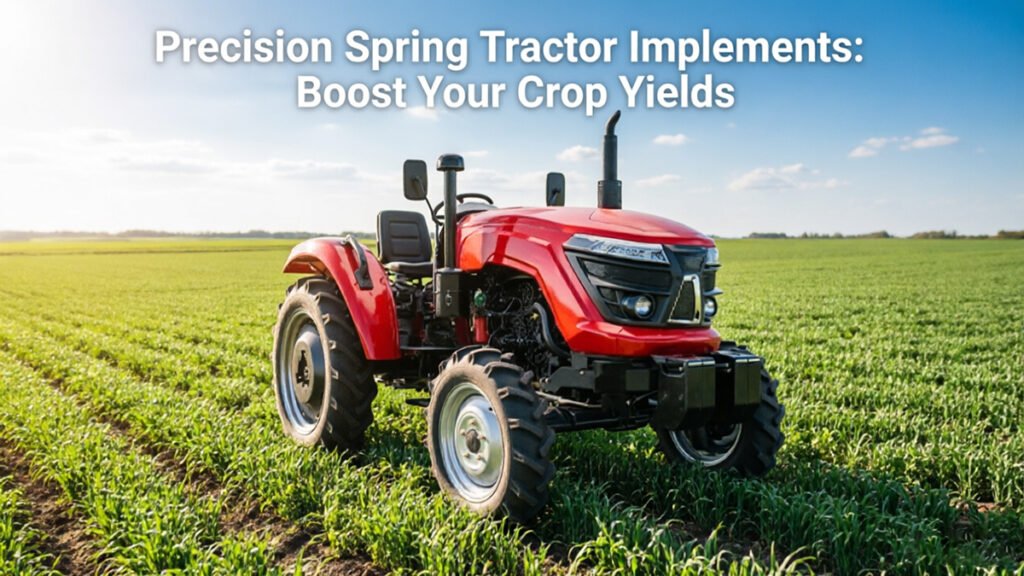
Precision seeders and fertilizer spreaders quietly deliver some of the highest per-acre savings available — and the technology behind that savings comes down to flow control mechanics.
Adjustable gate controls are the core of modern input efficiency. These mechanisms link metering aperture directly to ground speed through electronic or mechanical feedback loops. When the tractor slows at a headland turn, the gate narrows proportionally, cutting output to match the reduced coverage rate. When speed returns to operating pace in the field center, flow opens back up. The result is uniform distribution regardless of terrain variation or operator behavior — a sharp contrast to fixed-rate equipment that dumps excess product during deceleration and starves coverage during acceleration.
That uniformity directly addresses two chronic loss points in field application: over-application in headland zones and under-application in mid-field passes. Both conditions waste inputs and compromise crop uniformity. Over-applied headlands create runoff risk and unnecessary input cost, while thin mid-field coverage suppresses germination rates and yield potential. Proper seedbed preparation efficiency depends not just on tillage quality — the kind covered in earlier sections with disc harrows and cultipackers — but equally on placing seed and fertilizer exactly where the prepared soil structure can support germination.
ISO-certified calibration at the point of manufacture locks in these flow-rate relationships before equipment ever reaches the field. Factory calibration ensures that the stated output per hectare matches actual field delivery under load, eliminating the guesswork that comes with post-purchase adjustments on uncertified machinery. The business case is direct: according to University of Nebraska-Lincoln CropWatch, precision-calibrated broadcast seeders and fertilizer spreaders reduce input waste by up to 15% through more accurate distribution patterns. On a 500-acre operation spending $80,000 annually on seed and fertilizer, that margin recaptures $12,000 per season. That kind of built-in precision is exactly why sourcing directly from certified manufacturers — rather than through distributors — matters more than many procurement managers initially expect.
Maximizing tractor attachment ROI starts long before the implement touches soil — it starts at the sourcing decision.
Regional soil conditions vary dramatically, and what works in the clay-heavy fields of the Midwest won’t necessarily perform in the sandy loam of the Southeast. OEM/ODM customization solves this problem directly. Rather than adapting a generic implement to specific conditions, procurement managers can specify tilling depth ranges, frame dimensions, and component materials before production begins. This kind of upstream customization eliminates costly field modifications and reduces downtime during critical planting windows.
Bold callout: Buying factory-direct from a CE-certified manufacturer with integrated production removes the markup layers that routinely add 20–35% to machinery procurement costs — without adding any quality.
Eliminating middlemen is where the math gets compelling. Distributors and resellers each add margin, and neither controls quality. A factory-direct supplier with SeekMach’s 15+ years of manufacturing expertise manages the full production cycle — from raw material sourcing to final assembly — inside a single 50,000 m² facility. That integration means every component is engineered for compatibility with every other component, a detail that matters enormously when torque loads spike during deep-tillage passes.
Certification adds another layer of procurement confidence. CE marking confirms compliance with European safety and performance standards, while ISO 9001 certification validates consistent quality management across production runs. For international buyers, these aren’t optional credentials — they’re baseline requirements for customs clearance and liability protection.
In practice, an integrated production model also shortens lead times significantly. When a buyer needs a modified rotary tiller — say, one calibrated for rocky highland terrain — the engineering, fabrication, and QA all happen under one roof, without handoffs that introduce error or delay. That kind of supply chain efficiency is what the next generation of smart agricultural equipment will build directly upon.
Traditional mechanical implements are gaining a powerful second layer — embedded intelligence that turns raw iron into responsive, data-generating field tools.
Smart sensors are rapidly closing the gap between what an implement does and what a farmer actually needs it to do. Real-time depth monitoring is one of the clearest examples. Sensors embedded in tillage shanks and seeding units now detect soil resistance and surface variation continuously, automatically signaling hydraulic adjustments to maintain consistent working depth. The practical result: uniform seed placement across variable terrain without constant operator correction.
Hybrid power architecture is reshaping what attachments can demand from a tractor. As hybrid drivetrain systems deliver more consistent torque at lower RPMs, implements experience fewer power spikes and drops during field transitions. This steadier power delivery is especially valuable for high-draft tools — a 220HP farming setup paired with a sensor-coupled cultivator, for instance, maintains implement geometry even when switching between heavy clay and sandy loam in the same pass.
The push toward millimeter-level accuracy in automated seedling systems represents the leading edge of this shift. According to agricultural technology trends, modern implement development is moving toward millimeter-precision placement integrated with smart sensor feedback — a standard that was practically unachievable with purely mechanical systems even five years ago.
For industrial distributors, data-driven attachments are quickly becoming the baseline expectation rather than a premium option. Buyers sourcing at scale now routinely ask for sensor compatibility specs alongside traditional measurements like working width and hitch class.
This technology integration, however, is only as reliable as the mechanical foundation beneath it — which is exactly why proper maintenance and calibration protocols deserve serious attention before any season begins.
Precision implements only deliver elite performance when they’re properly maintained — neglected calibration and deferred inspections quietly erase every efficiency gain the technology provides.
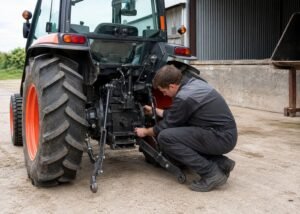
A well-maintained implement outperforms a neglected one regardless of spec sheet advantages. Before the first pass of the season, run through this pre-season checklist:
Technical support is the underrated half of implement longevity. According to the LSU AgCenter’s compact tractor implement guide, proper implement matching and adjustment are critical to avoiding premature component failure. Sourcing parts from a manufacturer with integrated production capabilities — and global support infrastructure spanning 50+ countries — reduces downtime risk dramatically. When a bearing fails during a narrow planting window, the gap between a two-day fix and a two-week wait is measured in yield, not inconvenience.
Long-term durability favors implements built from certified high-tensile steel, particularly in sandy-loam and clay-heavy environments where abrasion rates are steep. For operations running heavy rear-mounted attachments at full seasonal load, pairing durable steel construction with a consistent inspection schedule is what separates equipment that lasts a decade from equipment that lasts three seasons. When maintenance and calibration are treated as ROI strategies — not chores — the full potential of spring precision implements comes into focus.
Precision implements are the single most controllable variable in your spring planting operation — and the data backs that up. Iowa State University Extension confirms that achieving ideal soil tilth through specialized implements directly correlates to uniform emergence and higher yield potential. When the seedbed is right, germination rates can climb by as much as 20% compared to conventional, unoptimized tillage approaches.
Here’s what the evidence points to when you’re ready to act:
Taken together, these four levers — germination improvement, smart sourcing, implement selection, and input efficiency — form a compounding advantage that a basic plow simply can’t replicate. The gap between good intentions and elite yields almost always closes in the equipment bay, not in the field. If you still have questions about which implement fits your operation, the next section addresses the most common decision points growers face heading into spring.
Choosing the right spring implement comes down to matching your soil conditions, tractor specs, and procurement strategy to tools built for precision performance.
What is the best implement for high-residue fields?
Vertical tillage is the go-to solution when heavy crop residue is present. Unlike conventional tillage that buries residue, vertical tillage cuts and sizes it while leaving soil structure largely intact — reducing compaction risk. This approach also warms seedbeds faster, which is critical during tight spring planting windows.
How do I confirm my tractor can handle new precision attachments?
Start with your PTO output rating and hydraulic flow capacity before purchasing any implement. LSU AgCenter implement guide recommends matching implement demand to tractor specifications rather than assuming a general horsepower range covers all attachments. SeekMach’s lineup of 35HP–90HP tractors with quick-change attachments is built with this compatibility in mind, simplifying the matching process considerably.
Why consider factory-direct sourcing over local dealers?
Factory-direct purchasing typically unlocks customization options and lower price points that dealer networks can’t match. Configuration flexibility — from hydraulic fittings to implement widths — is far more accessible when working directly with the manufacturer. That cost difference can be reinvested in additional attachments or precision tech.
What certifications matter when evaluating machinery quality?
CE marking and ISO 9001 certifications are the two benchmarks worth prioritizing. CE marking confirms equipment meets safety and performance directives, while ISO 9001 validates verified quality management systems. Understanding what these standards signal about a manufacturer’s reliability helps operators make purchases they won’t second-guess mid-season.