Telephone/WhatsApp:+86 156 2656 0610
Telephone/WhatsApp:+86 156 2656 0610
Email:info@seekmach.com

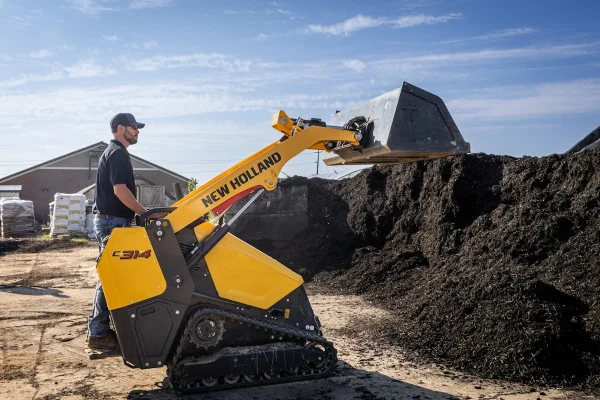

Mini skid steer loaders are revolutionizing construction sites by delivering powerful performance in compact packages, making them essential for modern urban projects.
• Compact powerhouses fit where others can’t: Most models are 35-44 inches wide, fitting through standard doorways while delivering 200-500 kg capacity with 360-degree maneuverability.
• Dramatic cost savings through versatility: One machine replaces 2-3 workers and multiple specialized tools, with electric models costing just $0.33/hour versus $3.04/hour for diesel.
• Track vs. wheel choice determines performance: Wheeled models excel on hard surfaces with 15-20% lower costs, while tracked versions provide superior stability on rough terrain.
• Market growth reflects urban construction demands: The stand-on mini skid steer market will grow from $2.8 billion in 2024 to $4.4 billion by 2035, driven by increasing urbanization.
• Smart buying requires matching capacity to needs: Focus on Rated Operating Capacity for regular materials rather than peak loads, with used units offering $10,000+ savings over new equipment.
The combination of space efficiency, attachment versatility, and lower operational costs makes mini skid steers the go-to solution for contractors facing tight spaces and tighter budgets in today’s construction landscape.

I’ve noticed a significant shift on construction sites this year, and the mini skid steer loader is at the center of this transformation. These compact powerhouses are revolutionizing how we approach tasks in confined spaces, offering impressive versatility without sacrificing performance. Indeed, their loading capacity of 200-500 kg combined with compatibility for hundreds of attachments makes them indispensable for modern construction projects.
Whether you’re searching for the best mini skid steer loader, exploring used mini skid steer loader for sale options, or deciding between a mini wheel skid steer loader and a mini skid steer track loader, understanding their advantages is crucial. In this guide, we’ll explore why the stand on mini skid steer loader market is booming and help you find quality mini skid steer loaders for sale that match your specific needs.
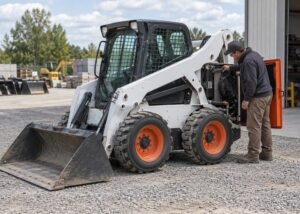
Mini skid steer loaders represent purpose-built machines designed to deliver hydraulic power and lifting capability in spaces where conventional equipment fails to operate. These compact units run on either tracks or wheels and feature universal quick-attach plates that allow operators to swap between dozens of specialized attachments within minutes.
The physical footprint of these machines addresses a critical need in urban environments. Most models measure between 35 and 44 inches wide, with some configurations fitting through standard 36-inch doorways. In fact, around 80% of contractors in major metropolitan areas have started favoring these smaller machines for utility installation and narrow alleyway work.
Their compact dimensions enable 360-degree rotation within standard parking spaces and material transport through residential gates. The lower center of gravity allows operators to excavate within 6 inches of existing structures without requiring street closures or extensive site preparation. This design capability stems from increasing urbanization, as data shows that 70% of homes built today sit on 9,000 square feet or less, with 40% on lots of 7,000 square feet or smaller.
Most mini skid steer loaders maintain a Rated Operating Capacity between 300 and 700 kg, though this varies based on machine size and counterweighting. Some models push beyond these ranges, with units like the Vermeer CTX160 offering 1,600 pounds of capacity while the Ditch Witch SK3000 reaches 3,100 pounds.
The rated operating capacity represents the maximum safe working load, typically set at 35% of the tipping load. Attachments such as buckets, forks, grapples, and augers affect this capacity by adding weight and shifting the load’s center of gravity. Operators can transform a single machine from a loader to a trencher to an auger within their workflow, eliminating the need for multiple specialized pieces of equipment.
Stand-on models dominate the mini skid steer market, offering 360-degree visibility from an elevated platform position. These units range from 24 to 59 horsepower and excel in confined spaces where frequent on-and-off operation occurs. Their lightweight structure reduces turf damage, making them ideal for residential landscaping and yard work.
By the same token, ride-on configurations provide enclosed cabs with roll cage protection and integrated control panels. These larger units deliver 74 to 100 horsepower and suit heavy-duty tasks requiring extended operation periods and greater lifting capacity. The choice between configurations depends on job duration, required visibility, and operator comfort needs.
Construction crews face mounting pressure to maximize productivity while minimizing disruption. Mini skid steer loaders address these demands through several operational advantages that directly impact project timelines and budgets.
Zero-radius turning capability allows these machines to rotate within their own footprint, eliminating the multi-point turns required by larger equipment. Operators navigate efficiently around utility poles, parked vehicles, and temporary structures in crowded urban alleys without sacrificing productivity. In 2024 construction equipment trials, mini skid steers demonstrated 40% faster cycle times for loading tasks compared to compact track loaders.
Track systems distribute weight evenly across surfaces, causing minimal ground disturbance to established turf, paving stones, and sidewalks. A 2023 study of twelve residential swimming pool foundation projects showed 78% less damage to grass and landscaping compared to standard tracked excavators. This low ground pressure makes them ideal for working on delicate surfaces where larger machines would cause costly restoration work.
Operating expenses drop significantly with these compact units. Smaller engine capacity results in lower fuel usage compared to full-size skid steers, while replacement parts cost less and routine maintenance proves more straightforward. Mini skid steers replace two to three labor workers on most jobs, delivering quicker ROI and immediate labor savings. Electric models consume just 2kW per hour at $0.33 hourly cost versus diesel units at $3.04 per hour.
Standardized attachment systems enable rapid tool swaps between over 35 different implements including buckets, trenchers, augers, grapples, and hydraulic breakers. Operators complete tasks 90% faster with these quick-change systems compared to manual tool changes. This versatility allows one machine to replace dedicated trenchers, tillers, and augers.
Weighing under 3,500 pounds, these units fit sideways on trailers well under the 102-inch DOT load width. Crews transport them using smaller trucks and lighter trailers without CDL license requirements. Because mini skid steers can be carried alongside stump grinders on small trailers at 36 inches wide each, schedulers avoid separate delivery trips.
Selecting between wheeled and tracked configurations affects performance, costs, and application suitability. Each undercarriage type delivers distinct advantages depending on surface conditions and operational requirements.
Mini wheel skid steer loaders excel on hard, level surfaces including concrete, asphalt, and compacted dirt. These units move faster than tracked models, covering more ground in less time. Basic air-filled tires cost around $100 each, while heavy-duty versions range from $150-$200. Solid rubber tires can reach $800 and up. A tire set lasts 600 to 1,000 hours depending on conditions. Wheeled models cost 15-20% less to purchase than tracked alternatives. They require simpler maintenance and consume less fuel due to reduced rolling resistance. Their lighter weight and faster repositioning make them ideal for warehouse work and tight urban spaces.
Mini track skid steer loaders distribute weight across larger surface areas, preventing sinking in mud, sand, or snow. Tracks cost approximately 30% more than tires but last 1,200 to 1,600 hours. Their lower center of gravity provides superior stability on slopes. Track models deliver smoother rides over rough terrain and won’t compact ground. They excel in forestry, landscaping, and demolition where grip and stability matter most.
Surface type determines the optimal choice. Wheeled units suit paved sites requiring speed and maneuverability. Tracked models handle wet, uneven, or sloped terrain where wheels struggle. Budget-conscious operators working on stable ground benefit from wheeled configurations, while challenging conditions justify tracked models despite higher upfront costs.
Purchasing decisions require balancing multiple factors against project requirements and budget constraints. The new versus used debate hinges on four variables: upfront capital, warranty coverage, maintenance history, and technology features. New machines deliver latest fuel efficiency and full warranty protection but command $25,000 to $45,000. Used mini skid steer loaders for sale typically range from $15,000 to $30,000, offering lower initial investment while avoiding steepest depreciation phases.
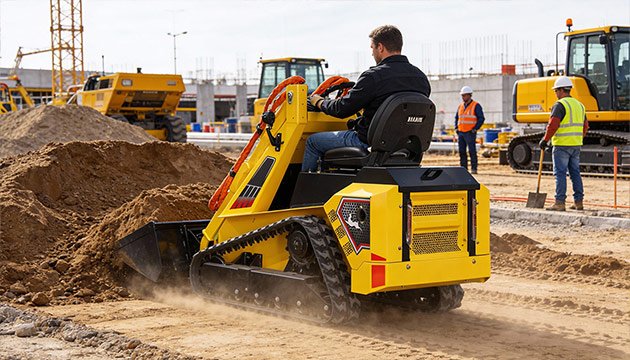
Daily commercial operations justify new equipment investment through minimized downtime and manufacturer support. Contractors using machines occasionally find better value in used units from reputable dealers who inspect equipment before sale. Check hours of operation, hydraulic system integrity, and engine performance during inspection.
Rated Operating Capacity between 500 and 1,200 pounds suits most applications. ROC represents 35% of tipping load for tracked machines and 50% for wheeled configurations. Match capacity to your heaviest regular materials rather than occasional peak loads.
The stand on mini skid steer loader market reached $2.839 billion in 2024 and projects growth to $4.417 billion by 2035. Urbanization drives demand as 85% of the US population will live in urban areas by 2030.
Equipment dealers, manufacturer direct sales, and online platforms like Machinery Trader list current inventory. Rental companies often sell well-maintained units after lease terms expire.
Mini skid steer loaders have earned their place as essential equipment for modern construction projects. Their compact footprint solves space constraints while delivering impressive versatility through quick-change attachments. Whether you opt for wheeled or tracked configurations depends on your specific terrain and application needs.
Given these points, start by assessing your project requirements and budget. The right mini skid steer will boost productivity, reduce operational costs, and provide the flexibility your crew needs to tackle diverse tasks efficiently.
Q1. What is the typical loading capacity range for mini skid steer loaders?
Most mini skid steer loaders have a Rated Operating Capacity between 300 and 700 kg (approximately 500 to 1,200 pounds), though some models can reach up to 3,100 pounds. The rated operating capacity represents the maximum safe working load, typically set at 35% of the tipping load for tracked machines and 50% for wheeled configurations.
Q2. How much do mini skid steer loaders cost compared to buying used?
New mini skid steer loaders typically cost between $25,000 and $45,000, while used models generally range from $15,000 to $30,000. Wheeled models also cost 15-20% less than tracked alternatives. Used equipment offers lower initial investment and avoids the steepest depreciation phases, making them attractive for occasional use.
Q3. What are the main differences between wheeled and tracked mini skid steers?
Wheeled mini skid steers excel on hard, level surfaces like concrete and asphalt, offering faster movement and lower purchase costs. Tracked models distribute weight more evenly, preventing sinking in mud or snow, and provide superior stability on slopes and rough terrain. Tracks cost about 30% more than tires but last longer (1,200-1,600 hours versus 600-1,000 hours).
Q4. Can mini skid steer loaders fit through standard doorways?
Yes, most mini skid steer loaders measure between 35 and 44 inches wide, with some configurations fitting through standard 36-inch doorways. This compact design allows them to navigate residential gates, rotate 360 degrees within standard parking spaces, and work in confined urban spaces where larger equipment cannot operate.
Q5. How do mini skid steer loaders reduce operational costs?
Mini skid steers lower operational costs through reduced fuel consumption due to smaller engines, less expensive replacement parts, and simpler maintenance requirements. Electric models cost just $0.33 per hour to operate compared to $3.04 per hour for diesel units. They can also replace two to three labor workers on most jobs, delivering quicker return on investment.