Telephone/WhatsApp:+86 156 2656 0610
Telephone/WhatsApp:+86 156 2656 0610
Email:seekmach@gmail.com



Running a 60HP tractor at poor fuel efficiency isn’t a minor inconvenience — it’s a slow, compounding drain on your operation’s bottom line.
The industry conversation has quietly shifted. Farmers and contractors once chased raw horsepower as a proxy for productivity. Today, the smarter metric is output per gallon — and 60HP tractor fuel efficiency sits squarely at the center of that conversation. Mid-range tractors in this class handle the widest variety of tasks: mowing, light tillage, loader work, and property maintenance. That versatility makes them the workhorses of small-to-mid-scale operations. It also makes fuel waste expensive.
Fuel costs can account for 15–25% of total operating expenses for mid-sized machinery over a full season. When you factor in the multi-year ROI of factory-direct equipment, even modest efficiency gains — say, 10–15% better consumption — compound into thousands of dollars in savings over a tractor’s lifespan.
Here’s what makes 60HP machines uniquely vulnerable: unlike larger, higher-inertia tractors, they are acutely sensitive to load-matching errors. Run them over-throttled on a light task, and you’re burning fuel the engine has no productive use for. According to Successful Farming, the most significant fuel savings in mid-sized tractors come from matching the tractor’s ballast to the specific draft of the implement — a detail operators routinely overlook.
This article is built around three proven pillars for fixing that waste:
The first and most actionable pillar starts with a technique that costs nothing to implement — and the way you manage gear selection and engine RPM simultaneously.
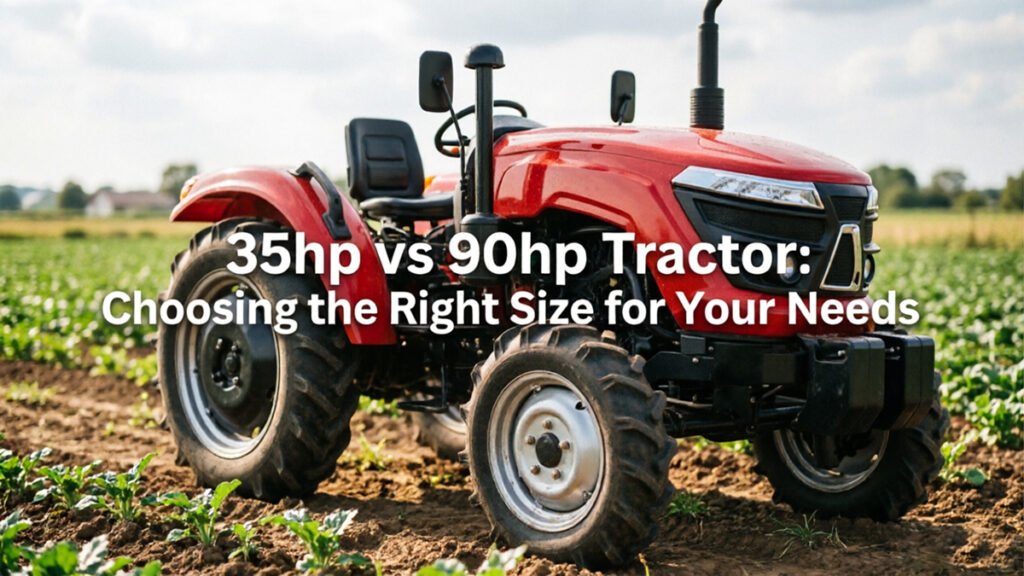
The single most overlooked fuel-saving technique for 60HP tractor operators is also one of the simplest: shift up a gear and dial back the throttle.
GFTD means selecting a higher gear than you might instinctively choose, then reducing engine RPM while maintaining the same ground speed. The result is a leaner, more efficient power stroke — your engine works at a fraction of its effort while still moving the implement at the right pace.
Parasitic losses is what makes high RPM under light loads so wasteful. When a 60HP engine spins at full throttle during mowing or light tillage, it’s generating far more power than the task demands. That excess energy doesn’t disappear — it converts into heat, vibration, and wasted diesel. Tracking tractor fuel consumption per hour on a 60HP model running at peak RPM during light work often reveals surprising overconsumption. According to North Dakota State University Agriculture Extension, operating at a GFTD setting can reduce fuel consumption by up to 20% compared to standard high-RPM operation.
How to apply GFTD on your 60HP tractor:
⚠️ Warning: Never lug the engine. If RPM drops below a comfortable working range and the engine begins to shudder or hesitate, shift back down immediately. Sustained lugging causes overheating, accelerated wear, and potential drivetrain damage.
Understanding GFTD is foundational — but even a perfectly throttled tractor loses efficiency if traction itself is working against you.
Excessive wheel slip is a significant inefficiency a 60HP tractor operator can overlook — quietly converting diesel fuel into heat and churned soil instead of forward motion.
The “Invisible Thief”: When tires spin faster than the tractor moves forward, that gap — the slip rate — represents energy waste. In moderate cases, it costs you fuel. In severe cases, it compounds into soil compaction, which raises your fuel burden on every subsequent pass across that field.
Pairing the Gear Fast Throttle Down technique covered in the previous section with proper slip management creates a compounding efficiency gain. Reducing slip means the engine load drops, which makes a higher gear at lower RPM even more achievable.
Optimal slip targets vary by drivetrain. According to the Extension Foundation, maintaining a slip rate of 10–15% for 2WD y 8–12% for 4WD tractors ensures maximum power transfer to the ground. Exceeding these ranges signals a traction problem that no throttle adjustment alone will fix.
| Drivetrain | Target Slip Range | Common Cause of Excess Slip |
|---|---|---|
| 2WD | 10–15% | Under-ballasted rear axle |
| 4x4 | 8–12% | Incorrect front-to-rear weight ratio |
Tire PSI is a direct rolling resistance lever. A tire inflated too much for the implement it’s pulling creates a smaller contact patch, increasing ground pressure and slip risk simultaneously. In practice, dropping PSI by 4–6 psi when adding a heavier rear implement can meaningfully reduce rolling resistance on softer soils.
Soil compaction creates a hidden long-term fuel penalty. Each over-slipping pass compresses the soil structure, increasing draft resistance for future tillage operations. The sub-100HP tractor segment is particularly vulnerable given the lighter frame weights involved.
Getting slip under control is half the equation — the other half is ensuring the tractor itself is properly weighted for the task, which is exactly where ballast optimization becomes critical.
Tractor ballast optimization is one of the fastest-acting levers operators can pull to reduce fuel consumption — yet it’s consistently underestimated on 60HP frames.
Carrying too much weight has a straightforward penalty: every extra pound your engine moves without a productive purpose burns diesel. As Successful Farming notes, “A 60HP tractor that is too heavy for its task wastes fuel moving its own dead weight, while one that is too light loses efficiency through tire spinning.” Both extremes cost you at the pump.
Too heavy means the engine labors under unnecessary load on lighter tasks like mowing or raking. Too light — particularly at the front axle — leads directly to the wheel slip problem covered in the previous section, compounding fuel waste and accelerating tire wear simultaneously.
For most 60HP configurations, the target front-to-rear weight ratio falls between 35:65 and 40:60. Front-heavy setups compromise rear traction; rear-heavy setups risk steering responsiveness and loader stability. If you’re running a front-end loader, that ratio shifts — and getting it wrong is one of the most common ballast mistakes on compact utility frames. You can review how weight balance factors into overall machine efficiency when comparing tractor builds and specs before purchase.
Pro-Tip — Front-End Loader Balance: When a loader is attached but empty, the front of the tractor effectively becomes lighter as rear implement weight increases. Counter this by adding rear suitcase weights or wheel weights to maintain that 35:65 ratio. Skipping this step forces the engine to compensate for instability, costing fuel on every pass.
Liquid ballast (water or calcium chloride in tires) suits permanent, high-draft fieldwork. Suitcase weights offer flexibility for seasonal tasks where ballast needs change frequently. Match the method to the workload — not the other way around.
Getting ballast right eliminates wasted power before it even reaches the drivetrain. The next hidden fuel drain, however, lives inside the engine itself.
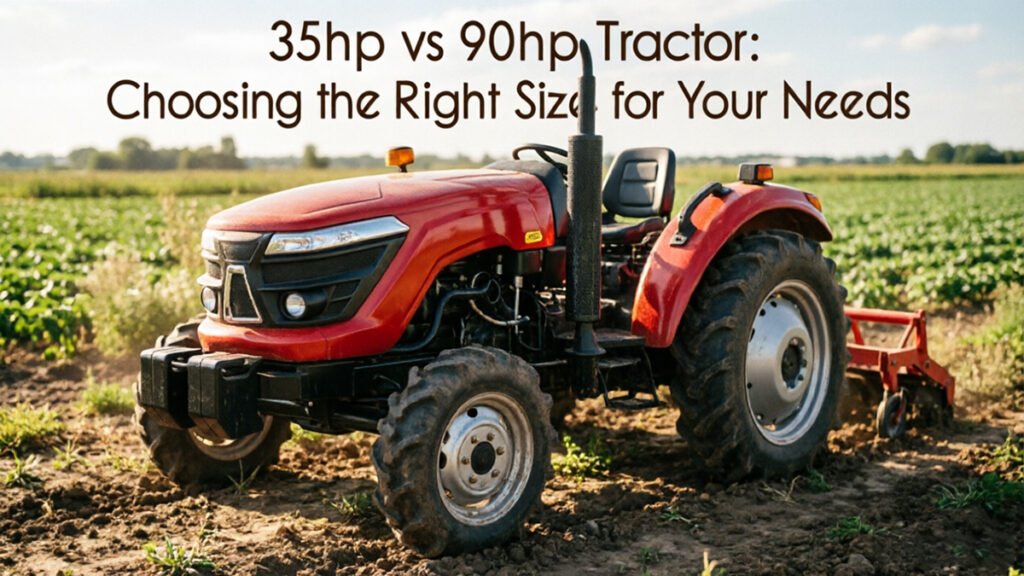
Reducing diesel consumption in tractors often starts not in the field, but in the service bay — and several routine maintenance items have an outsized impact on how efficiently your 60HP engine burns fuel.
Air Intake Health: Dusty field conditions are particularly punishing on diesel air filters. A clogged air filter can increase fuel consumption by up to 10% by disrupting the optimal air-to-fuel ratio, according to Farmers Weekly. When the engine can’t breathe freely, it compensates by pulling more fuel to maintain power — a costly trade-off on long operating days.
Fuel Injector Calibration: Black smoke from the exhaust stack is one of the clearest indicators that your injectors are misfiring or delivering uneven fuel loads. In practice, worn or dirty injectors don’t atomize fuel properly, leading to incomplete combustion and measurable efficiency losses. Injector testing and recalibration should be a seasonal priority, not an afterthought.
Lubricant Quality: Internal friction is a hidden fuel thief. Using the correct high-quality engine oil specified for your horsepower class reduces parasitic drag on pistons, bearings, and valve trains. On a 60HP tractor running eight-plus hour days, the compounding effect of sub-optimal lubrication is significant. The difference between a generic fill and the right spec oil is rarely considered — but it should be.
Cooling System Efficiency: A compromised cooling system raises operating temperatures beyond the designed combustion window, forcing the ECU to enrich the fuel mixture to protect the engine. Flushing coolant, inspecting the thermostat, and clearing radiator debris are low-cost steps that protect combustion efficiency year-round.
These maintenance fundamentals directly influence how well your mechanical systems perform — and they matter even more when the transmission itself isn’t optimized for your workload.
Modern transmission technology is quietly reshaping how 60HP tractors consume fuel — and operators who understand it hold a measurable efficiency advantage.
Hydro-Mechanical Transmission (HMT) combines the smooth power delivery of a hydraulic drive with the mechanical efficiency of a gear train. The result is a continuously variable output that keeps the engine operating near its optimal RPM band regardless of load fluctuations. Unlike conventional gear transmissions that force step-changes in ratio, HMT systems reduce the energy lost during those transitions — a significant factor in daily fuel budgets.
The critical insight, supported by research published in the Transactions of the Chinese Society of Agricultural Engineering, is this:
“Control strategies considering transmission efficiency are critical for HMT tractor economic performance.”
In practice, this means the software logic governing when and how the transmission shifts is just as important as the hardware itself. Modern control strategies continuously monitor torque demand, ground speed, and engine load, then automate gear-ratio adjustments to maintain peak efficiency without operator input. This automation closes the gap between theoretical efficiency and real-world performance — a gap that manual operation typically widens.
Integrated efficiency sensors represent the next step. Factory-fitted units increasingly bundle load-sensing hydraulics, fuel-flow monitoring, and transmission feedback into a single data loop. This tight integration is easier to achieve when machinery is purpose-built rather than assembled from generic components — which is why sourcing equipment directly from the manufacturer often delivers better gear-ratio matching for specific application profiles.
OEM customization matters here too. When a manufacturer controls the full drivetrain specification — as purpose-built, application-focused designs allow — gear ratios, torque curves, and control parameters can be aligned from day one. Paired with consistent 60hp tractor maintenance for efficiency, the transmission operates within tolerances that preserve fuel savings over the long term.
Of course, even the most advanced HMT system can’t compensate for poor operator habits — which is exactly where the next layer of savings lives.
Even a perfectly maintained 60HP tractor will burn excess fuel if the operator’s daily habits work against the machine’s efficiency curve. The human factor is often the last variable operators examine — and one of the highest-impact ones.
Daily habits checklist for 60HP fuel efficiency:
Proper tire inflation pressure, adjusted for implement weight, also reduces rolling resistance — meaning field pattern gains aren’t lost to unnecessary ground drag, as noted by the Extension Foundation.
For operators interested in how modern tractor technology is evolving to support smarter fuel monitoring, app-integrated platforms are making per-acre tracking far more accessible. Pulling all of these habits together into a repeatable routine is exactly what the next section’s efficiency checklist is designed to help you do.
Reducing fuel waste in a 60HP tractor comes down to four disciplines — transmission settings, traction management, filtration, and equipment selection.
The sections above covered each factor in depth. Here’s how they compress into a repeatable daily and seasonal framework:
Every operator working through this list will likely surface a few remaining questions — about fuel types, 4WD penalties, and engine load signals — that deserve direct answers.
Knowing the right answers to these common questions can save operators hours of troubleshooting and hundreds of dollars in wasted fuel each season.
Q: What is the average fuel consumption per hour for a 60HP tractor?
Under typical field conditions, a 60HP tractor consumes approximately 2.5 to 3.5 gallons per hour. Load intensity drives that range — light mowing sits near the low end, while heavy tillage pushes toward the top. If your machine consistently exceeds 4 GPH at moderate load, that’s a red flag worth investigating.
Q: Does 4WD use more fuel than 2WD in mid-size tractors?
Engaging 4WD does consume slightly more fuel — typically 3–5% more due to drivetrain friction. However, the trade-off is usually favorable. Better traction reduces wheel slip, which wastes far more energy than the 4WD engagement penalty. Use 4WD selectively on soft or uneven terrain, and switch back to 2WD on firm, dry surfaces.
Q: How do I know if my tractor is “lugging”?
Lugging occurs when engine RPM drops noticeably under load — listen for a labored, low-pitched engine tone accompanied by black exhaust smoke. In practice, if you have to downshift mid-row to maintain forward speed, the tractor was already lugging. Addressing this early protects your engine and restores fuel economy.
Q: Can biodiesel affect the fuel efficiency of my 60HP engine?
Biodiesel blends above B20 may reduce fuel economy by 1–2% due to lower energy density per gallon. Higher blends also increase the risk of fuel filter clogging in cooler temperatures. Always verify your engine manufacturer’s approved blend limits before switching.
Whether you’re sourcing a new machine or optimizing an existing one, ISO 9001-certified platforms built for OEM/ODM customization — like Seekmach’s 60HP lineup — give operators a mechanical foundation where efficiency gains are actually achievable. Consult the Seekmach team to match the right configuration to your specific workload demands.