Telephone/WhatsApp:+86 156 2656 0610
Telephone/WhatsApp:+86 156 2656 0610
Email:info@seekmach.com

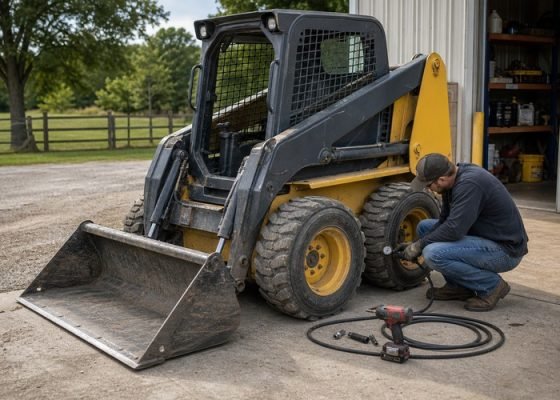
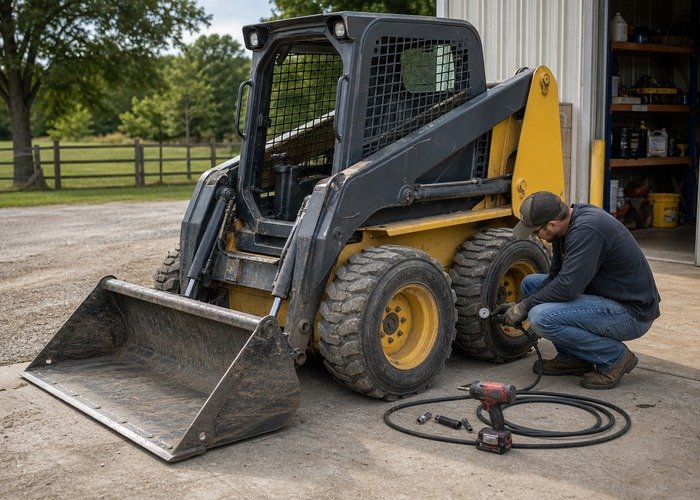
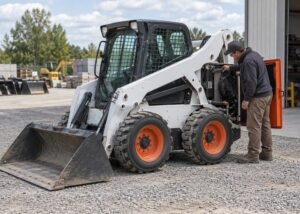
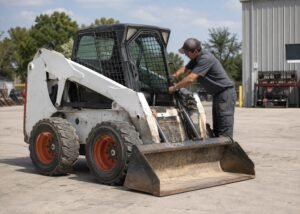
Skid steer tire maintenance is easy to ignore until a tire fails in the middle of a job. Tires affect stability, traction, ride, pushing power, fuel use, and the ability to finish without damaging the surface. If you are running a machine from the SeekMach skid steer loader category, tire checks should be part of every workday, not just a repair after a flat.
A skid steer works differently from a road vehicle. It turns by skidding, carries heavy loads on short wheelbases, works near debris, and often runs on gravel, demolition waste, brush, mud, and hard pavement in the same week. That combination is hard on tread and sidewalls. The right habit is to inspect before work, watch during work, and correct the jobsite behavior that damages tires.
Tire problems also create struck-by and control risks. The OSHA struck-by hazard guidance is worth reviewing because skid steers often work close to people, pallets, trucks, and structures. A tire failure or loss of traction can change the machine’s path quickly.
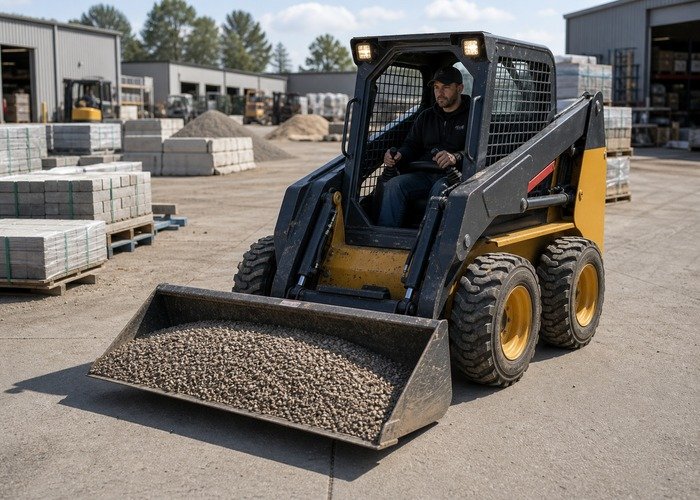
Tire pressure changes how the loader carries weight, steers, and contacts the ground. Too low and sidewalls flex, heat builds, rims may be damaged, and steering can feel sloppy. Too high and the machine may ride harshly, lose traction, and damage delicate surfaces. Use the machine and tire specifications rather than guessing by appearance.
Compare tire care with other machine choices through the SeekMach product overview. Tires are not separate from job planning. The NIOSH construction resources provides broader construction safety context for equipment working near crews and materials.
| Field condition | What to check | Better decision |
| — | — | — |
| Rapid shoulder wear | Pressure, alignment, hard turning | Check pressure and reduce aggressive pivots |
| Sidewall cuts | Brush, rubble, sharp debris | Inspect route and remove hazards |
| Poor traction | Wrong tire, slick surface, overinflation | Match tire and surface before forcing work |
| Frequent flats | Debris or damaged rim | Inspect site, valve stems, rim and tread |
| Harsh ride | Overinflation or hard surface | Verify pressure and travel speed |
| Uneven wear side to side | Load habit or pressure mismatch | Check pressure cold and review work pattern |
A tire that works well on concrete may not be ideal in mud. A deep aggressive tread can grip better in loose soil but wear faster on pavement. A harder industrial tire may survive abrasive surfaces but ride rougher. If your loader spends most of its day on hard yards, pallet work, and gravel, choose differently than a machine that lives in soft landscape sites.
Usar SeekMach application solutions when deciding how the loader fits the worksite. If the job is mostly digging roots or trenching, the SeekMach excavator category may protect the loader tires by letting an excavator do the work that creates sharp debris. The OSHA construction equipment safety topics adds general jobsite safety context.
Brush, broken concrete, pallets, rebar, sharp rock, and hidden stumps often damage sidewalls before tread is worn out. Inspect sidewalls at the start and end of the day. Look for cuts, bulges, embedded objects, exposed cords, and valve stem damage. A tire can look acceptable from the operator seat and still be unsafe at ground level.
Tire and rim information from Tire and Rim Association general information is a reminder that tire systems have load, inflation, and service limits. Do not weld, heat, or improvise around wheel assemblies without proper training.
Avoid spinning on abrasive surfaces. Make wider turns when the site allows it. Keep loads low and balanced. Do not ram piles when a lighter pass would work. Clean debris from travel routes before repeated cycles. A careful operator can make tires last longer without slowing the job much.
If long rural-property work is mixed with loader cycles, compare the role of a skid steer with the SeekMach tractor category. A tractor may handle longer travel or mowing while the skid steer stays on tight loading jobs.
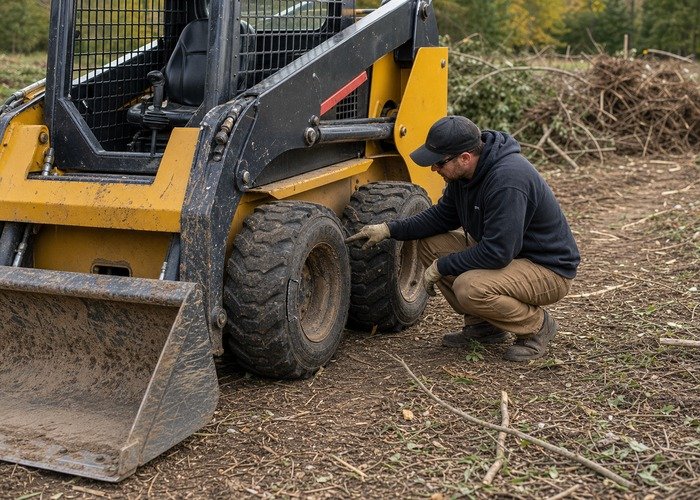
Inspect cold pressure, tread, sidewalls, valve stems, lug nuts, rim damage, and embedded objects. Check again after harsh brush or demolition work. Keep a log of repeated damage. If the same site or operator keeps causing sidewall cuts, change the route or work method before buying another tire.
Usar skid steer application solutions when thinking about the loader’s attachment work. Tire damage often follows attachment choice. A grapple in brush, forks on broken pallets, and a bucket in rubble create different tire risks. The CCOHS mobile equipment guidance provides useful mobile-equipment safety reminders.
A loader used for brush cleanup keeps losing tires on one side. The tread looks fine, but the sidewalls show cuts from hidden roots and broken branches. The solution is not only a tougher tire. The crew clears a safer travel lane, uses the grapple to pull debris away from the wheel path, and checks tires after each load cycle.
That kind of habit fits the broader SeekMach product overview: choose the machine, attachment, surface, and travel route as one system instead of treating tires as disposable parts.
Check before heavy work and whenever the machine changes surfaces or load patterns. Use the specified pressure, not visual guesswork.
Skid steering, abrasive surfaces, heavy loads, and aggressive pivots all increase wear. Operator habits matter.
They resist flats but add weight and can ride harder. The right choice depends on surface, lift needs, and downtime risk.
A serious sidewall cut is a safety risk. Inspect it properly and replace the tire when structure is compromised.
Yes. Pressure, tread, load, and surface all affect traction and control.
Skid steer work is full of short repeated cycles, which is why skid steer tire maintenance depends on habits more than one big repair. A small mistake repeated two hundred times in a day becomes tire wear, surface damage, or wasted fuel. Watch the travel route as closely as the bucket.
The fastest operator is not always the most productive one. Spinning tires, striking piles too hard, and pivoting sharply on abrasive surfaces can make the machine look busy while shortening tire life. A smoother route with fewer sharp turns often moves the same material with less damage.
Attachment choice changes the risk. Forks around broken pallets, buckets around rubble, grapples in brush, and brooms near wire all create different tire and visibility problems. Before changing attachments, take one minute to ask what new hazard the attachment brings to the tire path.
A simple site log helps more than memory. Note the surface, attachment, tire pressure, load type, and damage found at the end of the day. After a week, repeated sidewall cuts or uneven wear often point to one route, one surface, or one work habit.
| Work stage | What to record | Why it matters |
| — | — | — |
| Start of day | Check tires, fluids, attachment lock, and travel path | Catches failures before production pressure starts |
| Loading cycle | Keep the load low and avoid unnecessary spins | Improves control and reduces tire wear |
| Surface change | Slow down when moving from concrete to gravel, mud, or debris | Prevents sliding and sidewall damage |
| End of day | Record damage patterns by site and attachment | Turns repeated failures into solvable causes |
Most rework comes from skipping a small observation at the start. Check the surface, listen to the machine, and stop when the result changes. If the machine begins leaving ridges, clumps, crooked holes, tire marks, or uneven finish, the correct move is not always more power. Often it is a slower pass, a cleaner setup, sharper cutting edge, better moisture timing, or a different machine for that part of the job.
Think of the job as a sequence instead of a single pass. Plan where material will go, how water will move, how the operator will turn, and what the finished surface should look like from ground level. The relevant SeekMach pages, including SeekMach skid steer loader category and SeekMach product overview, are helpful starting points because equipment choice should come from the work pattern, not from the product name alone.
The last check should happen before tools are put away. Walk the work area, look at the surface from several angles, and note what changed. If the result will be exposed to rain, traffic, or repeated use, the first inspection after real conditions is even more valuable. That feedback is what turns one finished job into a better next job.
The first mistake is treating the machine as if it can overcome the wrong conditions. Wet turf, dry hardpack, loose gravel, rocky soil, sharp debris, or poor drainage each asks for a different pace. Forcing the same setting through every condition usually creates more work. When the result changes, stop and identify the condition that changed.
The second mistake is ignoring the edge of the work area. Edges are where water collects, tires drop, tools catch, decks scalp, and attachments swing close to objects. A clean center line with damaged edges is not a good finish. Make the turn area, shoulder, outlet, fence line, or discharge path part of the original plan.
The third mistake is using the final pass to hide earlier problems. A finish pass should refine good work, not cover up poor setup. If the base is uneven, the hole is crooked, the deck is clogged, or the tire path is full of debris, the final pass will only make the problem look smoother for a short time.
A fourth mistake is skipping the operator’s pause. A useful pause takes less than a minute: lower the attachment safely, look at the last ten meters of work, inspect the pattern, and decide whether to change speed, height, angle, route, or timing. That pause is often the difference between a clean article-worthy result and a job that needs to be redone tomorrow.
Stopping early is sometimes the professional choice. If soil starts smearing, grass begins clumping heavily, gravel turns to dust, tires start spinning, or the machine feels unstable, pushing ahead can damage the surface and the equipment. A short delay, a cleaning break, a different attachment, or a second machine may protect the job.
Another reason to stop is uncertainty. If an underground mark is unclear, a slope feels uncomfortable, a hydraulic connection leaks, a blade or tooth looks damaged, or the operator cannot see the work clearly, do not continue by habit. Clear the uncertainty first. Small machines are still powerful enough to turn a small question into a large repair.
Weather also decides timing. Rain can help settle dust and reveal drainage, but wet conditions can create ruts, clumps, and smeared finish. Heat can stress turf and operators. Cold or frozen ground can make digging and grading unpredictable. The schedule should serve the result, not the other way around.
After the job, write down one thing that worked and one thing to change next time. This habit sounds small, but it builds a local playbook for your soil, lawn, driveway, yard, crew, and machine. The best equipment advice is always improved by local experience because every site has its own weak spots.
A better next job starts faster because the operator already knows the first setting to try, the area to inspect, and the mistake to avoid. Over time, that means fewer wasted passes, less surface damage, cleaner finish, and more confidence when conditions are not perfect.
Watch a related skid steer tire and inspection video here: https://www.youtube.com/watch?v=gW_OWFAycSs. Skid steer tire maintenance is not glamorous, but it keeps the loader productive, predictable, and safer around people and materials.