Telephone/WhatsApp:+86 156 2656 0610

Telephone/WhatsApp:+86 156 2656 0610
Email:seekmach@gmail.com

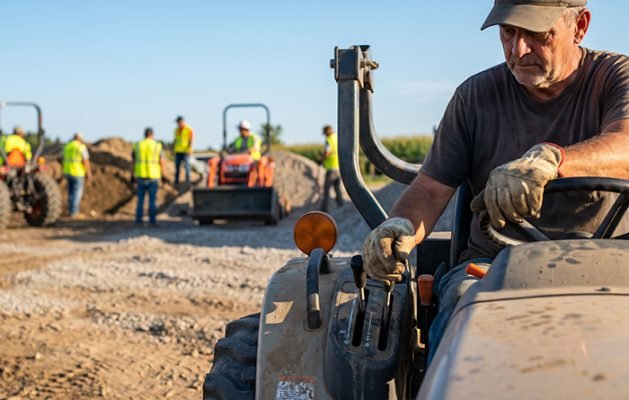
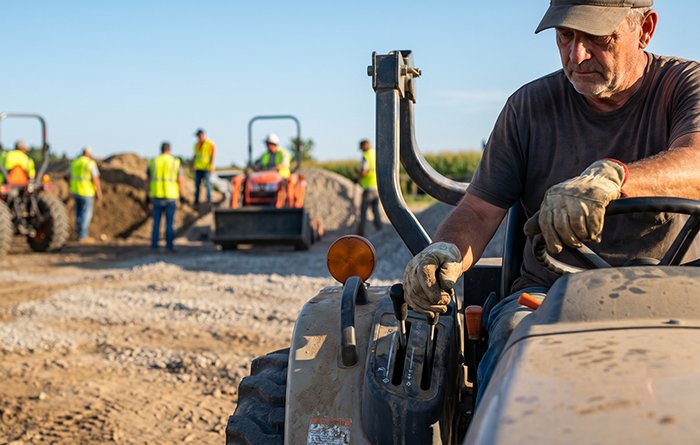
Walk onto any serious jobsite today — a landscaping operation, a small construction yard, a working farm pushing into light commercial territory — and you’ll almost certainly find a compact tractor humming in the 25 to 50 horsepower range. That’s not a coincidence. It’s a signal.
Tractors in the 25HP to 50HP range are a significant portion of the compact tractor market, according to the Association of Equipment Manufacturers (AEM). In an industry crowded with specialized equipment, that kind of dominance tells you something essential: this power band has earned the trust of professionals who can’t afford to get their equipment choices wrong.
“The 25-50 horsepower segment is the ‘Swiss Army Knife’ of the equipment world, capable of handling everything from precision seeding to heavy-duty material hauling.” — Equipment World Magazine
That analogy cuts to the heart of why this segment resonates so deeply. A single machine in this range can run a front-end loader in the morning, switch to a tiller attachment by afternoon, and push material with a box blade before sundown. Versatility isn’t just a selling point — it’s the operational reality that transforms these tractors from hobbyist weekend tools into genuine industrial assets.
This shift matters more than it might seem. The moment a compact tractor crosses the threshold into reliable, revenue-generating daily use, procurement decisions change entirely. Buyers stop thinking about price tags and start thinking about uptime, parts availability, and factory-direct reliability — the kind that doesn’t depend on a long chain of middlemen adding margin and delay.
Understanding exactly where that threshold sits requires a closer look at the physical differences driving performance — specifically, the debate between subcompact vs. compact tractor configurations and what each frame size actually delivers under load.
Not all compact tractors are created equal — and the gap between a subcompact and a full compact frame isn’t just a spec-sheet footnote. It’s the difference between a machine that handles weekend chores and one that earns its keep on a working site five days a week.
| Kategorie | Subcompact (Under 25HP) | Compact (25–50HP) |
|---|---|---|
| Engine Output | 15–24HP | 25–50HP |
| Betriebsgewicht | 1,500–2,800 lbs | 2,800–6,000 lbs |
| Lift Capacity (rear) | Up to 800 lbs | 1,500–4,000+ lbs |
| Typical Acreage Range | Up to 5 acres | 5–100+ acres |
| Ground-Engaging Suitability | Light grading, mowing | Full tillage, loader work, construction |
Weight isn’t a liability on a compact tractor — it’s a mechanical asset. Ballast and machine mass translate directly into traction, which determines how effectively ground-engaging implements like box blades, tillers, and loader buckets perform under load. A subcompact running at 22HP often loses ground traction before the engine reaches its limit, leaving power on the table. Compact frames in the 3,500–5,500 lb range keep all four tires planted when conditions get demanding.
Rear lift capacity is one of the most telling metrics for job-site utility. Subcompacts typically cap around 800 lbs at the lower hitch point — adequate for light attachments, but limiting for heavier implements. Step into the compact class and rear lift ratings climb to 2,000 lbs and beyond. When evaluating the best 50 hp tractor options for loader-intensive work, front loader lift ratings deserve equal attention; many 50HP compacts handle 2,000–2,500 lbs at full height, opening the door to genuine material-moving efficiency.
A common field guideline holds that 5 acres is often considered the practical threshold where subcompacts begin to show their limits — primarily in runtime and implement versatility rather than raw power. Below 5 acres, a subcompact’s tight turning radius and lower operating cost make sense. Above it, a compact frame pays dividends in reduced pass counts and expanded attachment compatibility. In construction and municipal settings, those efficiency gains compound quickly.
The physical and mechanical differences between these two classes ultimately trace back to one factor: engineering intent. How a tractor is built — its transmission, emissions compliance, and drivetrain design — shapes what it can realistically accomplish day after day.
Once you’ve settled on the right power band — as covered in the subcompact vs. compact breakdown above — the next question is what’s happening under the hood and inside the drivetrain. For municipal buyers and industrial procurement teams, this is where the real compact tractor comparison begins: not just horsepower figures, but transmission architecture and emissions certification.
Hydrostatic Transmission (HST) eliminates the clutch-and-gear sequence that wears operators down over a long shift. Instead of manually matching gear ratios to terrain changes, the operator uses a single pedal or lever to infinitely vary ground speed — both forward and reverse — without stopping. In practice, this translates directly into fewer operator errors, smoother attachment transitions, and measurably lower fatigue on multi-hour jobs.
For municipal fleets running tractors six to eight hours daily across parks, road shoulders, and utility corridors, HST isn’t a luxury feature. It’s a productivity multiplier that reduces both training time and long-term injury claims.
Tier 4 Final compliant engines reduce particulate matter (PM) and nitrogen oxides (NOx) by over 90% compared to older Tier 1 models, according to EPA Nonroad Diesel Greenhouse Gas Standards. For procurement officers bidding on government contracts, this is a baseline requirement.
As noted in our coverage of emissions thresholds in heavy equipment procurement, Tier 4 compliance increasingly determines which machines can even qualify for a contract bid.
ISO and CE certifications reinforce this further, signaling that a machine meets internationally recognized safety and manufacturing standards — a non-negotiable for liability-conscious municipal buyers.
High-efficiency engineering compounds over a machine’s service life. Lower fuel consumption, reduced maintenance intervals, and operator retention all feed directly into long-term ROI. The 25–50HP range earns its reputation not just from what it can lift, but from how intelligently it works — which sets the stage for understanding exactly what these machines can do across real-world applications.
Understanding what these machines actually do on the ground is where the theory gets real. The power band we’ve been analyzing — 25HP to 50HP — isn’t just about engine ratings. It’s about the range of tasks a single platform can perform without switching equipment entirely.
[YouTube Video Placeholder: Watch a 25–50HP compact tractor cycle through loader work, rear seeding, and pallet fork hauling in a single demo session]
A 25HP compact tractor is a capable machine. For anyone asking “what can a 25HP tractor actually do,” the honest answer covers a lot of ground: finish mowing, box blade grading, light loader work, rear tiller operation, and yes — precision seeding with mounted seeders that demand consistent PTO speed over uneven terrain.
This is why the 25HP class is frequently cited as the best tractor for 5 acres. On smaller parcels, the lightweight footprint reduces soil compaction, and the tighter turning radius makes working near fences, raised beds, and structure perimeters genuinely practical. Precision matters more than raw power at this scale.
What these machines do well is maintain consistent output under variable loads — a function of the HST transmission dynamics discussed in the previous section. Steady ground speed with responsive hydraulics translates directly to more uniform seeding depth and spacing.
Step up to the 50HP end of the range, and the operational profile shifts considerably. According to Equipment World Magazine, the 25–50HP range is capable of handling precision seeding and material hauling on the same platform — and it’s the 50HP machines that unlock the hauling side of that equation.
Think loaded pallet forks, three-point-hitch-mounted implements exceeding 1,000 lbs, or sustained loader cycles moving aggregates or mulch. OEM/ODM customization at this power level also opens options for specialized landscaping attachments — custom-width buckets, hydraulic thumb kits, or municipal-spec spray systems — that require both the hydraulic flow and the structural frame rigidity a 25HP machine simply can’t support.
The capability ceiling here is high. And as you’ll see next, how these machines are sourced and manufactured has a direct impact on both cost and configuration flexibility.
Understanding what a 25 HP tractor can do operationally — and what a 50 HP machine unlocks — is only half the equation. The other half is where and how you source the equipment. For municipalities, landscaping contractors, and industrial operators, the factory-direct model is increasingly reshaping procurement logic.
When you purchase through a traditional dealer network, overhead accumulates at every handoff. Distributor margins, regional warehousing fees, and limited customization windows all inflate the final cost without adding mechanical value. Factory-direct sourcing cuts that chain short, giving buyers direct access to pricing, specifications, and engineering support.
Scale matters here. Integrated production facilities enable rigorous quality compliance across international borders — a critical factor when equipment must meet CE, ISO, or EPA Tier 4 standards from day one. Facilities operating at this scale, like the Seekmach Industrial Overview demonstrates, embed compliance into the production line rather than treating it as an afterthought.
Fifteen-plus years of manufacturing expertise also translates directly into parts availability — a practical concern that often gets overlooked until something breaks mid-season. Integrated production means components are engineered, sourced, and stocked within the same ecosystem, reducing lead times significantly.
Direct access to OEM/ODM capabilities is a genuine differentiator for municipal buyers with non-standard attachment requirements. A township needing a tractor configured for narrow trail maintenance or a specific hydraulic output spec doesn’t have to settle for off-the-shelf compromises.
Buyers researching emissions-compliant compact equipment will find that this same factory-direct logic applies across the compact equipment category. The questions that arise — around certifications, customization options, and horsepower adequacy — are worth exploring in detail, which is exactly what the next section addresses.
Is a 25HP tractor enough for a 5-acre farm?
For most 5-acre operations, a 25HP compact tractor handles the core workload comfortably — mowing, tilling, light grading, and hauling. The practical ceiling tends to appear when operators run multiple demanding attachments simultaneously or tackle dense soil conditions regularly. A 5-acre property with mixed terrain and seasonal row cropping may benefit from stepping up to the 35-40HP range for consistent performance without overtaxing the engine.
What is the difference between HST and manual gear transmissions?
EIN hydrostatic transmission (HST) uses fluid pressure to deliver smooth, stepless speed control — ideal for loader work, tight maneuvering, and operators who frequently change pace. A manual gear transmission offers more direct mechanical efficiency and is generally preferred for sustained field operations like tilling where consistent ground speed matters. In practice, HST models cost somewhat more upfront but reduce operator fatigue significantly over long working days.
Why does Tier 4 compliance matter for commercial contracts?
Tier 4 emissions standards, set by the EPA, limit particulate matter and nitrogen oxide output from diesel engines. Many municipal, government, and institutional contracts now require Tier 4-compliant equipment as a procurement condition — making compliance less optional and more a baseline business requirement. As the sub-100 HP tractor market expands into commercial applications, Tier 4 certification increasingly separates contractors who can bid on public-sector work from those who cannot.
Can I customize a tractor for specific industrial attachments?
Yes — the 25-50HP power take-off (PTO) system und three-point hitch create a flexible mounting platform for hundreds of certified attachments. According to AllMachines compact tractor specs, attachment compatibility varies by model, so matching hydraulic flow rates and PTO shaft speeds to your target implements before purchasing is essential. Factory-configured options and dealer-installed packages both exist, giving buyers real flexibility without voiding warranties.
The 25-50HP range is not a compromise — it’s a deliberate power architecture that rewards operators who match machine capability to workload with precision.
Whether you’re budgeting for a first compact tractor or scaling an existing fleet, understanding what your total investment covers — from transmission type to emissions compliance — positions every purchase as a strategic asset rather than a line-item expense.