Telephone/WhatsApp:+86 156 2656 0610
Telephone/WhatsApp:+86 156 2656 0610
Email:info@seekmach.com

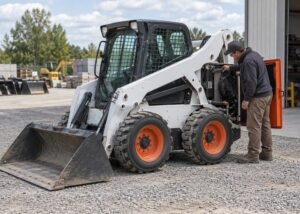
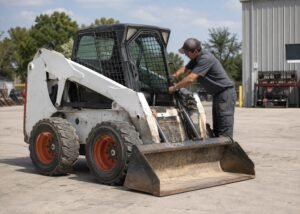
A skid steer loader earns its keep when the attachment matches the job instead of simply looking impressive on the front plate. The same carrier can move pallets, grade soil, clean brush, spread gravel, push snow, drill holes, sweep pavement, and load debris, but it cannot do all of that with one bucket. If you are comparing machines in the SeekMach skid steer loader category, build the attachment plan around the jobs that happen most often.
Start with the worksite, not the attachment catalog. A landscaping crew working around finished turf needs different tools from a contractor cleaning demolition debris or a property owner clearing brush along a fence line. Ground condition, required lift height, hydraulic flow, load center, visibility, transport, and operator skill all affect the choice. The best skid steer attachment is the one that completes the job safely with fewer passes and less rework.
It is tempting to buy a long list of tools at once. A better plan is to map the first six months of work: material handling, grading, cleanup, brush, snow, augering, and finish work. Rank those jobs by paid hours or actual property value. The highest-frequency tasks should guide the first attachments; rare jobs can often be rented until the need becomes clear.
| Attachment group | Best-fit jobs | What to confirm |
|---|---|---|
| General bucket | Soil, mulch, gravel, cleanup, loading | Width, cutting edge, material density |
| Smooth or grading bucket | Spreading topsoil, driveway touch-up, finish grading | Operator visibility, bucket width, grade tolerance |
| Palettengabeln | Pavers, bagged materials, lumber, supplies | Rated capacity, load center, pallet condition |
| Greifer | Brush, logs, demolition debris, storm cleanup | Auxiliary hydraulics, tooth style, guarding |
| Schnecke | Fence posts, footings, signs, planting holes | Flow, torque, bit size, soil conditions |
| Brush cutter | Overgrown fields, trails, small brush | Standard or high flow, debris protection, duty cycle |
This table is intentionally practical. Attachment marketing often focuses on what a tool can do at its best. Operators need to know what it does cleanly every week and where it becomes slow, unsafe, or expensive to maintain.
The bucket that comes with a loader may be fine for general material handling, but it may not be ideal for every job. A dirt bucket with teeth can cut into packed soil but may leave a rough finish. A smooth bucket can spread material better but may struggle to bite. A larger bucket saves trips in light mulch but can overload the machine in wet soil or gravel.
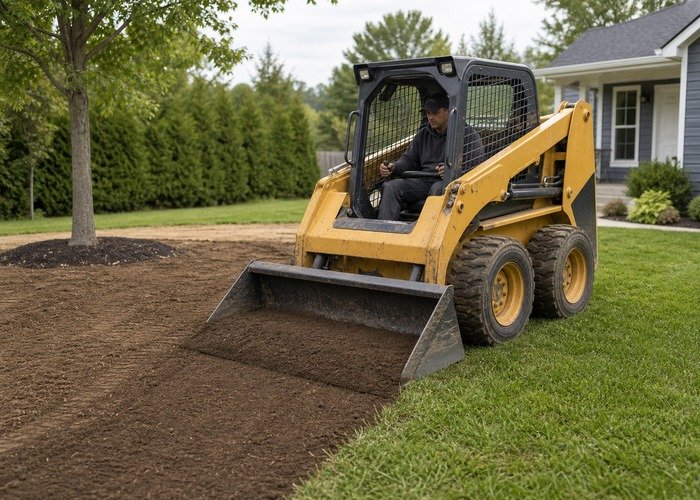
Bucket width should match the machine, tires, site access, and material. Too narrow and the wheels track outside the work. Too wide and the loader may lose breakout force or control. When spreading topsoil near a house, a moderate smooth bucket and careful passes may beat a larger bucket that leaves ridges.
For larger property workflows, compare skid steer work with the SeekMach tractor category. A tractor may be better for long mowing or field passes, while a skid steer shines in short-cycle loading and tight jobsite turns.
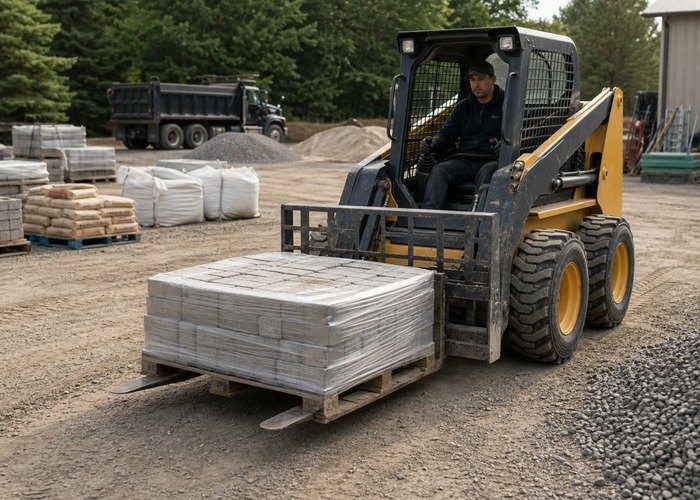
Pallet forks are one of the most useful skid steer attachments because they turn the loader into a material mover. They handle pallets of pavers, seed, stone, lumber, landscape blocks, attachments, and shop supplies. They also create some of the most common stability mistakes because the load center moves forward from the quick-attach plate.
Keep the load low during travel, tilt only enough to secure it, and avoid crossing slopes with a raised load. Pallet condition matters too. A broken pallet can shift suddenly. The OSHA powered industrial truck guidance is written for a different equipment class, but the load-handling principles around visibility, stability, and travel discipline are still useful reminders for material movement.
If a crew does frequent pallet handling, check rated operating capacity, lift height, visibility to fork tips, and the weight of the fork frame itself. Rated capacity is not just about whether the loader can raise the pallet once; it is about controlling it through the whole route.
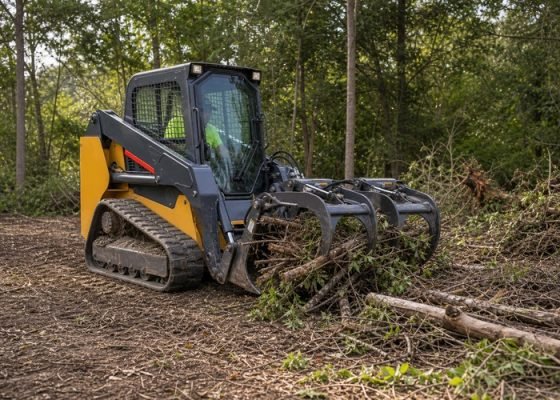
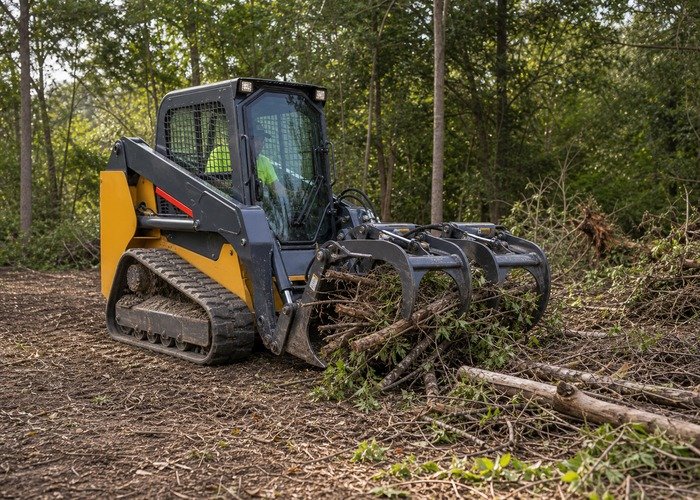
A grapple saves time when the material is irregular: brush, branches, logs, demolition debris, scrap, storm cleanup, and root mats. A standard bucket may push and spill this material, while a grapple can clamp it. The choice between root grapple, brush grapple, bucket grapple, and scrap-style grapple depends on the material.
Hydraulics matter. The loader needs auxiliary flow, compatible couplers, enough pressure, and hose routing that will not pinch through lift and tilt motion. The operator also needs protection from debris. The NIOSH construction safety resources are useful context when cleanup work blends into demolition or storm-damaged material handling.
Use the SeekMach application solutions page to think about whether the skid steer should do the grabbing, the hauling, or both. On a clearing job, an excavator may loosen roots while the skid steer moves material. The fastest job often comes from pairing machines rather than forcing one attachment to do everything.
Finish grading is where operator patience matters as much as attachment choice. A smooth bucket can spread topsoil and gravel, but it requires repeated thin passes. A grading blade or land plane style attachment can improve consistency on larger areas. A laser or machine-control setup can help on precision jobs, but many small contractors still rely on sight lines, stakes, and repeated checks.
Ground moisture changes everything. Wet topsoil smears and clumps. Dry loose soil can roll ahead of the bucket. Gravel grades differently from screened loam. A good operator adjusts bucket angle, travel speed, and pass direction. A good attachment makes that adjustment easier, not automatic.
Brush cutters are popular because they create dramatic results, but they are also demanding attachments. Standard-flow units can work well on lighter growth when matched correctly. High-flow cutters may handle heavier material or faster cutting, but only if the machine has the required flow, pressure, cooling, guarding, and stability. Flow that looks good on paper still has to survive the duty cycle.
Flying debris is a serious concern. Maintain exclusion zones, use proper guarding, and avoid cutting near people, vehicles, glass, livestock, or hidden hazards. If the job is primarily heavy land clearing, compare machine choice with the SeekMach excavator category. A mini excavator may pull stumps or handle roots more precisely before the skid steer cleans up.
Augers are useful for fence posts, signs, deck footings, tree planting, and light construction holes. Soil controls the outcome. Clay can stick, sand can collapse, and gravel can deflect the bit. Confirm hydraulic flow, bit size, torque, and overhead clearance. Locate utilities before drilling.
Trencher attachments can be productive for shallow utility or drainage work, but they must match soil, depth, width, and spoil handling. The OSHA trenching and excavation page is worth reviewing whenever a trench becomes deep enough to create collapse risk. Even when no one enters the trench, edges and spoil placement still matter.
For a landscaping crew, start with a general bucket, pallet forks, a smooth grading bucket, and either a grapple or auger depending on the work mix. For a small construction crew, pallet forks and buckets often come first, followed by a grapple, sweeper, breaker, or auger. For rural property cleanup, a grapple may earn its place earlier than forks.
Do not forget storage. Attachments need flat parking areas where couplers stay clean and frames do not settle into mud. A tool that is hard to connect will be used less often. Keep hoses capped, inspect couplers, and check cutting edges, teeth, pins, and cylinders before each job.
Attachment width should usually cover the machine’s track or tire path, but wider is not always better. A wide bucket can grade smoothly in open space and become clumsy beside retaining walls, gates, buildings, or planted beds. A narrow grapple may fit tight woodland trails but leave more passes in open brush. Pallet forks may seem universal until the load is long, flexible, or stacked unevenly.
For grading work, small differences in width and cutting edge condition show up in the finish. A bucket with a worn edge can leave ridges. A grading attachment that is too wide can catch and twist the machine on uneven ground. The Iowa State University Extension farm equipment safety resources provide practical reminders about equipment operation, visibility, and matching the machine to field conditions.
Skid steer attachments put stress into the quick-attach plate, pins, couplers, hoses, cylinders, and tires. Before starting, confirm the attachment is locked, hydraulic couplers are fully seated, hoses are routed clear of pinch points, and the attachment is appropriate for the material. After changing tools, cycle the attachment slowly in a clear area and watch for hose movement.
Check tires or tracks as part of the attachment plan. A machine carrying pallets on hardscape has different tire needs from one cutting brush on stumps and hidden debris. If the loader uses tires, pressure affects stability and sidewall damage risk. If it uses tracks, inspect cuts, tension, and packed debris. A great attachment cannot overcome a neglected carrier.
For mixed jobs, compare the entire equipment lineup through the SeekMach product overview. A skid steer loader may move material while an excavator digs and a tractor handles mowing or long-distance property work. Dividing the job correctly often reduces attachment abuse.
One more habit helps: write down why an attachment was slow on a specific job. Was the material too wet, the machine underpowered, the tool too wide, the operator unable to see the edge, or the access path too tight? Those notes turn one frustrating day into a better buying decision. They also keep a crew from blaming the wrong part of the system when the carrier, attachment, ground condition, and operator technique all contributed.
For example, a grapple that struggles in a brush pile may not be the wrong grapple. The pile may contain dirt-heavy roots that should be loosened first, or the loader may need a different approach angle so the lower tines can get under the material instead of pushing it. A pallet fork complaint may turn out to be poor load visibility, not lack of lift. A grading bucket that leaves waves may be telling the operator to reduce speed, make thinner passes, and check tire pressure before changing tools.
Most owners need a general bucket and pallet forks first. The next tool depends on the work: grapple for brush, smooth bucket for grading, auger for posts, or brush cutter for overgrowth.
Only for attachments that require it. Many buckets, forks, grapples, and augers work with standard flow. Brush cutters, cold planers, mulchers, and some trenchers may need higher flow.
They can be useful, but the load must stay low and within rated limits. Load center, ground slope, pallet condition, and visibility all matter.
Some tools overlap, but no single attachment does everything well. A bucket, forks, grapple, and grading tool cover more work than one oversized “universal” attachment.
Renting is sensible for rare or specialized work. Buy when the attachment earns enough hours, reduces labor, and fits the machine without constant compromise.
Watch a relevant skid steer attachment video here: skid steer attachment work on YouTube. Then choose from the job outward: material, site access, load, hydraulic needs, safety zone, and storage. A skid steer loader becomes valuable when its attachments are matched to the work that actually pays for the machine.