















































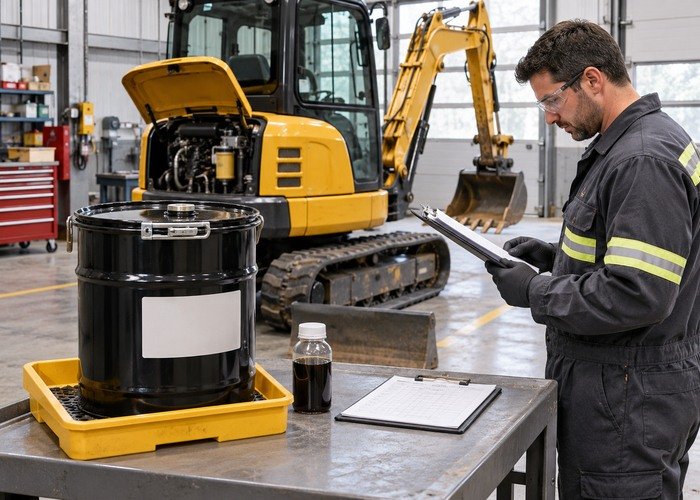
A mini excavator oil change creates a traceable maintenance stream: used engine oil. Keep its identity clear from the moment it is collected, store it in a suitable closed container, and confirm the receiver’s acceptance before arranging pickup. This is practical waste management, not a universal legal classification: requirements vary by country and state, and oil mixed with other substances may follow a different route.
This page focuses on engine oil removed during service. It is distinct from choosing the correct engine lubricant, covered in our guide to matching engine oil to the machine requirement, and from assessing hydraulic oil condition or an oil handover. See also hydraulic oil analysis and the used hydraulic oil handover record. The practical goal here is to avoid an unidentified batch and document the destination.
Identify the oil before it enters a collection container
Start with the machine’s service record and the product container or supplier documentation. Record that the fluid came from the engine lubrication system, the date of service, machine or fleet ID, service order, product identity if known, and the quantity or a clearly marked estimate. If the oil’s identity is uncertain, label the uncertainty. Do not infer grade, additives, contamination or suitability for re-refining from its color, odor or appearance.
In the United States, the EPA defines used oil as petroleum-based or synthetic oil that has been used and become contaminated by physical or chemical impurities. That definition is not the same as saying every dark liquid is used oil. A mixture with solvent, fuel, coolant, cleaning fluid or another waste may need a different determination. The maintenance history and known inputs matter.
Several machines may contribute to a bulk collection tank, but source records remain useful. Track which service events contributed, whether the container was empty or already contained material, and any unusual event such as a leak or an accidental addition. That information helps the receiver evaluate the batch and helps the fleet explain what left the site.
Use a clear container and a controlled collection point
Select a container that is compatible with the oil and accepted by the service provider. Keep it closed when not adding material, in sound condition and protected from impact or movement. Place it in the location designated by the facility’s environmental plan, using secondary containment or other controls required by local rules and the site. There is no single container size that is right for every excavator shop or jurisdiction.
For a U.S. used-oil stream managed under 40 CFR Part 279, EPA’s business guidance explains marking the container or tank with “Used Oil” and maintaining it in good condition without leaks. The site should check the current rule and its state requirements, which can be stricter. Outside the United States, the wording and controls may be different; ask the competent regulator or waste contractor for the local equivalent.
Do not use an unmarked drum simply because everyone in the shop recognizes it. Labels should remain readable to a coworker, relief technician or collection driver who was not present when the oil was generated. Include the contents, a unique container or tank ID, and dates or other fields required locally. Follow the site’s labeling system, and update it if the container’s contents or status change.

Keep separate until the receiver confirms compatibility
Used engine oil and used hydraulic oil may both be accepted as used oil by a recycler, but they are different source streams in the machine and should not be casually combined before the receiver confirms its requirements. A collector may have an approved bulk route for multiple lubricating oils; another may require separate tanks or decline a batch containing coolant, brake fluid, solvent, fuel or water. Ask first.
Never add a non-oil liquid or an unknown material to an oil container to save space. EPA guidance warns that contamination can affect management and may change the applicable waste rules. The 2025 EPA quick-start guide specifically says not to collect substances such as solvents, paint, pesticides, water or antifreeze in a used-oil storage container. If contamination has happened, stop adding material, note what is known, and contact the environmental lead or receiver before moving the batch.
Do not attempt to fix a mixed batch by decanting, diluting or blending it. Those steps can spread contamination and make the composition less certain. Preserve the facts: what may have entered, when it happened, approximate quantity and whether a receiver or qualified professional has reviewed it. A supplier or environmental consultant can advise whether further characterization is needed.
Confirm the route before pickup
Before scheduling collection, describe the stream accurately: used engine oil from mini excavator service, the known product, whether it is mixed with any other lubricants, and any suspected contamination. Ask the provider whether it accepts that material and what container, label, volume information, sampling or access arrangements it requires. Ask whether it will be recycled or sent for another permitted management route.
The EPA business FAQ on used oil notes that states may impose requirements stricter than the federal baseline. The 2025 EPA used-oil quick-start guide provides collection and contamination precautions. Michigan EGLE’s used motor oil generator guidance covers state-specific topics such as characterization, container management and shipping documentation. It says the publication is guidance and does not replace legal requirements. Use it as a Michigan reference, not as a nationwide rule.
Ask who arranges the transport and provides any required transfer document, shipping paper or receipt. If your company arranges hauling itself, verify the local requirements for that arrangement. Do not assume that a household drop-off location accepts commercial quantities or oil from a service business. A receiver’s website may describe general acceptance, but confirm the actual batch and account before loading.

Make the handover record reconcile to the service
A useful record joins the service event, container and collection. Capture the machine ID, work-order reference, date, fluid source, known product identity, amount and whether it was measured or estimated. Add the container ID, receiver name, acceptance confirmation, pickup date, carrier if relevant, destination and receipt or document number. Keep the record with maintenance and environmental records for the retention period that applies in your jurisdiction.
For a bulk tank, the site may also record additions and pickups so that the balance can be reviewed. Do not turn approximate figures into precise measurements after the fact. Mark estimated amounts and use the provider’s measured collection quantity when it supplies one. If the recorded service quantity and pickup quantity differ significantly, investigate possible prior contents, transfers, spills or measurement assumptions.
Where the provider rejects material, retain the rejection reason and the next instruction. Keep the oil segregated and do not relabel it as another accepted stream. A clear exception note is better than a record that implies the load was collected when it remained onsite.
Build the collection step into preventive maintenance
Maintenance planning can prevent oil from becoming an unknown batch. Before a scheduled service, identify the approved collection container, verify that it has capacity, check its label and confirm that the contracted receiver still accepts the stream. The maintenance plan should assign responsibility for the record and set a notification route for any unplanned mixture or leak.
After service, close the work order only when the waste note has been completed or assigned to a named person. This does not mean technicians need to perform a legal classification at the machine. Their job is to report source, product, date and unusual conditions accurately. The environmental or compliance contact can then apply the local determination with records and professional input.
For fleets with multiple depots, standardize the fields but allow local rules to add requirements. A shared form can include machine, oil system, product, date, quantity basis, container ID, contamination status, provider, destination and linked documents. Keep a copy of current local instructions at each shop so that a process written for one state is not treated as universal. Review the form whenever a receiver or regulation changes.
Common record and storage mistakes
- Calling any dark fluid “used engine oil” without confirming its source.
- Adding coolant, solvent, fuel, water or an unknown liquid to an oil container.
- Assuming that used engine oil and hydraulic oil must be combined—or must always be separate—without checking the receiving route.
- Using a container that is damaged, unmarked or not accepted by the contractor.
- Copying a state shipping rule or retention period into a different jurisdiction.
- Keeping only a service invoice and no evidence of collection or destination.
If there is a spill, container damage or unexplained contamination, follow the site’s emergency and environmental procedures and notify the responsible supervisor. Do not use this article as spill-response instructions. Trained staff should follow the facility plan and local reporting requirements.
Frequently asked questions
Can used engine oil and hydraulic oil share one collection tank?
Some used-oil programs may accept more than one lubricating-oil source, but acceptance is provider- and jurisdiction-specific. Keep the sources identifiable until the receiver confirms what its route allows, and never mix either stream with non-oil waste or unknown material.
Does engine oil become hazardous just because it is used?
Not automatically under every rule. The generator must apply the waste definition and determination process that applies locally. Contamination with certain substances can change the required management, so document known inputs and get qualified advice when uncertain.
What should go on the container label?
Use the label required by the applicable regulation and site procedure. For U.S. containers managed under the used-oil standards, EPA guidance refers to marking them “Used Oil.” Add site identifiers and any accumulation information required locally.
What paperwork should the fleet keep?
Keep the service record, container or tank log, provider acceptance, pickup receipt and any transfer or shipping documents required in the jurisdiction. Requirements and retention periods differ; confirm them with the regulator or environmental professional.
In short: identify the oil by its source, protect the stream from unknown additions, verify the contractor’s acceptance and connect each pickup to the machine service record. This makes recycling or other approved management easier to verify without inventing a classification or quantity.