Telephone/WhatsApp:+86 156 2656 0610
Telephone/WhatsApp:+86 156 2656 0610
Email:info@seekmach.com



Every serious B2B equipment buyer eventually arrives at the same conclusion: the economics of sourcing from a tractor supplier in China now makes more sense than it ever has before.
China now accounts for over 50% of global tractor manufacturing volume, according to Mordor Intelligence — a statistic that reflects not just scale, but a fundamental restructuring of where agricultural machinery expertise actually lives. A decade ago, that dominance was built on low-cost utility tractors. Today, it’s being reinforced by increasingly sophisticated 35HP–90HP machines equipped with modern hydraulics, PTO systems, and ROPS-certified cabins that compete directly with mid-tier Western brands on specification.
The quality gap has narrowed significantly. Chinese manufacturers have invested heavily in precision engineering, ISO-certified production lines, and export-focused QC protocols. What was once a trade-off — cheaper price, lower standard — has evolved into a genuinely competitive value proposition. SMEs in agriculture, landscaping, and light construction are responding accordingly, redirecting capital away from premium Western brands and toward direct-sourced Chinese machines that deliver comparable performance at 30–50% lower acquisition cost. That freed-up budget often gets reinvested into custom configurations and specialized attachments, compounding the ROI advantage further.
Underpinning all of this is the maturity of China’s agricultural supply chain. Tier-1 manufacturing clusters in Shandong, Sichuan, and Jiangsu now operate with vertically integrated supply chains, meaning factories control everything from raw steel to final assembly. Lead times are tighter, component consistency is higher, and export logistics are well-established. For B2B buyers thinking in terms of total cost of ownership rather than sticker price, this supply chain maturity changes the calculus entirely.
The question, then, isn’t whether to source from China — it’s how to do it without leaving money on the table through unnecessary intermediaries.
Factory-direct procurement from a Chinese tractor manufacturer isn’t just a cost-cutting tactic — it’s a structural advantage that reshapes your entire equipment budget.
The middleman mark-up in heavy machinery refers to the margin layered onto the manufacturer’s base price by trading companies, local importers, and third-party exporters. According to HKTDC Research, this markup typically adds 20% to 40% to the final cost of heavy machinery. On a $30,000 tractor order, that’s potentially $12,000 absorbed by a party who added no engineering value whatsoever.
Working directly with the factory eliminates that gap. The savings don’t vanish — they become capital you can redirect into higher-value decisions:
Beyond pricing, transparency is the second major dividend. When you deal directly with the manufacturer, you see actual production timelines, real component sourcing decisions, and honest lead times. Trading companies frequently obscure these details — sometimes unknowingly — because they’re one step removed from the factory floor themselves.
Hidden costs are where third-party exporters quietly erode your budget. Documentation errors, misclassified Harmonized System codes, and inconsistent quality control are far more common when a middleman manages the export process. Direct factory relationships give you a single point of accountability.
Buying factory-direct doesn’t just save money — it gives you the leverage to ask harder questions and get straight answers. That transparency becomes especially valuable once you start examining what separates a credibly certified factory from one that merely claims to be.
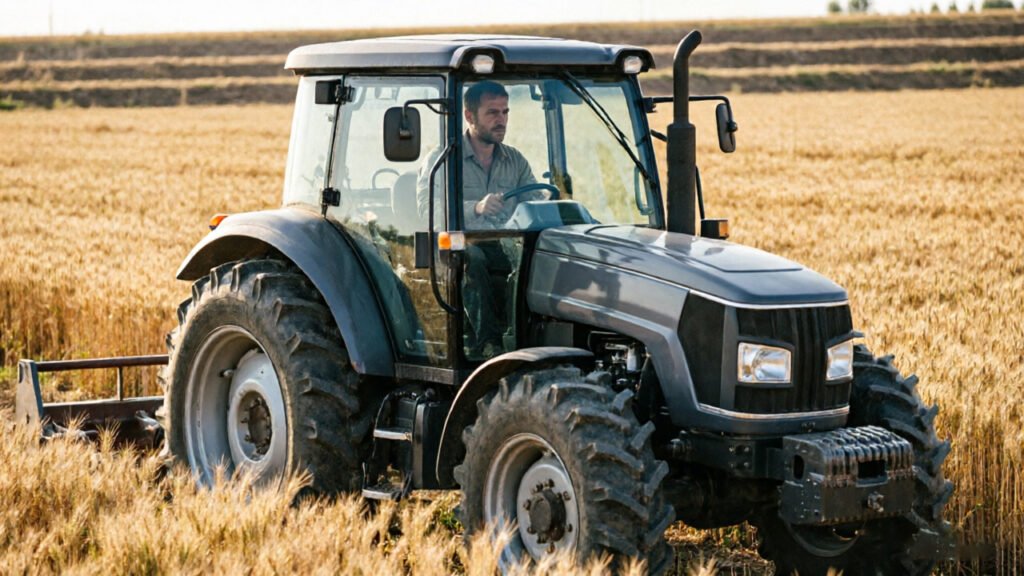
Certification documentation is the fastest way to separate credible factory-direct heavy machinery suppliers from those selling on price alone — and getting it wrong costs far more than the margin you saved.
A certificate on a PDF means nothing until you verify it against the issuing body’s registry. That step is where most B2B buyers fall short, and where the real qualification process begins.
ISO 9001: The Quality Management Baseline
ISO 9001 certification signals that a manufacturer operates a documented, audited quality management system — covering everything from raw material intake to final assembly tolerances. For tractor procurement, this translates directly to consistency across production batches. A factory that holds a current ISO 9001 certificate has demonstrated, to an accredited third-party auditor, that its processes are repeatable and correctable when defects occur.
CE marking: Non-Negotiable for Cross-Border Safety
CE marking is the compliance baseline for machinery entering European markets and a strong proxy for safety engineering quality regardless of your destination. It indicates conformity with EU machinery directives on guarding, emergency stops, and operator protection. According to the Alibaba agricultural machinery sourcing guide, confirming both ISO and CE documentation should be a non-negotiable step before finalizing any supplier shortlist.
Verifying Authenticity and the Reliability Link
To verify a certificate, request the certificate number, issuing body name, and expiry date — then cross-reference directly with the certifying body’s online registry. Expired or suspended certificates are more common than buyers expect.
| Certification | What It Proves |
|---|---|
| ISO 9001 | Audited quality management system across production |
| CE marking | Conformity with international machinery safety directives |
The connection between certification and long-term machine reliability isn’t theoretical. Factories without active third-party oversight have no systematic mechanism for catching recurring defects before they ship. If you’re also evaluating smaller equipment alongside tractors, reviewing compact equipment import considerations covers overlapping compliance checkpoints worth cross-referencing.
Once credentials check out, the next critical validation happens on the factory floor itself — which is why pre-shipment inspection goes well beyond a photo gallery.
Every serious tractor procurement guide treats the pre-shipment inspection (PSI) as the single most consequential step between signing a purchase order and loading a container.
Photos and videos sent by the factory simply don’t constitute a quality check. Lighting can be staged, angles can be chosen strategically, and short clips can be recorded before a fault develops under sustained load. For B2B buyers committing tens of thousands of dollars to heavy machinery, visual media is a starting point for conversation — not evidence of conformance.
The hydraulic system deserves particular scrutiny. A tractor’s loader arms, three-point hitch, and auxiliary circuits all depend on hydraulic pressure that holds consistently under real operating resistance. Testing at idle in a warehouse tells you almost nothing. A proper PSI requires the hydraulic circuit to be cycled under load — lift arms weighted, held at full extension, and then cycled repeatedly to detect drift, pressure drop, or seal weeping that wouldn’t appear in a static visual review.
Power Take-Off performance is equally non-negotiable to verify in person. PTO shafts must spin at the correct RPM under resistance, engage cleanly without shudder, and disengage without delay. These are functional characteristics that only reveal themselves during a live drive test with a connected implement.
“The most critical phase of sourcing from China is the pre-shipment inspection (PSI), which should include a functional test of the tractor’s hydraulic systems and PTO performance.” — QualityInspection.org (Sofeast)
Third-party inspection agencies operating inside China — firms like Sofeast, QIMA, or Bureau Veritas — provide on-the-ground, factory-floor verification with no financial relationship to the supplier. Reputable suppliers, like those load-tested before export, actively accommodate third-party inspectors as a mark of confidence. When a factory resists independent inspection, that resistance is itself a red flag worth treating as disqualifying.
With inspection fundamentals established, the next critical decision becomes matching the right horsepower range to your specific application.
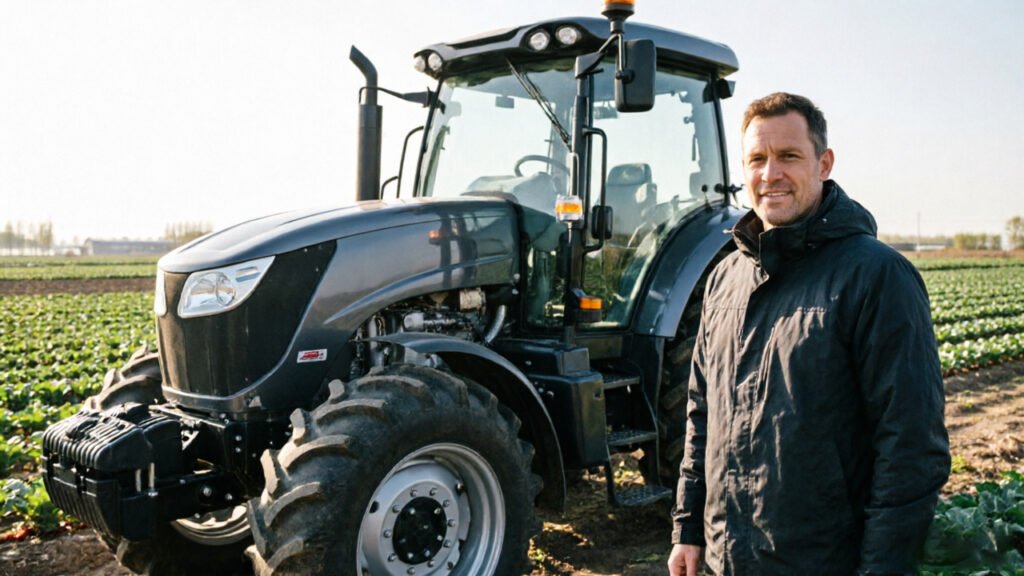
Choosing the right horsepower band is one of the most consequential decisions in B2B machinery sourcing — and getting it wrong means paying for power you can’t use or buying equipment that stalls under real workloads.
The horsepower range you select should be driven by job demand, not budget alone.
Small-scale utility (35HP–50HP). This band is built for small-to-mid-size agricultural operations: orchard management, market gardens, livestock farms, and light groundskeeping. Tractors in this range are maneuverable, fuel-efficient, and easier to operate with a lean crew. If your application involves row crops or confined spaces, it’s worth exploring how compact tractor specs translate to real-world performance before committing to a model. The lower operating weight also reduces soil compaction — a detail that matters more than most buyers anticipate.
Mid-range muscle (70HP–90HP). Municipal contractors, road maintenance crews, and construction operators consistently gravitate toward the 70HP–90HP window. This range delivers enough torque to handle loader work, grading, and utility sweeping without the acquisition and fuel costs of full-scale construction equipment. According to Alibaba’s B2B sourcing data, road sweeper tractors sourced from Chinese manufacturers in this category have seen growing demand across Southeast Asian municipal contracts precisely because the power-to-cost ratio is difficult to match elsewhere.
Attachments and parts availability. Modern Chinese manufacturers now offer integrated production systems supporting tractors from 35HP to 90HP with specialized attachments — front loaders, backhoes, rotary tillers, and mowers that quick-change between tasks in minutes. That versatility multiplies the ROI on a single chassis. However, attachment compatibility and spare parts availability vary significantly by model. Before finalizing any purchase order, confirm that the supplier maintains a dedicated spare parts warehouse and can commit to parts lead times in writing. Suppliers who hesitate on this point are flagging a real supply chain risk.
Understanding horsepower requirements sets the specification framework — but verifying that a factory can actually produce to those specifications consistently requires a different kind of due diligence, one that happens on the ground.
A factory audit separates credible manufacturers from paper suppliers — and knowing exactly what to evaluate on-site is the difference between a confident purchase and an expensive mistake.
With the pre-shipment inspection covered earlier, the factory audit goes a layer deeper. It’s not just about inspecting finished machines; it’s about assessing whether a manufacturer has the infrastructure, systems, and culture to deliver quality consistently across every order.
Production facility scale is your first credibility signal. Serious tractor manufacturers typically operate facilities of 50,000 m² or more. Advanced production lines — like those documented in industry manufacturing footage — can simultaneously produce tractors ranging from 60 to 300 horsepower using automated assembly techniques. A cramped or cluttered floor with improvised tooling tells you everything you need to know before a single machine is inspected.
When walking the assembly line, look for clearly defined quality control stations at each production stage, not just a final-check area at the end. Components should move through the line in a logical sequence, with documentation attached. Gaps in the QC flow — or stations that appear unused — are worth probing directly.
R&D capability signals long-term partnership potential. A dedicated engineering department with OEM/ODM project files on display suggests the manufacturer can adapt specs rather than just repeat catalogue builds. Ask to see examples of past customization work. Manufacturers who have invested in design capacity tend to support critical dimensional tolerances and compliance requirements far more reliably than pure assemblers.
Finally, audit the spare parts warehouse. Inventory should be organized, labeled, and cross-referenced against current production models. Poor parts management is a leading predictor of post-sale support failures — and a well-stocked, systematized warehouse is one of the clearest signs of operational maturity.
🚩 Red Flag: If a supplier discourages photography on the production floor, can’t produce recent QC records, or shows a parts warehouse that doesn’t match their active model lineup — walk away. Transparency is non-negotiable.
Beyond documents and machines, what you see and feel during a physical visit carries its own evidentiary weight — which is exactly why video documentation, covered next, has become an indispensable sourcing tool.
Video content has become one of the most underused yet high-impact verification tools in B2B tractor sourcing — giving buyers a window into factory scale, machine behavior, and build quality before any contract is signed.
Factory tour videos are your first filter. When a supplier shares walkthrough footage of their production line, pay close attention to the density of CNC machinery, welding stations, and quality control checkpoints visible on the floor. As XH News Agency notes, visual verification of production lines — such as those operating out of major manufacturing hubs like Luoyang — provides direct transparency into a supplier’s manufacturing maturity. A crowded assembly floor with workers and active tooling signals a genuine operation; an empty or staged-looking facility should raise immediate questions.
Beyond factory footage, performance videos in real field conditions are non-negotiable. Look for clips showing the tractor operating under load — running PTO attachments, working heavy soil, or navigating inclines. These scenarios reveal far more than spec sheets. Watch for signs of hydraulic strain, excessive exhaust smoke, or instability under stress. A supplier confident in their product will share unedited field footage willingly; reluctance to provide it is itself a data point.
The practical value here is assessing toughness before committing capital. A machine might meet published horsepower figures yet still show frame flex or drivetrain hesitation under realistic working loads. Video evidence makes these characteristics visible from thousands of miles away.
[Insert YouTube Video: Chinese Tractor Production Line]This walkthrough of an integrated tractor manufacturing facility highlights the scale of component fabrication and assembly processes typical of established Chinese OEM producers. Pay attention to the welding and hydraulic assembly stations as key quality indicators.
Combined with the on-site audit practices and horsepower matching frameworks covered earlier, video analysis completes a multi-layer verification approach — setting the stage for the final sourcing decisions that will make or break your import outcome.
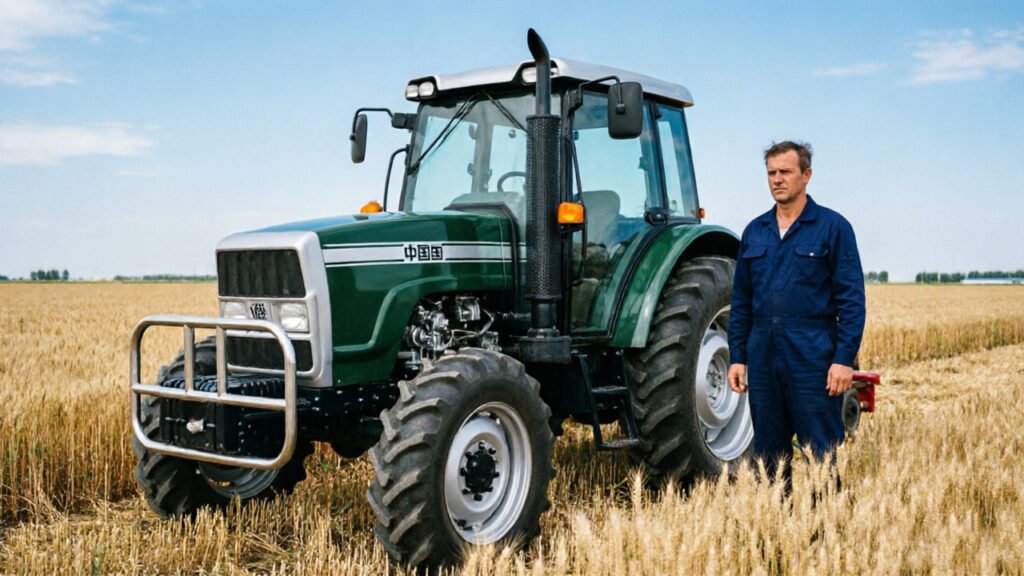
Sourcing tractors directly from Chinese manufacturers rewards prepared buyers — and punishes those who skip the fundamentals covered throughout this guide.
The single most important principle: structure every step before you spend a dollar. From initial supplier vetting through factory audits, video verification, and final inspection, each layer of due diligence compounds your protection. Buyers who treat sourcing as a process rather than a transaction consistently get better machines at better prices.
The strategies in this guide give you a repeatable framework — but every buyer’s situation raises its own specific questions. The next section addresses the most common ones directly.
Smart B2B buyers come prepared with the right questions — and knowing what to ask separates confident sourcing decisions from costly surprises.
How do I know if I’m dealing with a factory or a trader?
Request a copy of the supplier’s business license and manufacturing certification. Factories will have a production license listing specific machinery categories, while trading companies typically hold general import/export licenses only. A video factory tour — as covered earlier in this guide — can confirm floor-level production activity that traders simply cannot replicate.
What are the standard lead times for 35HP–90HP tractors?
In practice, lead times for this horsepower range run between 25 and 45 days for standard configurations, depending on order volume and current production schedules. Custom color schemes or non-standard transmission options can add 10–15 days. Always build buffer time into your logistics planning, particularly around Chinese national holidays like the Golden Week and Lunar New Year.
Can I get custom attachments for my specific industry?
Yes — and this is one of the strongest advantages of direct manufacturer relationships. Leading manufacturers supply OEM/ODM services to over 50 countries, meaning front loaders, backhoes, rotary tillers, and specialty implements can be engineered to your spec, per Seekmach Industrial. Submit detailed drawings or reference models early in the inquiry process.
What happens if a part fails after delivery?
Reputable manufacturers provide documented warranty terms — typically 12 months on major components — alongside spare parts support. The Alibaba Agricultural Machinery Parts Sourcing Guide recommends confirming parts availability and warranty scope in the contract before shipment.
Is it possible to order a single sample unit before a bulk purchase?
Most established manufacturers accommodate sample orders, though expect to pay closer to retail pricing on a single unit. Sampling one tractor under real working conditions remains the most reliable way to validate quality, specifications, and after-sales responsiveness before committing to a larger order.