Telephone/WhatsApp:+86 156 2656 0610

Telephone/WhatsApp:+86 156 2656 0610
Email:info@seekmach.com



Cities across America are caught in a slow-motion collision. Underground infrastructure built in the 1950s and 60s is failing at the precise moment urban populations are reaching their densest point. Water mains, fiber optic conduitss, and stormwater systems need constant repair — but the streets above them have never been more congested, more commercially sensitive, or more politically charged.
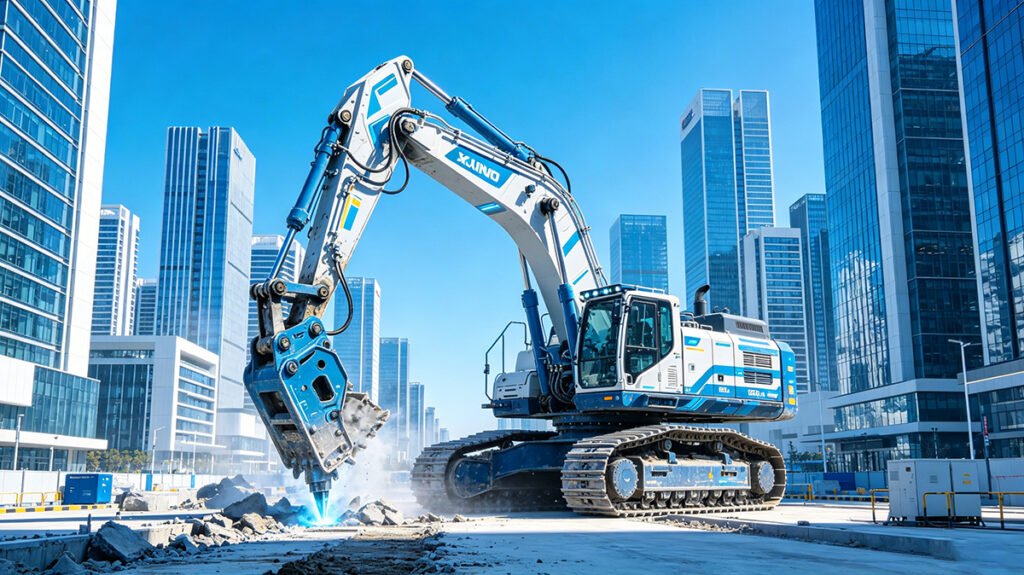
Traditional full-size excavators, once the default answer to any dig, are increasingly becoming a liability in this environment. A 20-ton machine that tears up two lanes of traffic, requires a full police detail, and takes three days to mobilize is no longer an acceptable solution for replacing a 40-foot section of clay sewer pipe. The math — in delays, public complaints, and contractor penalties — simply doesn’t work anymore.
“The versatility of a mini excavator in municipal work is defined not by the machine itself, but by the hydraulic flow capacity that supports specialized attachments.” — Equipment World
This shift has given rise to what engineers and project managers now call Surgical Construction — precise, minimally disruptive interventions designed to protect surrounding infrastructure, keep traffic flowing, and reduce community impact. Compact excavator municipal infrastructure applications sit at the heart of this movement, and machines built for confined urban conditions are rewriting what’s operationally possible on a city block.
Comprensione why compact equipment dominates modern municipal work starts with one critical design principle — and it involves what a machine does when it pivots.
When a crew opens up a city street to repair a drainage line or lay fiber optic conduits, every minute of lane closure costs money, goodwill, and political capital. That’s exactly where zero-tail-swing (ZTS) technology has shifted from a nice-to-have feature to an operational requirement — and it’s reshaping urban construction efficiency with mini excavators across the country.
On a conventional excavator, the rear counterweight swings outward beyond the width of the tracks during rotation. In an open field, that’s no problem. On a city street, it’s a collision waiting to happen. A zero-tail-swing excavator is engineered so the counterweight stays within the machine’s track width at all times, allowing full 360-degree rotation without encroaching on adjacent lanes, sidewalks, or structures.
This design directly improves operator safety. When the machine can’t swing into live traffic, operators focus on the task rather than constantly monitoring blind spots behind the cab. According to the Bobcat Compact Excavator Buyer’s Guide, ZTS models are specifically designed for confined jobsites where working in close proximity to obstacles is the norm, not the exception.
According to the Association of Equipment Manufacturers (AEM), compact excavators with zero tail-swing are becoming the standard for urban utility-first projects precisely because of their ability to operate within a single traffic lane. That capability eliminates the need for full road closures on many repair jobs — keeping one lane open, maintaining emergency vehicle access, and dramatically reducing the permit complexity that comes with multi-lane shutdowns.
A single avoided road closure can save a municipality thousands of dollars in traffic management costs and contractor delay penalties — before a single bucket of dirt is moved.
📦 Traffic ROI: The Numbers Behind One Open Lane Keeping one lane of traffic moving during a utility repair isn’t just a convenience — it’s a measurable cost reduction. Fewer cones mean lower traffic control contractor fees. Shorter closures mean fewer noise and disruption complaints routed to city hall. And faster project completion windows help municipalities avoid overtime penalties written into many infrastructure contracts.
In historic districts or dense commercial corridors, the counterweight collision risk extends beyond moving vehicles. A swinging counterweight can clip a parked car, graze a heritage building facade, or strike a bus shelter — incidents that carry liability implications well beyond the repair itself. If you’re evaluating whether a ZTS model fits your specific site constraints, understanding the controls before you operate is a practical first step for any crew new to this class of machine.
These operational realities explain why procurement teams are updating equipment specifications. However, traffic management is only one dimension of the regulatory pressure municipalities now face. Environmental compliance — from emissions standards to noise limits — is quickly becoming an equally non-negotiable factor in which machines get approved for city contracts.
The regulatory landscape governing urban construction is shifting faster than most equipment fleets can keep up with. Municipal procurement departments aren’t just buying machinery anymore — they’re navigating a growing web of environmental mandates that directly determine which machines can work within city limits and which ones can’t.
Low Emission Zones E Green Zones are no longer limited to European capitals. Municipalities across the US are adopting similar frameworks, influenced heavily by UN-Habitat’s push toward green urban innovation in infrastructure planning. The practical result? Contractors bidding on city utility work increasingly find that Stage V or Tier 4 Final engine compliance isn’t a differentiator — it’s the entry fee.
The numbers back this up. The global electric excavator market is projected to grow at a CAGR of 12.4% through 2030, driven largely by municipal emissions regulations. For utility trenching equipment for narrow city streets, that shift is already visible in tender requirements today.
Municipal leaders understand something equipment managers sometimes overlook: noise pollution is both a technical and public relations problem. A 6 AM utility repair that rattles apartment windows generates constituent complaints by 7 AM. Quieter machines — particularly electric compact excavators — give city officials a tangible talking point about responsible infrastructure management.
Contractors who invest in understanding compact machine operation alongside compliance documentation are consistently better positioned for municipal bids. According to Columbus Equipment, sustainabilityity credentials are becoming a genuine competitive advantage on today’s jobsite — not just a checkbox.
Meeting environmental standards is only one dimension of responsible urban operation, however. How a machine contacts the ground is equally consequential — and that’s where undercarriage choice becomes the next critical decision.
Urban job sites are unforgiving surfaces. A single pass of steel tracks across decorative stonework, freshly sealed asphalt, or municipal sidewalk panels can cause thousands of dollars in damage—damage that typically falls on the contractor or the city budget to repair. That’s why undercarriage choice has moved from an afterthought to a front-line procurement decision.
As previously discussed, zero-tail-swing excavators for road maintenance have redefined how crews operate in traffic-restricted corridors. But even the most maneuverable machine causes problems if it’s tearing up the surface beneath it. Rubber tracks are now the non-negotiable standard for most municipal applications, and according to For Construction Pros, they are mandatory for sidewalk and pavement preservation—directly reducing long-term infrastructure repair costs.
Rubber tracks don’t just protect surfaces—they protect project budgets and contractor reputations simultaneously.
Here’s how the common track types compare:
| Tipo di traccia | Surface Impact | Miglior caso d'uso |
|---|---|---|
| Steel tracks | High scarring risk on asphalt, tile, and pavers | Rough terrain, demolition sites, dirt-only environments |
| Rubber tracks | Minimal surface marking; distributes weight evenly | Urban streets, sidewalks, decorative hardscape, green spaces |
| Rubber-padded steel | Moderate protection; better grip than full rubber | Mixed-terrain municipal work with occasional hard surface crossing |
Surface scarring isn’t just cosmetic. Repairing a 50-foot stretch of decorative pavement can run $8,000–$15,000 depending on material—easily wiping out the margin on a routine utility job.
However, rubber tracks do involve trade-offs. They wear faster in abrasive conditions and offer less traction on steep, muddy slopes. In practice, the solution is selecting a machine sized and configured for the specific terrain. For operators navigating tight residential corridors alongside hard-surface streets, understanding how a compact machine pivots within its own footprint becomes just as important as track material.
Choosing the right undercarriage is only one dimension of maximizing a compact excavator’s value on a municipal site—the next step is expanding what the machine can actually do once it’s there.
Once you’ve addressed surface protection and emissions compliance, the next logical question becomes: how much work can one machine actually handle? For municipal departments operating under tight budgets, the answer matters enormously. A compact excavator’s real value isn’t just in the trench — it’s in the full range of tasks it can perform across an entire city’s infrastructure calendar.
As Equipment World notes, industry experts emphasize that for municipal applications, the machine’s value is tied to its multi-functionality and the ease of switching between hydraulic tools without losing pressure. That insight reframes how procurement teams should think about equipment: not as a single-purpose asset, but as a platform.
High-performance attachments are only as effective as the machine’s hydraulic flow capacity allows. A compact excavator with auxiliary hydraulic circuits and adjustable flow settings can power demanding tools — breakers, rotary cutters, cold planers — without pressure drops that reduce performance. When evaluating choosing the right excavator for city pipe repair and broader infrastructure work, operators consistently find that auxiliary flow ratings are what separates a capable machine from a limited one.
Example scenario: A public works department replaces a water main in spring, then redirects the same machine to cemetery grounds management by summer — switching from a grading bucket to a tilt rotator in under an hour. That kind of operational flexibility is only possible with a machine engineered for quick coupler compatibility and stable hydraulic output. Bobcat’s compact excavator overview reinforces this point, highlighting multi-attachment adaptability as a core feature for varied jobsite demands.
For departments weighing which size class delivers this kind of cross-department range, a closer look at mid-range compact options reveals how even lighter machines can support a surprisingly broad attachment library. That versatility sets the stage directly for the next critical decision: how to procure smartly, not just affordably.
Smart equipment purchasing decisions don’t start with a catalog — they start with a framework. For procurement officers and municipal contractors, choosing the right compact excavator means looking well beyond the sticker price and thinking strategically about long-term value, compliance, and operational fit.
Initial purchase price is the most visible number in any equipment bid, but it’s rarely the most important one. Total cost of ownership (TCO) accounts for fuel consumption, maintenance intervals, operator training, downtime costs, and resale value — factors that compound significantly over a five- to ten-year municipal asset lifecycle. In practice, a machine priced $8,000 higher upfront can easily save $20,000+ over its operational life through better fuel efficiency and lower service demands.
IL World Bank emphasizes optimized resource and energy use efficiency as a core principle in municipal infrastructure development — a standard that TCO-focused procurement directly supports. Electric and hybrid compact excavators, in particular, dramatically reduce fuel and maintenance expenditure while aligning with sustainabilityity mandates.
Municipal procurement rarely allows flexibility on compliance. CE certification signals conformity with European safety and environmental directives, while ISO certifications (particularly ISO 9001 for quality management) provide independent assurance of manufacturing consistency. For government tenders, these aren’t optional extras — they’re gatekeeping requirements that protect both public funds and project timelines. Always verify certifications before shortlisting any supplier.
Off-the-shelf machines rarely fit the full scope of municipal work. Factory-direct OEM/ODM models allow cities to specify track type, attachment compatibility, cab configuration, and emissions package from the ground up. This customization — without the markup of a reseller — delivers measurably better value. For example, a zero-tail-swing configuration engineered specifically for dense urban corridors eliminates jobsite compromises that generic models can’t resolve.
According to 4Rivers Equipment, mini excavators offer unmatched versatility across attachment types — a key consideration when municipal fleets must serve multiple departments with a single asset class.
Compact excavators have evolved from a niche workaround into the definitive standard for sustainable municipal infrastructure. Cities that approach procurement strategically — prioritizing TCO, certification compliance, and factory-direct customization — will consistently outperform those chasing the lowest bid. The right machine, chosen for the right reasons, builds more than infrastructure — it builds long-term fiscal and environmental accountability.