














































If you’re shopping the 35 horsepower class, you’re usually chasing the same outcome: enough muscle to run real implements, without paying (or maneuvering) like you bought a full-size utility machine.
This guide is written for a mixed audience:
- US dealers/importers who need spec clarity and a clean evaluation framework.
- Small farms, orchards, and property owners who want a practical tractor that works in tight rows and mixed terrain.
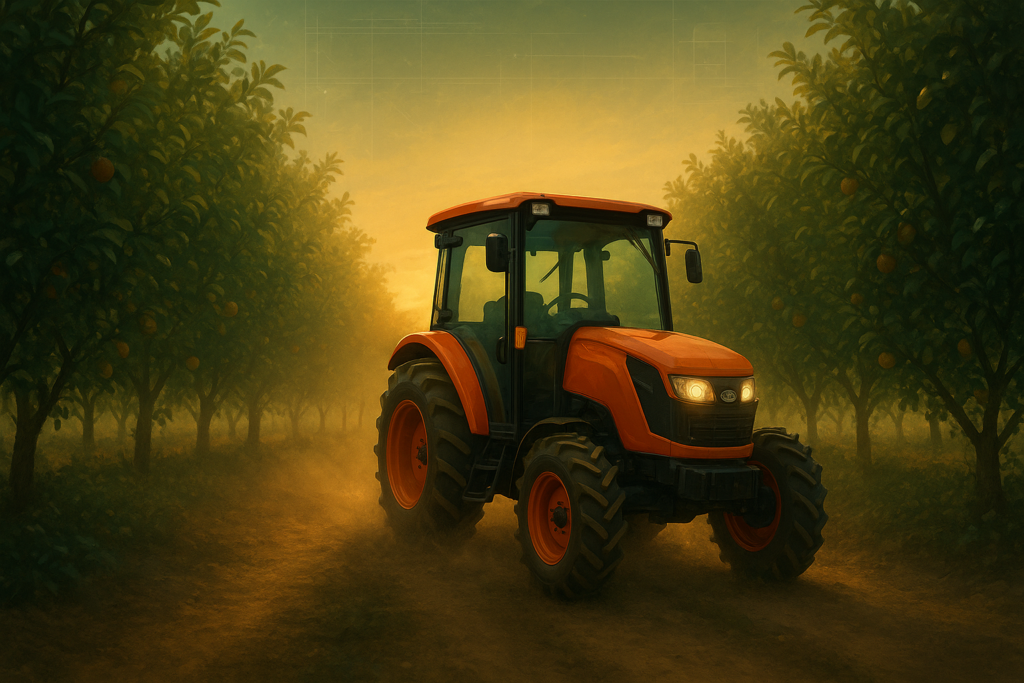
We’ll use one concrete example throughout: the China 35HP Tractor SM-354Y (a compact Farm Tractor configuration built for real work). The goal isn’t hype—it’s to help you compare, spec-check, and shortlist with confidence.
Start here: the 7 criteria that decide whether a 35HP Farm Tractor is “right”
Consideration-stage buyers don’t need a history lesson. They need a checklist that prevents expensive mismatches.
- PTO setup (speed + engagement) — will it match the implements you actually plan to run?
- Real working traction — 4WD, tire size, ballast strategy.
- Transmission ranges — enough gear options for low-speed work and transport.
- Hydraulic capability — steering type and available rear hydraulic output(s).
- Physical size — wheelbase and width for orchards/greenhouses.
- Operating weight — stability on slopes, loader work, and ground engagement.
- Compliance + documentation — especially for US dealers/importers.
Pro Tip: Build your shortlist using criteria first, not brochures. Criteria tell you what to verify.
Quick spec snapshot: China 35HP Tractor SM-354Y (verified)
Below are the specs pulled directly from the official product page.
| Spec | SM-354Y (Verified) |
|---|---|
| Model | SM-354Y |
| Rated power | 35 HP |
| Engine model | 4L22BT |
| Drive | 4WD |
| Transmission | 8F + 2R |
| PTO speeds | 540 / 720 rpm |
| Dimensions (L×W×H) | 3350 × 1400 × 2000 mm |
| Wheelbase | 1780 mm |
| Operating weight | 1410 kg |
| Tires (front / rear) | 6.5-16 / 11.2-24 |
| Speed range (forward) | 2.06–31.30 km/h |
| Speed range (reverse) | 2.71–12.52 km/h |
| Rated drawbar force | ≥ 7.6 kN |
| Steering | Hydraulic steering |
| Hydraulics | 1 group hydraulic output |
| Emissions statement | Stage II |
Source: SM-354Y specifications
The one concept that prevents most bad purchases: PTO ≠ engine horsepower
Implements don’t care what the hood decal says. They care about PTO power and PTO speed.
A power take-off (PTO) is the mechanism that transfers engine power to implements via a splined shaft—common on tractors used to run mowers, tillers, pumps, and more.
- Definition reference: Power take-off (PTO)
A practical rule-of-thumb (for buyer math)
Successful Farming notes that there is often around 20% power loss from crankshaft output to PTO/wheel horsepower, depending on drivetrain and test conditions.
- Reference: Successful Farming’s Understanding the Differences in Horsepower (2024)
That means a 35 HP tractor frequently delivers less at the PTO than 35.
Simple estimate table (rule-of-thumb, not a model-specific test)
| Engine HP (label) | Estimated PTO/Wheel HP (≈80%) |
|---|---|
| 25 | 20 |
| 35 | 28 |
| 50 | 40 |
⚠️ Warning: This is an estimate for planning. The only true number is the published PTO rating (if provided) or measured output. Use this table to avoid over-buying implements.
Why the SM-354Y’s PTO setup matters (540/720 rpm)
Most US implements are designed around standard PTO speeds—commonly 540 rpm for many compact applications. The SM-354Y lists 540/720 rpm, which is valuable for two reasons:
- Compatibility: 540 rpm aligns with a very wide range of PTO-driven implements.
- Flexibility: a second PTO speed can help match implement behavior to operating conditions, as long as you stay within the implement’s rated PTO speed requirements.
If you’re comparing tractors in the “China Tractor” segment, don’t just compare horsepower. Compare PTO speeds and how they’re selected/engaged—that’s what determines whether you can safely and efficiently run your attachment lineup.
Decision matrix: how to evaluate a 35HP Farm Tractor for your use case
Use this matrix to score any shortlist candidate (including the SM-354Y) on what actually changes outcomes.
| Evaluation criterion | What “good” looks like | What to verify on SM-354Y |
|---|---|---|
| PTO setup | Standard speed(s) you need; easy engagement; stable RPM | PTO listed as 540/720 rpm; confirm engagement method and implement match |
| Traction | 4WD for slopes/soft ground; appropriate tires; ballast option | 4WD; tire sizes 6.5-16 / 11.2-24 |
| Transmission | Enough low gears for ground engagement + usable transport gear | 8F+2R; check how speed range maps to your tasks |
| Hydraulics | Smooth steering; at least one rear hydraulic output if you need it | Hydraulic steering; 1 hydraulic output group |
| Size for tight work | Width and wheelbase suited to orchard rows/greenhouses | 1400 mm width; 1780 mm wheelbase |
| Stability | Operating weight + wheelbase support your terrain | 1410 kg operating weight |
| Compliance/docs | Clear spec sheets, manuals, emissions statement, shipping docs | Emissions statement Stage II; request manuals and parts list |
If you want a fast scoring method: give each row a 1–5 score. Anything under 3 in a “must-have” row is a deal-breaker.
Where the SM-354Y fits best (and where to be careful)
Best-fit scenarios
1) Orchards, vineyards, greenhouses, and tight property lanes
The SM-354Y’s compact width (1400 mm) and 4WD make it naturally aligned with tighter working environments where turning space and traction matter.
2) Mixed-task small farms that run PTO-driven implements
A 35 HP class tractor is often chosen because it can do mowing + light tillage + hauling across seasons. The key is matching implement demands to PTO reality.
3) Dealers building an entry compact line
If you’re stocking a compact unit to cover broad “general farm / small acreage” needs, the 35 HP class can be an attractive “middle” SKU—big enough to feel capable, small enough to move volume.
Be careful if…
- You plan to run heavy PTO implements at full width all day. Confirm your PTO rating and duty cycle expectations.
- Your customers require US-specific emissions certification language. Use the manufacturer’s stated level and verify what documentation is available for your market.
For emissions context (high level), DieselNet summarizes both EU NRMM stages and US EPA nonroad tiers:
- DieselNet overview: EU nonroad emission standards
- DieselNet overview: US nonroad diesel emission standards
Implement compatibility: what most 35HP owners actually run (and how to avoid mismatch)
Rather than listing every implement under the sun, here’s a method that transfers across models.
Step 1: Write down your “top 5” tasks
Typical combinations for this class include:
- mowing/brush cutting
- light tillage and soil prep
- hauling and light grading
- orchard/row work
- post and fencing work
Step 2: If it’s PTO-driven, confirm required PTO speed
The PTO is a standardized interface, but it only works when speed and coupling match. A mismatch is how gearboxes get cooked and blades start vibrating.
Step 3: Use PTO-horsepower logic to avoid over-buying implements
If an implement spec calls for more PTO horsepower than your tractor can realistically deliver, you’ll feel it immediately: bogging, slow ground speed, poor cut quality, and wear.
Key Takeaway: For implement shopping, PTO reality beats engine labels every time.
A dealer/importer checklist (US): what to request before you commit
If you’re evaluating the SM-354Y as a portfolio unit, treat it like procurement, not shopping.
Documentation pack to request
- spec sheet + configuration list
- user manual + service manual (if available)
- parts list / parts diagram
- packing details (dimensions, weight, container plan)
- warranty terms (what’s covered, duration, claim process)
Operational readiness questions
- recommended maintenance intervals and consumables
- spare parts lead time and what’s stocked routinely
- pre-delivery inspection steps
- after-sales communication channel and response expectations
Relevant internal pages:
- SM-354Y specifications page (see link above)
- farm tractor lineup
- tractor manufacturer overview
Buying checklist: the fastest way to shortlist the right China Tractor
Use this as a binary “yes/no” filter:
- PTO speed matches your core PTO implements (540 and/or your required speed)
- 4WD is included if you work slopes, soft ground, or wet seasons
- Transmission range fits your tasks (creep work + transport)
- Hydraulic steering is present if you do tight maneuvering and frequent turning
- At least one rear hydraulic output if your attachments require it
- Operating weight and tire sizes match your stability needs
- Documentation is available (manuals, parts list, warranty terms)
If a tractor clears these seven, you’re no longer guessing—you’re evaluating.
Red flags (and how to spot them early)
- Specs without units (or changing across documents)
- No clarity on PTO speed selection/engagement
- Vague emissions claims (instead of “this is the stated level” + documentation)
- No parts list / no service pathway
A good supplier doesn’t just answer questions—they can show you the paperwork.
Next step: request a quote with your configuration
If the SM-354Y is on your shortlist, the fastest way to turn this from “interesting” into “actionable” is to request a quote with the configuration you need (drive, PTO needs, hydraulics, and required attachments).