Telephone/WhatsApp:+86 156 2656 0610

Telephone/WhatsApp:+86 156 2656 0610
Email:info@seekmach.com

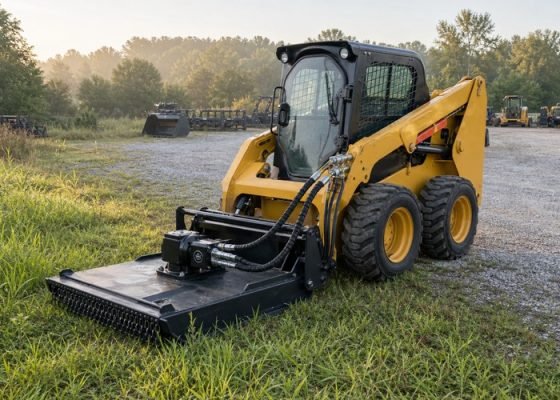
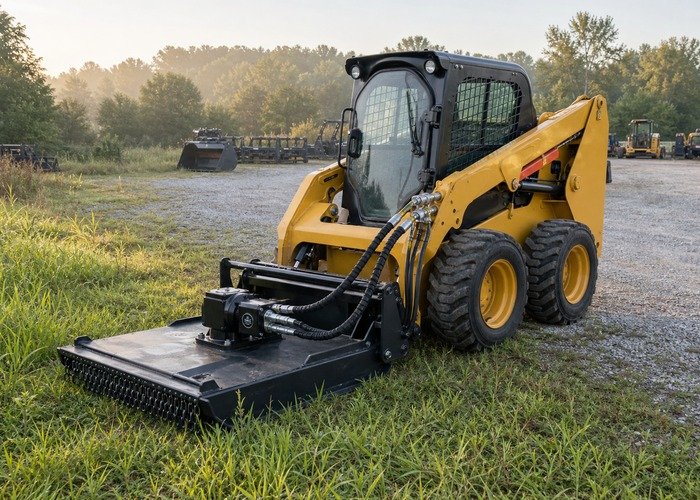
Hydraulic flow is one of the most misunderstood skid steer specifications. More gallons per minute do not automatically mean more usable attachment power, and a high-flow machine does not make every tool run better. The attachment must match flow, pressure, couplers, return path, case-drain needs, cooling capacity, and the way the carrier controls auxiliary hydraulics. Begin with the work and attachment manuals, then compare carriers through the SeekMach skid steer loader category.
Standard flow commonly supports buckets with hydraulic functions, augers, grapples, brooms, light trenchers, and many general-purpose tools. High flow is often chosen for attachments that need more hydraulic horsepower, such as demanding cutters, planers, mulchers, saws, and higher-production trenchers. Exact ranges vary widely. Never classify an attachment by name alone; use its specified operating flow and pressure.
The goal is a matched operating window. Too little flow can make a motor slow and easy to stall. Excess flow can overspeed a motor, create heat, damage seals, or exceed the attachment’s rating. Excess pressure can overload components. A connection that physically fits is not proof of compatibility.
Flow mainly influences actuator speed. Pressure mainly influences the force or torque available against resistance. Together they determine theoretical hydraulic power. A commonly used estimate is hydraulic horsepower equals flow in gallons per minute multiplied by pressure in pounds per square inch, divided by 1,714. Real output is lower because pumps, valves, hoses, couplers, and motors lose energy as heat.
| Example system | Flow | Pressure | Theoretical hydraulic horsepower |
|---|---|---|---|
| General standard-flow example | 18 gpm | 3,000 psi | About 31.5 hp |
| Higher standard-flow example | 24 gpm | 3,000 psi | About 42 hp |
| High-flow example | 35 gpm | 3,500 psi | About 71.5 hp |
These examples explain the relationship; they are not purchasing targets. The usable result depends on efficiency, cooling, duty cycle, and attachment design. Verify continuous ratings, not just maximum figures. A carrier may advertise a peak pressure that is not available at maximum flow in every condition.
Standard flow is the practical choice for many owners because it supports common attachments without the cost and complexity of a high-flow package. Pallet forks and buckets do not need continuous auxiliary flow. Grapples need cylinder movement, not high motor speed. Many augers, brooms, and trenchers are specifically designed for standard-flow carriers.
The SeekMach product overview is useful when deciding whether a skid steer is the correct carrier at all. A hydraulic attachment can make a skid steer versatile, but an excavator may provide better reach for trench work and a tractor may be more efficient for long PTO-driven field tasks. Choose the carrier around the workflow, then choose its hydraulic package.
Standard flow can also reduce heat generation when the attachment is correctly sized and the work is intermittent. That does not mean standard flow cannot overheat. A restricted coupler, kinked hose, dull cutting tool, excessive down pressure, wrong motor, or continuous relief operation can turn hydraulic energy into heat quickly.
High flow is valuable when the attachment is designed to convert additional hydraulic power into production. A properly matched planer may cut faster, a demanding brush cutter may recover speed better, and a mulching head may maintain rotor energy in heavier material. The carrier also needs adequate pressure, cooling, stability, rated operating capacity, and electrical controls.
Do not buy high flow only for future flexibility. List the exact tools and annual hours. If high-flow attachments will work only a few days per year, rental may be simpler. If a revenue-producing attachment runs hundreds of hours, the package can be justified by productivity and attachment choice.
Review the OSHA landscaping hazards guidance before treating powered cutting tools as routine. Brush cutters, mulchers, and similar attachments require exclusion zones, guarding, debris control, and strict adherence to the manuals.
Some manufacturers offer packages above conventional high flow, sometimes paired with higher pressure, larger couplers, extra cooling, or specific controls. Marketing names are not standardized. Compare actual flow, pressure, continuous duty, coupler size, return restriction, case-drain provisions, and attachment approval.
An attachment designed for one enhanced system may not be suitable for another carrier that advertises a similar label. Hydraulic motor displacement and maximum speed must match. Electrical connectors and controller communication may also be required for door, depth, speed, or reversing functions.
If the attachment vendor and carrier documentation disagree, stop and obtain written compatibility guidance. Do not resolve a mismatch by installing adapters and hoping the oil will find a safe path.
Find minimum flow, maximum flow, maximum pressure, required coupler size, case-drain requirement, acceptable backpressure, machine weight recommendation, rated operating capacity requirement, and electrical-control needs. Some plates provide only a model number, so obtain the manual before use.
Flow below minimum may produce poor speed and stalling. Flow above maximum may overspeed the motor. Pressure below the work requirement may reduce torque; pressure above component limits can cause failure. Attachment weight changes stability and lifting performance even before the tool engages material.
Use the SeekMach application solutions page to map the attachment to the job. A wide, heavy cutter on uneven ground may demand more carrier stability and visibility than its hydraulic numbers suggest.
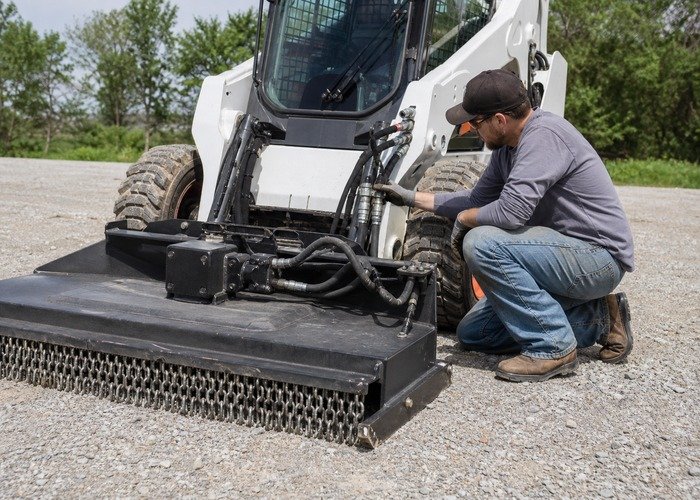
Quick couplers are restrictions, especially when worn, contaminated, damaged, or only partly seated. Clean both sides before connection. Relieve trapped pressure according to both manuals. Never strike a coupler, loosen a hose, or use body weight against a pressurized fitting.
Hose inside diameter, length, routing, and bend radius affect pressure loss and heat. Long undersized hoses can consume useful power. Sharp bends, twist, abrasion, pinching at full lift, and contact with the tire or attachment frame shorten life. Route hoses through approved supports and test the full lift and tilt range slowly before work.
A motor attachment needs an unrestricted return path within its backpressure limit. Some tools require a separate case drain to carry internal leakage directly to tank at low pressure. Connecting a case drain to the wrong port can destroy motor seals. The NIOSH hydraulic safety page explains the severe risk of high-pressure fluid injection.
A case-drain line is often smaller than the pressure and return hoses, which makes it easy to overlook. Its job is not to power the attachment; it protects the motor by allowing internal leakage to return with very low backpressure. Verify that the carrier has the correct port and that it is clean and open.
If the case drain disconnects, kinks, or connects to a pressurized return, shaft seals can fail quickly. Oil at the motor face or seal area after connection is a stop-work signal. Do not plug the line because the attachment “still runs.”
Marking hoses can help, but color alone is not enough. Trace each line to the port, compare the diagram, and confirm the carrier mode before starting.
Some attachments need continuous one-way flow; others need bidirectional flow. A brush cutter may use one-way flow with a free return, while an auger needs reversing to clear material. Selecting the wrong mode can cause abrupt stopping, excessive backpressure, or poor control.
Learn how the skid steer engages auxiliary flow: momentary control, detent, proportional trigger, or display setting. Verify how to stop the attachment before leaving the seat. Interlocks and the operator restraint must remain functional.
The OSHA skid-steer loader safety bulletin describes crushing hazards around lift arms and attachments. Use approved lift-arm supports for service, never work beneath unsupported arms, and keep people out of the operating zone.
Every hydraulic system loses energy as heat. High-flow tools can generate heat faster because they transmit more power. Watch temperature indicators and warnings. Keep coolers and screens clean, use the specified oil, and check the reservoir at the correct position and temperature.
Heat often signals wasted energy. Common causes include dull teeth or blades, too much travel speed, excessive down pressure, relief-valve operation, restricted return, undersized hose, damaged coupler, wrong motor displacement, and packed cooler fins. Slowing the attachment may not solve the root cause if the system is continuously bypassing at relief.
Plan work-rest cycles if the manual requires them. A tool rated for intermittent use should not be treated as continuous-duty simply because the carrier can keep supplying oil.
Production depends on feed rate as well as rotor, chain, drum, or wheel speed. Driving too quickly into material drags motor speed down and converts more energy into heat. Driving too slowly can reduce production and increase repeated passes. Use sound, gauges, and the attachment manual to find a steady load.
For brush cutting, inspect the area for wire, rocks, stumps, utilities, and bystanders before work. Keep the deck at the specified height and never lift it to throw material farther. For trenching, verify utilities through the applicable notification service and control spoil and access.
The Call 811 guidance should be part of any auger or trencher plan in the United States. Hydraulic compatibility does not replace excavation planning.
This checklist catches many problems before they become overheated oil, failed seals, damaged hoses, or unstable operation.
If a powered attachment is slow, first confirm that it is intended for the machine’s flow. Check the selected auxiliary mode, engine speed, coupler seating, hose routing, case drain, oil level, filter indicators, and temperature. Compare performance with another approved attachment if available, and review the broader SeekMach machinery range when another carrier may suit the task better.
If the tool starts well and fades hot, investigate cooling, restrictions, continuous relief operation, and internal leakage. If it runs in one direction but not the other, verify control mode and coupler behavior. If the engine bogs, distinguish engine power loss from hydraulic load. Do not raise relief pressure to “give it more power.”
Use the SeekMach skid steer application page to keep the diagnosis tied to the intended job and machine class. A carrier that is too light or unstable is not fixed by more hydraulic flow.
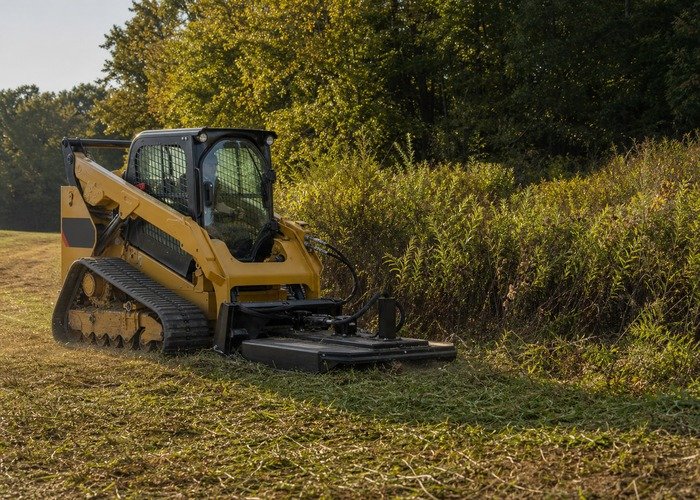
Choose standard flow when the regular attachment list fits its range and the work does not benefit from additional hydraulic power. Choose high flow when specific approved tools need it and their annual use supports the added package. Choose an enhanced system only when the exact attachment, pressure, cooling, couplers, controls, and service support match.
Budget for hoses, couplers, teeth, blades, filters, oil sampling, cleaning, and operator training. Attachment condition can erase the advantage of a high-flow carrier. A sharp, correctly sized standard-flow tool may outperform a neglected high-flow tool. The application solutions library can help connect those ownership costs to the jobs that will actually use the attachment.
Often yes if the machine can be set to standard flow and all pressure, coupler, return, and control requirements match. Never send high flow to an attachment with a lower maximum rating.
No. Rated operating capacity and lift performance depend on the loader design, geometry, weight, and hydraulics. High-flow auxiliary packages are primarily for powered attachments.
Some heat is normal, but excessive heat can indicate restriction, partial connection, wear, contamination, undersized couplers, excessive flow, or high backpressure. Stop and diagnose before seals or hoses fail.
No. It depends on the attachment motor design. When the attachment requires one, it must be connected correctly to a suitable low-pressure port.
Watch this clear standard-flow versus high-flow explanation before building an attachment list. The defensible decision uses actual flow and pressure numbers, respects motor speed and backpressure, protects the case drain, controls heat, and matches carrier stability to the job. Hydraulic power is useful only when the whole system can deliver it safely.