Telephone/WhatsApp:+86 156 2656 0610
Telephone/WhatsApp:+86 156 2656 0610
Email:info@seekmach.com

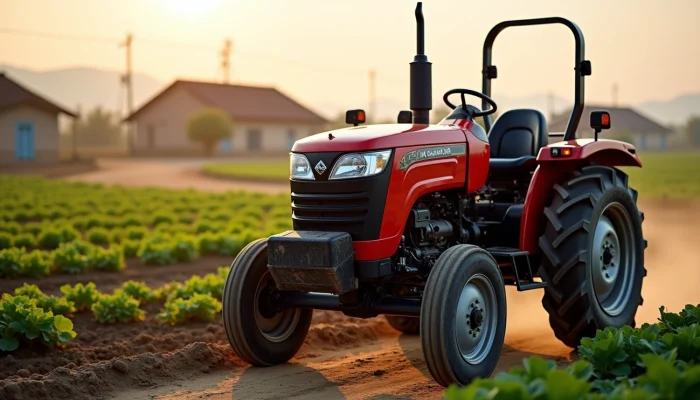
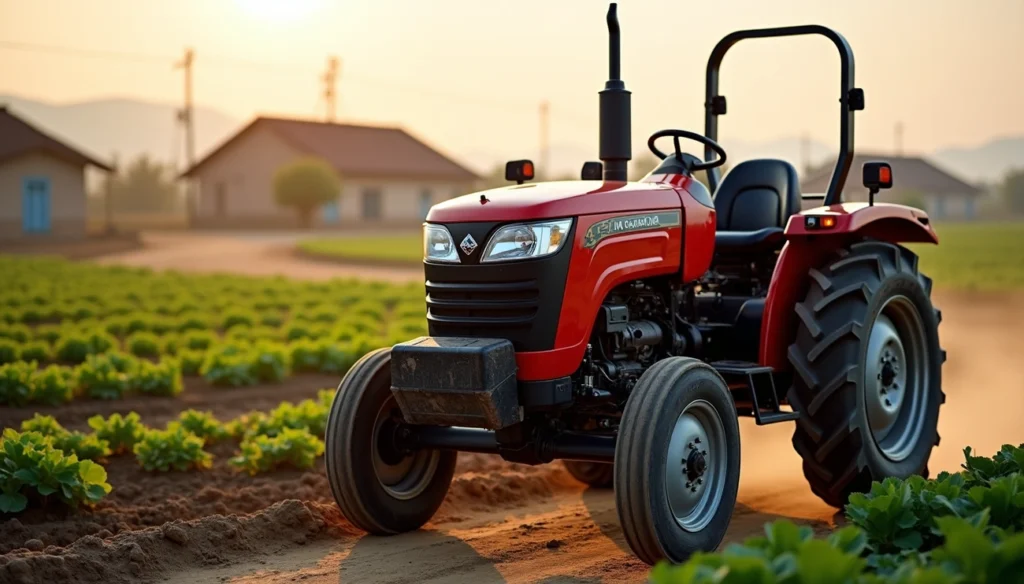
The 25HP compact tractor has quietly become the most financially rational machine on the job site — delivering professional-grade capability without the overhead that drags down larger equipment investments.
Оглавление
ПереключатьCompact tractors under 40HP now represent a significant portion of the total tractor market share, according to the Association of Equipment Manufacturers, and the trend isn’t accidental. Operators across landscaping, hobby farming, property management, and light construction are converging on the same conclusion: bigger isn’t better — versatility is.
The ‘sweet spot’ logic. The 25HP range threads a needle that few other classes can match. It delivers enough power to run loaders, box blades, tillers, and post-hole diggers effectively, while remaining light enough to operate in confined spaces where full-size equipment causes damage. A compact tractor for small farms applications, in particular, benefits from this balance — navigating between crop rows, working near structures, and operating on slopes where heavier machines create serious soil compaction risk.
Avoiding regulatory complexity. Larger diesel units — typically 75HP and above — are subject to stringent Tier 4 Final emissions requirements, which add diesel particulate filters, selective catalytic reduction systems, and the maintenance costs that come with them. As covered in various industry analyses, those systems introduce real operational friction. The sub-25HP class largely sidesteps this burden — a significant cost and complexity advantage.
The soil compaction argument is gaining ground. As Equipment World Magazine notes, “the shift toward ‘right-sized’ machinery allows contractors to reduce soil compaction and fuel consumption without sacrificing lifting capacity.” On turf-sensitive or repeatedly trafficked ground, a 25HP unit preserves soil structure in ways a 60HP machine simply cannot.
What the spec sheet alone won’t tell you is where the 25HP class gets truly interesting — and that starts with hydraulic output.
Hydraulic output — not horsepower — is the true measure of what a 25HP compact tractor can actually accomplish on a working job site.
Horsepower tells you how hard an engine works; hydraulic capacity tells you what it can do. This distinction matters enormously when you’re evaluating whether a machine can run advanced attachments without sacrificing loader speed or cycle time. A tractor with a high-efficiency gear pump and properly configured flow rates consistently outperforms a higher-horsepower machine with an underpowered hydraulic circuit.
Third-function valves are where customization becomes a genuine competitive advantage. A standard two-function loader circuit handles boom raise and bucket curl — useful, but limited. Adding a third-function valve unlocks hydraulic-powered attachments like grapple buckets, angle brooms, and pallet forks with integrated tilt. As the American Society of Agricultural and Biological Engineers (ASABE) notes, customizing hydraulic flow and PTO configurations is essential for operating specialized attachments like backhoes and wood chippers effectively.
On a capable 4WD compact tractor platform, the hydraulic system typically supports several configurations:
The SM-254Y tractor is built around this principle — its open-center hydraulic system supports rear auxiliary ports and front loader circuits simultaneously without pressure drop that stalls cycle times. For operators considering how capability scales with platform size, this compact tractor comparison breakdown offers useful context on where the 25HP class holds its own against larger machines.
The hydraulic circuit is the nervous system of the tractor — and getting it right determines whether attachments work for you or against you. This sets the stage for understanding why loader-backhoe integration is only possible when the underlying platform is engineered to handle simultaneous demand.
A 25HP compact tractor equipped with a front-end loader and backhoe isn’t just versatile — it’s a fully capable job site hub that replaces two or three single-purpose machines.
Front-End Loader Integration. Most modern compact tractors in this class use SSQA (Skid Steer Quick Attach) mounting systems, allowing operators to swap between buckets, pallet forks, grapples, and bale spears in under two minutes. That rapid interchangeability directly translates to billable efficiency — fewer idle minutes per task, and a single machine covering material handling, grading, and loading without a second operator or rental unit.
The Backhoe Business Case. For small-scale excavation — fence post holes, utility trenching, drainage work — a tractor-mounted backhoe is often the most cost-effective solution available. Dedicated mini excavators carry higher acquisition and transport costs, making them harder to justify on jobs under half a day. If you’re evaluating when a compact tractor is genuinely sufficient versus when a dedicated digging machine makes more sense, dig depth and cycle time are the deciding factors.
Stability Is Non-Negotiable. Running a backhoe on a compact tractor demands chassis rigidity and ballast. Liquid tire ballast — typically calcium chloride or beet juice — adds critical low-center-of-gravity weight that stabilizes the rear axle under backhoe load. Skipping ballast on a machine this size is how operators get into dangerous rear-tip situations during hard digging.
Lifting Capacity vs. Industry Benchmarks. Reviewing 25HP tractor specs in this segment, loader lift capacity typically falls between 1,100 and 1,500 lbs at pivot pin — sufficient for pallet loads, bale handling, and most landscaping materials. Machines at the upper end of that range provide meaningful versatility across agricultural and commercial tasks without requiring a larger, costlier frame.
The loader-backhoe combination effectively addresses ground-level work. But ground engagement is only part of the picture — what drives implements like mowers, tillers, and augers is PTO output, a capability that deserves its own focused look.
PTO flexibility is the hidden multiplier that determines whether a compact tractor earns its keep across diverse tasks — or becomes a single-use liability.
The right PTO speed configuration can mean the difference between an implement running at peak efficiency and one that burns through belts, stresses gearboxes, or underdelivers on yield.
Understanding dual-speed PTO options. Not all implements speak the same language. The SM-254Y supports 540/720 or 540/1000 PTO configurations, giving distributors and operators the flexibility to match the machine to regional implement standards rather than the other way around. In North America, the 540/1000 pairing dominates, while smaller rotary implements common in Asian and European markets often favor 540/720. For a procurement manager sourcing a customized 25hp tractor for a specific regional market, this distinction isn’t a footnote — it’s a core specification decision.
Matching PTO output to implement requirements. In practice, different implements demand different speed profiles:
Efficiency gains through speed customization. What typically happens when PTO speed is mismatched to an implement is progressive wear, uneven soil tillage, or under-powered mowing passes that require additional field time. Dialing in the correct shaft speed for regional crop cycles — whether that’s preparing paddy fields, orchards, or turf — measurably reduces operating hours per acre.
OEM gearing flexibility. Seekmach’s OEM capabilities allow for tailored PTO gearing ratios at the factory level, so distributors building a niche product line don’t have to compromise on this critical output parameter. When you review attachment cost planning alongside PTO specs, the business case for factory-level customization becomes even clearer — a point worth exploring when evaluating procurement strategy.
Sourcing equipment factory-direct isn’t just a cost-cutting tactic — it’s a strategic lever that reshapes your entire fleet budget and long-term risk profile.
Eliminating middleman markups is the most immediate win. Traditional distribution chains can add 15–30% to the base machine price before the unit ever reaches a buyer. By working directly with a manufacturer, procurement teams redirect that margin toward more units, better attachments, or expanded service contracts. For small farms and job site operators running lean budgets, that difference is decisive.
Four procurement advantages define the factory-direct model:
Bottom Line: A factory-direct compact tractor delivers more machine per dollar and fewer operational surprises.
The SM-254Y tractor illustrates this model in practice — buyers gain direct access to certified engineering documentation, configurable specs, and dedicated support channels without the markup layers typical of multi-tier distribution.
On the other hand, buyers should verify that factory-direct suppliers maintain adequate parts inventory domestically or can guarantee shipping timelines. Certification paperwork and import logistics require due diligence.
With procurement strategy locked in, the next natural question is whether the machine itself stays productive day after day — which brings operational efficiency, fuel economy, and maintenance simplicity into sharp focus.
Long-term ownership costs separate a smart equipment investment from a budget drain — and 25HP compact tractors win this comparison decisively.
Fuel consumption is where the savings add up fast. A 50HP tractor running mowing, tilling, or loader work burns roughly twice the diesel of a comparable 25HP unit handling the same tasks. For operators logging 400–600 hours annually, that gap translates directly to hundreds of dollars saved per season. Many daily farm and job site tasks — especially those involving tractor loaders, backhoes, and mid-mount attachments — simply don’t demand 50HP to complete effectively. Matching machine size to actual workload is the clearest path to a lower cost-per-hour.
💡 Operators running 25HP units on mixed-duty tasks typically report 30–45% lower annual fuel costs compared to mid-range tractors doing equivalent work.
Simplified electronics drive another meaningful advantage. Many tractors under 25HP do not require complex DPF (Diesel Particulate Filter) systems, according to TractorByNet research — meaning fewer sensors, fewer regeneration cycles, and fewer dealer visits. In practice, this translates directly to higher uptime. When a machine doesn’t need a diagnostic scanner to clear an emissions fault, it stays working instead of waiting.
Maintenance accessibility compounds these gains over time. Key checkpoints to look for in any compact tractor:
These design details reduce service time and allow operators to stay on a consistent maintenance schedule without specialized labor.
Long-term value retention is the final piece. Compact 4WD tractors with straightforward mechanicals hold resale value well because their broad attachment compatibility keeps them relevant to a wide secondary market. A machine that’s easy to maintain and versatile enough to tackle multiple roles is exactly the kind of asset that holds its price — and its usefulness — across years of hard work.
That durability across conditions becomes even clearer when you put these machines to work in real-world environments.
Real-world versatility separates a capable compact tractor from a genuinely indispensable one — and the SM-254Y consistently performs across terrain types that would stall less adaptable machines.
Commercial landscaping puts a premium on maneuverability. Tight gate clearances, ornamental bed margins, and narrow service corridors demand a machine that turns on a dime without sacrificing power. In practice, the SM-254Y’s compact footprint lets operators work within constrained commercial properties without disturbing finished surfaces or requiring multiple repositioning passes. That translates directly into fewer billable hours lost to setup and more productive time on the attachment.
4WD performance on wet or sloped land is where the platform earns its credibility with agricultural buyers. As noted in this overview of 4WD advantages on compact platforms, four-wheel drive delivers critical traction and stability across mud, snow, and uneven gradient — conditions that routinely define small farm operations. The SM-254Y’s 4WD system engages seamlessly, maintaining forward momentum on grades where two-wheel drive alternatives lose purchase and spin out.
The R-1 agricultural tire is a critical enabler here. R-1 deep-tread tires are the industry standard for wet and muddy conditions — their aggressive lug pattern bites into soft ground rather than skimming across it. For operators managing pasture, tillage, or post-rain landscaping work, R-1s are what transform a 25HP rating from a spec sheet number into actual field capability.
Off-grid homesteading presents a different challenge: task diversity over raw throughput. A homesteader running fence-post drilling in the morning and box-blade grading by afternoon needs a machine that reconfigures quickly and runs reliably without dealer support nearby. The SM-254Y’s PTO and three-point hitch compatibility with a wide implement range makes it a practical single-machine solution for that workload.
Taken together, the SM-254Y’s multi-terrain capability reflects a design philosophy centered on real-world conditions — not ideal ones. Those specific design decisions, from tire selection to 4WD architecture, are exactly the kind of buying criteria worth organizing into a clear decision framework — which is where the final takeaways come in.
The 25HP compact tractor isn’t just a practical compromise — it’s the strategically optimal choice for property owners managing 1 to 20 acres who need genuine multi-task capability without overspending on power they’ll rarely use.
Across every dimension covered in this article — fuel economy, implement compatibility, terrain adaptability, and total cost of ownership — the case for this displacement class holds firm. Industry analysts widely recognize the 25HP segment as the “golden displacement” for property maintenance, precisely because it threads the needle between capability and maneuverability in a way that larger machines simply can’t replicate on confined plots.
Here are the four takeaways every machinery buyer should internalize:
The SM-254Y platform demonstrates that professional-grade performance and simplified ownership aren’t mutually exclusive — they’re actually the same machine.
Still have specific questions before committing? The next section addresses the most common buyer concerns directly.
The SM-254Y generates consistent questions from buyers who want clarity before committing — here are the answers that matter most.
Is 25HP enough for heavy loader work?
Yes — with the right expectations. 25HP delivers ample torque for bucket loading, pallet forks, and material handling on properties up to 20 acres. In practice, where compact tractors lose ground isn’t raw lift capacity but cycle speed on industrial-scale jobs. For small farm logistics, landscaping, and construction site cleanup, the SM-254Y’s loader handles the workload without strain.
Can the SM-254Y be fitted with GPS or auto-steer?
This capability surprises many buyers. While GPS auto-steer systems are typically marketed for high-HP row-crop units, the SM-254Y can be retrofitted with GPS navigation modules, according to Seekmach Technical Support. This opens the door to precision passes on orchards, hobby farms, and market garden plots — a capability gap between the SM-254Y and most comparably priced alternatives.
What is the advantage of a factory-direct warranty?
Factory-direct coverage eliminates the middleman markup on parts and labor costs. When a dealership handles warranty claims, markups on components and labor rates inflate repair costs — and delays are common. A factory-direct warranty means claims route straight to the manufacturer, typically resulting in faster parts dispatch and lower out-of-pocket exposure over the ownership period.
How does the 4WD system handle steep slopes?
The SM-254Y’s 4WD engages both axles simultaneously, distributing traction load across all four wheels. On slopes up to approximately 20–25 degrees, this prevents the rear-wheel slip that routinely stalls 2WD compact tractors on wet grass or loose soil. However, all operators should follow posted grade limits and avoid overloading the front loader bucket on inclines — physics applies regardless of drivetrain.
The SM-254Y may not be the right machine for every operation, but for property owners and job site managers who need capable, versatile performance without oversized overhead, it remains one of the most compelling 25HP compact tractor values available today. Evaluate your terrain, match your attachment list to your seasonal needs, and let the numbers decide.
SeekMach is a professional manufacturer and exporter dedicated to the R&D and production of excavators, loaders and tractors. We guarantee to provide you with the best quality service.