Telephone/WhatsApp:+86 156 2656 0610
Telephone/WhatsApp:+86 156 2656 0610
Email:info@seekmach.com

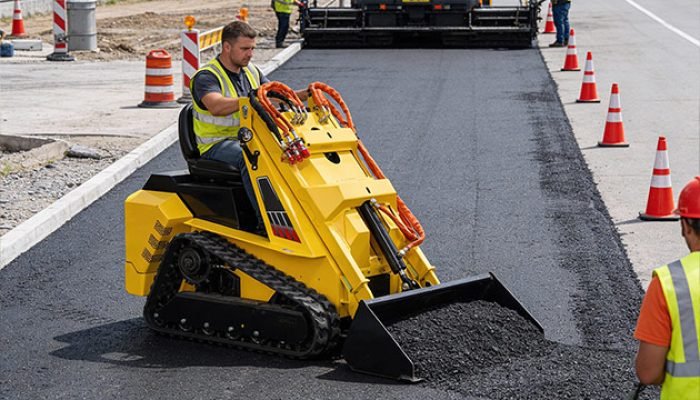
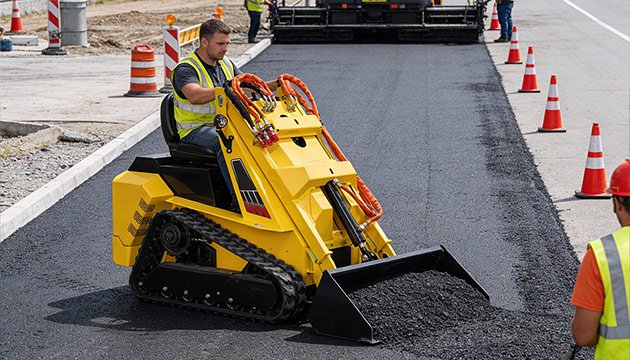
Quick answer: Match an attachment by coupler, operating weight, rated operating capacity, hydraulic flow and pressure, case drain, controls, visibility and the job surface before ranking it by popularity.
| Check | Evidence |
|---|---|
| Mechanical | Coupler standard, locks, clearance and attachment weight |
| Hydraulic | Required GPM, PSI, case drain, couplers and hose routing |
| Стабильность | ROC, load center, terrain, travel height and visibility |
No. Mechanical fit does not prove hydraulic, electrical, capacity or control compatibility.
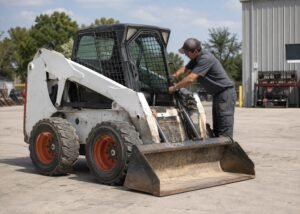
There is a particular satisfaction in arriving at a jobsite with a single machine and leaving with every task accomplished. The погрузчик с бортовым поворотом offers precisely that possibility. Compact yet commanding, it navigates tight corridors and unforgiving terrain with a composure that larger equipment simply cannot match. Yet the machine itself is only the beginning. It is the attachments that transform this already capable workhorse into a genuinely multi-functional instrument of productivity.
As Skid Steers Direct notes in their 2025 guide, the right attachments turn one machine into a high-performing, profit-driving powerhouse. Whether your work spans construction, agriculture, landscaping, or property maintenance, the selections you make in attachments determine the full measure of your skid steer’s value on any given site.
This guide presents a thorough examination of the Top 5 Attachments For Your Skid Steer Loader, with detailed coverage of each attachment type, selection criteria, safety protocols, and maintenance practices. By the time you finish reading, you will possess a clear framework for making attachment decisions that are both informed and financially sound.
The skid steer loader occupies a distinct and valuable position in the world of heavy equipment. Understanding what it is, and why skid steer loader attachments are so central to its purpose, provides the essential foundation for every decision that follows.
As Rut Manufacturing describes it, a skid steer is a small engine-powered machine suited for a wide variety of construction, landscaping, and ground maintenance tasks. Its name derives from its steering mechanism: fixed wheels or tracks that skid across the ground as each side operates independently, enabling zero-degree radius turns. This differential steering makes it exceptionally capable in confined spaces.
According to AHM Corp, a skid steer loader becomes one of the most versatile pieces of equipment precisely because of its attachment system. There are virtually no construction or farm site tasks that cannot be addressed when the correct attachment is in place. A single machine replaces several, and the financial logic of that consolidation is considerable.
Fastline Safety Training identifies construction, landscaping, agriculture, and property maintenance as the primary fields where skid steer attachments deliver transformative results. Each industry places distinct demands on the machine, and the breadth of available attachments ensures those demands are met with precision.
Before selecting any attachment, consider your most frequent tasks, your machine’s hydraulic flow and pressure ratings, and the compatibility of your coupler system. As Prime Attachments’ ultimate guide emphasizes, understanding these variables is crucial for maximizing performance and efficiency on every project.
Key Takeaway: A skid steer’s true value is unlocked through its attachments. Match each attachment to your specific workflow and machine specifications before committing to a purchase.
No conversation about skid steer bucket attachments is complete without acknowledging the bucket’s foundational role. It is, in most cases, the first attachment an operator uses and the one most consistently in service across virtually every site type.
As Skid Steer Cabs’ comprehensive guide describes, bucket attachments are among the most versatile tools available, capable of digging, grading, loading, and unloading material. General purpose buckets handle the broadest range of everyday tasks and serve as an ideal starting point for most operators.
When the material shifts from loose soil to rock, demolition debris, or compacted fill, a heavy-duty bucket becomes essential. These attachments are engineered with reinforced cutting edges and thicker steel construction to sustain performance under substantial stress without premature wear.
Skid Steers Direct highlights the 4-in-1 bucket as a particularly sophisticated option: it can doze, back-drag, clamp, and dump, all with a single tool. This versatility means one attachment can replace several machines on site, delivering a compelling return on investment for operators managing diverse tasks.
Select your bucket size based on the density and volume of the material you handle most frequently. A bucket that is too large for your machine’s rated operating capacity will compromise stability. Match capacity ratings carefully to your skid steer’s specifications.
Inspect cutting edges and side cutters regularly for wear. Replace worn edges promptly to maintain digging efficiency. Keep hinge points lubricated and inspect the attachment plate for cracks or stress fractures after demanding work cycles.
Pro Tip: The 4-in-1 bucket is one of the most cost-effective attachments available. If your work involves both material handling and light grading, it eliminates the need for a second dedicated attachment.
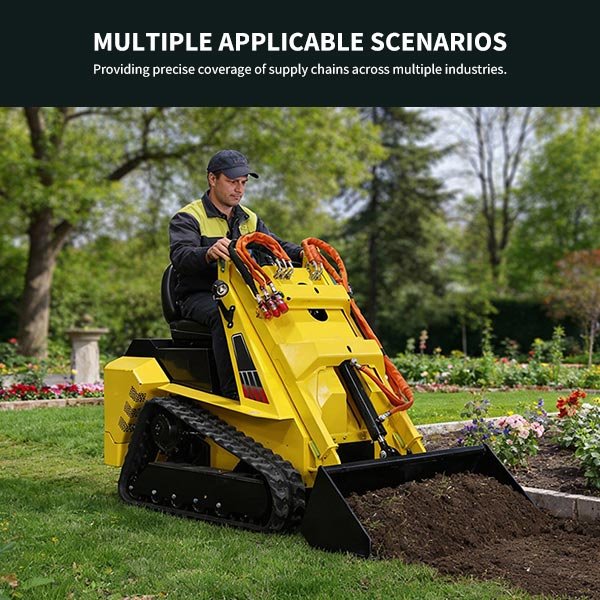
There are materials that no standard bucket can manage with grace: tangled brush, irregular logs, jagged demolition debris, and loose rock. For these challenges, the grapple bucket skid steer attachment stands as the definitive solution.
According to Fastline Safety Training, the grapple bucket provides powerful clamping action that secures even the most cumbersome loads. Hydraulic cylinders drive the upper jaw downward, creating a grip force sufficient to hold materials that would shift or escape a conventional bucket entirely.
Prime Attachments identifies two primary grapple categories: rock and brush grapples, built with all grade-50 steel for handling logs and sifting debris from soil, and rock and stump ripper grapples for more aggressive material removal. Matching the grapple design to the material type ensures both efficiency and structural longevity.
As Fastline Safety Training notes, several grapple variants include rotating mechanisms that allow the operator to position materials with a degree of precision that fixed-jaw designs cannot achieve. This is particularly valuable in demolition cleanup and precise placement tasks.
Omitech’s skid steer loader guide confirms that grapple buckets excel at clearing thick brush and trees, loading and unloading materials, and managing large, irregular debris. Their precision and control make them indispensable for landscaping, site clearing, and demolition work.
| Особенность | Fixed Grapple | Hydraulic Grapple |
|---|---|---|
| Jaw movement | Static | Operator-controlled |
| Точность | Умеренный | Высокий |
| Расходы | Ниже | Выше |
| Лучше всего подходит для | Light brush, debris | Logs, rocks, demolition |
Key Takeaway: For sites involving irregular or bulky materials, a hydraulic grapple attachment delivers precision and control that a standard bucket simply cannot replicate.
The labor cost of manual hole digging is considerable. A hydraulic auger skid steer attachment eliminates that burden with efficiency and consistency that manual methods cannot approach.
The auger mounts to the skid steer’s auxiliary hydraulic circuit, drawing flow from the machine’s hydraulic pump to drive the rotation motor. As Rut Manufacturing explains, their Skid Steer Auger drive provides an overall length of 28 inches, delivering ample clearance while transforming the loader into a powerful drilling machine.
Augers are available in a range of diameters and lengths. AHM Corp notes that they come in different lengths and diameters, making them suitable for fence posts, tree planting holes, and structural footings alike. Select bit diameter based on post size or root ball dimensions, and length based on required depth.
Omitech identifies the auger as one of the skid steer’s most multi-purpose attachments, capable of eliminating the need for a separate machine when installing fences, planting trees, or setting footings for new structures. This consolidation of equipment directly reduces both project timelines and rental costs.
According to AHM Corp, augers perform well in soil, clay, and even rocky ground. For particularly challenging soil conditions, select auger bits with carbide teeth rated for hard or rocky terrain to maintain consistent penetration rates.
Always clear the area of personnel before engaging the auger. Never attempt to free a stuck auger by reversing with bystanders present. Check for underground utilities before drilling using appropriate locating services, a step that is as much a legal requirement as a safety measure.
Pro Tip: For rocky or compacted soils, invest in a carbide-tipped auger bit. The upfront cost is higher, but the reduction in wear and downtime more than justifies the expenditure.
The pallet fork skid steer attachment represents one of the most immediately practical and financially sound additions any operator can make. It is versatile, durable, and eliminates the need for a dedicated forklift on many sites.
Fork attachments are rated by their maximum lift capacity, typically expressed in pounds. As Skid Steer Cabs notes, they come in different sizes and are designed to handle different weight loads. Always ensure your fork rating does not exceed your skid steer’s rated operating capacity.
Standard forks suit most pallet-based material handling. Adjustable-width forks accommodate non-standard pallet sizes and irregularly shaped loads. Fastline Safety Training recommends considering adjustable pallet forks for maximum versatility across diverse jobsite demands.
Skid Steers Direct identifies pallet forks as essential for moving lumber, pavers, equipment, and supplies. They describe forks as one of the most profitable skid steer attachments available because of their affordability and immediate impact on workflow efficiency.
Load center distance directly affects your skid steer’s stability. Keep loads as close to the machine as practical and travel with the forks low to the ground. Exceeding the tipping load, even briefly, creates a significant rollover risk.
Omitech confirms that pallet forks allow operators to save countless trips back and forth on the worksite. The elimination of manual carrying and the reduced need for larger, less maneuverable forklifts translates directly into measurable labor savings on every project.
Key Takeaway: Pallet forks are among the most affordable and highest-return attachments available. Every contractor who moves materials on site should own a set.

When utility lines, irrigation systems, or drainage channels require installation, a skid steer trencher attachment delivers the precision and speed that conventional excavation methods cannot match.
Chain trenchers use rotating cutting chains with hardened teeth to slice through standard soil conditions efficiently. Rock trenchers incorporate more aggressive carbide-tipped configurations designed for dense, compacted, or rocky ground. Prime Attachments’ guide confirms that trenching attachments are purpose-built for narrow, deep cuts in demanding excavation applications.
Standard skid steer trenchers typically produce trenches ranging from 4 to 12 inches in width and depths of 36 to 48 inches, depending on the attachment and machine pairing. As Omitech notes, a trencher attachment enables accurate and efficient trenching of various depths and widths to suit project specifications.
AHM Corp identifies trenching as one of the core use cases for skid steer attachments, covering pipe and installation work across a range of project types. Skid Steers Direct further notes that trenching represents a core high-margin service category for contractors who invest in the right attachment.
Inspect cutting teeth before each use. Replace worn or damaged teeth promptly, as degraded cutting elements force the machine to work harder, increasing fuel consumption and wear on the hydraulic system. Keep the drive chain properly tensioned according to the manufacturer’s specification.
For complete site excavation workflows, pair your trencher with a general purpose or 4-in-1 bucket. The trencher creates the opening; the bucket handles backfill and grading once installation is complete. This sequential approach maximizes site efficiency with minimal equipment changes.
Pro Tip: Always locate underground utilities before engaging your trencher. A single contact with a buried line can cause serious injury and significant project delays.
Dense vegetation, overgrown saplings, and entrenched brush demand purpose-built tools. The skid steer brush cutter mulcher attachment addresses these conditions with a directness that manual clearing methods cannot sustain at scale.
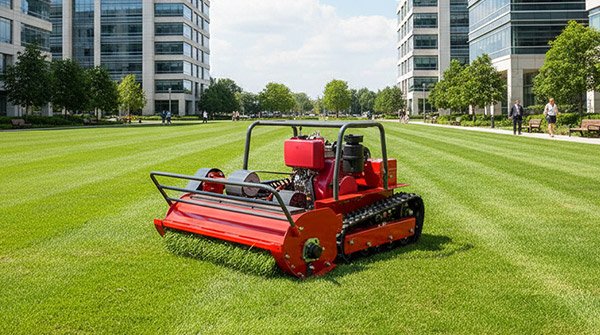
Brush cutters use high-speed rotating blades or flails to shred vegetation into manageable material. Rut Manufacturing’s Skid Steer Brush Cutter Terminator, for example, features a direct-drive three-blade cutting system designed for use with skid steers, CTL, and MTL machines. It is engineered to cut through woody material and trees 6 inches in diameter or thicker.
Standard brush cutters handle grass, weeds, and light brush efficiently. Forestry mulchers are engineered for more aggressive vegetation, including dense thickets and larger-diameter trees. Skid Steers Direct recommends the brush cutter as one of the best attachments for land clearing or site preparation where vegetation density varies significantly.
Fastline Safety Training identifies brush cutters as essential for land clearing, forestry work, right-of-way maintenance, and property upkeep. Skid Steer Cabs notes that brush mower attachments are particularly ideal for maintaining large properties and clearing land for construction projects.
When selecting a brush cutter, prioritize reinforced housing, high-flow hydraulic compatibility, and cutting width suited to your typical clearing area. Prime Attachments emphasizes that quality attachments feature reinforced materials and expert craftsmanship to maximize both efficiency and operator safety.
For complete site clearing, combine your brush cutter with a rock and brush grapple. The cutter reduces vegetation to debris; the grapple then collects and moves that material efficiently. This pairing eliminates the need for additional equipment on most clearing projects.
Key Takeaway: Match your brush cutter to vegetation density. A standard brush cutter suffices for maintained overgrowth; forestry mulchers are necessary for established brush and small trees.
Soil preparation is the silent foundation of every successful landscaping and agricultural project. The skid steer tiller soil conditioner attachment transforms compacted, unworked ground into a receptive seedbed with a thoroughness that manual methods rarely achieve.
Tillers use rotating tines or rotors to break up and aerate soil. Soil conditioners feature more aggressive configurations designed to pulverize clods and produce a finer, more uniform soil texture. As Skid Steers Direct explains, a rotary tiller is the go-to tool for garden centers, sod crews, and anyone performing soil work.
Most skid steer tillers work to depths of 6 to 8 inches, with cutting widths typically ranging from 60 to 72 inches. Select width based on the scale of your project and the size of the areas you need to prepare. Wider units complete large open areas more efficiently; narrower units provide better control in confined spaces.
Fastline Safety Training notes that tillers and soil conditioners represent specialized attachments well suited for property maintenance and landscaping applications. These tools dramatically reduce manual labor for soil preparation tasks, as confirmed by Omitech’s observation that the right ground engagement attachments multiply a skid steer’s value.
Tillers and soil conditioners are high-flow attachments. Verify that your skid steer can supply the required gallons per minute before purchasing. Underpowering a tiller reduces performance and can damage the hydraulic system over extended operation cycles.
For complete lawn establishment, follow tilling immediately with a broadcast or hydroseeding application while the soil surface remains loose and receptive. This integrated approach produces faster germination and more uniform coverage than seeding on untreated ground.
Pro Tip: For lawn renovation projects, a soil conditioner produces a finer finish than a standard tiller. The investment in the right attachment type pays dividends in the quality of the final seeded surface.
Knowing how to choose skid steer attachments with discipline and foresight separates operators who maximize their equipment’s value from those who accumulate tools that underperform. A methodical approach simplifies what can otherwise feel like an overwhelming selection process.
AHM Corp correctly observes that the best attachments for your skid steer are the ones that correspond to your specific needs and the work you do most often. Begin by cataloguing your three most recurring jobsite tasks and identifying the attachment that addresses each. This prevents impulse purchases that deliver little practical return.
Powered attachments, including augers, tillers, and brush cutters, require specific hydraulic flow rates measured in gallons per minute and operating pressures measured in PSI. Always cross-reference the attachment manufacturer’s requirements against your skid steer’s auxiliary hydraulic specifications before purchasing.
Most modern skid steers use a universal quick-attach plate system that accepts a broad range of attachments from multiple manufacturers. Verify your machine’s coupler style before purchasing any attachment. Incompatible couplers require adapters that add cost and can introduce mechanical complications.
| Фактор | New Attachment | Used Attachment |
|---|---|---|
| Upfront cost | Выше | Ниже |
| Гарантия | Typically included | Rarely available |
| Wear condition | Known | Requires inspection |
| Risk level | Низкий | Moderate to high |
Skid Steers Direct frames this question well: the most profitable attachments are those that pay for themselves through reduced labor, eliminated rental costs, or new billable services. Estimate the hours saved per project, multiply by your labor rate, and compare that figure to the attachment’s purchase price.
Key Takeaway: Prioritize attachments that address your highest-frequency tasks first. A disciplined, needs-based approach delivers far greater return than purchasing attachments reactively.
The most sophisticated attachment loses its value rapidly when neglected or used without appropriate care. Skid steer attachment safety and maintenance practices are not optional considerations. They are the foundation upon which consistent performance and operator safety rest.
Before each use, inspect all mounting hardware and attachment pins for security and wear. Examine hydraulic hoses for abrasion, cracking, or fitting leaks. Confirm that cutting edges, tines, or grapple jaws show no cracks or deformations that could compromise structural integrity during operation.
Always lower the attachment fully to the ground before dismounting from the skid steer. Engage the parking brake and verify the hydraulic pressure is relieved before disconnecting any hydraulic lines. Fastline Safety Training emphasizes that proper training on operating a skid steer and using its attachments is essential for safe and efficient operation.
Grease all pivot points, hinge pins, and articulation joints according to the manufacturer’s recommended intervals. Hydraulic grapples, auger drives, and rotating brush cutter assemblies are particularly demanding of consistent lubrication. Neglecting these intervals accelerates wear and introduces unnecessary downtime.
Store attachments on stable, level ground away from moisture and direct weather exposure where possible. Prime Attachments advises checking that attachment designs incorporate reinforced materials and quality craftsmanship, and proper storage preserves that quality investment over time. Apply a light protective coating to bare metal surfaces on attachments stored outdoors.
While formal licensure is not universally required for skid steer operation, structured training delivers measurable safety and efficiency benefits. As Fastline Safety Training notes, proper training ensures safe and efficient operation, reduces equipment damage, and protects both the operator and those working nearby.
Pro Tip: Establish a written pre-operation checklist for each attachment type you own. Consistent documentation of inspections protects both your equipment investment and your liability exposure on commercial jobsites.
The principle that a single machine, intelligently outfitted, can accomplish the work of several is not merely a marketing proposition. It is a practical reality that the Top 5 Attachments For Your Skid Steer Loader make possible on jobsites of every scale and character.
This guide has moved deliberately through ten areas of consideration: the foundational nature of the skid steer itself, the versatility of bucket attachments, the precision of grapple buckets, the efficiency of hydraulic augers, the practical value of pallet forks, the accuracy of trencher attachments, the power of brush cutters and mulchers, the soil-preparation capability of tillers, the discipline of informed selection, and the importance of safety and maintenance.
As you translate this knowledge into purchasing decisions, proceed in a measured sequence. Begin with the attachment that addresses your highest-frequency task. Verify hydraulic compatibility before committing to any powered attachment. Inspect used equipment thoroughly, or purchase new when the work demands reliability that cannot be compromised.
Do not attempt to acquire every attachment simultaneously. The most productive operators build their attachment inventory deliberately, allowing each tool to demonstrate its return before the next investment is made.
Remember the opening observation: a skid steer’s value is ultimately determined by the attachments placed on it. Choose with care, maintain with consistency, and the machine you already own becomes the most capable asset on your site.
Begin today by identifying your three most pressing jobsite needs. Select the one attachment that addresses the most urgent among them. That single decision starts a sequence that will measurably improve both your productivity and your bottom line.
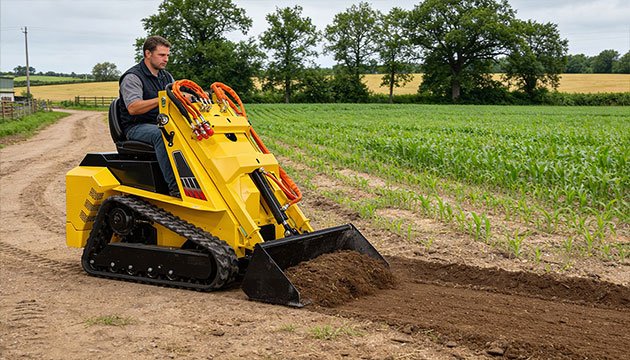
For most contractors, the highest-priority starting attachments are a general purpose or 4-in-1 bucket and a set of pallet forks. As Skid Steers Direct notes, pallet forks are among the most affordable and profitable attachments available, while a 4-in-1 bucket replaces multiple machines on site. These two tools address the broadest range of construction and material handling tasks for the lowest initial investment.
Verify two things before purchasing any attachment: your skid steer’s coupler type and its auxiliary hydraulic specifications. Most modern machines use a universal quick-attach plate, but powered attachments also require a minimum hydraulic flow rate in gallons per minute and a compatible operating pressure in PSI. If the attachment’s requirements exceed your machine’s output, performance will be compromised and hydraulic damage is possible.
A standard bucket scoops and carries loose or granular materials such as soil, gravel, and sand. A grapple bucket adds a hydraulically actuated upper jaw that clamps down on irregular, bulky, or oversized materials, including logs, rocks, and demolition debris, that a standard bucket cannot secure. If you handle mixed or irregular material regularly, a grapple delivers control and precision that a bucket cannot replicate.
If your clearing work involves primarily grass, weeds, and light brush, a standard brush cutter attachment will perform efficiently and cost less. If you are working through dense thickets, established brush, or trees up to 6 inches in diameter or thicker, a forestry mulcher is the appropriate choice. As Rut Manufacturing notes, their Terminator brush cutter is engineered specifically for that heavier woody material. Match the attachment’s rated cutting capacity to the actual vegetation density you encounter.
Inspect auger teeth before each use and replace worn or damaged teeth promptly. Grease the drive head according to the manufacturer’s interval, typically every 8 to 10 operating hours. Check hydraulic hose connections for leaks or abrasion regularly. After use in rocky or abrasive soils, inspect the bit shaft for bending or stress damage. Consistent maintenance prevents the accelerated wear that difficult soil conditions impose on underprepared equipment.
Used attachments can represent meaningful cost savings, but they carry inherent risks that new purchases do not. Inspect all structural welds, cutting edges, hydraulic fittings, and pin bores for wear, cracking, or deformation before purchasing. Hydraulic seals on older powered attachments may be deteriorated, leading to leaks and performance loss shortly after purchase. If a used attachment shows significant wear on high-stress components without documentation of recent service, the cost of repair may eliminate the savings anticipated from the lower purchase price.
Continue with the SM-390T compact skid steer work-fit review for the next buyer decision.
Confirm the complete machine match with the skid steer attachment compatibility hub.
Search performance shows readers need a faster answer for skid steer attachment compatibility. Confirm the exact model, operating weight, included equipment, service support, documents, and recurring ownership costs in writing. Compare alternatives on the same scope and never substitute a headline number for a complete delivered-and-supported specification.
| Check | Evidence | Decision |
|---|---|---|
| Machine fit | Manual and serial-specific specification | Pass only when job limits are covered |
| Поддерживать | Parts list, warranty route, response owner | Price downtime risk separately |
| Total cost | Written quote with exclusions | Compare like for like |
Related planning: used compact tractor inspection checklist and mini excavator trailer transport guide.