Telephone/WhatsApp:+86 156 2656 0610

Telephone/WhatsApp:+86 156 2656 0610
Email:info@seekmach.com

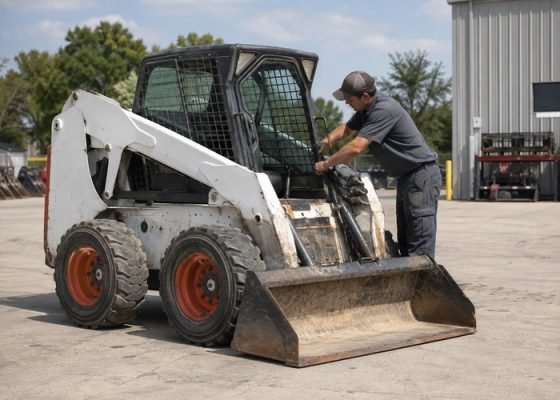
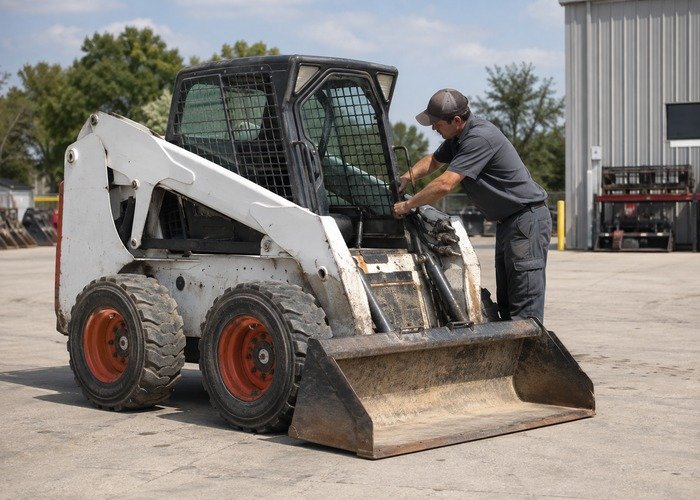
A skid steer bucket that settles is never a reason to work under it. Lower the attachment flat to the ground before inspection whenever possible. If a manufacturer-approved service position is truly required, use the specified lift-arm support and lockout procedure. Never bypass the seat bar, seat switch, or other interlock to operate controls from outside the cab. Start with the skid steer coupler and hose inspection and compare the present condition with the machine’s own history.
Ask how far the arms settle, in what time, under what load, and whether tilt moves too. A slow, stable change may differ from a rapid drop, jerky movement, or a machine that will not lift. Record cold and warm behavior. The comparison tells you whether to look at a common oil supply issue, one cylinder, a valve section, or a control command. Consult OSHA skid-steer safety bulletin before selecting a test method.
With the boom down and cylinders positioned as the manual specifies, check oil level on level ground. Look for wet rod seals, damaged hoses, loose fittings, contaminated oil, chafing, and a bent or scored cylinder rod. External leakage matters, but a dry cylinder can still bypass internally, so do not stop the inspection simply because the paint is clean. Keep the inspection focused with the skid steer parking-brake troubleshooting guide.
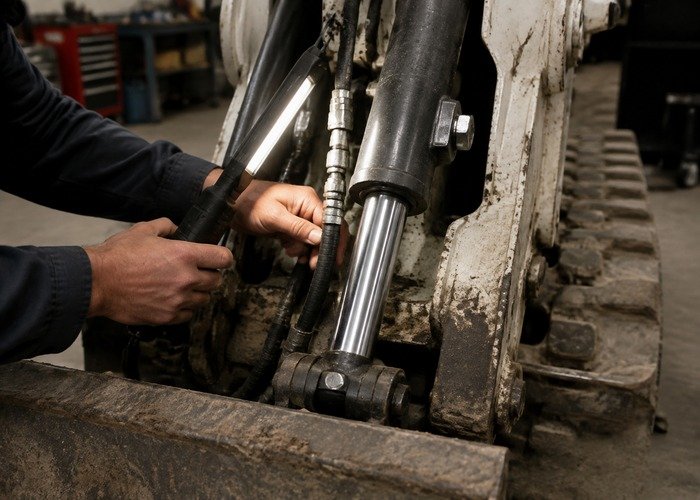
A lift cylinder can pass oil internally across its piston seal; a control valve or lowering cartridge can also pass oil through the circuit. A qualified technician can use the model’s approved isolation and pressure tests to distinguish them. Do not cap lines, loosen fittings, or attempt a makeshift holding test without the exact service procedure and a rated support device. Work from a written observation, not from a parts hunch. Record the machine serial number, hour reading, temperature, exact control position, warning lamps, and whether the fault changes after warm-up. A short record keeps the next step tied to evidence and avoids turning a simple connection, switch, or adjustment into an expensive replacement job. Review manufacturer boom-lock operating guidance where it applies.
Sticky pedals, damaged linkage, a misadjusted control, or a faulted electrical command can hold a valve slightly open. Test controls only from the normal operator position with the restraint system engaged. Confirm that neutral is positive, the seat and bar interlocks behave correctly, and no emergency-lower or self-level function is being commanded unintentionally. Use the operator and service manual for the exact model as the controlling document. Connector locations, fuse names, diagnostic ports, permitted test values, and safety interlocks differ between machines. Generic advice can help organize the inspection, but it cannot replace the specified procedure, rated instrument, or lockout method for the equipment in front of you. Review manufacturer hydraulic-oil service guidance where it applies.
A pressure gauge reading has value only when the port, oil temperature, rpm, attachment position, and test limit are known. Compare lift and tilt behavior; if one circuit is strong and the other settles, that narrows the fault. Rising oil temperature, noise, foam, or slow response can suggest aeration or restriction, but none proves a component alone. A useful diagnostic separates a fault that is present all the time from one that appears only under load, vibration, heat, moisture, or after an operator moves a particular control. Reproduce the symptom only in a controlled area. If the symptom is intermittent, write down the sequence rather than cycling the machine until the evidence disappears. Review energy-control safety requirements where it applies.
If a cylinder, valve, or hose is opened, keep dirt out of the circuit. Cap lines, use clean containers, inspect the filter by the prescribed method, and replace oil or components only when the model procedure calls for it. Reinstalling a rebuilt cylinder into contaminated oil can make a short-lived repair and obscure the root cause. Use the operator and service manual for the exact model as the controlling document. Connector locations, fuse names, diagnostic ports, permitted test values, and safety interlocks differ between machines. Generic advice can help organize the inspection, but it cannot replace the specified procedure, rated instrument, or lockout method for the equipment in front of you. For related ownership checks, see the one-direction attachment diagnostic guide.
After repair, restore guards and supports, check oil level, and operate at low speed in a clear area. Use the manufacturer’s hold test, not a person as a spotter beneath the arms. Verify normal lift, tilt, neutral holding, interlock function, hose routing, and absence of leaks. If settling returns, take the machine out of service for further diagnosis rather than accepting a dangerous workaround. A useful diagnostic separates a fault that is present all the time from one that appears only under load, vibration, heat, moisture, or after an operator moves a particular control. Reproduce the symptom only in a controlled area. If the symptom is intermittent, write down the sequence rather than cycling the machine until the evidence disappears. For related ownership checks, see the one-direction attachment diagnostic guide.

| What you observe | What it can mean | Safe next step |
|---|---|---|
| Fault appears only after warm-up | Heat, resistance, oil condition, or a marginal connection | Repeat the specified test at the same temperature |
| Fault changes with load | Mechanical resistance, pressure loss, or an electrical supply problem | Use the model’s controlled test procedure |
| Fault is intermittent | Vibration, moisture, control or harness issue | Record the sequence and inspect connectors |
| Safety device does not behave normally | Potential serious hazard | Remove machine from service |
Work from a written observation, not from a parts hunch. Record the machine serial number, hour reading, temperature, exact control position, warning lamps, and whether the fault changes after warm-up. A short record keeps the next step tied to evidence and avoids turning a simple connection, switch, or adjustment into an expensive replacement job. This is an illustrative service-planning step, not a substitute for the machine-specific manual. Confirm the equipment model, serial range, and required values before making an adjustment or replacing a component.
Use the operator and service manual for the exact model as the controlling document. Connector locations, fuse names, diagnostic ports, permitted test values, and safety interlocks differ between machines. Generic advice can help organize the inspection, but it cannot replace the specified procedure, rated instrument, or lockout method for the equipment in front of you. This is an illustrative service-planning step, not a substitute for the machine-specific manual. Confirm the equipment model, serial range, and required values before making an adjustment or replacing a component.
A useful diagnostic separates a fault that is present all the time from one that appears only under load, vibration, heat, moisture, or after an operator moves a particular control. Reproduce the symptom only in a controlled area. If the symptom is intermittent, write down the sequence rather than cycling the machine until the evidence disappears. This is an illustrative service-planning step, not a substitute for the machine-specific manual. Confirm the equipment model, serial range, and required values before making an adjustment or replacing a component.
Before returning a machine to work, restore every guard, cover, connector lock, hose restraint, and fastener that was removed for inspection. Then run a low-risk functional check and look again for loose hardware, heat, leakage, abnormal noise, or a warning light. A repair is not complete because one test passed; it is complete when the normal safe configuration is back in place. This is an illustrative service-planning step, not a substitute for the machine-specific manual. Confirm the equipment model, serial range, and required values before making an adjustment or replacing a component.
Work from a written observation, not from a parts hunch. Record the machine serial number, hour reading, temperature, exact control position, warning lamps, and whether the fault changes after warm-up. A short record keeps the next step tied to evidence and avoids turning a simple connection, switch, or adjustment into an expensive replacement job. This is an illustrative service-planning step, not a substitute for the machine-specific manual. Confirm the equipment model, serial range, and required values before making an adjustment or replacing a component.
Use the operator and service manual for the exact model as the controlling document. Connector locations, fuse names, diagnostic ports, permitted test values, and safety interlocks differ between machines. Generic advice can help organize the inspection, but it cannot replace the specified procedure, rated instrument, or lockout method for the equipment in front of you. This is an illustrative service-planning step, not a substitute for the machine-specific manual. Confirm the equipment model, serial range, and required values before making an adjustment or replacing a component.
No. If a safety system, electrical circuit, hydraulic control, belt, guard, or holding function behaves abnormally, park the machine and follow the manufacturer’s instructions. Continuing to operate can turn a small defect into equipment damage or an injury risk. Use the skid steer control-layout guide for a related site-owned check, and compare the model procedure with energy-control safety requirements before authorizing service.
Provide the model and serial number, hour reading, the exact symptom, a short video from a safe distance if appropriate, warning lamps, recent maintenance, temperature, load condition, and the results of only the tests authorized by the manual.
Keep the final record with the machine. A dated note that lists the fault, the approved measurements, parts installed, fluid or electrical checks completed, and the final functional test prevents the same symptoms from being treated as a new mystery at the next service interval.
Keep the final record with the machine. A dated note that lists the fault, the approved measurements, parts installed, fluid or electrical checks completed, and the final functional test prevents the same symptoms from being treated as a new mystery at the next service interval.
Keep the final record with the machine. A dated note that lists the fault, the approved measurements, parts installed, fluid or electrical checks completed, and the final functional test prevents the same symptoms from being treated as a new mystery at the next service interval.
Keep the final record with the machine. A dated note that lists the fault, the approved measurements, parts installed, fluid or electrical checks completed, and the final functional test prevents the same symptoms from being treated as a new mystery at the next service interval.