Telephone/WhatsApp:+86 156 2656 0610
Telephone/WhatsApp:+86 156 2656 0610
Email:info@seekmach.com

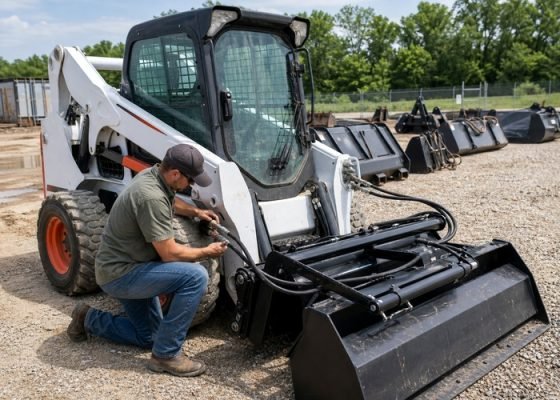
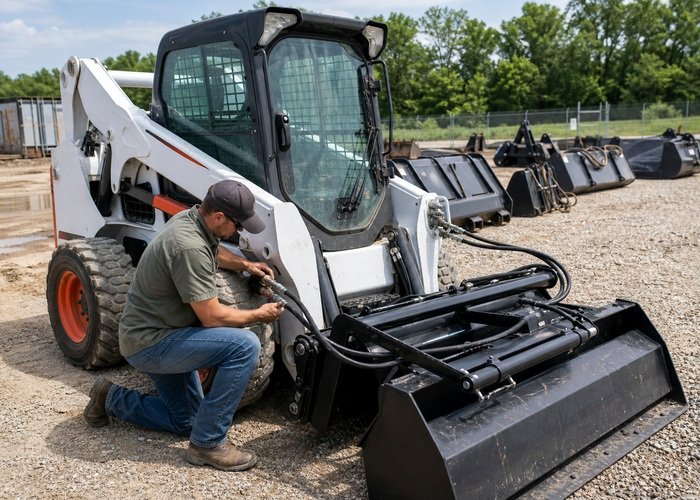
Hydraulic flow is one of the most misunderstood skid steer loader specs. Buyers often compare horsepower, lift height, and rated operating capacity first, then discover later that the attachment they wanted needs more oil flow, different pressure, better cooling, or a different coupler setup. A skid steer with the wrong hydraulic package can still move dirt and pallets, but it may struggle with demanding powered tools.
This guide explains hydraulic flow in practical jobsite terms. It is written for buyers, fleet managers, landscaping crews, farm operators, and small contractors who want to match machine and attachment before money is spent. Keep the SeekMach skid steer loader category nearby as you read, and use each section as a checklist for your own job list.
Hydraulic flow is commonly discussed in gallons per minute, while pressure is discussed in pounds per square inch. Flow helps determine how fast a hydraulic motor can turn or how much oil the attachment receives. Pressure helps determine force. Both matter, and neither should be judged alone. A powered broom, auger, trencher, brush cutter, cold planer, breaker, grapple, and snow tool may all connect to auxiliary hydraulics, but they do not all ask the machine for the same thing.
A standard-flow skid steer can run many common attachments. A high-flow machine can support more demanding tools, but high flow is not automatically better for every job. Running the wrong attachment on the wrong flow can create poor performance, heat, seal damage, hose stress, or unsafe behavior. The goal is not to buy the highest number. The goal is to match the machine, attachment, and work cycle.
| Attachment type | Typical hydraulic concern | Buyer question |
|---|---|---|
| Grapple or 4-in-1 bucket | Cylinder function and control | Are auxiliary controls responsive and easy to feather? |
| Оже | Torque and speed balance | Will soil type require more torque than the machine can support? |
| Brush cutter | Flow, pressure, cooling, debris protection | Does the attachment specify minimum and maximum flow? |
| Траншеекопатель | Flow, chain speed, soil load | Will the unit maintain speed in compacted soil? |
| Hydraulic breaker | Pressure, return line, heat | Does the machine meet the tool requirements exactly? |
| Snow blower or broom | Flow consistency and winter operation | Can the loader maintain flow through the full route? |
Standard flow suits many everyday skid steer jobs: buckets, forks, grapples, light augers, brooms, basic landscape tools, and general property work. If most of your work is loading, cleaning, grading, moving material, and occasional attachment use, standard flow may be the practical choice. It can reduce purchase complexity, limit unnecessary heat, and keep attachment options straightforward.
The mistake is treating standard flow as a bargain option without checking the actual work. If your business depends on brush cutting, asphalt milling, heavy trenching, forestry-style cleanup, or other demanding hydraulic tools, standard flow may limit productivity. A buyer should list attachments first, then verify machine flow. The SeekMach application solutions page can help frame the machine around applications instead of one isolated spec.
High flow matters when the attachment is designed for higher hydraulic demand. It can improve productivity for certain cutters, planers, trenchers, snow tools, and heavy-duty powered attachments. But high flow does not improve a simple bucket, pallet fork, or attachment that is not built to accept it. More flow than the tool is designed for can be harmful. Always read the attachment plate, manual, and hydraulic requirement before connecting.
The YouTube video embedded with this article gives a useful visual overview of high-flow versus lower-flow thinking. Watch it with one question in mind: does your real attachment list justify the machine package? Do not buy a high-flow loader only because it sounds more capable. Buy it when your work cycle and tools will actually benefit.
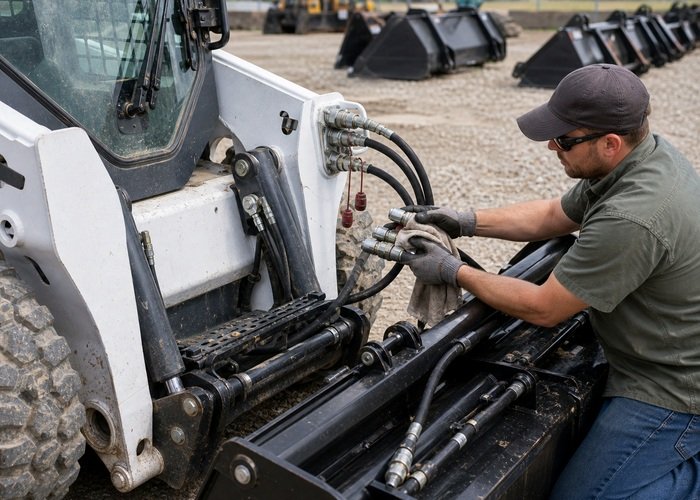
Flow gets the attention, but pressure, case drain, coupler size, and heat management can decide whether an attachment works reliably. Some attachments need a case drain line to protect hydraulic motors. Some need a specific return path. Some need flat-face couplers that are clean and compatible. Dirty couplers can push contamination into the system, and contamination can create expensive failures.
Hydraulic systems also create heat. Long continuous operation with a demanding tool can expose cooling limitations. If a loader will spend hours running a cutter, trencher, or broom, ask about hydraulic temperature behavior, cooler condition, fan cleanliness, and service intervals. OSHA’s mobile heavy equipment guidance is a useful reminder that attachment work also changes visibility, debris zones, and struck-by risk.
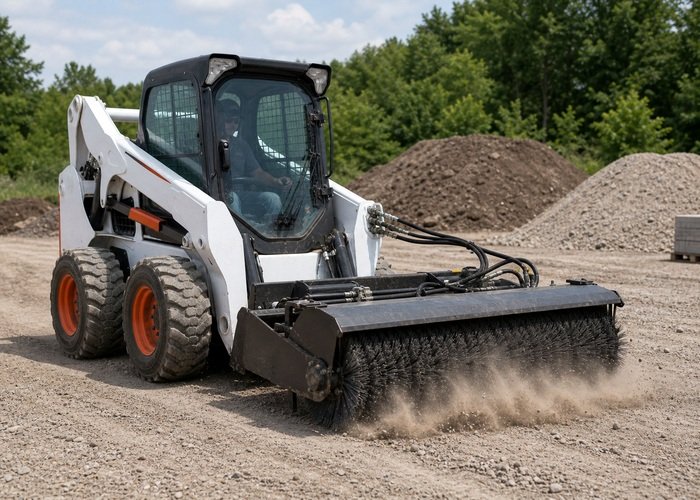
If possible, test the loader with the attachment type you actually plan to use. A short bucket demo does not prove hydraulic fit for a brush cutter or trencher. Listen for pump strain, watch attachment speed, feel control response, and observe heat after a reasonable work cycle. If the attachment slows quickly in ordinary material, the machine may be under-matched. If hoses jump, couplers leak, or controls feel harsh, stop and inspect.
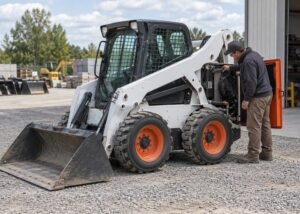
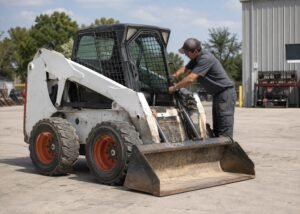
Also consider the surface and site. A wheeled skid steer may move quickly on firm ground, while a tracked machine may better handle soft, uneven, or muddy areas. Hydraulic flow is only one part of productivity. Ground conditions, traction, lift path, visibility, operator comfort, and service access all affect the daily result. The Wikipedia definition of a погрузчик с бортовым поворотом is basic, but your decision should be job-cycle based.
The first mistake is buying an attachment before confirming the machine’s hydraulic capability. The second is assuming high flow is always better. The third is ignoring case drain, return line, coupler, and heat requirements. The fourth is overlooking the operator. A machine that technically runs the attachment but is hard to control, hard to see from, or hard to service will still waste time.
The fifth mistake is comparing only new-machine specs without thinking about used-machine condition. A used high-flow skid steer with tired pumps, dirty oil, damaged couplers, or neglected cooling may underperform a cleaner standard-flow unit for the jobs you actually do. For broader equipment selection, compare the SeekMach skid steer loader category, SeekMach product overview, и SeekMach application solutions pages, especially if your job list also includes digging or tractor-style PTO work.
A landscaping crew preparing several acres for seed may use a bucket, pallet forks, a soil conditioner, an auger, and a broom in the same week. The bucket and forks may not demand high flow, but the soil conditioner or heavy rotary tool might. In that case, the buying question is not “Can the loader lift enough?” It is “Can the loader run the attachment that controls the final surface quality without overheating or slowing down?” This is where a written attachment list protects the buyer from choosing a machine that only solves half the work.
A farm or estate maintenance operator may use the skid steer loader for manure cleanup, gravel, snow, fence materials, brush piles, and seasonal storm debris. Many of those jobs are short-cycle and do not require high flow. Standard flow, good visibility, easy service access, and strong tires may matter more than a premium hydraulic package. If the same property also needs trenching or controlled digging, compare the skid steer against the SeekMach excavator category before expecting one loader to do every task well.
A contractor running a hydraulic breaker, cold planer, or heavy cutter needs a different level of confirmation. The attachment may have a narrow flow range, pressure requirement, case drain need, and duty-cycle expectation. The loader may perform well for a short demonstration and still run hot during a full day. Ask how the machine behaves after continuous operation, not just during a clean sales-yard test.
Ask for the loader’s auxiliary flow, system pressure, high-flow setting if equipped, coupler type, case drain availability, hydraulic service history, filter change interval, and any overheating history. Ask the seller to show the attachment controls from the operator position. Ask whether the loader has run the same attachment type you plan to use. If the answer is vague, treat the machine as unproven for that tool.
For a used machine, inspect oil condition, cooler cleanliness, hose age, coupler wear, and leaks around the auxiliary block. A small leak may be repairable, but a pattern of neglected hydraulic maintenance can turn a good purchase price into downtime. A skid steer loader earns its keep through fast cycles. Hydraulic mismatch slows every cycle.
Hydraulic attachments can throw debris, create pinch points, and change the loader’s balance. Use the attachment manual, keep people out of the work zone, relieve pressure before disconnecting when instructed, and keep couplers clean. The Canadian Centre for Occupational Health and Safety has general hydraulic safety information at CCOHS hydraulic systems. NIOSH workplace resources at NIOSH are also useful for building safer equipment habits.
Maintenance should be routine, not occasional. Check hydraulic oil condition, filters, hoses, couplers, cooler screens, attachment motor leaks, and mounting plates. If a tool depends on clean oil and proper flow, small maintenance shortcuts become expensive. A clean coupler before connection is one of the simplest habits a crew can build.
Only if your planned attachments require it. Many buckets, forks, grapples, and light tools work well with standard flow.
It can if the attachment is not designed for the higher flow. Always stay within the attachment manufacturer’s flow and pressure range.
Both matter. Flow affects speed and oil volume, while pressure affects force. Attachment requirements should specify both.
A case drain is a hydraulic return path used by some motor-driven attachments to protect components from excess internal pressure.
Yes when possible. A bucket demo does not prove that a demanding powered attachment will perform well.
– OSHA mobile heavy equipment guidance – CCOHS hydraulic systems – NIOSH workplace safety resources – Skid-steer loader definition – Hydraulic flow video – OSHA machine guarding overview
Continue with the skeleton rock bucket soil-sifting guide for the next buyer decision.
Before mobilizing, use this tight-site compact skid steer planning checklist.
Confirm the complete machine match with the attachment compatibility and rated-capacity checklist.