Telephone/WhatsApp:+86 156 2656 0610
Telephone/WhatsApp:+86 156 2656 0610
Email:info@seekmach.com

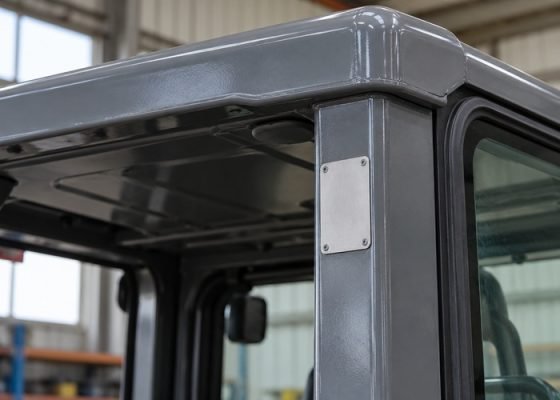
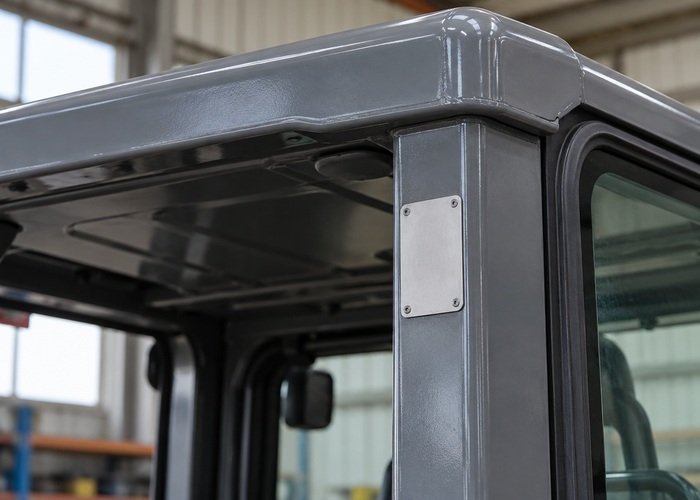
Verify a mini excavator’s protective structure from the actual machine, installed assembly and manufacturer’s documentation before deciding that it suits a job. A roof, enclosed cab or familiar acronym does not establish a particular protection rating. Rollover, tip-over and falling-object protection address different events; their names should not be treated as interchangeable approvals.
This guide helps an owner prepare the evidence for a task-suitability or damage-assessment discussion. It is not a certification guide or a procedure for removing, repairing or modifying a structure. Requirements vary by jurisdiction, machine design and task. Obtain the applicable manufacturer information and a qualified assessment where the evidence is incomplete.
ROPS commonly refers to a rollover protective structure, TOPS to a tip-over protective structure and FOPS to a falling-object protective structure. These descriptions identify different protection functions. They do not, by themselves, tell an owner which requirements an individual assembly has been designed or assessed to meet.
Record the exact wording on the original identification and supporting documents. A seller’s shortened description may omit the distinction that matters for a proposed task. If an advertisement says certified cab, ask which assembly, which machine installation and which supporting document the statement refers to before relying on it.
The UK HSE guidance on mobile work equipment discusses managing rollover risk and protecting people carried on equipment. It provides a risk-management context, not a declaration that every mini excavator roof has a particular rating. Keep local obligations and the actual machine’s documented arrangement separate from a general guidance page.
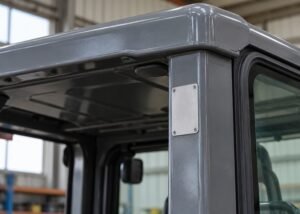
Start with the excavator model and serial information, then identify the protective structure using accessible original markings and the parts documentation. Retain clear photographs taken safely with the machine secured. Do not remove trim, climb onto the roof or reach into hazardous areas merely to obtain a better label photograph.
Ask whether the machine has its original structure, an approved replacement or a modification whose history is unknown. A used machine may carry an assembly that resembles the original while differing in mounting or supporting parts. The point is to establish the actual arrangement, not to assume that the current shape proves its history.
| Question | Evidence to retain | What it does not establish alone |
|---|---|---|
| Which machine is involved? | Model, serial information and applicable instructions | The identity of a replacement cab or canopy |
| Which structure is installed? | Assembly markings and manufacturer confirmation | Suitability for every proposed task |
| Has it been altered or damaged? | History, observations and qualified assessment | Acceptability based on appearance alone |
| What hazards does the job present? | Task assessment and required protection evidence | Permission to proceed because a roof is present |
Use the mini excavator spare-parts ordering guide to keep component identification with the inquiry. Ask for the complete approved assembly and associated parts where replacement is being considered. A matching panel or convenient bolt pattern is not confirmation of the complete protective system.
Describe the task before asking whether the machine is suitable. Include the materials, surrounding structures, potential falling or moving objects, ground conditions and intended attachment. Different jobs may present different hazards even when the same excavator and operator are involved.
Do not assume that an assembly addressing one event also addresses another. An enclosed cab can provide weather protection without proving the protection needed for a falling-object hazard. Conversely, a guard added for one exposure does not establish the condition or suitability of the original structure beneath it.
The HSE excavator overview places machine suitability within broader planning of excavation work. Apply that principle to the actual task: the responsible person should identify the needed controls and obtain the corresponding equipment evidence. A protective structure is part of the plan, not permission to work beneath uncontrolled material.
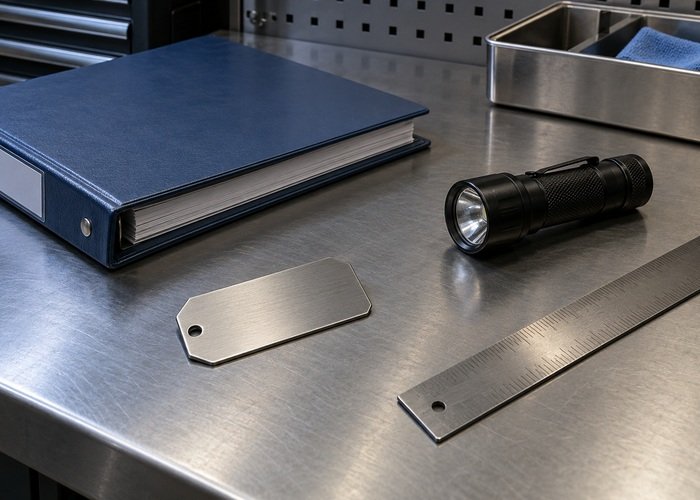
First consider how the job will prevent the hazardous event. Ground planning, work positioning, material management and exclusion arrangements remain important even when a machine has documented operator protection. Do not turn a protection claim into a reason to accept an otherwise unsuitable operating situation.
The mini excavator slope-work guide addresses related planning questions. It cannot supply a universal allowable slope, nor can a protective-structure label do that. The machine’s operating limits, task assessment and site conditions must be considered through the appropriate process.
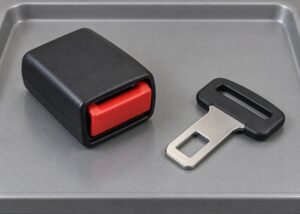
Restraints also belong in the complete installation discussion. See the separate seat-belt inspection guide for identifying the actual restraint assembly. Do not assume that a sound roof compensates for a defective restraint or that an unapproved seat change leaves the original protection arrangement unaffected.
Record the observation without declaring the remaining strength. A dent, crack, corrosion, distorted mounting, evidence of an impact or an unknown previous repair may require manufacturer or qualified specialist assessment. The appropriate response depends on the actual assembly and instructions; a photograph cannot establish a universal acceptable damage limit.
Keep the machine’s incident history with the request. Explain what is known about a collision, falling object, overturning event, transport damage or previous modification. If the history is uncertain, say so. Missing information should remain visible rather than being converted into a statement that no significant event occurred.
HSE maintenance guidance emphasizes competent people and safe planned work. For a protective structure, arrange the assessment before attempting a cosmetic or structural repair. Do not straighten, heat, weld, drill or add mounting holes as an informal solution. Obtain the manufacturer’s direction for the identified assembly.
A low doorway or transport clearance problem can create pressure to remove a canopy or change its arrangement. Treat that as a new equipment and task decision. A public discussion showing bolts or a removable-looking joint does not establish permission to operate with the structure removed or altered.
Ask the manufacturer or authorized provider whether an approved configuration or procedure exists for the actual machine and proposed situation. If it does not, change the access plan or select suitable equipment. Do not infer an operating configuration from the fact that a part can physically be detached for manufacture, shipping or service.
Keep transport and operating requirements distinct. A documented transport arrangement may still require restoration and inspection before use. Identify who will complete that work and what evidence is needed. A handover that says canopy removed leaves too much uncertainty about the machine’s condition and permitted next activity.

Send the machine identity, structure markings, safe photographs, applicable documents and the proposed task. Separate three questions: what is installed, what condition it is in, and whether the complete arrangement is suitable for the intended work. These questions may require different evidence and different qualified people.
If replacement is recommended, ask for the approved assembly, supporting components and installation instructions for that machine. Record any conditions or exclusions in the supplier’s response. Do not shorten a detailed answer to a generic statement such as ROPS fitted when the original response has a narrower scope.
Keep a traceable record when a part number or design is superseded. A supplier may need to explain which supporting items change with the new assembly. That is a reason to retain the complete confirmation, not to substitute a visually similar item because the original listing is no longer available.
Retain the identity records, assessment findings, approved work instructions and completion evidence together. State whether the outcome concerns repair completion, a particular operating configuration or suitability for a defined task. Avoid wording that implies indefinite approval for all future work.
At the next site handover, make unresolved questions and restrictions visible. If the proposed job changes, revisit the task assessment rather than recycling an earlier acceptance statement without checking its scope. A machine can remain mechanically unchanged while the required protection question changes substantially.
During routine inspections, report changes through the defect system and refer back to the original assessment record. Operators should know which observations to report without being expected to judge structural strength themselves. Clear responsibility is more useful than asking every person who walks past the machine to decide whether a damaged canopy looks strong enough.
No. They describe different protection functions. Confirm the exact designation and supporting documentation for the installed assembly and machine. Do not infer a rating or a job approval from an acronym in a sales description.
No. Appearance and weather enclosure do not establish a documented protection capability. Ask for the relevant manufacturer evidence and have the responsible person assess suitability for the actual task.
Do not improvise a repair. Record the damage and obtain manufacturer or qualified specialist direction for the identified assembly. This guide provides no welding, straightening or damage-acceptance procedure.
Reassess the access plan and ask about an approved machine configuration. Physical removability is not permission to operate without protection. Select a suitable arrangement or different equipment when the required evidence is unavailable.