Telephone/WhatsApp:+86 156 2656 0610
Telephone/WhatsApp:+86 156 2656 0610
Email:info@seekmach.com

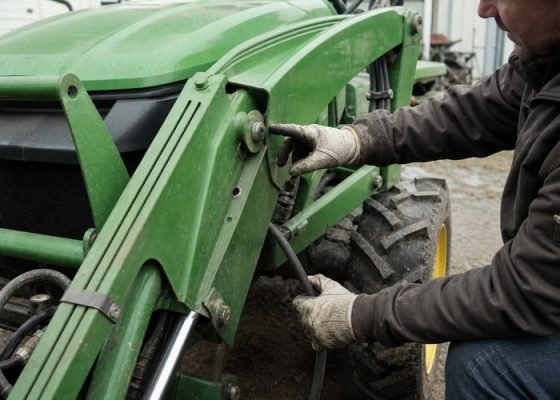
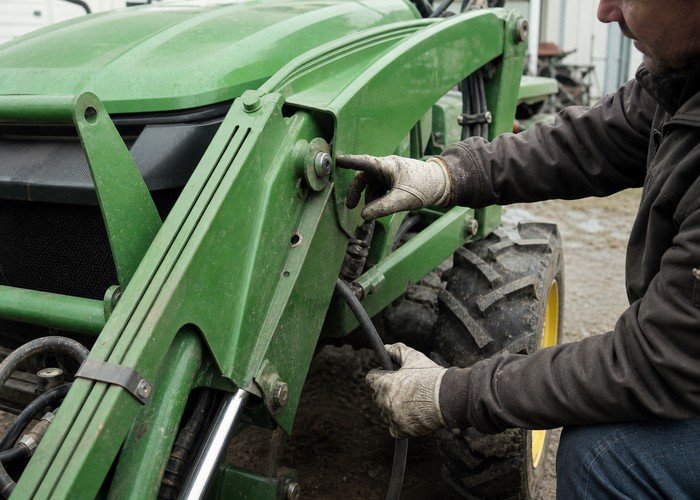
Used Compact Tractor Inspection Checklist: Engine, PTO, Hydraulics, and Loader gives buyers and operators a structured way to verify condition, fit, and safety before money or machinery moves.
Continue through the SeekMach equipment range, compare the tractor range, review компактные экскаваторы, see погрузчики с бортовым поворотом, and browse lawn mowers.
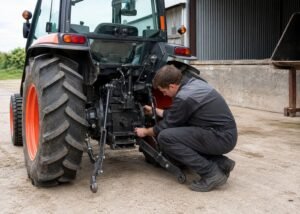
A sound used compact tractor inspection checklist decision starts with the machine manual, identification plate, and a written job requirement. Record operating weight, attachment weight, fluid condition, service history, and any limits before judging appearance. A clean machine can still hide wear, while honest cosmetic wear may accompany careful maintenance.
Work in a fixed sequence and take photographs of every finding. Begin with the machine cold, on firm level ground, with the parking brake applied. Never place any part of your body beneath raised equipment unless it is supported by the manufacturer-approved device. If a test cannot be performed safely, treat it as unverified rather than guessing.
Compare observations with the exact model manual instead of relying on a generic number. Tire pressure, fluid grade, fastener torque, towing capacity, blade setting, and service interval vary by model and market. A supplier should be able to provide the correct manual, parts diagram, serial-number format, and support route before purchase.
A practical inspection separates acceptable wear, maintenance due soon, and stop-work faults. Write each issue in one of those three columns, estimate downtime as well as parts cost, and confirm whether the seller will correct it. This turns a walk-around into a defensible buying or operating decision.
Finish with a controlled functional test. Listen for changes under load, watch for drift or vibration, and recheck the ground for fresh leaks. Do not use one successful movement as proof that the whole system is healthy; repeat the test after warm-up and verify all controls return smoothly to neutral.
A sound used compact tractor inspection checklist decision starts with the machine manual, identification plate, and a written job requirement. Record operating weight, attachment weight, fluid condition, service history, and any limits before judging appearance. A clean machine can still hide wear, while honest cosmetic wear may accompany careful maintenance.
Work in a fixed sequence and take photographs of every finding. Begin with the machine cold, on firm level ground, with the parking brake applied. Never place any part of your body beneath raised equipment unless it is supported by the manufacturer-approved device. If a test cannot be performed safely, treat it as unverified rather than guessing.
Compare observations with the exact model manual instead of relying on a generic number. Tire pressure, fluid grade, fastener torque, towing capacity, blade setting, and service interval vary by model and market. A supplier should be able to provide the correct manual, parts diagram, serial-number format, and support route before purchase.
A practical inspection separates acceptable wear, maintenance due soon, and stop-work faults. Write each issue in one of those three columns, estimate downtime as well as parts cost, and confirm whether the seller will correct it. This turns a walk-around into a defensible buying or operating decision.
Finish with a controlled functional test. Listen for changes under load, watch for drift or vibration, and recheck the ground for fresh leaks. Do not use one successful movement as proof that the whole system is healthy; repeat the test after warm-up and verify all controls return smoothly to neutral.
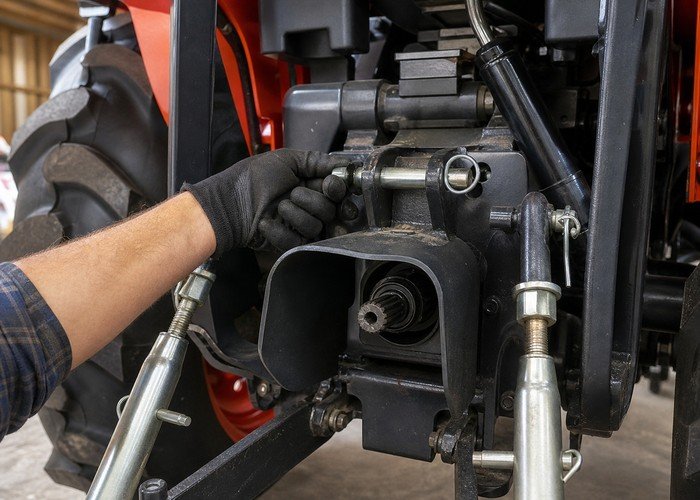
A sound used compact tractor inspection checklist decision starts with the machine manual, identification plate, and a written job requirement. Record operating weight, attachment weight, fluid condition, service history, and any limits before judging appearance. A clean machine can still hide wear, while honest cosmetic wear may accompany careful maintenance.
Work in a fixed sequence and take photographs of every finding. Begin with the machine cold, on firm level ground, with the parking brake applied. Never place any part of your body beneath raised equipment unless it is supported by the manufacturer-approved device. If a test cannot be performed safely, treat it as unverified rather than guessing.
Compare observations with the exact model manual instead of relying on a generic number. Tire pressure, fluid grade, fastener torque, towing capacity, blade setting, and service interval vary by model and market. A supplier should be able to provide the correct manual, parts diagram, serial-number format, and support route before purchase.
A practical inspection separates acceptable wear, maintenance due soon, and stop-work faults. Write each issue in one of those three columns, estimate downtime as well as parts cost, and confirm whether the seller will correct it. This turns a walk-around into a defensible buying or operating decision.
Finish with a controlled functional test. Listen for changes under load, watch for drift or vibration, and recheck the ground for fresh leaks. Do not use one successful movement as proof that the whole system is healthy; repeat the test after warm-up and verify all controls return smoothly to neutral.
A sound used compact tractor inspection checklist decision starts with the machine manual, identification plate, and a written job requirement. Record operating weight, attachment weight, fluid condition, service history, and any limits before judging appearance. A clean machine can still hide wear, while honest cosmetic wear may accompany careful maintenance.
Work in a fixed sequence and take photographs of every finding. Begin with the machine cold, on firm level ground, with the parking brake applied. Never place any part of your body beneath raised equipment unless it is supported by the manufacturer-approved device. If a test cannot be performed safely, treat it as unverified rather than guessing.
Compare observations with the exact model manual instead of relying on a generic number. Tire pressure, fluid grade, fastener torque, towing capacity, blade setting, and service interval vary by model and market. A supplier should be able to provide the correct manual, parts diagram, serial-number format, and support route before purchase.
A practical inspection separates acceptable wear, maintenance due soon, and stop-work faults. Write each issue in one of those three columns, estimate downtime as well as parts cost, and confirm whether the seller will correct it. This turns a walk-around into a defensible buying or operating decision.
Finish with a controlled functional test. Listen for changes under load, watch for drift or vibration, and recheck the ground for fresh leaks. Do not use one successful movement as proof that the whole system is healthy; repeat the test after warm-up and verify all controls return smoothly to neutral.
A sound used compact tractor inspection checklist decision starts with the machine manual, identification plate, and a written job requirement. Record operating weight, attachment weight, fluid condition, service history, and any limits before judging appearance. A clean machine can still hide wear, while honest cosmetic wear may accompany careful maintenance.
Work in a fixed sequence and take photographs of every finding. Begin with the machine cold, on firm level ground, with the parking brake applied. Never place any part of your body beneath raised equipment unless it is supported by the manufacturer-approved device. If a test cannot be performed safely, treat it as unverified rather than guessing.
Compare observations with the exact model manual instead of relying on a generic number. Tire pressure, fluid grade, fastener torque, towing capacity, blade setting, and service interval vary by model and market. A supplier should be able to provide the correct manual, parts diagram, serial-number format, and support route before purchase.
A practical inspection separates acceptable wear, maintenance due soon, and stop-work faults. Write each issue in one of those three columns, estimate downtime as well as parts cost, and confirm whether the seller will correct it. This turns a walk-around into a defensible buying or operating decision.
Finish with a controlled functional test. Listen for changes under load, watch for drift or vibration, and recheck the ground for fresh leaks. Do not use one successful movement as proof that the whole system is healthy; repeat the test after warm-up and verify all controls return smoothly to neutral.
A sound used compact tractor inspection checklist decision starts with the machine manual, identification plate, and a written job requirement. Record operating weight, attachment weight, fluid condition, service history, and any limits before judging appearance. A clean machine can still hide wear, while honest cosmetic wear may accompany careful maintenance.
Work in a fixed sequence and take photographs of every finding. Begin with the machine cold, on firm level ground, with the parking brake applied. Never place any part of your body beneath raised equipment unless it is supported by the manufacturer-approved device. If a test cannot be performed safely, treat it as unverified rather than guessing.
Compare observations with the exact model manual instead of relying on a generic number. Tire pressure, fluid grade, fastener torque, towing capacity, blade setting, and service interval vary by model and market. A supplier should be able to provide the correct manual, parts diagram, serial-number format, and support route before purchase.
A practical inspection separates acceptable wear, maintenance due soon, and stop-work faults. Write each issue in one of those three columns, estimate downtime as well as parts cost, and confirm whether the seller will correct it. This turns a walk-around into a defensible buying or operating decision.
Finish with a controlled functional test. Listen for changes under load, watch for drift or vibration, and recheck the ground for fresh leaks. Do not use one successful movement as proof that the whole system is healthy; repeat the test after warm-up and verify all controls return smoothly to neutral.
A sound used compact tractor inspection checklist decision starts with the machine manual, identification plate, and a written job requirement. Record operating weight, attachment weight, fluid condition, service history, and any limits before judging appearance. A clean machine can still hide wear, while honest cosmetic wear may accompany careful maintenance.
Work in a fixed sequence and take photographs of every finding. Begin with the machine cold, on firm level ground, with the parking brake applied. Never place any part of your body beneath raised equipment unless it is supported by the manufacturer-approved device. If a test cannot be performed safely, treat it as unverified rather than guessing.
Compare observations with the exact model manual instead of relying on a generic number. Tire pressure, fluid grade, fastener torque, towing capacity, blade setting, and service interval vary by model and market. A supplier should be able to provide the correct manual, parts diagram, serial-number format, and support route before purchase.
A practical inspection separates acceptable wear, maintenance due soon, and stop-work faults. Write each issue in one of those three columns, estimate downtime as well as parts cost, and confirm whether the seller will correct it. This turns a walk-around into a defensible buying or operating decision.
Finish with a controlled functional test. Listen for changes under load, watch for drift or vibration, and recheck the ground for fresh leaks. Do not use one successful movement as proof that the whole system is healthy; repeat the test after warm-up and verify all controls return smoothly to neutral.
A sound used compact tractor inspection checklist decision starts with the machine manual, identification plate, and a written job requirement. Record operating weight, attachment weight, fluid condition, service history, and any limits before judging appearance. A clean machine can still hide wear, while honest cosmetic wear may accompany careful maintenance.
Work in a fixed sequence and take photographs of every finding. Begin with the machine cold, on firm level ground, with the parking brake applied. Never place any part of your body beneath raised equipment unless it is supported by the manufacturer-approved device. If a test cannot be performed safely, treat it as unverified rather than guessing.
Compare observations with the exact model manual instead of relying on a generic number. Tire pressure, fluid grade, fastener torque, towing capacity, blade setting, and service interval vary by model and market. A supplier should be able to provide the correct manual, parts diagram, serial-number format, and support route before purchase.
A practical inspection separates acceptable wear, maintenance due soon, and stop-work faults. Write each issue in one of those three columns, estimate downtime as well as parts cost, and confirm whether the seller will correct it. This turns a walk-around into a defensible buying or operating decision.
Finish with a controlled functional test. Listen for changes under load, watch for drift or vibration, and recheck the ground for fresh leaks. Do not use one successful movement as proof that the whole system is healthy; repeat the test after warm-up and verify all controls return smoothly to neutral.
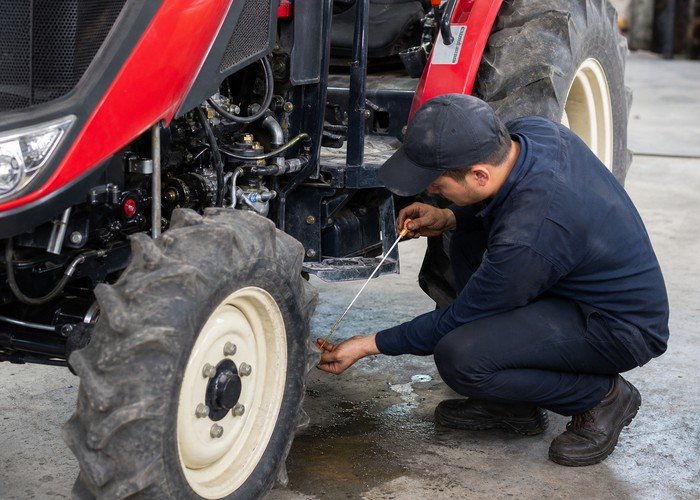
A sound used compact tractor inspection checklist decision starts with the machine manual, identification plate, and a written job requirement. Record operating weight, attachment weight, fluid condition, service history, and any limits before judging appearance. A clean machine can still hide wear, while honest cosmetic wear may accompany careful maintenance.
Work in a fixed sequence and take photographs of every finding. Begin with the machine cold, on firm level ground, with the parking brake applied. Never place any part of your body beneath raised equipment unless it is supported by the manufacturer-approved device. If a test cannot be performed safely, treat it as unverified rather than guessing.
Compare observations with the exact model manual instead of relying on a generic number. Tire pressure, fluid grade, fastener torque, towing capacity, blade setting, and service interval vary by model and market. A supplier should be able to provide the correct manual, parts diagram, serial-number format, and support route before purchase.
A practical inspection separates acceptable wear, maintenance due soon, and stop-work faults. Write each issue in one of those three columns, estimate downtime as well as parts cost, and confirm whether the seller will correct it. This turns a walk-around into a defensible buying or operating decision.
Finish with a controlled functional test. Listen for changes under load, watch for drift or vibration, and recheck the ground for fresh leaks. Do not use one successful movement as proof that the whole system is healthy; repeat the test after warm-up and verify all controls return smoothly to neutral.
A sound used compact tractor inspection checklist decision starts with the machine manual, identification plate, and a written job requirement. Record operating weight, attachment weight, fluid condition, service history, and any limits before judging appearance. A clean machine can still hide wear, while honest cosmetic wear may accompany careful maintenance.
Work in a fixed sequence and take photographs of every finding. Begin with the machine cold, on firm level ground, with the parking brake applied. Never place any part of your body beneath raised equipment unless it is supported by the manufacturer-approved device. If a test cannot be performed safely, treat it as unverified rather than guessing.
Compare observations with the exact model manual instead of relying on a generic number. Tire pressure, fluid grade, fastener torque, towing capacity, blade setting, and service interval vary by model and market. A supplier should be able to provide the correct manual, parts diagram, serial-number format, and support route before purchase.
A practical inspection separates acceptable wear, maintenance due soon, and stop-work faults. Write each issue in one of those three columns, estimate downtime as well as parts cost, and confirm whether the seller will correct it. This turns a walk-around into a defensible buying or operating decision.
Finish with a controlled functional test. Listen for changes under load, watch for drift or vibration, and recheck the ground for fresh leaks. Do not use one successful movement as proof that the whole system is healthy; repeat the test after warm-up and verify all controls return smoothly to neutral.
No. Use this workflow to organize the inspection, then apply the exact limits and procedures in the model manual.
Use a qualified technician when records are incomplete, safety structures are altered, fluids are contaminated, structural cracks appear, or the functional test is inconsistent.
Record serial number, hours, cold-start condition, leaks, wear, measured settings, attachments, faults, photographs, and the person who performed the check.
Compact tractor buyer path: Match the job and horsepower with the low-horsepower compact tractor guide, verify condition with the used tractor inspection checklist, then choose safe rear weight with the compact tractor loader ballast guide.
Tractor ownership decision path: Compare tractor financing against cash and farm liquidity, review the compact tractor DPF operating guide, and use a compact tractor size and implement checklist before requesting a final delivered quote.
Compact tractor buyer decision path: Compare tractor financing against cash and farm liquidity, review the compact tractor DPF operating guide, and use a compact tractor size and implement checklist before requesting a final delivered quote.