Telephone/WhatsApp:+86 156 2656 0610
Telephone/WhatsApp:+86 156 2656 0610
Email:info@seekmach.com

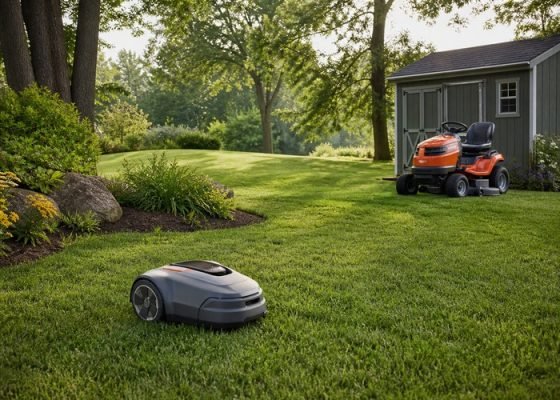
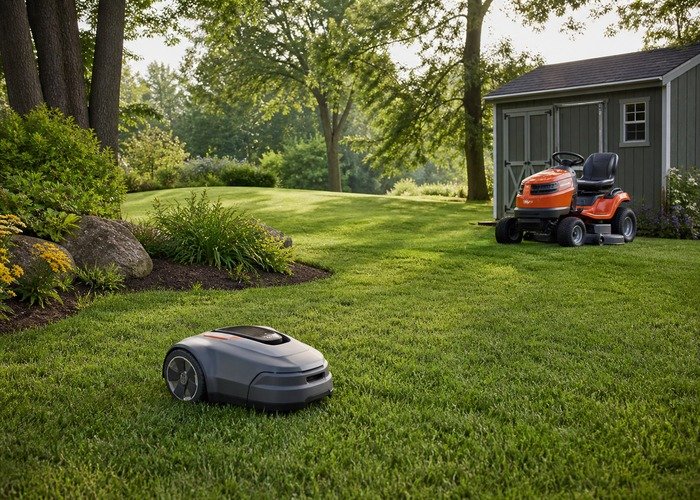
The choice between a robotic and riding lawn mower is not simply automation versus speed. A robot suits a lawn that can be divided into reliable mowing zones and maintained through frequent light cuts. A riding mower suits an owner or crew who wants to finish a large area in a scheduled session, handle taller growth, collect or discharge more material, and sometimes use seasonal attachments.
Large-yard buyers should measure actual mowable area, steepest slopes, narrow passages, tree cover, wet zones, edge length, obstacles, growth rate, power and connectivity, storage, noise limits, and the time available for supervision or manual trimming. Acreage alone hides the conditions that make one system easy and the other frustrating.
Safety sets the boundary. OSHA and public product-safety guidance warn that riding mowers can overturn or lose control on slopes and near drop-offs. A robot removes the seated operator from routine mowing, but still requires correct installation, exclusion zones, blade safety, child and pet controls, and a yard that fits its navigation and traction limits.
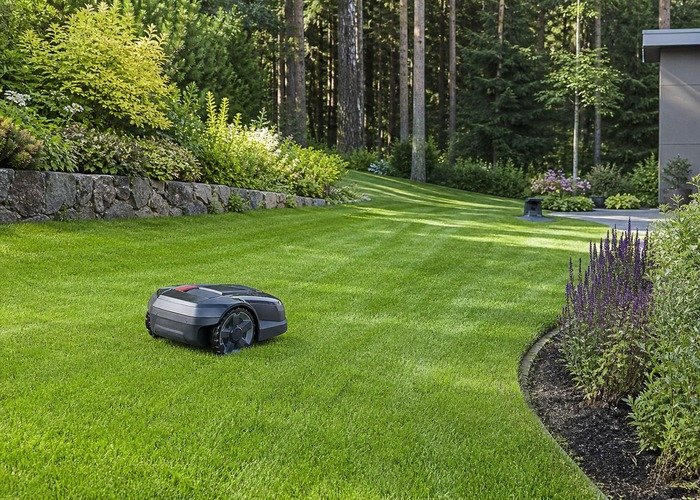
Mark locations where seated mowing is prohibited, including unsafe slopes, drop-offs, soft shoulders, traffic edges, and water. The route should be walked before mowing and changed as conditions change. Practical rollover precautions are published by OSHA riding mower safety guidance.
Map only mowable grass, then subtract buildings, beds, woodland, ponds, drives, and areas maintained another way. Record separate zones and the connections between them. A two-acre property may have less than one acre of grass, while a smaller site with many islands can demand more navigation work.
Measure slope where the mower will travel, not from a real-estate description. Check cross-slopes, transitions, ditch edges, retaining walls, roots, soft shoulders, and wet spots. Compare those measurements with the exact manual limits and keep conservative separation from hazards.
For a related specification or ownership decision, continue with this practical SeekMach resource: lawn mower category.
A robot maintains height by cutting small amounts frequently and returning to charge. The owner trades long mowing sessions for setup, mapping, blade checks, cleaning, occasional rescue, boundary or positioning maintenance, and trimming that the robot cannot reach.
This pattern can improve schedule flexibility and reduce routine noise, but it depends on reliable access. Fallen branches, toys, fruit, pet waste, temporary furniture, construction, and rapidly changing wet conditions can interrupt the route. The yard must be prepared as part of the system.
For a related specification or ownership decision, continue with this practical SeekMach resource: lawn mower buying guide.
A riding mower covers open ground in planned sessions and gives the operator immediate control around new obstacles, taller patches, and changing conditions. Deck width and travel speed matter, but turning, overlap, clipping handling, refuelling or charging, and trimming often determine the real total time.
The operator remains exposed to rollover, thrown-object, hearing, vibration, heat, and visibility risks. Inspect the route first, keep bystanders away, follow slope instructions, use protective equipment, and never treat a fast finish as permission to mow wet ground or an unsafe bank.
For a related specification or ownership decision, continue with this practical SeekMach resource: gas versus electric mower guide.
Do not convert a product slope claim into permission to mow every bank. Direction of travel, surface moisture, transition shape, obstacles, and the manufacturer procedure matter. Consumer precautions for ride-on equipment are summarized by Australian Product Safety ride-on mower guide.
Robot slope ratings may be expressed as percent or degrees and can refer to an ideal uniform surface. Short transitions, holes, wet grass, leaf cover, exposed roots, and edges can reduce usable capability. Confirm whether the limit applies inside the mowing area, at boundaries, and near the charging route.
Riding mowers also vary widely. Steering type, tire grip, centre of gravity, rollover protection, braking, and manufacturer instructions all matter. If the slope exceeds the machine guidance or leads toward water, traffic, a wall, or a drop, redesign the maintenance method rather than testing the limit.
For a related specification or ownership decision, continue with this practical SeekMach resource: zero-turn versus riding mower guide.
Autonomous equipment still requires a controlled operating zone and protection of children, pets, and bystanders. Owners should read recalls and safety notices for the exact model; the searchable starting point in the United States is US Consumer Product Safety Commission recalls database.
Boundary-wire robots can be dependable when the wire is installed correctly, but repairs and landscape changes require tracing the circuit. Wire-free systems may use satellite positioning, cameras, beacons, or combinations; tree canopy, walls, buildings, and narrow corridors can affect performance differently.
A riding mower needs physical width, turning room, and a safe route between zones. Measure deck and machine width at gates and bridges. Robots need a passage wide enough for navigation margin and reliable signal, not merely enough room for the chassis to squeeze through once.
For a related specification or ownership decision, continue with this practical SeekMach resource: mower maintenance articles.
The video below can help visualize how an autonomous mower handles routine coverage and how much setup surrounds that convenience.
Watch the route near edges and obstacles rather than focusing only on the clean open strip.
Then compare the scene with the wettest, steepest, narrowest, and most shaded parts of your own lawn.
Turn the observations into a trial checklist and insist on testing the difficult zone.
Estimate weekly trimming, debris pickup, cleaning, rescue, and blade work for the robot alongside the riding mower session.
The best choice is the one that fits the whole maintenance system, not the machine that performs best in a perfect demonstration yard.
Mowing height should match the turf species and season rather than being set only for appearance. Avoid removing too much leaf at once and use sharp blades. A practical turf-care reference is available from University of Minnesota Extension lawn mowing guidance.
Frequent robotic cuts leave fine clippings and work best when the lawn stays within the system capacity. Heavy spring growth, storm delays, leaves, seed heads, or a neglected zone may require a conventional cut before the robot resumes maintenance height.
A riding mower can respond to taller grass with height adjustment, slower travel, repeated passes, side discharge, mulching, or collection as the manual permits. It can also scalp uneven ground if the deck is too wide or speed is excessive. Match deck, anti-scalp setup, and mowing direction to terrain.
For a related specification or ownership decision, continue with this practical SeekMach resource: available equipment range.
Neither system eliminates all edge work. Robot blade discs often sit inside the body, leaving strips near walls, raised beds, fences, and drop-offs. Riding decks also miss tight corners and can damage bark or hardscape when the operator crowds obstacles.
Walk the property and count metres of difficult edge, not just trees. A robot-friendly redesign may use flush edging and wider passages. A riding-mower plan may combine a sensible deck width with a separate trimmer rather than buying the widest deck that fits the open field.
Battery packs and chargers need dry, ventilated storage and manufacturer-compatible equipment. Damaged lithium batteries should not enter normal household disposal. Owners can locate safe management options through US EPA used lithium-ion battery guidance.
For robots, confirm charger location, electrical protection, cable route, charging time, battery coverage, weather limits, and what happens after an outage. Headline area capacity assumes a schedule and conditions; shade, slope, thick growth, wheel slip, and complex routes can increase energy use.
For riding equipment, compare fuel or battery capacity with the full session, including travel and collection. Battery riding mowers need a suitable circuit, dry storage, temperature-aware battery care, and replacement planning. Fuel machines require safe storage, ventilation, and seasonal maintenance.
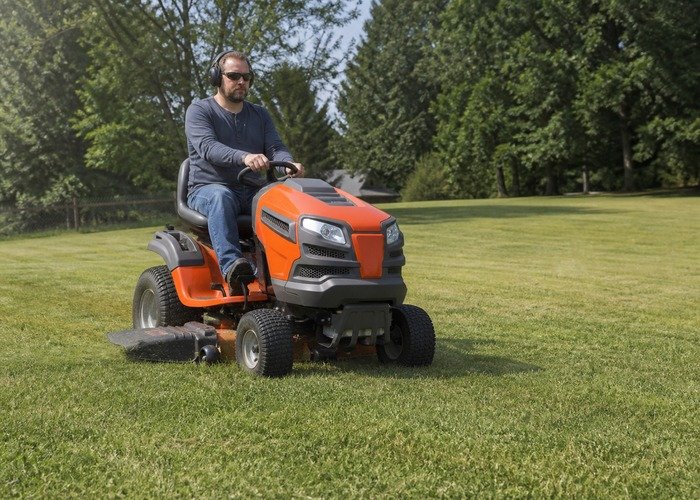
Riding mower noise can exceed comfortable exposure during long sessions. Equipment condition, hearing protection, distance, and time all matter. The health basis for managing occupational noise is explained by CDC/NIOSH occupational noise guidance.
A robot depends on blades, wheels, seals, battery, charging hardware, positioning components, software, and sometimes connectivity services. Ask what continues to work without a subscription or mobile signal, how maps are backed up, and how theft tracking and ownership transfer operate.
A riding mower depends on deck belts, spindles, blades, tires, battery, engine or traction drive, and larger storage. Local parts and service can be decisive during peak growth. Compare five-year wear items and downtime, not only purchase price.
For a robot, test the worst zone: shaded boundary, narrow passage, slope transition, rough patch, and return to charger. Observe several cycles in different light and moisture, then inspect wheel marks, missed areas, boundary clearance, and rescue frequency.
For a riding mower, test gate access, turning around beds, braking and control on permitted slopes, visibility, deck clearance, ride comfort, clipping path, loading for transport if needed, and safe storage. A short flat-lawn demonstration does not answer the large-yard question.
Draw the yard as operating zones rather than one green shape. Mark charging or fuel, gates, passages, slopes, wet ground, shade, beds, play and pet areas, water, traffic, and drop-offs. Estimate mowing and trimming by zone. The map shows whether a robot can move reliably and whether a riding mower can turn and stop safely.
Measure the steepest representative line and record the intended travel direction under the manufacturer instructions. Check transitions at the top and bottom, not only the middle. A robot may lose traction where grade changes, while a riding mower can unload a wheel near a shoulder. Wet grass, leaves, roots, holes, and soft edges need separate notes.
For a robotic trial, count interventions for a full week: boundary errors, signal loss, wheel slip, trapping, blocked blade, obstacle stops, missed zones, failed return, and manual carrying. Record weather and grass condition. One rescue after storm debris differs from daily failure in the same passage. The log makes convenience measurable.
For a riding trial, time the session from route inspection through cleaning and storage. Include trimming, gates, furniture, fuel or charging, emptying collection, and deck cleanup. Record extra passes and scalping. Deck width and advertised speed explain only part of the labour on a complex property.
Estimate edge work directly. Walk walls, fences, beds, tree rings, ditches, curbs, and raised borders. Note which edges could use flush pavers, wider mulch, or safer exclusion space. A robot with excellent open coverage can still create long trimming work, while an oversized riding deck can increase hand work around islands.
Create seasonal scenarios for spring surge, summer heat, wet weeks, leaf fall, and a two-week absence. Ask how the system recovers when grass exceeds maintenance height. A robot may need a conventional reset cut; a riding mower may need slower travel, raised settings, collection, or repeated passes. Large yards rarely stay ideal all year.
List dependencies that can stop each system. A robot depends on charging, boundary or positioning, app and software support, blades, wheels, and battery health. A riding mower depends on fuel or charging, belts, spindles, tires, starter battery, operator availability, and storage. Confirm local support during the fastest growth month.
Finish with two realistic weekly plans. Put autonomous mowing windows, debris walks, blade inspection, cleaning, trimming, and rescue checks in one. Put riding sessions, inspection, fuel or charging, clipping handling, cleaning, and trimming in the other. Prefer the system that fits the calendar and safety limits during a difficult week.
Run the ownership comparison with three weeks in mind: an ordinary dry week, the fastest spring-growth week, and a wet week after missed mowing. Estimate interventions, trimming, clipping handling, charging or fuel, cleaning, and recovery work for each. Add the cost of a backup method when the preferred mower is unavailable. A system that looks efficient only in the ordinary week may still fit, but the owner should know how the difficult weeks will be handled without unsafe slope work, rushed riding, excessive grass removal, or repeated robot rescues.
Possibly, if the exact model capacity, charging schedule, zones, slopes, navigation, grass growth, and passage layout fit. Measure mowable area and trial the difficult zones instead of selecting by acreage alone.
Usually not. Walls, raised edges, fences, beds, drop-offs, and blade-disc offset commonly leave manual edge work.
It can finish open ground quickly in one session, but total time includes inspection, manoeuvring, clipping handling, refuelling or charging, cleaning, and trimming.
Neither should be used beyond its instructions. Removing a rider can reduce rollover exposure, but a robot still needs traction, boundary, drop-off, water, child, pet, and retrieval controls.
Yes. Some owners use a robot for a defined maintained lawn and a riding mower or contractor for rougher, seasonal, or outlying areas. Separate zones can be more practical than forcing one machine to cover everything.
A robotic vs riding lawn mower decision for a large yard should be based on measured zones, slope and hazard limits, navigation, growth pattern, weekly labour, service, and a real trial. Choose the maintenance system that remains reliable on the hardest ordinary week, not the one that looks easiest on a perfect day.