Telephone/WhatsApp:+86 156 2656 0610

Telephone/WhatsApp:+86 156 2656 0610
Email:info@seekmach.com

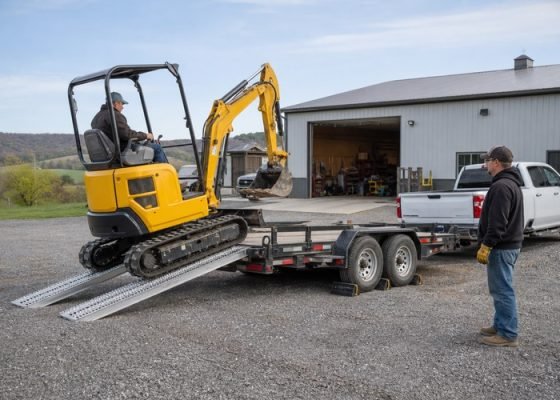
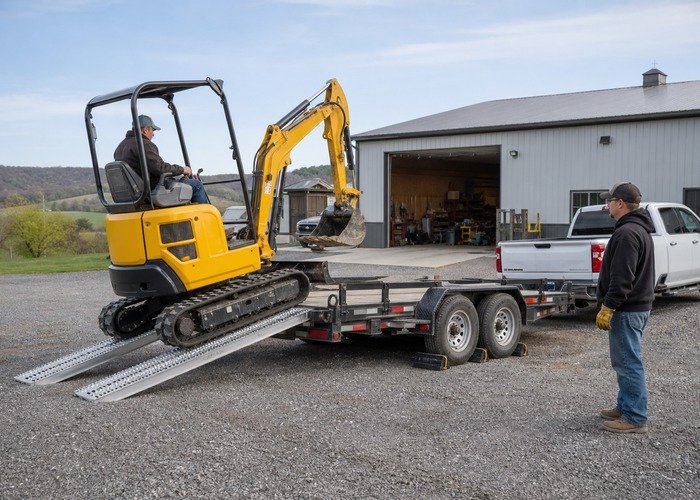
The hard part of towing a mini excavator is not getting the tracks onto the trailer. It is proving that every part of the transport system can handle the complete load: tow vehicle, receiver, hitch, ball or pintle, trailer frame, axles, tires, brakes, ramps, deck, securement points, chains, binders, and the excavator with its actual attachment and anything stored on the trailer.
This guide explains how to tow a mini excavator as a planning and inspection process. It does not replace the manuals, local licensing rules, state or national transport law, or a qualified driver’s training. Start by identifying the exact machine in the SeekMach excavator category, then use its operating weight and transport instructions rather than a rounded class label such as one-ton or three-ton.
Federal Motor Carrier Safety Administration guidance says cargo must be firmly immobilized or secured and that the aggregate working load limit of the securement system must be at least one-half the weight of the article or group of articles. Rules differ by jurisdiction, vehicle use, and equipment weight, and heavy machinery can trigger additional requirements. Treat the regulation as the floor; the equipment, trailer, and securement manufacturers may require a more specific setup.
The safest transport day begins before the excavator starts. A weight worksheet is completed, the route is checked, the trailer sits on firm level ground, the ramps and deck are clean, and one person controls loading. If the numbers or hardware are uncertain, the excavator does not move until the uncertainty is resolved.
| Item | Number to record | Where to verify it | Why it matters |
|---|---|---|---|
| Excavator in transport configuration | Actual operating or transport weight with current bucket/attachment | Machine plate and manual; scale when needed | Class names and base weights may omit attachments or options |
| Trailer | Empty weight, GVWR, GAWR, tire and coupler ratings | Certification plate, component labels, manual | Payload is not the same as GVWR |
| Tow vehicle | GVWR, GCWR, axle ratings, approved towing limit | Door label and owner’s manual | The trailer may fit while the combined vehicle does not |
| Hitch system | Receiver, mount, ball/pintle and fastener ratings | Stamped labels and instructions | The lowest-rated part limits the system |
| Loaded combination | Scale weights by axle when practical | Certified scale ticket | Confirms distribution rather than estimating it |
Working calculation: loaded trailer weight equals trailer empty weight plus excavator, attachment, fuel carried as part of the machine, chains, binders, tools, mats, and every other item on the trailer. Compare the measured result with each applicable rating, not only with the advertised tow limit.
Mini excavator specifications can list operating weight, canopy weight, cab weight, shipping weight, or a base configuration. A hydraulic thumb, quick coupler, heavier bucket, breaker, extra counterweight, fuel, or blade configuration can change the number. The trailer also carries chains, binders, spare attachments, ramps, and tools. Guessing low can overload an axle or tire even when the trailer appears level. A related SeekMach reference is the mini excavator size chart. For independent guidance, review FMCSA cargo securement rules.
Use a repeatable order and follow the exact manual. Park securely, lower attachments, isolate power, control stored energy, and inspect the work area before testing.
Field example. An excavator fits visually between the trailer fenders, but a heavier bucket and stored grading attachment put the loaded trailer close to its limit. A scale shows the rear axle carrying more than expected. Moving or removing the spare attachment solves a real problem that a tape measure could not reveal.
Decision point. If any required rating, actual weight, or component label is missing, do not substitute an online estimate. Verify the number or choose a transport system with clear margin. Stop whenever the setup falls outside the manual, site rules, component ratings, or the operator’s training.
A transport system is limited by its weakest component. A trailer frame may have adequate capacity while one tire is under-rated, aged, cut, or underinflated. A hitch label may be adequate while the receiver, mount, ball, coupler, or safety-chain connection is not. Electric or hydraulic trailer brakes, lights, the breakaway system, wheel fasteners, bearings, suspension, ramps, latches, and deck condition all need a pre-load inspection. A related SeekMach reference is the mini excavator buying guide. For independent guidance, review NHTSA towing safety guidance.
Use a repeatable order and follow the exact manual. Park securely, lower attachments, isolate power, control stored energy, and inspect the work area before testing.
Field example. A ramp pin slides into place but its retaining clip is missing. The ramp looks stable while parked, yet vibration could let the pin walk out. Replacing the correct retainer before loading is faster than trying to control a track when the ramp shifts.
Decision point. Any damaged tire, cracked weld, loose coupler, untested brake, missing ramp retainer, or unknown component rating removes the trailer from service until corrected. Stop whenever the setup falls outside the manual, site rules, component ratings, or the operator’s training.
Loading magnifies small setup errors. Soft ground can let a trailer jack or tire settle, a sideways slope can shift the machine toward a ramp edge, and dirt on steel ramps can reduce traction. Keep the tow vehicle and trailer aligned on firm level ground, connect the trailer to the tow vehicle as instructed, chock where required, exclude bystanders, and agree on hand signals before the excavator moves. A related SeekMach reference is the mini excavator operating guide. For independent guidance, review OSHA struck-by equipment guidance.
Use a repeatable order and follow the exact manual. Park securely, lower attachments, isolate power, control stored energy, and inspect the work area before testing.
Field example. The left ramp sits on packed gravel while the right rests on a softer shoulder. As the machine climbs, the right side begins to settle. The correct response is to back down under control and rebuild the support, not to steer uphill and hope the ramp stays aligned.
Decision point. Stop if the machine is not square, a ramp moves, the trailer shifts, traction changes, or the spotter disappears from view. Reset from the ground rather than correcting aggressively from the controls. Stop whenever the setup falls outside the manual, site rules, component ratings, or the operator’s training.
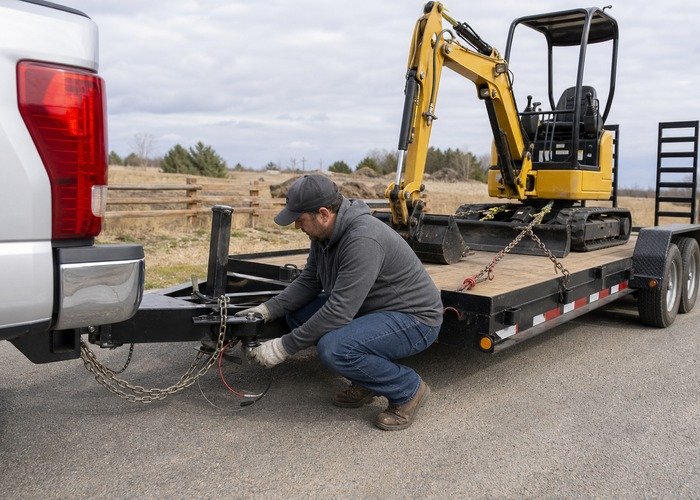
The excavator must be positioned so the loaded trailer and tow vehicle remain within their axle, tire, hitch, and vehicle ratings with stable tongue or pin loading as specified by the manufacturers. A trailer that looks level can still load one axle or the tow vehicle’s rear axle incorrectly. Boom direction, blade position, counterweight, spare attachments, and fuel all affect distribution. A related SeekMach reference is the excavator trenching bucket guide. For independent guidance, review FMCSA heavy equipment securement rule.
Use a repeatable order and follow the exact manual. Park securely, lower attachments, isolate power, control stored energy, and inspect the work area before testing.
Field example. The excavator is centered visually, but the tow vehicle’s rear axle is heavily loaded and the trailer front axle carries more than the rear. A small position change may improve distribution, but only scale numbers and the manuals confirm the result.
Decision point. Do not move the excavator solely to make the tow vehicle look level. Air springs, weight-distribution equipment, or suspension appearance do not increase legal component ratings. Stop whenever the setup falls outside the manual, site rules, component ratings, or the operator’s training.
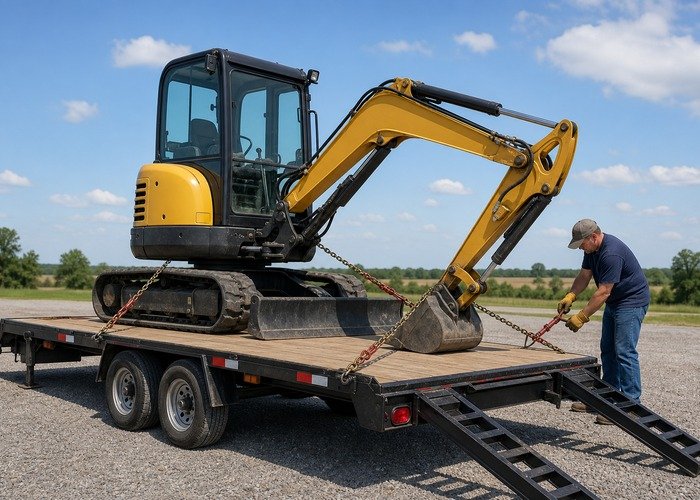
Use designated machine tie-down points and trailer anchor points with chains, binders, hooks, and fittings that are compatible, marked, undamaged, and rated. Prevent forward, rearward, sideways, and vertical movement as the applicable rule requires. Articulating equipment and accessories may need separate restraint so the boom, blade, bucket, or attachment cannot move during transport. A related SeekMach reference is the rubber track inspection guide. For independent guidance, review FMCSA equipment accessory securement guidance.
Use a repeatable order and follow the exact manual. Park securely, lower attachments, isolate power, control stored energy, and inspect the work area before testing.
Field example. Four chains hold the undercarriage, but the bucket is supported only by hydraulic pressure. A road impact can let the boom or bucket move. Use the restraint or locking method required for the accessory rather than assuming the cylinders are transport locks.
Decision point. If a designated tie-down point is damaged, a chain is unmarked, a binder cannot close correctly, or the aggregate working load limit cannot be demonstrated, replace the component or stop the move. Stop whenever the setup falls outside the manual, site rules, component ratings, or the operator’s training.
After securement, walk around in one direction so no item is skipped. Look under the machine and trailer, check each tie-down by hand, confirm ramps are stowed and retained, verify the jack is raised, and make sure no tool or loose material remains on the deck. Test steering and trailer braking at low speed in a safe area before entering traffic. For independent guidance, review FMCSA driver vehicle inspection resources.
Use a repeatable order and follow the exact manual. Park securely, lower attachments, isolate power, control stored energy, and inspect the work area before testing.
Field example. At the first safe stop, one binder has lost a small amount of tension as mud compresses under a track. The recheck catches it before the load can move. Cleaning the tracks before loading would have reduced the settling, but the inspection still matters.
Decision point. Do not continue when the trailer sways, braking feels weak, a tire heats abnormally, a chain loosens, or the combination behaves differently from the low-speed test. Stop safely and identify the cause. Stop whenever the setup falls outside the manual, site rules, component ratings, or the operator’s training.
No. Ton class is a broad product label, not a transport calculation. Use the exact machine weight in its current configuration, add attachments and everything carried on the trailer, then verify the trailer, axles, tires, hitch, tow vehicle, and combined ratings.
The answer depends on equipment weight, dimensions, securement method, designated points, applicable jurisdiction, and whether accessories require separate restraint. Follow the machine manual and the rules that apply to the trip. Heavy equipment subject to 49 CFR 393.130 has specific requirements; lighter equipment remains subject to general securement rules.
Use the machine and trailer manufacturers’ approved transport orientation and confirm axle distribution by measurement. Orientation changes weight distribution, clearance, and accessory restraint, so there is no universal visual rule for every excavator and trailer.
Do not treat hydraulic pressure alone as a cargo restraint. Place accessories in the specified transport position and use locks or separate securement when required by the manual or applicable rule.
Check actual axle and tongue or pin loads, hitch setup, tire pressures, and all vehicle ratings. Appearance is not a measurement, and suspension aids do not raise the certified ratings. Reposition, remove load, or use a more suitable transport system based on verified numbers.
A clean mini excavator transport plan can be explained on one sheet: exact loaded weights, every component rating, loading position, tie-down points, chain and binder working load limits, accessory restraint, brake test, and recheck schedule. If any line is blank, the move is not ready.
Keep that sheet with the tow vehicle and update it whenever the bucket, thumb, counterweight, trailer, hitch, tow vehicle, or stored attachment changes. Photograph the final tie-down arrangement only as a record, not as proof that it is correct. The next trip still requires a fresh inspection because wear, tire pressure, weather, deck contamination, and route conditions can change overnight.
The goal is a boring trip. Nothing shifts, nothing settles unexpectedly, the trailer follows without sway, and the driver has enough braking and steering margin for ordinary road surprises. That result begins on level ground with a scale ticket and an inspection, not at highway speed.