Telephone/WhatsApp:+86 156 2656 0610

Telephone/WhatsApp:+86 156 2656 0610
Email:info@seekmach.com

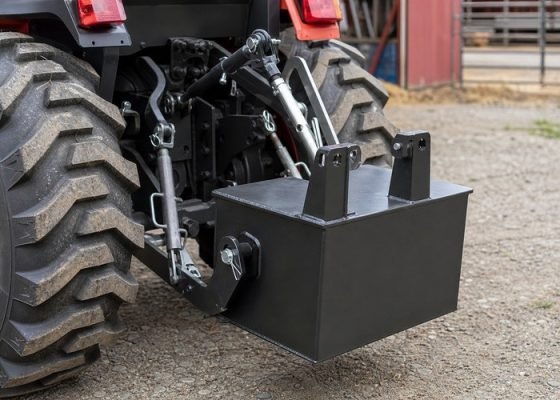
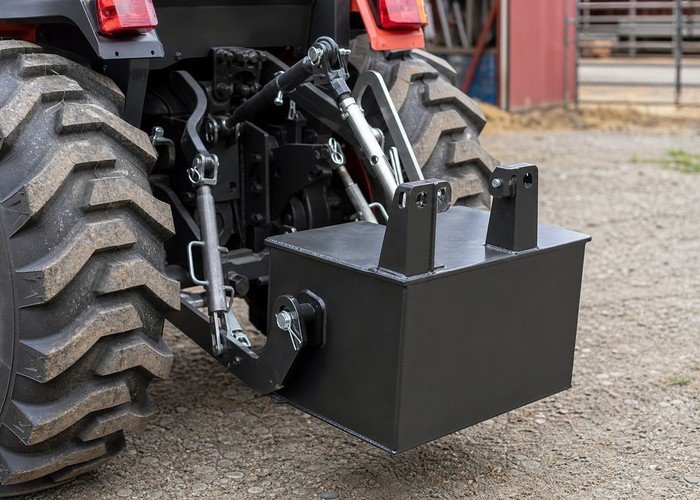
Compact Tractor Loader Ballast: Choose Rear Weight Without Guessing gives buyers and operators a structured way to verify condition, fit, and safety before money or machinery moves.
Continue through the SeekMach equipment range, compare the tractor range, review escavadeiras compactas, see carregadeiras compactas, and browse lawn mowers.
Start with records, ratings, and the exact machine: Loader ballast is a stability system, not a contest to add the heaviest object available. Start with the tractor and loader manuals, the front-axle and tire ratings, and the manufacturer’s approved ballast combinations. The rear weight must improve the working balance without exceeding axle, tire, hitch, or gross-vehicle limits.
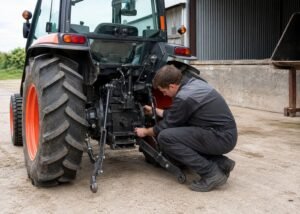
Start with records, ratings, and the exact machine: A three-point ballast box normally places weight farther behind the rear axle than liquid in the tires. That leverage can unload the front axle more effectively, but it also increases rear overhang and changes transport behavior. Loaded rear tires lower the center of gravity and remain with the tractor, yet they do not provide the same rearward leverage.
Start with records, ratings, and the exact machine: Choose ballast for the actual bucket, material, terrain, and travel route. Dense gravel in a heaped bucket creates a different load from mulch, and a slope or pothole adds dynamic forces that a level-floor calculation misses. Keep the load low, travel slowly, avoid sharp turns, and never use ballast as permission to exceed the loader rating.
Start with records, ratings, and the exact machine: Check tire inflation, wheel fasteners, hitch pins, stabilizers, clearance, and ballast-box security before lifting. If the steering becomes unusually light, a rear tire lifts, the tractor bounces, or braking feels different, lower the load and stop. Those symptoms require a safer setup, not a faster pass across the worksite.
Start with records, ratings, and the exact machine: Record the chosen configuration so another operator can repeat it: ballast type and weight, tire setup, loader attachment, typical material, and prohibited conditions. Recheck the configuration whenever the attachment changes. The exact manual remains controlling because seemingly similar compact tractors can have different axle and hitch limits.
Safety-first walk-around before operation: Loader ballast is a stability system, not a contest to add the heaviest object available. Start with the tractor and loader manuals, the front-axle and tire ratings, and the manufacturer’s approved ballast combinations. The rear weight must improve the working balance without exceeding axle, tire, hitch, or gross-vehicle limits.
Safety-first walk-around before operation: A three-point ballast box normally places weight farther behind the rear axle than liquid in the tires. That leverage can unload the front axle more effectively, but it also increases rear overhang and changes transport behavior. Loaded rear tires lower the center of gravity and remain with the tractor, yet they do not provide the same rearward leverage.
Safety-first walk-around before operation: Choose ballast for the actual bucket, material, terrain, and travel route. Dense gravel in a heaped bucket creates a different load from mulch, and a slope or pothole adds dynamic forces that a level-floor calculation misses. Keep the load low, travel slowly, avoid sharp turns, and never use ballast as permission to exceed the loader rating.
Safety-first walk-around before operation: Check tire inflation, wheel fasteners, hitch pins, stabilizers, clearance, and ballast-box security before lifting. If the steering becomes unusually light, a rear tire lifts, the tractor bounces, or braking feels different, lower the load and stop. Those symptoms require a safer setup, not a faster pass across the worksite.
Safety-first walk-around before operation: Record the chosen configuration so another operator can repeat it: ballast type and weight, tire setup, loader attachment, typical material, and prohibited conditions. Recheck the configuration whenever the attachment changes. The exact manual remains controlling because seemingly similar compact tractors can have different axle and hitch limits.
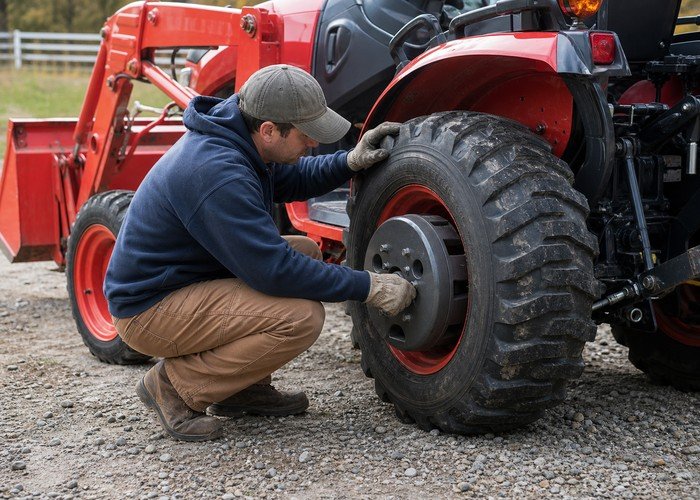
Engine, fluids, cooling, and leak checks: Loader ballast is a stability system, not a contest to add the heaviest object available. Start with the tractor and loader manuals, the front-axle and tire ratings, and the manufacturer’s approved ballast combinations. The rear weight must improve the working balance without exceeding axle, tire, hitch, or gross-vehicle limits.
Engine, fluids, cooling, and leak checks: A three-point ballast box normally places weight farther behind the rear axle than liquid in the tires. That leverage can unload the front axle more effectively, but it also increases rear overhang and changes transport behavior. Loaded rear tires lower the center of gravity and remain with the tractor, yet they do not provide the same rearward leverage.
Engine, fluids, cooling, and leak checks: Choose ballast for the actual bucket, material, terrain, and travel route. Dense gravel in a heaped bucket creates a different load from mulch, and a slope or pothole adds dynamic forces that a level-floor calculation misses. Keep the load low, travel slowly, avoid sharp turns, and never use ballast as permission to exceed the loader rating.
Engine, fluids, cooling, and leak checks: Check tire inflation, wheel fasteners, hitch pins, stabilizers, clearance, and ballast-box security before lifting. If the steering becomes unusually light, a rear tire lifts, the tractor bounces, or braking feels different, lower the load and stop. Those symptoms require a safer setup, not a faster pass across the worksite.
Engine, fluids, cooling, and leak checks: Record the chosen configuration so another operator can repeat it: ballast type and weight, tire setup, loader attachment, typical material, and prohibited conditions. Recheck the configuration whenever the attachment changes. The exact manual remains controlling because seemingly similar compact tractors can have different axle and hitch limits.
Hydraulics, structure, and working components: Loader ballast is a stability system, not a contest to add the heaviest object available. Start with the tractor and loader manuals, the front-axle and tire ratings, and the manufacturer’s approved ballast combinations. The rear weight must improve the working balance without exceeding axle, tire, hitch, or gross-vehicle limits.
Hydraulics, structure, and working components: A three-point ballast box normally places weight farther behind the rear axle than liquid in the tires. That leverage can unload the front axle more effectively, but it also increases rear overhang and changes transport behavior. Loaded rear tires lower the center of gravity and remain with the tractor, yet they do not provide the same rearward leverage.
Hydraulics, structure, and working components: Choose ballast for the actual bucket, material, terrain, and travel route. Dense gravel in a heaped bucket creates a different load from mulch, and a slope or pothole adds dynamic forces that a level-floor calculation misses. Keep the load low, travel slowly, avoid sharp turns, and never use ballast as permission to exceed the loader rating.
Hydraulics, structure, and working components: Check tire inflation, wheel fasteners, hitch pins, stabilizers, clearance, and ballast-box security before lifting. If the steering becomes unusually light, a rear tire lifts, the tractor bounces, or braking feels different, lower the load and stop. Those symptoms require a safer setup, not a faster pass across the worksite.
Hydraulics, structure, and working components: Record the chosen configuration so another operator can repeat it: ballast type and weight, tire setup, loader attachment, typical material, and prohibited conditions. Recheck the configuration whenever the attachment changes. The exact manual remains controlling because seemingly similar compact tractors can have different axle and hitch limits.
Functional test under realistic load: Loader ballast is a stability system, not a contest to add the heaviest object available. Start with the tractor and loader manuals, the front-axle and tire ratings, and the manufacturer’s approved ballast combinations. The rear weight must improve the working balance without exceeding axle, tire, hitch, or gross-vehicle limits.
Functional test under realistic load: A three-point ballast box normally places weight farther behind the rear axle than liquid in the tires. That leverage can unload the front axle more effectively, but it also increases rear overhang and changes transport behavior. Loaded rear tires lower the center of gravity and remain with the tractor, yet they do not provide the same rearward leverage.
Functional test under realistic load: Choose ballast for the actual bucket, material, terrain, and travel route. Dense gravel in a heaped bucket creates a different load from mulch, and a slope or pothole adds dynamic forces that a level-floor calculation misses. Keep the load low, travel slowly, avoid sharp turns, and never use ballast as permission to exceed the loader rating.
Functional test under realistic load: Check tire inflation, wheel fasteners, hitch pins, stabilizers, clearance, and ballast-box security before lifting. If the steering becomes unusually light, a rear tire lifts, the tractor bounces, or braking feels different, lower the load and stop. Those symptoms require a safer setup, not a faster pass across the worksite.
Functional test under realistic load: Record the chosen configuration so another operator can repeat it: ballast type and weight, tire setup, loader attachment, typical material, and prohibited conditions. Recheck the configuration whenever the attachment changes. The exact manual remains controlling because seemingly similar compact tractors can have different axle and hitch limits.
Decision table: pass, negotiate, or stop: Loader ballast is a stability system, not a contest to add the heaviest object available. Start with the tractor and loader manuals, the front-axle and tire ratings, and the manufacturer’s approved ballast combinations. The rear weight must improve the working balance without exceeding axle, tire, hitch, or gross-vehicle limits.
Decision table: pass, negotiate, or stop: A three-point ballast box normally places weight farther behind the rear axle than liquid in the tires. That leverage can unload the front axle more effectively, but it also increases rear overhang and changes transport behavior. Loaded rear tires lower the center of gravity and remain with the tractor, yet they do not provide the same rearward leverage.
Decision table: pass, negotiate, or stop: Choose ballast for the actual bucket, material, terrain, and travel route. Dense gravel in a heaped bucket creates a different load from mulch, and a slope or pothole adds dynamic forces that a level-floor calculation misses. Keep the load low, travel slowly, avoid sharp turns, and never use ballast as permission to exceed the loader rating.
Decision table: pass, negotiate, or stop: Check tire inflation, wheel fasteners, hitch pins, stabilizers, clearance, and ballast-box security before lifting. If the steering becomes unusually light, a rear tire lifts, the tractor bounces, or braking feels different, lower the load and stop. Those symptoms require a safer setup, not a faster pass across the worksite.
Decision table: pass, negotiate, or stop: Record the chosen configuration so another operator can repeat it: ballast type and weight, tire setup, loader attachment, typical material, and prohibited conditions. Recheck the configuration whenever the attachment changes. The exact manual remains controlling because seemingly similar compact tractors can have different axle and hitch limits.
Questions to ask the seller or operator: Loader ballast is a stability system, not a contest to add the heaviest object available. Start with the tractor and loader manuals, the front-axle and tire ratings, and the manufacturer’s approved ballast combinations. The rear weight must improve the working balance without exceeding axle, tire, hitch, or gross-vehicle limits.
Questions to ask the seller or operator: A three-point ballast box normally places weight farther behind the rear axle than liquid in the tires. That leverage can unload the front axle more effectively, but it also increases rear overhang and changes transport behavior. Loaded rear tires lower the center of gravity and remain with the tractor, yet they do not provide the same rearward leverage.
Questions to ask the seller or operator: Choose ballast for the actual bucket, material, terrain, and travel route. Dense gravel in a heaped bucket creates a different load from mulch, and a slope or pothole adds dynamic forces that a level-floor calculation misses. Keep the load low, travel slowly, avoid sharp turns, and never use ballast as permission to exceed the loader rating.
Questions to ask the seller or operator: Check tire inflation, wheel fasteners, hitch pins, stabilizers, clearance, and ballast-box security before lifting. If the steering becomes unusually light, a rear tire lifts, the tractor bounces, or braking feels different, lower the load and stop. Those symptoms require a safer setup, not a faster pass across the worksite.
Questions to ask the seller or operator: Record the chosen configuration so another operator can repeat it: ballast type and weight, tire setup, loader attachment, typical material, and prohibited conditions. Recheck the configuration whenever the attachment changes. The exact manual remains controlling because seemingly similar compact tractors can have different axle and hitch limits.
A repeatable field checklist: Loader ballast is a stability system, not a contest to add the heaviest object available. Start with the tractor and loader manuals, the front-axle and tire ratings, and the manufacturer’s approved ballast combinations. The rear weight must improve the working balance without exceeding axle, tire, hitch, or gross-vehicle limits.
A repeatable field checklist: A three-point ballast box normally places weight farther behind the rear axle than liquid in the tires. That leverage can unload the front axle more effectively, but it also increases rear overhang and changes transport behavior. Loaded rear tires lower the center of gravity and remain with the tractor, yet they do not provide the same rearward leverage.
A repeatable field checklist: Choose ballast for the actual bucket, material, terrain, and travel route. Dense gravel in a heaped bucket creates a different load from mulch, and a slope or pothole adds dynamic forces that a level-floor calculation misses. Keep the load low, travel slowly, avoid sharp turns, and never use ballast as permission to exceed the loader rating.
A repeatable field checklist: Check tire inflation, wheel fasteners, hitch pins, stabilizers, clearance, and ballast-box security before lifting. If the steering becomes unusually light, a rear tire lifts, the tractor bounces, or braking feels different, lower the load and stop. Those symptoms require a safer setup, not a faster pass across the worksite.
A repeatable field checklist: Record the chosen configuration so another operator can repeat it: ballast type and weight, tire setup, loader attachment, typical material, and prohibited conditions. Recheck the configuration whenever the attachment changes. The exact manual remains controlling because seemingly similar compact tractors can have different axle and hitch limits.
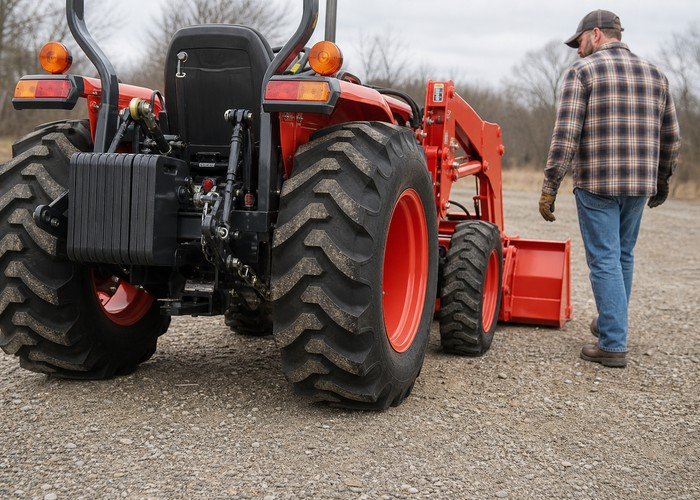
Common mistakes that create expensive surprises: Loader ballast is a stability system, not a contest to add the heaviest object available. Start with the tractor and loader manuals, the front-axle and tire ratings, and the manufacturer’s approved ballast combinations. The rear weight must improve the working balance without exceeding axle, tire, hitch, or gross-vehicle limits.
Common mistakes that create expensive surprises: A three-point ballast box normally places weight farther behind the rear axle than liquid in the tires. That leverage can unload the front axle more effectively, but it also increases rear overhang and changes transport behavior. Loaded rear tires lower the center of gravity and remain with the tractor, yet they do not provide the same rearward leverage.
Common mistakes that create expensive surprises: Choose ballast for the actual bucket, material, terrain, and travel route. Dense gravel in a heaped bucket creates a different load from mulch, and a slope or pothole adds dynamic forces that a level-floor calculation misses. Keep the load low, travel slowly, avoid sharp turns, and never use ballast as permission to exceed the loader rating.
Common mistakes that create expensive surprises: Check tire inflation, wheel fasteners, hitch pins, stabilizers, clearance, and ballast-box security before lifting. If the steering becomes unusually light, a rear tire lifts, the tractor bounces, or braking feels different, lower the load and stop. Those symptoms require a safer setup, not a faster pass across the worksite.
Common mistakes that create expensive surprises: Record the chosen configuration so another operator can repeat it: ballast type and weight, tire setup, loader attachment, typical material, and prohibited conditions. Recheck the configuration whenever the attachment changes. The exact manual remains controlling because seemingly similar compact tractors can have different axle and hitch limits.
Final verification before transport or purchase: Loader ballast is a stability system, not a contest to add the heaviest object available. Start with the tractor and loader manuals, the front-axle and tire ratings, and the manufacturer’s approved ballast combinations. The rear weight must improve the working balance without exceeding axle, tire, hitch, or gross-vehicle limits.
Final verification before transport or purchase: A three-point ballast box normally places weight farther behind the rear axle than liquid in the tires. That leverage can unload the front axle more effectively, but it also increases rear overhang and changes transport behavior. Loaded rear tires lower the center of gravity and remain with the tractor, yet they do not provide the same rearward leverage.
Final verification before transport or purchase: Choose ballast for the actual bucket, material, terrain, and travel route. Dense gravel in a heaped bucket creates a different load from mulch, and a slope or pothole adds dynamic forces that a level-floor calculation misses. Keep the load low, travel slowly, avoid sharp turns, and never use ballast as permission to exceed the loader rating.
Final verification before transport or purchase: Check tire inflation, wheel fasteners, hitch pins, stabilizers, clearance, and ballast-box security before lifting. If the steering becomes unusually light, a rear tire lifts, the tractor bounces, or braking feels different, lower the load and stop. Those symptoms require a safer setup, not a faster pass across the worksite.
Final verification before transport or purchase: Record the chosen configuration so another operator can repeat it: ballast type and weight, tire setup, loader attachment, typical material, and prohibited conditions. Recheck the configuration whenever the attachment changes. The exact manual remains controlling because seemingly similar compact tractors can have different axle and hitch limits.
No. Use this workflow to organize the inspection, then apply the exact limits and procedures in the model manual.
Use a qualified technician when records are incomplete, safety structures are altered, fluids are contaminated, structural cracks appear, or the functional test is inconsistent.
Record serial number, hours, cold-start condition, leaks, wear, measured settings, attachments, faults, photographs, and the person who performed the check.
Compact tractor buyer decision path: Compare tractor financing against cash and farm liquidity, review the compact tractor DPF operating guide, and use a compact tractor size and implement checklist before requesting a final delivered quote.