Telephone/WhatsApp:+86 156 2656 0610
Telephone/WhatsApp:+86 156 2656 0610
Email:info@seekmach.com

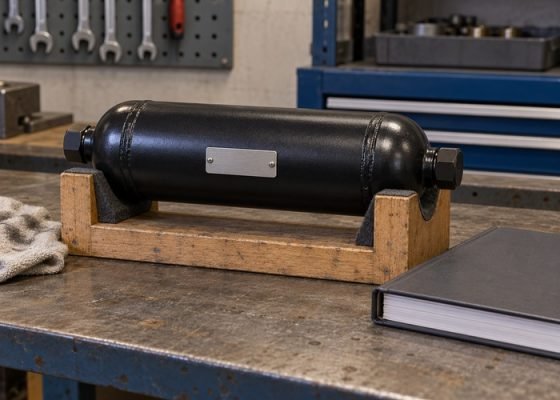
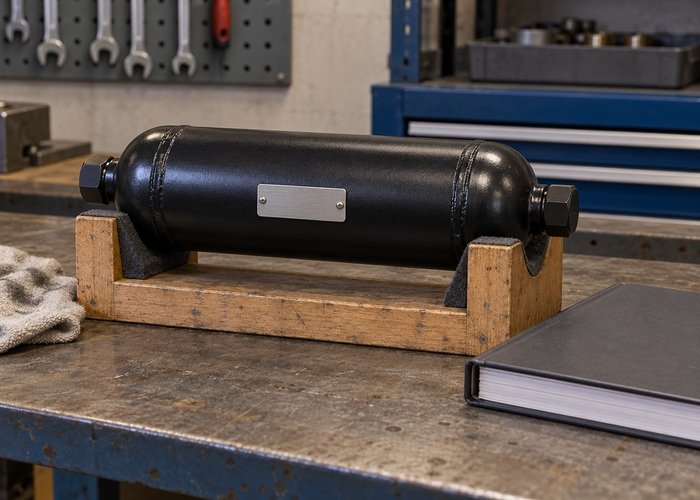
If a mini excavator has a hydraulic accumulator, prepare service around the identified component, its actual circuit and the manufacturer’s stored-energy procedure. Engine shutdown alone is not evidence that every energy source has been made safe. An accumulator service request should establish what is installed and what qualified work is needed before anyone loosens a connection or attempts a test.
Not every mini excavator has the same arrangement, and this guide does not claim that a particular SeekMach model contains an accumulator. It provides an owner-facing preparation framework, not instructions for charging, discharging, dismantling, pressure testing or setting a precharge. Those activities require the applicable equipment instructions and appropriately competent personnel.
Start with the machine model and serial information and the relevant parts and service documents. Ask the manufacturer or authorized service provider to identify whether the circuit concerned contains an accumulator and which assembly applies. A cylindrical object in a photograph is not enough to establish the component type or its function.
Keep the circuit question specific. A machine can have several hydraulic functions, and an attachment may have its own separate equipment and instructions. Do not transfer a service method from a breaker, another excavator or a larger machine simply because the component name sounds familiar.
Use the mini excavator spare-parts ordering guide to assemble the identity pack. Retain accessible component markings and safe photographs with the machine details. If a marking cannot be read without opening a hazardous area, leave that task to the service provider rather than improvising access.
An accumulator can store energy within a hydraulic system. Its purpose and arrangement depend on the design. For an owner preparing a service request, the important point is that the actual circuit may have stored energy that needs to be addressed under a specific procedure; a familiar shutdown habit does not establish that condition.
UK HSE maintenance guidance discusses safe maintenance arrangements and the need to address energy hazards. Apply that as a planning principle: the work order should identify the applicable instructions and responsible competent person. Do not replace that preparation with a generic instruction to move controls a certain number of times.
IL safety-lock lever and isolation guide covers a related but broader issue. A control lock is not a component-specific declaration of zero energy. Keep the accumulator question explicit so that the technician can determine which sources and verification steps the actual work requires.
Record the observed behavior, affected function and conditions under which it appears. Note whether it is constant or intermittent, when it began and what changed beforehand. Include relevant service history, attachment changes or other observations without performing an improvised demonstration to make the report more convincing.
A symptom that someone associates with an accumulator can have other causes. Buying a replacement before diagnosis can leave the original fault unresolved and complicate the service history. Ask the qualified provider to determine the diagnostic scope rather than treating a public forum suggestion as a confirmed failure.
| Information | Useful record | Unsupported conclusion to avoid |
|---|---|---|
| Machine and circuit | Serial information and applicable documentation | Every similar excavator has the same accumulator |
| Observed behavior | Affected function, conditions and onset | The symptom proves the accumulator has failed |
| Component identity | Original markings and confirmed part reference | A similar shell establishes compatibility |
| Service preparation | Qualified provider and exact instruction reference | Engine off means every energy source is safe |
IL guide to jerky excavator hydraulics illustrates why a symptom needs a wider diagnostic context. Keep any previous findings with the request, but do not use that article as a pressure-testing instruction. The service provider should select the actual diagnostic procedure for the identified machine.

State whether the request is for identification, fault diagnosis, scheduled inspection, replacement assessment or another defined service activity. These are different scopes. A quotation for a component does not establish that diagnosis, isolation, installation and acceptance are all included.
Ask who will supply the machine-specific service information and who will perform the work. Confirm any requirements for access, approved support arrangements, specialist equipment or a suitable service location through the provider. An owner can organize these responsibilities without attempting to determine technical settings or substitute tools.
HSE’s work-equipment inspection guidance supports inspection that reflects the equipment and circumstances. It does not create a universal accumulator inspection interval. Have the responsible person identify the applicable manufacturer instructions and any local requirements, then record the resulting inspection or maintenance plan with its actual scope.
Where an accumulator design includes a gas charge, the service information must address that design and its hazards. Do not assume a pressure reading, a disconnected hose or a fluid-side observation describes every relevant condition. The qualified provider needs the correct component information and procedure for the work being performed.
This article deliberately gives no gas type substitution, charging pressure, gauge connection, valve sequence or dismantling instructions. Do not use shop air, improvised charging equipment or a value borrowed from another machine. Request the exact manufacturer’s specification and let the competent provider determine the required equipment and method.
Keep any previous service certificate or recorded setting with its source and date, but do not treat an old handwritten number as current authority. It may refer to another component, condition or procedure. Ask the provider to verify its meaning before using it as part of the service decision.
The responsible provider should determine how to secure the machine, address gravity and stored energy, control access and verify the required condition before intervention. These arrangements belong in the actual work plan. An owner should not loosen a fitting to find out whether pressure remains or use an operating symptom as an informal energy test.
UK HSE’s PUWER overview places suitability, maintenance, inspection and information within the wider management of work equipment. Use that framework to make responsibility clear. It does not establish the detailed procedure for an accumulator fitted to an unidentified excavator.
If the service location or access conditions are unsuitable, resolve them before work begins. A technician should not arrive to find that the machine cannot be secured as required or that a planned component is inaccessible under the agreed arrangements. Treat that as a planning issue, not a reason to improvise a faster method.

If replacement is recommended, ask for the approved component and supporting parts for the actual machine and circuit. Appearance, physical size and a matching port do not establish the complete specification. Retain the supplier’s application confirmation and any relevant superseding reference with the order.
Do not assume a replacement accumulator is ready for the identified installation merely because it is new. The provider should confirm what preparation, checks and commissioning the applicable instructions require. Keep the supply scope separate from the installation scope so that an unperformed task is not lost between the parts seller and technician.
Do not modify a pressure-containing component to make it fit. An unfamiliar bracket, connection or orientation should be referred back to the approved application information. Where the supplied item differs from the agreed reference, resolve the discrepancy before installation rather than documenting the substitution only after work is complete.
The completion record should identify the machine, component, service scope, instruction reference, responsible provider and work date. Record the findings and the required functional or acceptance checks as reported by the qualified person. Avoid expanding a narrow component service result into a statement that the entire hydraulic system has been certified.
Keep unresolved symptoms visible. If a component service is complete but the original complaint remains, record the follow-up decision and responsible person. A new part on an invoice is not evidence that the reported behavior has been resolved, and a single apparently normal movement is not a substitute for the specified acceptance process.
Retain removed-component handling or return instructions from the provider. Do not puncture, cut, heat or dispose of an unfamiliar pressure-containing component as ordinary scrap. The responsible service provider should determine the appropriate safe handling and destination for the identified item and its condition.
At the next shift handover, make any restrictions and follow-up requirements clear. Keep the detailed service evidence available to the next technician while giving operators the practical information they need. Clear boundaries between diagnosis, work completion and return to service prevent an unfinished decision from being mistaken for an approval.
No universal arrangement should be assumed. Confirm the actual machine and relevant circuit using the manufacturer’s documentation and qualified identification. An attachment may also have separate equipment and instructions.
Shutdown alone does not demonstrate that every relevant energy source has been addressed. The applicable machine and component procedure must establish and verify the required safe condition before intervention.
No. A value without the exact component, conditions and instruction reference is not a valid service specification. Ask the qualified provider to obtain and apply the correct information for the actual installation.
Provide machine and accessible component identities, the relevant circuit, observed behavior, operating conditions and service history. Ask for identification and diagnostic scope first, then documented application and acceptance requirements if replacement is recommended.