Telephone/WhatsApp:+86 156 2656 0610

Telephone/WhatsApp:+86 156 2656 0610
Email:info@seekmach.com

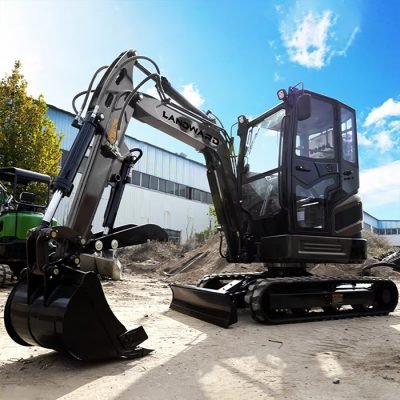
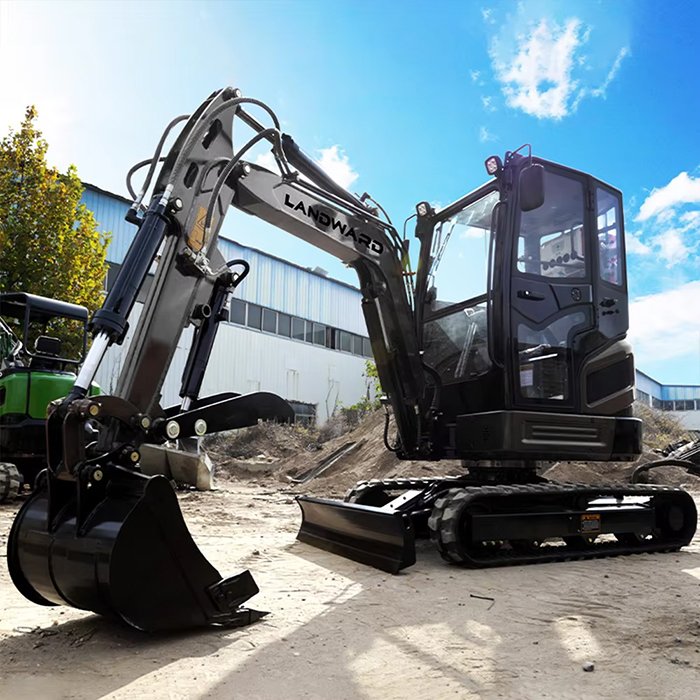
The era of sending in massive iron to bulldoze, scoop, and haul is quietly losing ground — and the contractors still betting on brute force are falling behind.
For decades, “bigger equipment equals faster results” was gospel on job sites. But modern land clearing and excavation demands tell a different story. Urban density, tighter permitting windows, and proximity to existing infrastructure have fundamentally changed what a winning job looks like. The old bulk-dig mentality assumed open space and wide tolerances. Today’s job sites offer neither.

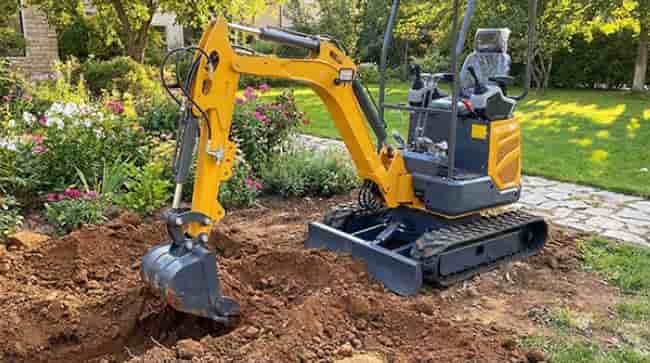
The compact equipment market reflects this shift clearly: mini excavators are projected to dominate earthmoving with a 4.2% CAGR through 2030, driven almost entirely by urban space constraints.
This isn’t a niche trend. It’s a structural market realignment.
Micro-Space Engineering is the discipline emerging in response — a precision-first approach to excavation that prioritizes accuracy, site adaptability, and equipment versatility over raw volume. Where traditional methods measured success in cubic yards per hour, this new standard measures it in margin protection, access capability, and job-site flexibility.
Several converging forces are driving this change:
The thesis is straightforward: versatility now outperforms volume as the primary competitive advantage in excavation. Firms that understand this are winning contracts their larger-equipment competitors can’t physically touch.
What makes that versatility possible — and how a single machine can handle demolition, forestry, and trenching — is exactly where this conversation goes next.
A single well-equipped machine can outperform a three-unit fleet — if the attachment strategy is right.
Moving beyond the bucket is no longer a premium option; it’s a baseline expectation in modern excavator application solutions. According to the Association of Equipment Manufacturers, advanced hydraulic thumb attachments and quick-coupler systems increase job site versatility by up to 30% without increasing machine size. That’s a significant productivity multiplier hiding in plain sight.
Quick-couplers and hydraulic thumbs are the foundation of this flexibility. A hydraulic thumb transforms a digging machine into a precision handler — capable of gripping irregular debris, repositioning boulders, or sorting material on the fly. Quick-coupler systems then allow operators to swap between attachments in under two minutes, eliminating the downtime that used to define multi-task projects.
In practice, a single compact excavator can cycle through radically different workflows across a single workday:
The attachment ROI math is straightforward. A full attachment package for a mid-size excavator typically runs $15,000–$40,000. Purchasing separate specialized machines for each task can push capital expenditure past $200,000. For contractors exploring compact equipment options, this consolidation argument is increasingly hard to ignore.
Bold callout: One machine with five attachments doesn’t just save money — it eliminates scheduling conflicts, reduces transport costs, and shrinks your crew requirements.
Factory-direct OEM/ODM customization is where this strategy gets refined. Off-the-shelf attachments rarely fit every chassis or hydraulic flow spec perfectly. Manufacturers offering custom-configured attachment interfaces ensure that each component operates at peak hydraulic efficiency — not just mechanically compatible, but purpose-built for the host machine.
That precision in equipment configuration connects directly to a broader competitive question: how does attachment capability translate into winning bids?
Contractors who treat grade control as an upgrade rather than a baseline are losing bids to leaner, better-equipped competitors — and the gap is widening fast.
The business case is straightforward: precision technology eliminates the rework cycle that quietly destroys project margins. In utility sectors — telecom, stormwater, gas distribution — 2D/3D grade control isn’t a differentiator anymore. It’s an entry requirement. Clients specifying tight elevation tolerances or trenchless-adjacent work simply won’t accept manual grade checks when digital verification is standard practice in competitive markets.
“The integration of telematics and 2D/3D grade control in compact excavators is no longer a luxury but a requirement for competitive bidding.” — Construction Equipment Magazine
This shift is particularly powerful for smaller firms. A mid-size operation running one or two precision-equipped compact machines can realistically outperform a larger contractor fielding older iron with bigger crews. The math is direct: fewer passes, less regrading, and tighter tolerances on the first cut reduce both labor hours and material waste. That’s where micro-space engineering delivers its sharpest competitive edge — executing detailed, confined-area work with an accuracy that headcount alone can’t replicate.
Telematics compounds the advantage. Real-time machine monitoring tracks fuel burn, idle time, and cycle efficiency, giving operators and project managers actionable data instead of end-of-day guesswork. A machine spending 30% of its shift idling on a congested urban lot represents recoverable cost — telematics surfaces that loss before it compounds. Operational downtime from unplanned maintenance drops significantly when hour-meter data and diagnostic alerts replace reactive repair schedules.
For contractors building or updating their procurement checklist, the practical approach is to treat grade control and telematics as non-negotiable line items — not optional configurations. Evaluating hydraulic output consistency alongside digital integration capacity gives a more complete picture of a machine’s true job site value.
As job sites grow denser and municipal contracts grow stricter, precision technology increasingly intersects with a harder constraint: noise and emissions compliance — a frontier that’s reshaping how and