Telephone/WhatsApp:+86 156 2656 0610

Telephone/WhatsApp:+86 156 2656 0610
Email:seekmach@gmail.com

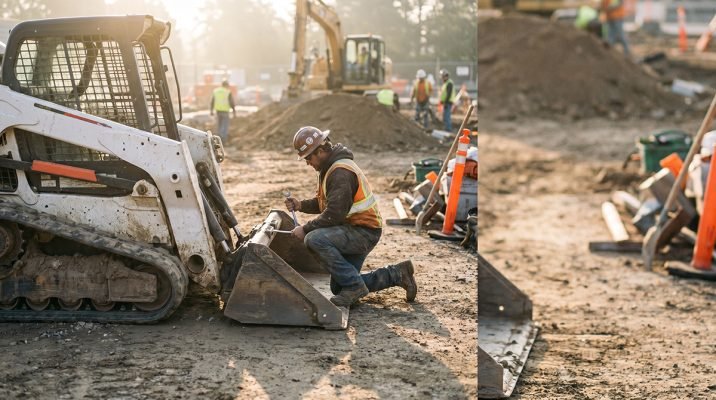
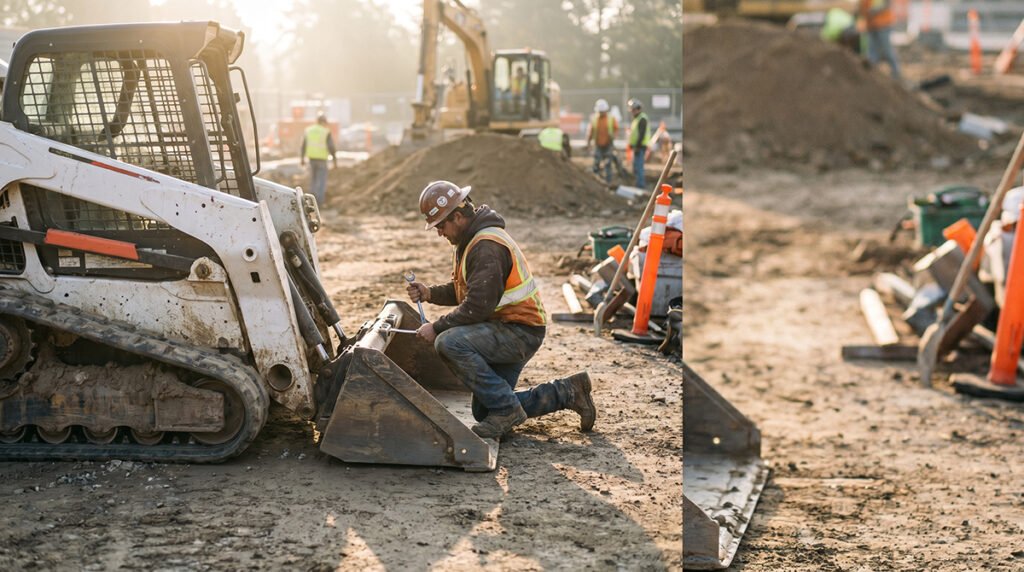
Contractors burning through budget on specialized equipment fleets are solving the wrong problem. The real drain isn’t the work itself — it’s the overhead of mobilizing, maintaining, and financing multiple machines to accomplish what one well-configured power unit can handle.
The shift in how serious operators think about the skid steer is already underway. Where the old framing treated these machines as glorified loaders, the smarter framework is the power unit concept: a single chassis that transforms through attachments into a trencher, a brush cutter, a grader, or a cold planer — often within the same work day. As Construction Equipment Magazine puts it:
“The versatility of the skid steer is its greatest asset; by utilizing the correct attachment, a contractor can replace three specialized machines with one power unit.”
That replacement has direct financial consequences. Every piece of equipment that stays off the job site eliminates a transportation move, an insurance line item, and a maintenance schedule. For project managers evaluating skid steer rental against owning dedicated machinery, the math increasingly favors flexibility — especially when attachments can be swapped between units across a fleet.
IL skid steer loader market reflects this momentum, driven largely by contractors demanding more output from fewer machines. Understanding how versatility translates to measurable ROI is the foundation before tackling the more specialized territory ahead — particularly the hydraulic performance demands that separate standard applications from true industrial-grade work.
Versatility means nothing without the power to back it up. That’s where hydraulics become the real story — and where most operators discover a hard limit on what their machine can actually do.
Every skid steer runs on hydraulic pressure, but not all systems deliver the same output. Standard flow systems typically produce between 17–24 gallons per minute (GPM), which is more than enough for common tasks like bucket work, augers, and pallet forks. High-flow hydraulic systems, however, push 30–45 GPM or more, unlocking a completely different tier of attachment capability.
Think of it like household electricity. Standard flow is your 120-volt outlet — reliable for everyday use. High flow is the 240-volt circuit your industrial tools actually need to run at full capacity.
| Categoria | Standard Flow Applications | High-Flow Applications |
|---|---|---|
| GPM Range | 17–24 GPM | 30–45+ GPM |
| Allegati comuni | Augers, buckets, forks | Cold planers, rock saws, mulchers |
| Typical Use Case | Landscaping, material handling | Road milling, demolition, land clearing |
| Attachment Demand | Low-to-moderate | High-demand continuous operation |
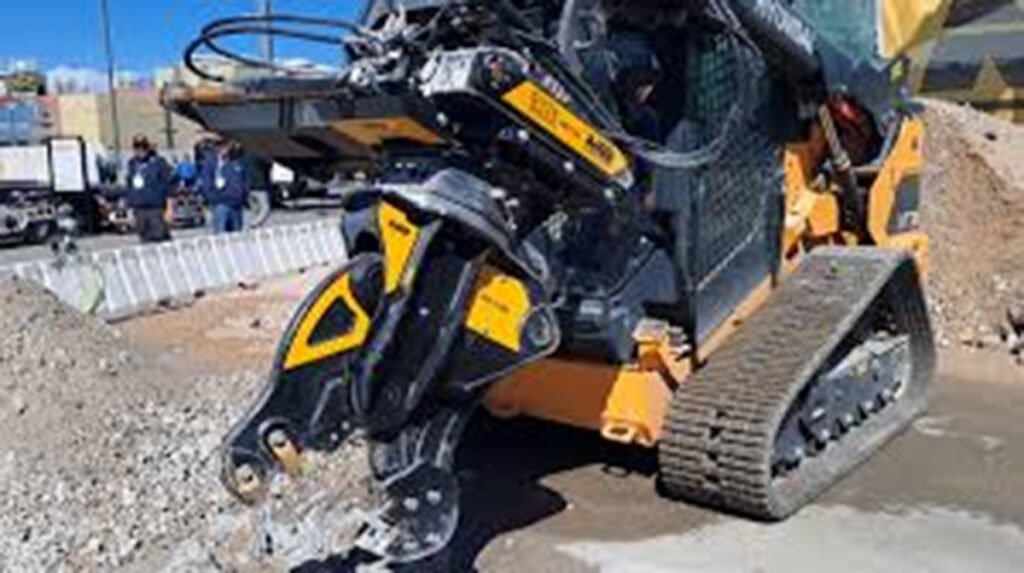
According to the Association of Equipment Manufacturers (AEM), a compact skid steer loader equipped with a high-flow hydraulic system can operate heavy-duty attachments like cold planers E rock saws for precision road milling — tasks that traditionally required much larger, dedicated equipment.
Cold planers, in particular, are unforgiving. Drop below the required hydraulic flow threshold, and the cutting drum slows, surface finish degrades, and cycle times balloon. Precision road milling isn’t just about power; it’s about sustained, consistent hydraulic output throughout the entire cutting pass.
Technical Tip: Always cross-reference your attachment’s minimum GPM requirement against your machine’s rated high-flow output — not the standard flow spec — before committing to a purchase or rental.
Matching machine flow to attachment requirements is where operators either maximize ROI or waste it. Understanding how hydraulic output affects powered attachments across equipment classes is a discipline in itself — and it applies just as critically when choosing your machine’s base platform, whether that’s a wheeled or tracked configuration.
Comprensione what a skid steer is used for starts with a foundational decision most buyers overlook: wheels or tracks? Get this wrong, and you’re fighting your own machine on every job site.
Tire-based skid steers are purpose-built for hard, stable surfaces — concrete pads, asphalt lots, compacted gravel, and urban job sites. Their advantages are real and measurable.
Pros:
Cons:
Tire replacement is straightforward and typically runs $400–$800 per tire depending on size — a cost that’s predictable and easy to budget.
CTLs distribute weight across a wider footprint, dramatically reducing ground pressure. That makes them the smarter call for soft soil, sensitive turf, muddy conditions, or uneven terrain.
Pros:
Cons:
According to research published in the Journal of Terramechanics, skid steers are increasingly favored for precision land clearing in silviculture applications specifically because their lower track pressure minimizes soil compaction — a critical factor for forest regeneration where disturbed soil structure undermines root establishment in replanted stands.
In practice, the terrain dictates the platform. Hard, urban, and mixed-surface contractors typically get better ROI from wheeled machines. Operations involving turf, soft agricultural ground, or woodland clearing lean heavily toward CTLs. If your work spans both compact and larger equipment categories, it’s worth evaluating ground pressure specs across your entire fleet — not just the skid steer in isolation.
The platform is your foundation — and every attachment decision that follows depends on getting it right. That versatility becomes even clearer when you break down the specific high-impact applications driving contractor ROI in 2025.
With hydraulic muscle and attachment flexibility established, the real question becomes: where does that capability actually translate into measurable ROI? The answer spans more industries than most contractors initially expect. According to Allied Market Research, the global skid steer loader market is projected to reach $3.3 billion by 2030 — a figure driven by contractors discovering new high-value use cases every season.
The right machine, paired with the right attachment, doesn’t just replace one piece of equipment — it replaces several.
Landscaping crews consistently rank among the heaviest attachment users in the industry. A single skid steer can handle an entire project sequence without swapping machines.
Agricultural operations — especially silviculture and pasture management — demand both brute clearing power and surgical precision. High-flow skid steers excel here because mulching heads and brush cutters require consistent hydraulic output across uneven terrain. This is also where the skid steer vs compact track loader decision carries real weight: track machines handle soft or muddy ground better, but wheeled units deliver faster cycle times on established surfaces.
On active job sites, skid steers routinely outperform dedicated forklifts in confined areas. Understanding how wheel and track choices affect site prep decisions can sharpen your equipment selection from day one.
Municipal contractors face relentless seasonal pivots — and skid steers handle both ends of the calendar.
That versatility is compelling — but how contractors source these machines dramatically affects their total cost. That brings the conversation squarely to procurement strategy.
As contractors get smarter about maximizing ROI on every attachment purchase, the supply chain itself has become a competitive variable. Traditional dealer networks add layers of markup — distributor margins, regional warehousing costs, and sales overhead — that routinely inflate equipment prices by 20% to 40% before a machine ever reaches a job site.
The factory-direct model cuts that chain entirely. Buyers working directly with manufacturers gain pricing transparency, faster lead times, and direct access to engineering teams who can tailor specifications. Whether you’re sourcing a high-flow mulcher head or a complete skid steer for landscaping operations, the difference in landed cost can be substantial — often justifying the extra due diligence that direct sourcing requires.
Not all overseas manufacturers operate at the same standard. When vetting direct suppliers, three checkpoints matter most:
Seekmach, for instance, operates from a 50,000 m² facility with over 15 years of manufacturing expertise and ships factory-direct to more than 50 countries — a logistical footprint that supports serious industrial buyers, not just one-off purchases. Before committing to any direct import, reviewing a comprehensive import checklist can prevent costly specification mismatches down the line.
Of course, even the best-sourced machine only delivers long-term ROI with consistent upkeep — which is where the next piece of the puzzle comes in.
Swapping attachments daily is one of the biggest productivity advantages of modern skid steer applications — but it’s also where maintenance discipline separates profitable operations from costly downtime.
Consistent maintenance isn’t optional — it’s the multiplier that makes every attachment investment pay off longer.
These practical habits apply regardless of your machine brand or fleet size. As you build out your maintenance routine, you’ll likely run into broader operational questions — which the next section addresses directly.
Are skid steer attachments universal?
Not entirely. Most modern attachments follow the universal quick-attach standard, making them broadly compatible — but hydraulic flow requirements vary. High-flow attachments won’t perform correctly on a standard-flow machine. Always verify both mechanical fitment and hydraulic specs before purchasing. Top attachment suppliers provide compatibility guides to simplify this process.
Can a skid steer replace a forklift?
With a pallet fork attachment, a skid steer handles most light-to-medium material lifting tasks effectively. However, for high-rack warehouse operations, a dedicated forklift remains more practical. On job sites and outdoor yards, skid steers offer clear versatility advantages.
What is the average lifespan of a compact skid steer?
In practice, a well-maintained skid steer typically delivers 4,000–6,000 operating hours — often 10+ years of productive service. Consistent maintenance, especially around hydraulic systems and track wear management, directly determines longevity. The machines that last longest aren’t the most expensive — they’re the most consistently maintained.