Telephone/WhatsApp:+86 156 2656 0610
Telephone/WhatsApp:+86 156 2656 0610
Email:seekmach@gmail.com

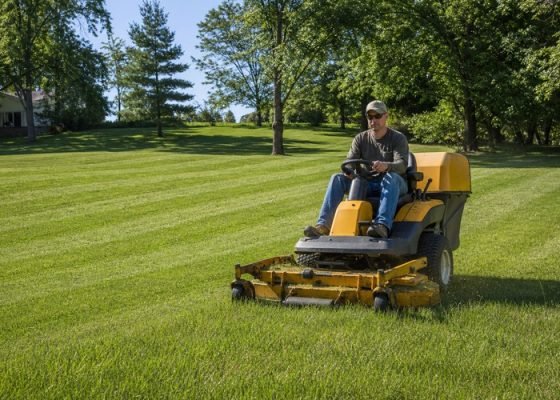
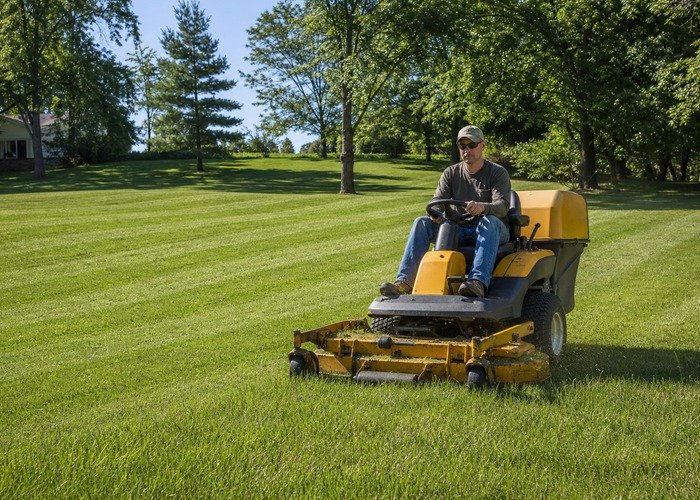
When a lawn mower cuts unevenly, the first instinct is often to turn the deck-adjustment hardware. That can make the problem worse. A low tire can tilt the whole machine, a bent blade can change height through its rotation, wet clippings can collapse airflow, and a wide deck can scalp a ridge even when it measures perfectly on a flat floor.
The fastest diagnosis starts in the grass. Look at the pattern before washing it away with another pass: one continuous low stripe, a narrow uncut strip between blades, random standing grass, repeating waves, scalped crowns, or ragged brown tips. Each pattern points toward a smaller group of causes. Owners comparing machines can review the SeekMach lawn mower category, but setup measurements and service procedures must come from the exact mower manual.
University of Minnesota Extension notes that a dull rotary mower blade frays grass ends, producing brown tips and increasing susceptibility to some plant diseases. The same source emphasizes safe mowing and suitable conditions. That is why cut quality is more than appearance: the grass, deck airflow, blade edge, ground speed, and terrain form one system.
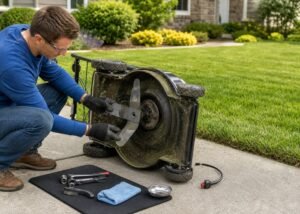
Before touching the deck, park on a flat hard surface, disengage the blades, set the brake, stop the engine, remove the key, and isolate the battery or spark plug as the manual directs. Wait for all movement to stop. Never work beneath an unsupported mower or reach into a discharge opening while the machine can start.

| Pattern left in the lawn | Most likely area to inspect first | Useful check | Common wrong turn |
|---|---|---|---|
| One side consistently lower | Tire pressure, wheel setting, side-to-side deck level | Set tires correctly, then measure blade tips on a flat surface | Adjusting deck links before correcting a soft tire |
| Narrow strip of tall grass between blade paths | Blade installation, blade length, spindle position, belt drive | Inspect overlap area and compare blade-tip height through rotation | Raising the whole deck |
| Random single blades left standing | Wet or laid-over grass, excessive speed, low blade speed, airflow restriction | Repeat a short dry test at correct operating speed and slower travel | Replacing the deck before changing conditions |
| Repeating waves or washboard pattern | Ground speed, deck bounce, rough terrain, loose linkage | Observe whether spacing changes with travel speed | Sharpening blades only |
| Scalped spots on crowns and ridges | Lawn contour, deck width, anti-scalp setup, cutting height | Map where scalping repeats and raise height for the test | Leveling to compensate for the yard’s shape |
| Ragged brown tips across the whole lawn | Dull or damaged cutting edges | Inspect grass tips and safely remove blades for service | Lowering the cutting height |
A quick photograph taken across the light makes ridges and skipped strips easier to compare. Mark the direction of travel, whether the defect appears on turns, and whether it repeats at the same place in the yard. Then choose a dry, reasonably flat strip and make one pass at the cutting height, blade speed, and travel speed recommended for the mower. Do not keep mowing the whole property while diagnosing. A related SeekMach reference is the mower guide by yard size. For independent guidance, review University of Minnesota mower safety guidance.
Use a repeatable order and follow the exact manual. Park securely, lower attachments, isolate power, control stored energy, and inspect the work area before testing.
Field example. A mower leaves a low stripe only on the return pass beside a shallow swale. On a flat test strip, the cut is even. The machine may not need deck adjustment at all; the route is placing the downhill wheels in a depression and moving the deck across the crown.
Decision point. If the pattern is tied to terrain, change route, overlap, height, deck width, or equipment choice before adjusting a correctly set deck to match one uneven place. Stop whenever the setup falls outside the manual, site rules, component ratings, or the operator’s training.
The deck is mounted to a machine that stands on tires or wheels. If one tire is low, the chassis and deck tilt with it. Correct pressure must come from the mower label or manual, not from the maximum molded into the tire sidewall. Walk-behind mowers also need matching wheel-height settings and undamaged adjusters. Check on a cool machine before measuring blade tips. A related SeekMach reference is the lawn mower buying guide. For independent guidance, review CPSC lawn mower safety center.
Use a repeatable order and follow the exact manual. Park securely, lower attachments, isolate power, control stored energy, and inspect the work area before testing.
Field example. The left rear tire is only slightly soft, and the deck looks level when measured from its shell. Measuring the cutting blade tips reveals the left side is low. Restoring the specified tire pressure changes the blade-tip measurement without touching a deck link.
Decision point. Do not use deck adjustment to cancel a tire or wheel problem. The correction will disappear when the tire is inflated or may worsen as pressure changes during use. Stop whenever the setup falls outside the manual, site rules, component ratings, or the operator’s training.
A stamped deck shell can have contours, guards, wear, or manufacturing features that make its outer edge a poor cutting-height reference. The blades create the cut, so level checks normally use blade-tip positions described by the manual. Rotate by hand only after the mower is fully disabled as directed. Measure the same blade tip at multiple positions; a changing measurement may indicate a bent blade, damaged spindle, loose bearing, or debris on the mounting surface. A related SeekMach reference is the mower options for uneven ground. For independent guidance, review University of Missouri mowing practices.
Use a repeatable order and follow the exact manual. Park securely, lower attachments, isolate power, control stored energy, and inspect the work area before testing.
Field example. One blade tip measures correctly when pointed outward but changes when rotated 180 degrees. Adjusting the deck would move both positions together and leave the variation. The blade, mounting surface, or spindle needs inspection first.
Decision point. Replace cracked, severely bent, worn, or otherwise unserviceable parts according to the manual. Do not straighten a questionable blade or guess at adjustment specifications. Stop whenever the setup falls outside the manual, site rules, component ratings, or the operator’s training.
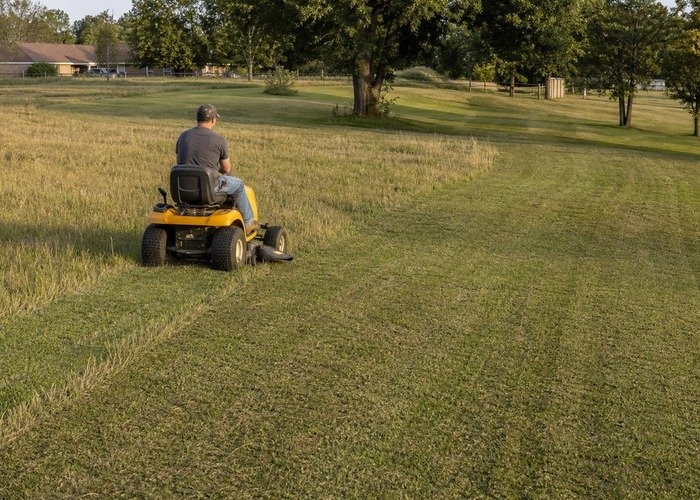
A sharp blade still cuts poorly if it is installed upside down, mounted against debris, driven at inconsistent speed, or turning on a worn spindle. Grass packed under the deck changes airflow and can block discharge, especially after wet mowing. A glazed or slipping belt, weak tensioner, damaged pulley, or spindle play can leave strips that resemble a leveling problem. A related SeekMach reference is the gas versus electric mower comparison. For independent guidance, review Oregon State mowing and lawn care guidance.
Use a repeatable order and follow the exact manual. Park securely, lower attachments, isolate power, control stored energy, and inspect the work area before testing.
Field example. The mower cuts well for ten minutes, then begins leaving clumps and random standing grass. The deck is level, but wet material builds under the discharge side and reduces airflow. Waiting for dry conditions and cleaning safely restores the pattern without changing adjustment hardware.
Decision point. Stop immediately for abnormal vibration, metal contact, a loose blade, damaged spindle, cracked deck, thrown object, or belt smoke. These are mechanical warnings, not cosmetic cut issues. Stop whenever the setup falls outside the manual, site rules, component ratings, or the operator’s training.
Even a correctly serviced mower can leave a poor finish when asked to remove too much tall growth in one pass, travel too quickly, or cut wet grass that lies down and clumps. The widely used one-third guideline means avoiding removal of more than roughly one-third of the grass blade in a single mowing where practical. Species, season, drought, shade, and lawn purpose still affect the correct height. A related SeekMach reference is the SeekMach application solutions. For independent guidance, review University of Minnesota healthy lawn mowing practices.
Use a repeatable order and follow the exact manual. Park securely, lower attachments, isolate power, control stored energy, and inspect the work area before testing.
Field example. A fast first pass through tall mixed grass leaves random stems and heavy windrows. A higher, slower pass in dry conditions removes less material, keeps airflow moving, and leaves a more consistent surface. The final height can be reached gradually if the turf and schedule allow.
Decision point. If engine speed drops, discharge clogs, clippings form heavy piles, or the mower begins pushing grass flat instead of cutting it, reduce the load rather than continuing at the same height and speed. Stop whenever the setup falls outside the manual, site rules, component ratings, or the operator’s training.
Wide decks bridge high spots and dip into low areas differently from narrow decks. Anti-scalp wheels reduce deck contact but are not intended to carry the deck continuously unless the design says otherwise. Tree roots, settled utility trenches, tire ruts, mole activity, frost heave, and compacted paths can create repeating defects that no blade adjustment can remove. For independent guidance, review Penn State mowing guidance.
Use a repeatable order and follow the exact manual. Park securely, lower attachments, isolate power, control stored energy, and inspect the work area before testing.
Field example. A large riding mower leaves two scalped circles around a mature tree every week. The deck measures correctly on concrete. A raised root and the turning path compress one side of the machine. Widening the turn and finishing the inner ring with a smaller mower protects both turf and equipment.
Decision point. Do not lower the entire deck to hide missed grass in a hollow or raise one side to compensate for a single ridge. Fix the route or surface problem and preserve a correct machine setup. Stop whenever the setup falls outside the manual, site rules, component ratings, or the operator’s training.
Check tire pressure and wheel settings first, then measure blade tips side to side on a flat surface using the manual’s procedure. If one blade changes height as it rotates, inspect that blade, its mounting surface, spindle, and bearings before adjusting the deck.
Wet or laid-over grass, excessive ground speed, low blade speed, poor overlap, blocked deck airflow, a slipping belt, and rough terrain can all leave random stems. Run a controlled dry test strip at the correct cutting speed and slower travel before replacing parts.
Not necessarily. Many decks use a specified front-to-rear pitch rather than identical front and rear blade-tip heights. Use the exact mower manual. A universal internet measurement can produce poor cut quality or excess power demand on a different deck.
Blade-tip measurements are usually more meaningful because the blades create the cut and deck shells are contoured. Follow the manual’s measurement points, disable the mower fully, and rotate blades safely by hand only as instructed.
Stop for strong vibration, metal contact, a loose or cracked blade, spindle play, smoke, a damaged belt or pulley, a cracked deck, repeated thrown objects, or any condition that makes guarding or control unreliable. Do not keep testing a mechanical failure in the lawn.
A useful uneven-cut diagnosis follows a simple order: photograph the pattern, test on dry flat ground, correct tire pressure, measure blade tips, inspect the cutting and drive parts, clean the deck, and only then make the specified adjustment. That order prevents a five-minute tire problem from becoming an afternoon of unnecessary deck changes.
After the repair, repeat the same test strip in the same direction and conditions. Compare the photographs and grass tips, not just how the deck looks in the garage. When the machine is correctly set but one area still scalps, let the lawn contour change the mowing plan rather than forcing the mower to imitate a level floor.