Telephone/WhatsApp:+86 156 2656 0610
Telephone/WhatsApp:+86 156 2656 0610
Email:info@seekmach.com

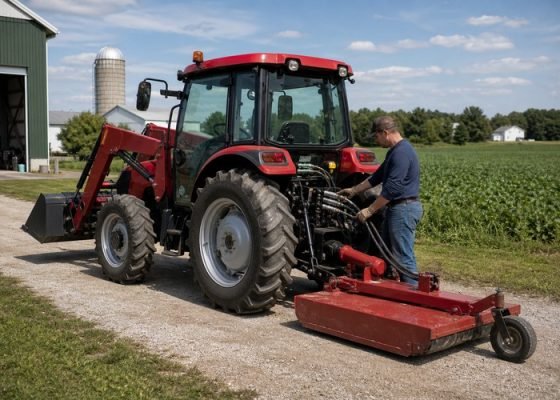
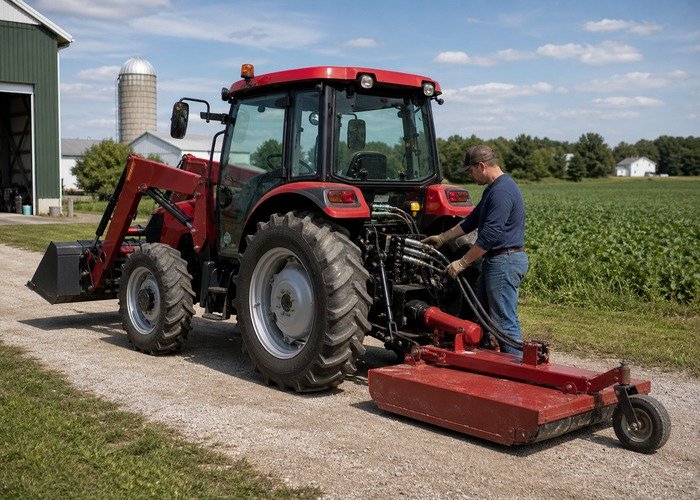
Tractor buyers often begin with horsepower because it is the easiest number to remember. The trouble is that a tractor with the “right” engine horsepower can still feel wrong once a loader bucket is full, a rotary cutter meets heavy grass, or a rear implement starts pushing the front axle light. If you are comparing machines in the SeekMach tractor category, treat engine HP, PTO HP, hydraulic capacity, lift figures, ballast, tire choice, and machine weight as one working system rather than one headline specification.
The practical question is simple: what work must the tractor do repeatedly without forcing the operator to exceed limits? A tractor used mainly for finish mowing needs a different balance from one used for loader gravel, pasture cutting, post-hole work, snow cleanup, driveway grading, or feeding material around a small farm. The best choice is rarely the biggest number. It is the machine that has enough usable power, enough stability, enough hydraulic response, and enough attachment fit for the jobs that show up every month.
Before you compare spec sheets, write the job list. Include the heaviest routine loader load, the widest PTO implement you expect to run, the narrowest gate, the softest ground, the steepest safe route, and the place where implements will be stored. A tractor that looks strong online but cannot safely carry the real load through your access path is not a good fit.
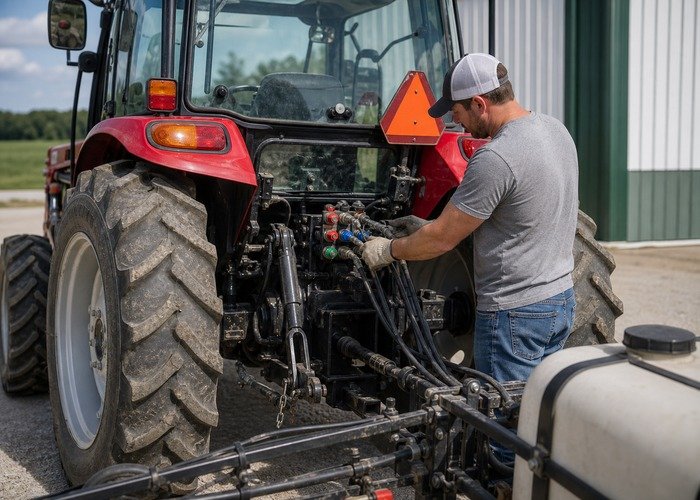
Engine horsepower describes the engine output under a defined test condition. PTO horsepower is the power delivered at the power take-off to run implements such as rotary cutters, tillers, finish mowers, and some spreaders. Lift capacity describes what the loader or three-point hitch can raise under specific measurement conditions. These numbers are related, but they are not interchangeable.
| Spesifikasi | What it helps answer | What it does not answer alone |
|---|---|---|
| Tenaga kuda mesin | General power class and engine workload | Loader stability, PTO output, ballast, traction |
| PTO horsepower | Whether a powered implement can run properly | Loader lift, hydraulic flow, transport weight |
| Loader lift capacity | Whether the loader can raise a defined load | Safe travel, load center, rear ballast, braking |
| Three-point lift | Whether a rear implement can be raised | PTO demand, front ballast, implement control |
| Berat operasi | Traction and stability clues | Soil compaction, transport legality, access fit |
The table is intentionally plain because the mistake is usually plain. A buyer wants to lift pallets, so they shop by horsepower. Another buyer wants to cut tall pasture, so they compare loader capacity. The work tells you which specification deserves attention.
A rotary cutter, finish mower, tiller, or similar implement draws from the PTO. If the implement manufacturer recommends a certain PTO range, engine horsepower is not a substitute. A tractor can have a respectable engine rating and still lack enough PTO output for a wider cutter in thick grass. The result is slow travel, rough cutting, overheating, belt stress, and operator frustration.
This is where real conditions matter. Short dry grass is easy. Wet spring growth, weeds, light brush, uneven ground, and slopes change the load. Wider implements save time only when the tractor can maintain safe speed and power without lugging. The Penn State Extension tractor safety material is a good reminder that PTO work also brings guarding, shutdown, entanglement, and operator-distance hazards.
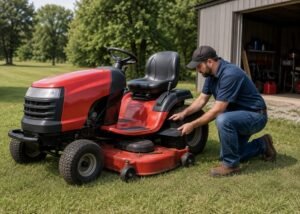
If mowing is one of several property jobs, compare the tractor’s role with the SeekMach lawn mower category. A tractor-mounted cutter can clear rougher land, but a dedicated mower may give a cleaner result around finished lawns. Choosing the carrier before the task often leads to the wrong compromise.
Loader capacity can be quoted at the pivot pins, at a point forward of the pins, at ground level, or at full height. Those numbers are not the same. A pallet fork moves the load center forward, which reduces usable capacity and changes stability. A large bulky object can be harder to control than a dense smaller load with the same weight. The loader also needs proper rear ballast, tire pressure, steering control, and braking room.
Rear ballast is part of the loader setup. A tractor that can raise a load may still be unsafe to travel with that load if the rear axle is too light. Keep the bucket low during travel, turn slowly, and avoid side slopes. The NIOSH agriculture safety program emphasizes that machine hazards are usually controlled by a complete system of setup, training, environment, and behavior.
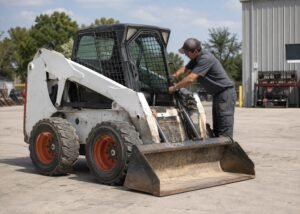
For repeated heavy material handling, compare the work with the SeekMach skid steer loader category. A tractor loader is wonderfully versatile, but a skid steer may be more efficient when the day is dominated by short loading cycles, tight turns, pallets, and attachment changes.
Hydraulics matter in loader speed, steering feel, rear remotes, grapple operation, and some attachments. A tractor with enough horsepower may feel slow if hydraulic response is limited for the job. Flow, pressure, valve design, couplers, hose routing, and oil temperature all affect performance. Do not assume that two tractors with similar horsepower will feel the same with a loader or hydraulic attachment.
The useful test is not a quick empty-bucket lift in a yard. Watch how the tractor behaves with a normal working load, correct ballast, and the attachment you expect to use. Does the loader respond smoothly? Can the operator feather movements? Does steering remain controlled? Do hydraulic hoses have safe clearance through the full motion range?
Weight can help traction and stability, but it can also increase rutting and soil compaction. A heavier tractor may pull a grading implement better and carry a loader load more confidently. A lighter compact tractor may be easier on lawns, smaller drives, and soft ground. Tire type, tire pressure, ballast, four-wheel drive, and operator technique all change the result.
Itu University of Minnesota Extension farm machinery resources are useful for thinking about machinery setup as a field-performance issue rather than a brochure comparison. On a rural property, walk the ground after rain and note where a heavier tractor will leave marks, where a lighter tractor will spin, and where the job should simply wait.
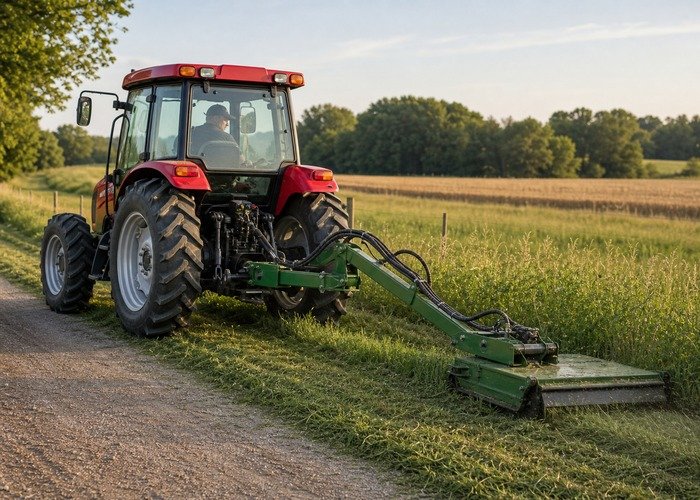
Imagine a small property owner with a gravel drive, five acres of rough grass, a few pallets of landscape material each season, and occasional garden work. The tractor needs enough PTO power to run the cutter without constant lugging. It needs loader capacity for realistic material handling, but it does not need to become a warehouse machine. It needs ballast for loader work and tires that do not destroy the finished yard.
Now imagine a different owner with heavier bales, long field passes, and wide implements. That buyer may need more tractor weight, PTO output, hydraulic capacity, and implement width. The same engine horsepower discussion will not solve both cases. The yearly work pattern decides which number matters most.
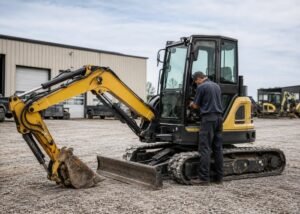
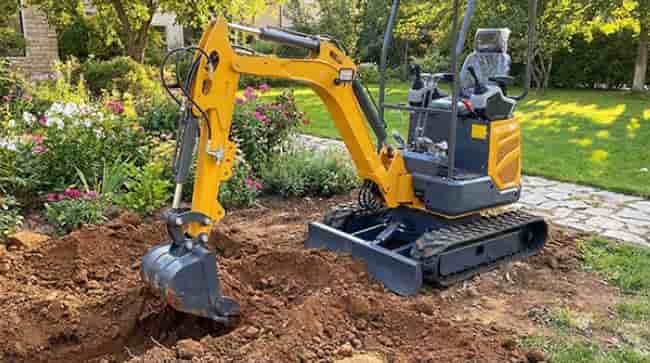
If the work crosses into trenching, stump removal, or drainage, look at the SeekMach excavator category. A tractor can support site work, but an excavator may do precise digging more safely and cleanly. The SeekMach product overview is a better starting point when the real question is machine type, not only tractor size.
Before committing to a tractor, walk around it with the intended implements in mind. Stand where the loader bucket edge will be visible. Check whether the rear implement blocks your view when backing. Look at the hydraulic couplers and confirm they can be reached without leaning into pinch points. Open the hood and imagine checking fluids on a cold morning. None of these details shows up in a horsepower number, yet each one changes how confidently the tractor gets used.
If the tractor will run PTO equipment, inspect guarding and driveline geometry before the first pass. The University of Missouri Extension tractor safety guidance is useful because it treats rollover protection, PTO safety, and operator habits as connected issues rather than separate warnings. A tractor with enough PTO horsepower still needs guarded shafts, correct drawbar and hitch setup, and a patient operator.
For loader work, mark a realistic test route. Include the surface you will actually cross: gravel, turf, mud, barn floor, or slope. A machine may lift the load on concrete and still feel wrong on uneven ground. If the route feels marginal during a demonstration, it will feel worse when the operator is tired, the bucket is wet, and the job is behind schedule.
Ask for PTO horsepower, not only engine horsepower. Ask where loader lift was measured. Ask what rear ballast is required for the rated load. Ask whether the three-point hitch can lift your real implement through the full range. Ask whether the tractor can be transported with loader, ballast, fuel, and implement included. Ask whether service points are reachable with the loader installed.
Also test comfort. Visibility to the bucket edge, pedal position, steering effort, entry height, control layout, and seat support matter after two hours. The safest tractor is not only the one with the best numbers; it is the one the operator can control slowly and consistently.
The first trap is comparing loader numbers measured at different points. Ask whether the figure is at the pivot pins or forward of the pins, and whether it is at full height or another position. The second trap is treating PTO horsepower as a perfect guarantee. A cutter that technically fits can still be slow in thick wet growth if blades are dull or travel speed is too high.
The third trap is ignoring total machine weight for transport. Loader, bucket, ballast, filled tires, cab, rear implement, fuel, and chains all add up. The Federal Motor Carrier Safety Administration cargo securement rules are worth reviewing when equipment transport becomes part of ownership. Even when local rules differ by use case, the principle is the same: real operating weight matters.
Finally, do not buy around one rare heavy job. If one future project needs a bigger machine, renting or hiring may be smarter than living every week with a tractor that is too large for gates, lawns, sheds, and normal chores. Match the daily work first, then plan rare work separately.
Not by itself. Engine horsepower is useful, but PTO horsepower, hydraulic capacity, operating weight, ballast, tire choice, loader rating, and implement fit decide the actual work.
No. Loader capacity depends on measurement point, height, attachment, load center, ballast, surface, slope, and travel speed. A lifted load is not automatically a safe traveling load.
The cutter may be too wide, the grass too heavy or wet, blades dull, travel speed too high, or PTO power too low for the condition. Setup and ground speed matter as much as the spec sheet.
Buy enough capacity for realistic recurring work with a sensible margin. If the future task also needs more weight, hydraulics, or lift capacity, horsepower alone will not solve it.
Watch a related tractor comparison video here: tractor power and work fit on YouTube. Then return to the job list. Tractor HP, PTO HP, and lift capacity are useful only when they are tied to the loads, implements, surfaces, and working rhythm you actually have.